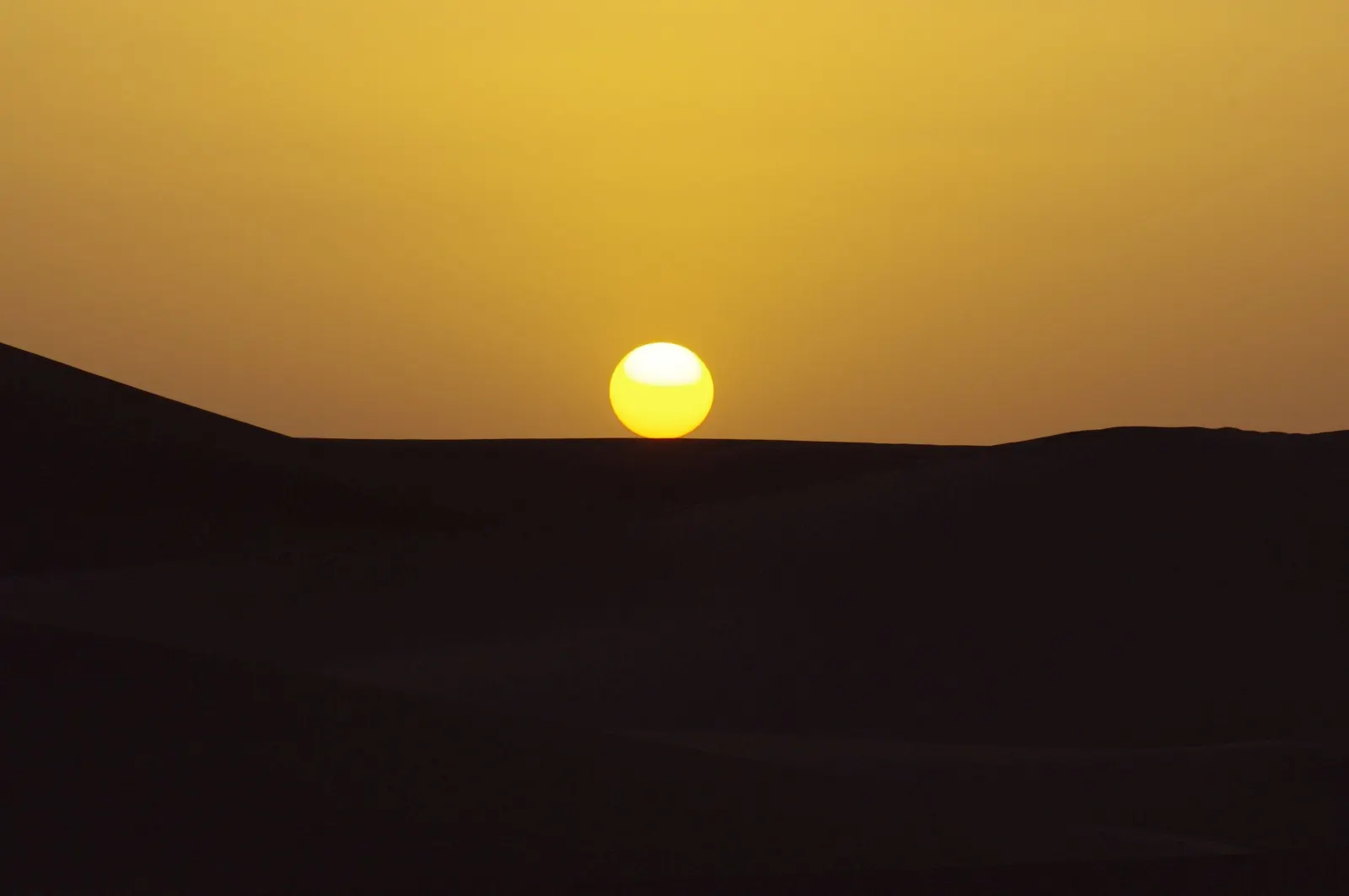
The short answer
The best time to visit Siwa is mid-October to mid-April, when afternoons average about 19 to 30 °C and every trip works, though December to February nights average only 6 to 7 °C. June to September is hot and quiet, with one exception: 2 August 2027, when a total solar eclipse crosses Siwa.
Ask us on WhatsAppThe short version
Short answer: mid-October to mid-April for weather; 2 August 2027 for the eclipse; June to September only if you like heat and empty lodges.
Siwa has two seasons that matter to a traveller: a long, mild one from mid-October to mid-April, when every activity works at any hour, and a hot one from June to September, when the day shrinks to the first and last few hours of light. May and early October sit in between. Rain hardly ever falls, so the decision comes down to three things: heat, cold nights and crowds.
| If you want... | Go in |
|---|---|
| The most comfortable all-round weather | Late October to early December, February to mid-March |
| The longest dark nights for stargazing | December and January (with a warm jacket) |
| The total solar eclipse | 2 August 2027 (see the eclipse in Siwa) |
| The Siyaha festival | The October full moon (15 October in 2027) |
| Fresh dates on the palms | September to November |
| Low prices and an empty oasis | June to September, outside eclipse week |
| Traditional sand baths | July and August |
| To avoid dusty winds | Skip late March and April if you can |
If you remember one thing: November is the safest month to book blind, and April is the month most likely to surprise you.
Typical values in Siwa town. Nights out in the dunes are a few degrees colder; individual days vary.
Month by month: what works when
Short answer: November and March score well on everything; June to August score poorly on everything except swimming.
Highs and lows below are the official WMO 1961-1990 normals for the Siwa station (checked 17 November 2026), the single baseline used across this site. Recent decades run a little warmer, most of all from July to September. Our Siwa weather by month page has the full set, including records, wind and the 1991-2020 comparison. The ratings are our own planning view.
| Month | High / low | Sightseeing | Desert safari | Camping | Swimming | Crowds |
|---|---|---|---|---|---|---|
| January | 19.3 / 5.6 °C | Great | Great | Cold nights | Warm springs only | Busy in the school break, 23 Jan to 4 Feb |
| February | 21.5 / 7.1 °C | Great | Great | Cool nights | Warm springs only | Quiet by day in Ramadan |
| March | 24.5 / 10.1 °C | Great | Good, some dusty days | Great | Good from midday | Busy at Eid al-Fitr and Easter |
| April | 29.9 / 13.7 °C | Good | Fair: khamsin days | Good | Great | Moderate |
| May | 34.0 / 17.8 °C | Mornings only | Late afternoon | Good | Great | Busy at Sham el-Nessim and Eid al-Adha |
| June | 37.5 / 20.4 °C | Hard | Late afternoon only | Warm nights | Great | Very low |
| July | 37.5 / 21.7 °C | Hard | Late afternoon only | Warm nights | Great | Very low until eclipse week |
| August | 37.0 / 21.4 °C | Hard | Late afternoon only | Warm nights | Great | Eclipse week full, then very low |
| September | 34.6 / 19.5 °C | Mornings and evenings | Fair | Good | Great | Low |
| October | 30.5 / 15.5 °C | Great | Good | Great | Great | Busy at Siyaha |
| November | 25.0 / 10.2 °C | Great | Great | Great | Good | Moderate |
| December | 20.5 / 6.5 °C | Great | Great | Cold nights | Warm springs only | Very busy at Christmas and New Year |
How to read the table:
- The gap between day and night is 14 to 17 °C in every month. The monthly average tells you little. Pack for both ends of the day.
- "Swimming" means the open springs and the salt lakes, which are unheated. In winter, choose a warm spring; see Siwa's springs and the salt lakes.
- "Crowds" is relative. Even a busy week in Siwa is quiet beside Luxor or Giza. What fills up is the lodges you most want, not the oasis.
- Records are extremes, not plans. Across the 30-year WMO set the station logged 48.2 °C in June and -2.2 °C on a January night.
The best time for your kind of trip
Short answer: match the month to the one activity you care about most; the rest of Siwa works around it.
Most people come for one headline experience and fit everything else in. This table picks the window for each.
| Your priority | Best months | Why | Avoid | Read next |
|---|---|---|---|---|
| A first visit, seeing everything | Late Oct to early Dec; Feb to mid-Mar | Warm days, calm air, all sights comfortable at any hour | Jun to Aug | Things to do in Siwa |
| 4x4 safari in the Great Sand Sea | Oct, Nov, Feb, Mar | Cool sand, enough light, little wind | Apr (dust), Jun to Aug (heat) | What a 4x4 safari is like |
| A night camping in the dunes | Oct, Nov, Mar, Apr | Mean lows of 10 to 15.5 °C in town | Dec to Feb unless well equipped | Camping in Siwa |
| Stargazing and astrophotography | Oct to Mar, new-moon week | Long nights, clear skies, no moonlight | Full-moon week | Stargazing in Siwa |
| Photography of the palms and lakes | Nov to Feb | Low sun all day, soft colour, clear air | Apr (haze) | Photography spots |
| Swimming in springs and lakes | Apr to Oct | Air warm enough to dry off comfortably | Dec to Feb (unheated pools feel cold) | Cleopatra Spring |
| Sand baths at Gebel Dakrour | Jul and Aug | The tradition needs the hottest sand | Winter | Sand baths in Siwa |
| The total solar eclipse | 31 Jul to 3 Aug 2027 | Totality over the oasis on 2 August | Booking late | Getting there for the eclipse |
| Culture and local life | October | Harvest work in the gardens, the Siyaha festival | Ramadan days, if you want busy cafés by day | Siwi people and culture |
| Lowest prices | Jun to Sep | Fewest visitors | Eclipse week, Eid holidays | Siwa trip cost |
| Combining Siwa with the White Desert | Oct, Nov, Feb, Mar | Both deserts are mild at the same time | Jun to Aug | Siwa vs the White Desert |
Two notes on the table. Off-road travel in Egypt needs a permit in every season: the UK Foreign Office says to use a qualified guide and get a Ministry of Interior permit for any off-road trip (checked 17 November 2026); see Siwa permits and checkpoints. And if you want both Siwa and the White Desert, budget the road time: our Egypt itinerary with Siwa sets out the routing.
Dates to plan around, 2026-2027
Short answer: the fixed dates are Christmas, Western Easter (28 March) and the eclipse (2 August); Ramadan, both Eids and Siyaha move with the moon and are provisional.
Holiday dates are from timeanddate's Egypt 2027 calendar (checked 17 November 2026), which marks the Islamic dates as tentative: they depend on the moon sighting and can move by a day. The school break is from the Ministry of Education calendar as reported by Egypt Telegraph (checked 17 November 2026). Our 2027 events and holidays calendar has every date, including the minor ones.
| Date | Event | Status | Effect on Siwa |
|---|---|---|---|
| Night of 13/14 Dec 2026 | Geminid meteor shower (Geminids in Siwa) | Fixed | A good camp night; see Siwa sky nights |
| 25 Dec 2026 to 2 Jan 2027 | Christmas and New Year | Fixed | The fullest week of winter: Christmas and New Year trips |
| 7 Jan 2027 | Coptic Christmas | Fixed | Public holiday |
| 23 Jan to 4 Feb 2027 | Egyptian mid-year school break | Fixed | Egyptian families travel, especially at weekends |
| About 9 Feb to 9 Mar 2027 | Ramadan (Siwa in Ramadan) | Provisional | Quiet days, lively evenings |
| About 10 to 12 Mar 2027 | Eid al-Fitr | Provisional | Busy for three to four days; book 6 to 8 weeks ahead |
| 27 Mar to 1 Apr 2027 | Western Easter (Sunday 28 March) | Fixed | A popular week for European visitors |
| 2 and 3 May 2027 | Coptic Easter and Sham el-Nessim | Fixed | A long weekend for Egyptian travellers |
| About 16 to 19 May 2027 | Arafat Day and Eid al-Adha | Provisional | Busy; afternoons already hot |
| 31 Jul to 3 Aug 2027 | Eclipse week, totality on 2 August | Fixed | Every bed taken: eclipse tour, register interest |
| About 15 Oct 2027 | Siyaha festival at Gebel Dakrour, around the full moon | Set locally | A community event; the town is busier |
For the record, the ninth International Dates Festival was held in Siwa from 14 to 16 October 2026, Ahram Online reported. It is a trade fair for growers, manufacturers and exporters rather than a visitor event, so check the 2027 dates before planning a trip around it.
Season by season
Winter (December to February): the classic season
Winter is when Siwa is easiest by day. Afternoons of 19 to 22 °C mean you can cycle the palm groves at noon, walk up Gebel al-Mawta without worrying about water, and spend a full day on a safari. The sun stays low enough that the mud-brick ruins of Shali hold a warm light for most of the afternoon, not just the last half hour.
The price is the night. Mean lows in town are 5.6 to 7.1 °C, and the open desert away from the palms feels colder before dawn. Sub-zero nights are rare but on record: the WMO set logs -2.2 °C in January. Not every lodge room is heated, so ask before you book, and treat a January dune camp as a trip for people with a proper sleeping bag.
Daylight is short. On 15 December the sun rises at 07:04 and sets at 17:21, giving about 10 h 17 min of light, according to timeanddate's sun table for Siwa (checked 17 November 2026). A desert afternoon that starts after a long lunch has little time before dark. More detail is in Siwa in winter, and the winter sun week is built around this season.
Spring (March to May): lovely, then windy, then hot
March is the second-best month of the year. Days climb to the mid-20s, nights sit around 10 °C, the gardens are green and a night in the dunes is comfortable without heavy kit.
From late March the chance of a dust day rises. The khamsin is a hot, dry, sand-laden wind that in Egypt usually arrives in April and can blow from March to May, according to Wikipedia's khamsin article, and it can push temperatures up by as much as 20 °C within two hours. In the WMO normals, April has the highest average wind speed and the most days with blowing sand. An episode tends to last hours rather than days and rarely ruins a trip, but it can turn the sky yellow, flatten the views from the hills and make a sandboarding afternoon miserable. Keep one flexible day in April.
By May the mean high is 34 °C. Mornings are still fine, and the springs and lakes come into their own. Sham el-Nessim and Eid al-Adha bring Egyptian visitors in 2027, so book those weekends early.
Summer (June to August): heat, empty lodges and one eclipse
Mean highs of 37 to 37.5 °C in the WMO normals, and more in recent decades, put the middle of the day out of bounds. The air is dry, with average relative humidity of 33 to 41% from June to August in the WMO normals, so a 07:00 bike ride or a 19:00 dip is pleasant and shade feels cool. Days are long: on 15 June 2027 the sun rises at 06:18 and sets at 20:18 Egypt summer time, 14 hours of light per timeanddate. The usable hours are the first three and the last three.
Summer suits travellers who want an almost empty oasis, a lodge with a pool or air conditioning, and warm nights outdoors. It is also the season of the traditional sand baths at Gebel Dakrour, which depend on the hottest sand of the year. It does not suit a first-timer who wants to see all the sights, or anyone who struggles in heat. Read Siwa in summer before you commit.
In 2027 one week breaks every rule. On Monday 2 August a total solar eclipse crosses the oasis. In Siwa town the partial phase runs from about 11:22 to about 14:08 Egypt time, with about five and a half minutes of totality around 12:45, per timeanddate's Siwa eclipse page (checked 17 November 2026). Our eclipse guide has second-by-second contact times, and the Egypt-wide eclipse guide compares Siwa with Luxor. Expect the oasis to be full from the last days of July; our eclipse tour takes registrations of interest now.
Autumn (September to November): harvest and the calmest air
September is still hot, at 34.6 °C on average, but the nights start to ease. By October the season has turned: 30 °C afternoons, 15 °C nights, and October and November are the calmest months for wind.
This is harvest season. Slow Food's profile of Siwa's dates has the varieties ripening in turn: Amnzou in September, Siwi and Azzawi in early October, Ghazaal in late October, and Takdat later, in December and January. Date palms are by far the largest part of the local economy, Wikipedia notes, with olives a distant second. An October walk through the gardens means passing families at work in the trees.
Around the October full moon, Siwans gather at Gebel Dakrour for the Siyaha, a three-day festival of reconciliation in honour of the town's patron saint, Sidi Sulayman, as Wikipedia describes it. It is a community occasion, not a show, so ask before photographing and follow your guide's lead; Siwa etiquette covers the basics.
November, for us, is the best month of the year: warm golden days, cool but not cold nights, calm air and every activity at its best.
Daylight, heat and the shape of a day
Short answer: in winter you can use the whole day but there is little of it; in summer the days are long but only the edges are usable.
The month you pick changes how you spend each day. Sun times are for the 15th from timeanddate's table for Siwa, in Egypt local time, including daylight saving, which in 2027 runs from 30 April to 29 October (checked 17 November 2026). The comfortable hours and the day plans are our own guidance.
| Season | Sunrise / sunset (15th) | Comfortable outdoor hours | How we would plan the day |
|---|---|---|---|
| Mid-December | 07:04 / 17:21 | 08:00 to 17:00 | Sights in the morning, safari from about 13:30, back by dark |
| Mid-March | 06:28 / 18:26 | 07:30 to 18:00 | Full days; dunes for sunset, then a camp night |
| Mid-June | 06:18 / 20:18 | 06:30 to 10:00, 17:30 to 20:30 | Early ride, long lunch indoors, springs and dunes late |
| Mid-October | 07:19 / 18:48 | 07:30 to 11:30, 15:00 to 18:45 | Gardens in the morning, a rest, sunset on a hill |
Siwa weather by month lists sun times for every month. The same logic shapes how long to stay: a winter trip fits more into each day, while a summer trip needs an extra night to see the same sights. See how many days in Siwa.
The moon: when to camp and when to look up
Short answer: camp at new moon for the Milky Way and at full moon for silver dunes; you cannot have both on the same night.
Clear skies are the norm in every month, so the moon is what decides a night in the desert. The phases below are from timeanddate's 2027 moon table for Siwa (checked 17 November 2026), in local time, for the months that suit camping.
| Month (2027) | New moon: darkest skies | Full moon: bright dunes |
|---|---|---|
| January | 7 Jan | 22 Jan |
| February | 6 Feb | 21 Feb |
| March | 8 Mar | 22 Mar |
| April | 7 Apr | 21 Apr |
| October | 29 Oct | 15 Oct |
| November | 28 Nov | 14 Nov |
| December | 27 Dec | 13 Dec |
The three or four nights either side of a new moon are the ones for stars. The eclipse itself falls on a new moon, 2 August, so eclipse week also has dark nights. Our 2027 moon calendar and meteor shower calendar give the best night in each month, and the stargazing evening can be timed to them.
Crowds and how far ahead to book
Short answer: Siwa is never crowded the way Luxor is, but the lodges people want most fill on Egyptian holidays and at Christmas.
Demand comes in two waves: foreign visitors through the cool season, and Egyptian travellers on long weekends, the school break and the Eid holidays. The lead times below are our planning advice for a private trip, not a rule. For the choice of lodge, see Siwa eco-lodges and where to stay in Siwa.
| Period | Demand | Book |
|---|---|---|
| Christmas and New Year | Very high | 6 to 8 weeks ahead, more for the most sought-after lodges |
| Eid al-Fitr, Eid al-Adha, Sham el-Nessim | High, mostly Egyptian travellers | 6 to 8 weeks ahead |
| Egyptian school break (late Jan to early Feb) | High at weekends | 4 to 6 weeks ahead |
| Ordinary weeks, October to April | Moderate | 2 to 4 weeks ahead |
| Ramadan days | Low | 1 to 2 weeks ahead |
| June to September | Very low | A week ahead is often enough |
| Eclipse week 2027 | Exceptional | Now |
We do not quote prices on this page because they change with dates and group size; the Siwa trip cost guide explains what drives them. Ask us for current prices for your dates.
Getting there in each season
Short answer: the road is the same all year, but short winter days mean an early start from Cairo.
Siwa is about 750 km from Cairo by road: about 9 hours of driving, or about 10 hours with stops. In December, with sunset at about 17:20, that means leaving Cairo around dawn to arrive before dark, which matters because the UK Foreign Office advises against driving outside main cities and resorts at night (FCDO, checked 17 November 2026). Summer evenings give more slack. Our how to get to Siwa guide compares the options, including the night bus, which takes 10 to 13 hours.
Flights are seasonal. Siwa's airfield (SEW) has no scheduled passenger flights. The nearest airport with flights is Marsa Matruh (MUH), about 300 km and 4 hours north by road, and its flights run mostly in summer. That makes arriving via Marsa Matruh a summer option rather than a winter one. We route road trips from Cairo via the coast; the UK government advises against all but essential travel on the direct Bahariya-Siwa road.
When not to go
Short answer: June to August for a first trip, and April if your dates are fixed and the trip is all desert.
Each of these is a reason to pick other dates, not to cancel:
- Mid-June to the end of August, for a first sightseeing trip. You will see the sights, but only at the edges of the day. The NHS hot-weather advice to avoid the sun between 11am and 3pm, drink plenty of cold fluids and wear loose, light-coloured clothing is the daily routine in Siwa in these months. Know the signs of heat exhaustion: dizziness, headache, nausea, cramps and intense thirst.
- April, if the whole trip is a Great Sand Sea safari. A dust day can cost you the one day you have. Add a spare day or choose March or October.
- Christmas and New Year, if you want an empty oasis. It is the busiest week of the winter. Go in early December or mid-January instead.
- Egyptian holiday weekends, if you need a particular lodge at short notice. Check the dates table above first.
- Ramadan, if you want cafés open all day. Siwa stays open and trips run normally, but some cafés serve only after sunset. Many visitors find the evenings a reason to go.
Our recommendation
For a first trip, aim for late October to early December or February to mid-March. Plan four days so you can add a night in the dunes, as on our four-day eco-lodge and desert camp trip, and pack for both warm afternoons and cold nights with the Siwa packing list.
If your dates are fixed, the oasis still works: winter needs a warm layer, spring needs a spare day, summer needs early starts. If you are still deciding whether to go at all, read is Siwa worth it, and when you have dates in mind, contact us or browse our Siwa tours.
Questions people ask
What is the best month to visit Siwa?+
November, for us: afternoons average 25.0 °C, nights 10.2 °C, the wind is at its calmest and every activity works. March and late October come close.
Is August too hot for Siwa?+
For most trips, yes. August's mean high is 37.0 °C in the WMO normals, and recent decades run warmer, so sightseeing happens before 10:00 and after 17:00. The reason to go anyway in 2027 is the total solar eclipse on 2 August.
What is the hottest month in Siwa?+
June and July tie at a mean high of 37.5 °C in the WMO 1961-1990 normals, and June holds the station record of 48.2 °C. The air is dry, so mornings and evenings are bearable.
Is Siwa cold in winter?+
The days are not: December to February afternoons average 19 to 22 °C. The nights are, at 5.6 to 7.1 °C on average in town and colder in the open desert. Pack a warm jacket and a hat.
Does it rain in Siwa?+
Almost never: about 9 mm a year, on about one day, in the WMO normals. Rain is not a factor when you choose dates.
When is the cheapest time to visit Siwa?+
June to September, outside eclipse week and Egyptian holidays, when lodges are quiet. Ask us for current prices for your dates; the afternoons will be very hot.
What is the khamsin, and when does it blow?+
A hot, dry, dust-laden wind from the desert, most likely in April and possible from March to May. Episodes usually last hours rather than days, but one can stop a desert trip, so keep a spare day in spring.
How far ahead should I book?+
Two to four weeks is usually enough on ordinary dates in the cool season. Allow six to eight weeks for Christmas and New Year and the Eid holidays, and register now for eclipse week in 2027.
Go with us
Trips that include this
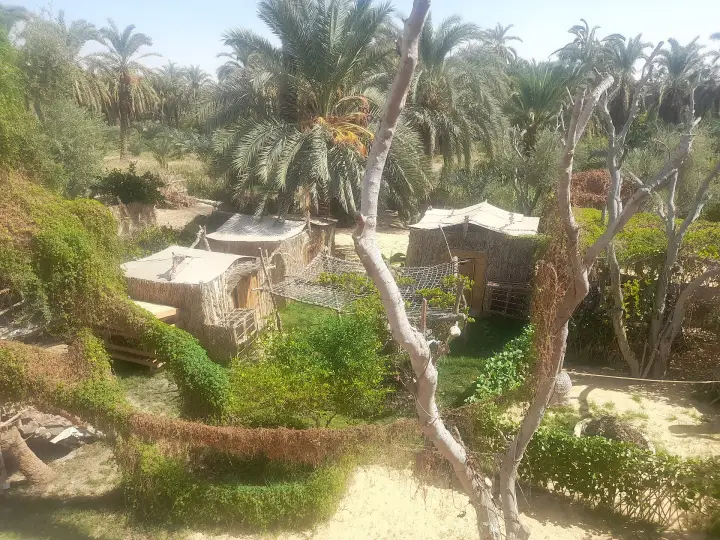
4 days, 3 nights
Siwa in 4 Days: Eco-Lodge and a Night in the Great Sand SeaAbout US$495 to 825 per person for two travellers (the lodge level decides the price)
Check dates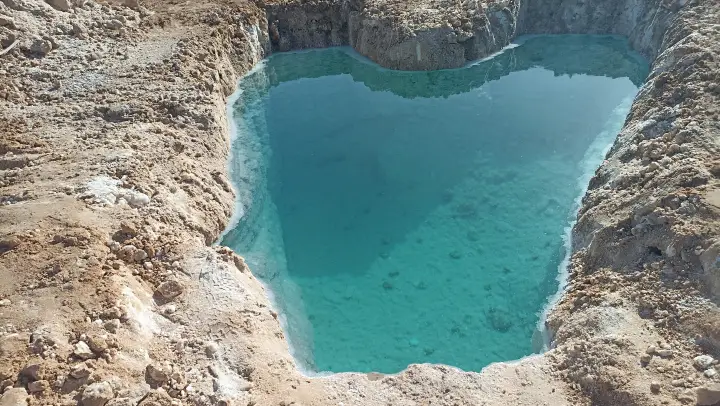
7 days, 6 nights
Siwa Winter Sun Week: 7 Slow Days, December to FebruaryOn request: mid-range, set by the lodge you choose and your dates
Check dates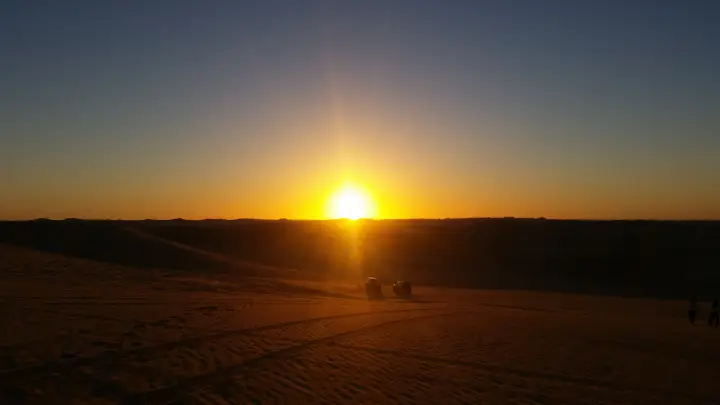
4 days, 3 nights
Siwa Christmas and New Year Trips from Cairo, 2026-27From about US$495 per person for two travellers, plus a holiday supplement quoted for your dates (prices updated November 2026)
Check dates