The short answer
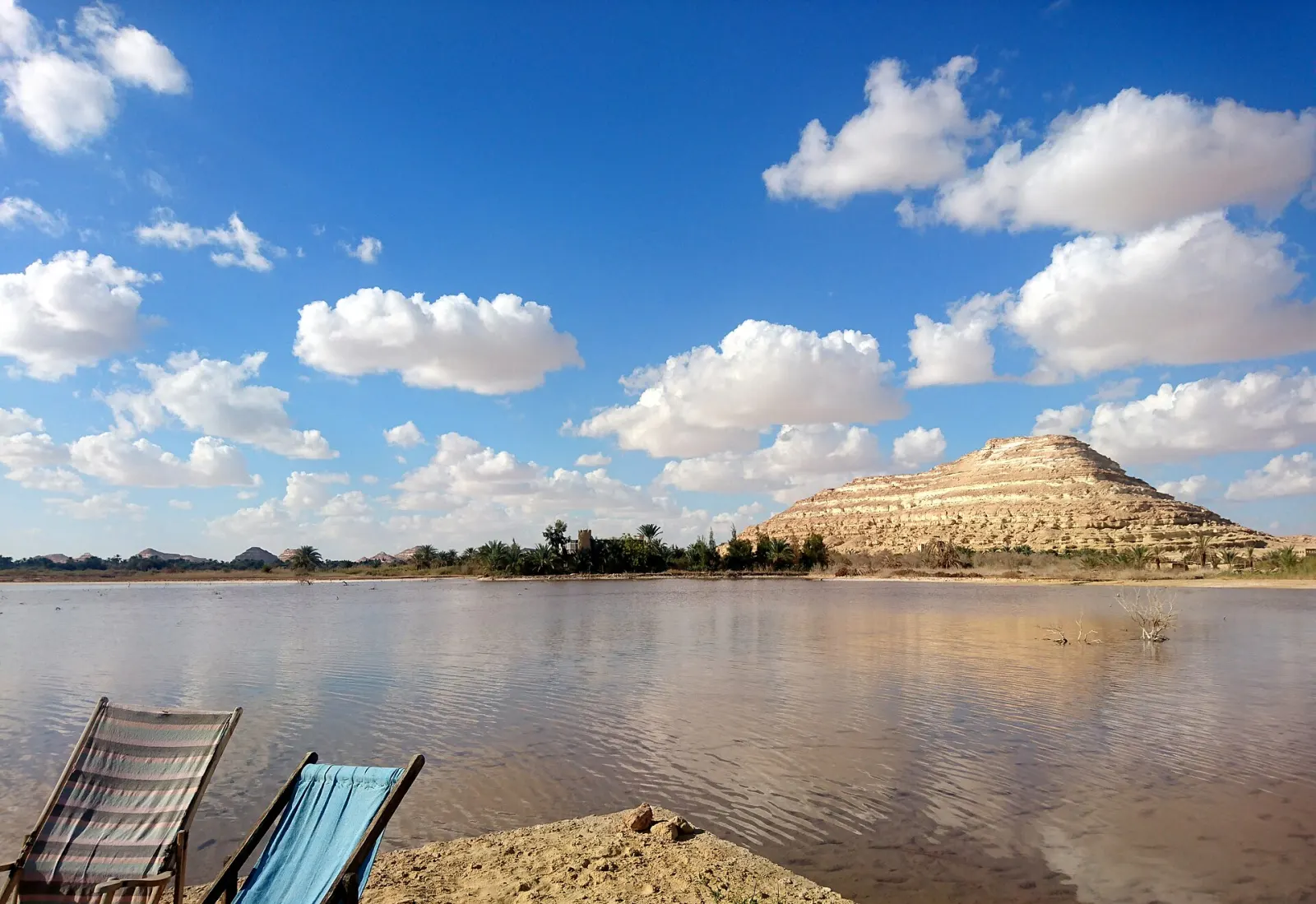
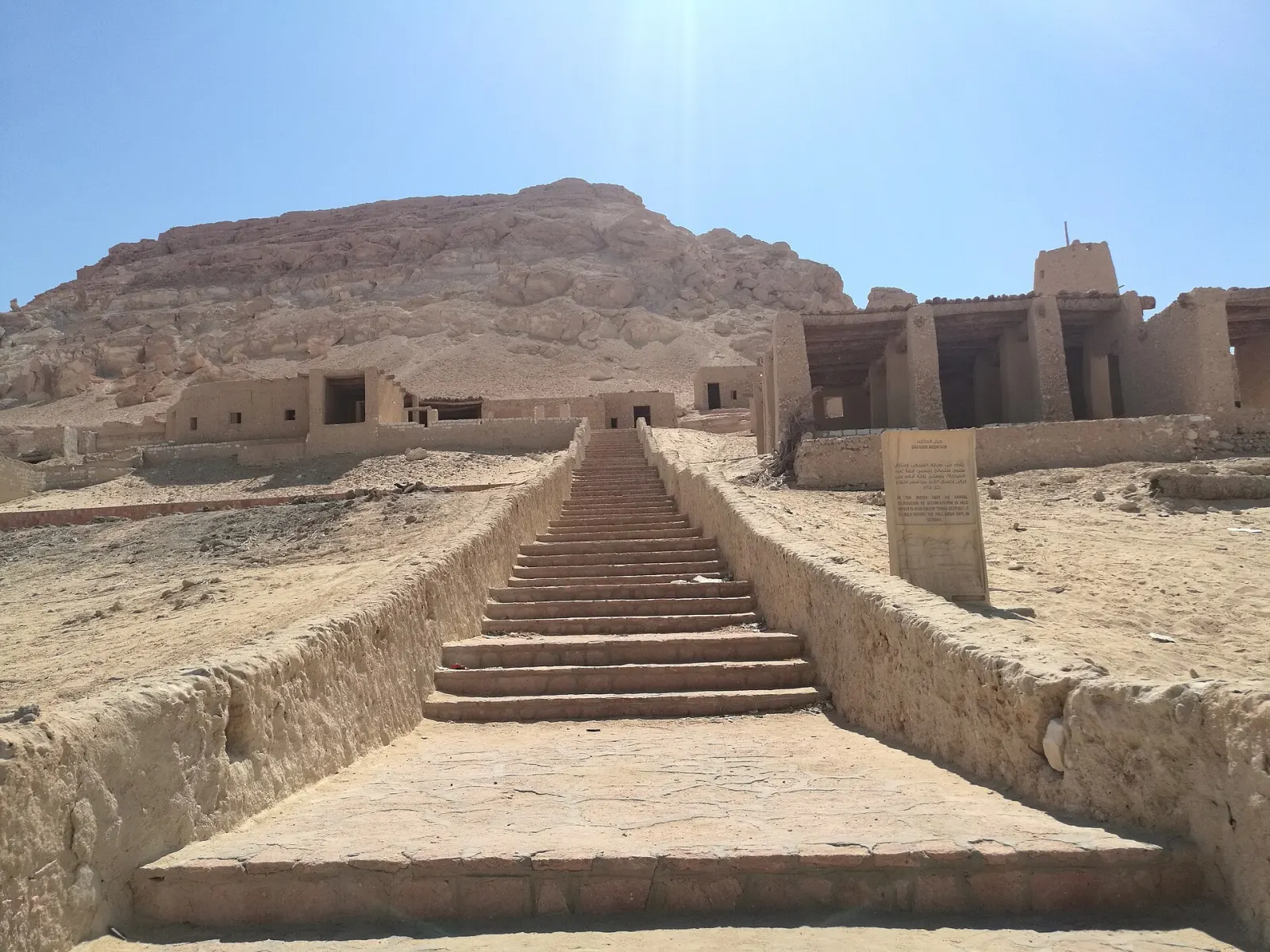
Siwa's sand baths are a summer folk treatment at Gebel Dakrour, about 4.5 km by road south-east of the market square. From July to mid-September an attendant buries you to the neck in sun-heated sand for 10 to 15 minutes after lunch, then you rest in a closed tent. Courses run 3 to 9 days. Skip it with heart problems, uncontrolled blood pressure or pregnancy.
Ask us on WhatsAppSand baths at a glance
Short answer: a summer-only folk treatment. You lie in a trench of sun-heated sand at the foot of Gebel Dakrour with only your head showing, sweat hard for 10 to 15 minutes, then cool down slowly in a closed tent. People on full courses come for aching joints; a single session is enough to try it.
| Details | |
|---|---|
| Where | Sand-bath camps at the foot of Gebel Dakrour, south-east edge of the oasis |
| From the market square | About 4.5 km by road, about 10 to 15 minutes by tuk-tuk or car |
| Season | July to mid-September; July and August are the core |
| Time of day | Early afternoon, roughly 13:00 to 16:00, when the sand is hottest |
| In the sand | 10 to 15 minutes, 30 at most |
| Afterwards | About 15 minutes in a closed tent, then rest with hot drinks |
| Course | 1 trial session, or 3 to 9 days for the full tradition |
| Not for | Heart disease, uncontrolled blood pressure, pregnancy, children |
How a session works
Short answer: the trench is dug in the morning so the sun can heat it, you are covered to the neck in the hottest surface sand after midday, and the cool-down in a sealed tent matters as much as the burial.
The most detailed public description of the method comes from a 2023 study of Siwan sand therapy in the journal Medicine, whose patients were recruited from six traditional healing centres. Its account runs like this:
- Morning: the trench. Around 10:00 the attendant digs a shallow trench about 20 to 40 cm deep, 80 cm wide and 1 to 2 m long, then leaves it open so the sun heats the sand.
- Early afternoon: the burial. Between about 13:00 and 16:00 you lie in the trench and are covered up to the neck with dry sand scraped from the surface, which the researchers measured at 75 to 82 °C. Your head stays out of the sand.
- In the sand. Sessions last about 10 to 15 minutes, or as long as you can tolerate, but no more than 30. Sand that gets damp from sweat is swapped for fresh hot sand.
- The tent. You are wrapped in a blanket straight away and moved into a closed tent beside the trench for around 15 minutes, so that your body cools slowly and no draught hits your skin.
- Hot drinks and rest. Attendants serve hot drinks (lemon, anise and liquorice are typical) and tell you to lie down until you feel normal. Drinking water straight after the session is traditionally avoided.
- The rest of the day. You wipe off the sand and change your clothes once your sweat has dried, wash only your face and hands with warm water, and avoid fans and air conditioning. On the last day of a multi-day course, the healer often finishes with an olive-oil massage.
A news report from Siwa in Youm7 (2 August 2026, in Arabic) adds the local rules that people on a course follow: wear heavier clothes than the weather suggests, stay out of cold air, and skip bathing and iced drinks during the course and for three days after it.
When to go
Short answer: a day in July or August, with the session after lunch. June and September are possible at the edges; from October to May there is no sand bath season.
Season dates vary between sources because they depend on the heat, not the calendar. Youm7 gives 1 July to mid-September for 2026, with July and August preferred. The 2023 study gives the season as mid-June to the end of the first week of September, and a trial registered on ClinicalTrials.gov (checked 17 November 2026) treated patients from the end of May to the first half of September. The safest plan is July or August.
| Month | Sand baths? | Sunset on the 15th |
|---|---|---|
| June | Some years, from mid or late June | About 20:18 |
| July | Yes, peak | About 20:19 |
| August | Yes, peak | About 19:59 |
| September | First half only | About 19:24 |
Monthly temperatures are on our Siwa weather page. Sunset times for 2027 are from the sunrise-sunset.org API for Siwa (checked 17 November 2026), converted to Egypt summer time. Solar noon in mid-July falls at about 13:24 local time, which is why sessions start after lunch rather than at midday.
Eclipse note. On 2 August 2027 totality over Siwa town starts at 12:42 and the partial phase lasts until about 14:08, overlapping the usual sand-bath window. Do not plan a session that day; book it for the days before or after. See the 2027 eclipse in Siwa.
Getting there from the market square
Short answer: a short tuk-tuk or car ride south-east along the Dakrour road. Do not walk or cycle there in the early afternoon in July.
Public OSRM routing gives about 4.5 km by road from the market square below Shali to the foot of the ridge, under 10 minutes of driving (checked 17 November 2026). The last stretch to the camps is sand and gravel.
| Way to go | Time | Advice for a sand-bath day |
|---|---|---|
| Tuk-tuk | 10 to 15 min | Fine; agree the fare and a pick-up time, as you will want a ride back while still drained |
| Car with driver | About 10 min | Best for families or a multi-day course; the driver waits while you rest |
| Bicycle | 25 to 35 min | Only in the cool hours; do not pedal home after a session |
| On foot | About 1 hour | Not sensible in summer heat |
More distances are in getting around Siwa and the Siwa map. Siwa itself is about 750 km from Cairo by road: about 9 hours of driving, or about 10 hours with stops; how to get to Siwa covers the routes.
One session or a full course?
Short answer: one session tells you whether you like it. A course of 3 to 9 days is what people with joint pain come for, and it shapes your whole stay.
| Single trial | Full course | |
|---|---|---|
| Who does it | Curious travellers | People with rheumatism or back pain |
| Length | 1 afternoon | 3 to 9 days, one session a day (Youm7, 2026) |
| Where you sleep | Any lodge in town | In town, or lodging the treatment centre arranges |
| Daily routine | Session, rest, then a normal evening | Session, rest, early night; no cold water, fans or air conditioning |
| Rest of your trip | Barely affected | Little else fits; no swimming or long drives during the course |
How many days helps most is unsettled: in the 2023 Siwa trial, 24 people with rheumatoid arthritis did 3 or 5 days, both groups reported less pain, and the difference between them was not statistically significant.
Does it work? What the evidence says
Short answer: the research is small: a handful of short trials with few patients. It is a traditional experience, not a substitute for treatment.
A 2019 systematic review of hot sand baths in Complementary Therapies in Medicine found only three eligible trials (two in rheumatoid arthritis, one in chronic lung disease). The authors said no conclusions on clinical efficacy could be drawn, though very limited evidence hinted at better symptoms and function. The 2023 Siwa study compared two course lengths and had no group that skipped the sand. Keep taking any prescribed medicine and tell your doctor if you plan a multi-day course.
Who should skip it
Short answer: anyone whose heart, circulation or temperature control is under strain, plus pregnant women and children.
The ClinicalTrials.gov study excluded people with uncontrolled high blood pressure (180/100 mmHg or above), uncontrolled diabetes, coronary artery disease, a bleeding disorder or a kidney transplant, and pregnant women. Those are a sensible minimum for travellers too. The NHS (checked 17 November 2026) names children, older people and people with long-term conditions such as diabetes or heart problems as most at risk from heat.
Know the warning signs. The NHS lists dizziness, headache, nausea, cramps, intense thirst and pale, clammy skin as signs of heat exhaustion. Hot skin that has stopped sweating, confusion or a racing heart point to heatstroke, which is an emergency. If any of these appear, ask to be dug out at once and cool down in the shade with fluids, whatever the tradition says. Siwa has a public hospital for basic care; serious cases go to Marsa Matruh. Read health and pharmacies in Siwa.
Families and accessibility
Children should not be buried: they overheat faster and cannot easily say when they have had enough. The camps sit on flat sand reachable by car, so people with limited mobility can visit, but getting into a trench means lying on the ground and being helped up again, and the tent cool-down happens at floor level. Tell us about any mobility needs and we will check what the attendant can manage.
What it costs
Short answer: a single session is a modest cash payment; a multi-day course costs more because it usually bundles a room, meals and transport. We confirm current prices for your dates.
Each camp sets its own prices, in Egyptian pounds, and they change every season. Youm7's August 2026 report describes packages bundling treatment, accommodation, meals and transport but publishes no prices; older guidebook figures are out of date. Ask us for current prices.
| What you pay for | Notes |
|---|---|
| Trial session | Burial, tent rest and hot drinks |
| Multi-day course | Per day or per package; may include a room, meals and the final massage |
| Transport | Tuk-tuk or car from town, both ways |
| Tips | Customary for the attendant, in cash |
Combining it with a summer trip
Short answer: build the day around the session: water first thing, sand after lunch, the ridge or a lake at sunset.
- Before 10:00: swim at Cleopatra Spring or float in the salt lakes. Do not swim again after your session that day.
- 13:00 to 16:00: the sand bath and tent rest, then a slow ride back to your lodge.
- After 19:00: if you feel fine, watch the sunset from Gebel Dakrour itself or at Fatnas; evenings in Siwa compares the options.
For a whole summer stay, read Siwa in summer and the packing list.
Mistakes to avoid
- Coming out of season. In October the ridge and the springs are lovely, but nobody runs sand baths.
- Starting dehydrated. Drink steadily through the morning; you lose a lot of sweat in a few minutes.
- Pushing for longer. The first session should be the shortest. Twenty minutes is not a target.
- Going straight into air conditioning. The sudden chill is what the tent is meant to prevent; let your body cool slowly.
- Planning a long drive the same day. Do not schedule a Cairo transfer or a desert safari afterwards.
- Forgetting spare clothes. Bring loose cotton clothes, a towel and a hat for the ride home. Our what to wear guide covers modest dress at the camps.
- Photographing other bathers. People are lying half-dressed in the sand; ask before any photo and see Siwa etiquette.
Plan a sand bath
Short answer: send us your dates and whether you want one session or a full course, and we will arrange a trusted attendant and plan the rest of the day around the heat.
Our Siwa in 3 days from Cairo and 4-day eco-lodge and desert camp trips run in July and August too; ask whether a trial session can be added to your dates. Contact us with your dates, or browse all tours. We will tell you honestly if the sand will not be hot enough that week.
Questions people ask
When is the sand bath season in Siwa?+
July and August are the core months. Egyptian press reports in August 2026 gave a season of 1 July to mid-September; some years it starts in late June. From October to May the sand does not get hot enough.
How hot is the sand?+
In a published Siwa study, surface sand measured 75 to 82 °C and sand 10 to 20 cm down 50 to 60 °C, with air at 40 to 45 °C. Attendants use the hot surface sand to cover you.
How long is a session?+
About 10 to 15 minutes in the sand, adjusted to what you can tolerate and never more than 30, then around 15 minutes wrapped in a blanket in a closed tent and a rest with hot drinks.
Can I try just one session?+
Yes. A single trial in the early afternoon shows whether you like it; keep the rest of the day light. Ask us to arrange it when you book.
Does it actually work?+
The evidence is thin. A 2019 systematic review found only three small trials and said no conclusions could be drawn; a 2023 Siwa trial of 24 patients reported less pain after 3 and 5 days. Treat it as a tradition, not as medicine.
Who should not do it?+
Anyone with heart disease, uncontrolled high blood pressure, uncontrolled diabetes, a bleeding disorder or a kidney transplant, pregnant women and children. Ask your doctor first if you take regular medication.
Can I shower afterwards?+
Tradition says no: no bathing, cold air, fans or air conditioning during the course, only warm water on the face and hands. If you feel faint or sick, though, cooling down comes first.
Go with us
Trips that include this
3 days, 2 nights
Siwa Oasis in 3 Days from Cairo (Private Trip)About US$420 to 650 per person for two travellers
Check dates
4 days, 3 nights
Siwa in 4 Days: Eco-Lodge and a Night in the Great Sand SeaAbout US$495 to 825 per person for two travellers (the lodge level decides the price)
Check dates