The short answer
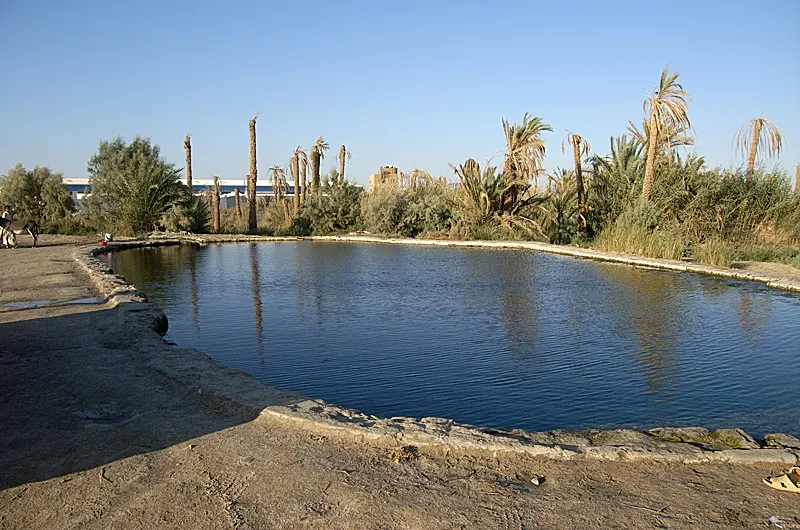
Abu Shuruf is a deep, clear spring pool in a village on Lake Zeitoun, about 27 to 34 km by road east of Siwa's market square. Zeitoun, at the lake's far end, has a ruined 19th-century village partly built over a Roman-era cemetery. Allow a half-day by car or 4x4 and leave by 08:00; ask us about permits.
Ask us on WhatsAppThe eastern oasis at a glance
Short answer: Abu Shuruf is for a swim and a short walk to a Roman-era building; Zeitoun is for empty ruins at the end of a salt lake. Together they make a half-day, best started early.
| Abu Shuruf | Zeitoun | |
|---|---|---|
| From the market square | 21.9 km straight line, 27 to 34 km by road | About 25 km straight line, 30 to 38 km by road |
| Drive each way | 30 to 45 min | 45 to 60 min |
| What you see | Spring basin in a living village; a Roman-era stone building | Abandoned Senussi village; buried remains of a large ancient town |
| Time on site | 1 to 1.5 hours with a swim | 45 min to 1.5 hours |
| Surface | Short walk from the road | Sand, salt crust and rubble |
| Shade | Palms around the pool | Almost none |
| Facilities | A small tea shelter by the pool | None |
Distances and drive times come from our Siwa map, measured on OpenStreetMap. Guidebooks print anything from 25 to 40 km for the same places; German Wikivoyage, for example, puts Abu Shuruf about 40 km south-east of Siwa (checked 17 November 2026). The road figure depends on the track your driver uses.
How the east of the oasis fits together
Short answer: East of Aghurmi the depression widens to almost 20 km, and the largest salt lake, Zeitoun, fills much of it. Fresh springs rise on its north-eastern shore, and that is where the villages sit.
A 2009 survey by a University of Cologne team, published by the University of Bonn (Heinzelmann and Buess, 2011), lays out the area:
- The lake basin runs for about 22 km, but its larger western part has dried to a hard salt crust. Open water survives mainly at the eastern end, about 10 km long and 2 km wide, and shrinks and grows with the seasons.
- Three ancient settlements line the shore about 4.5 km apart: al-Qurayshat in the north, Abu Shuruf in the middle and al-Zaytun (Zeitoun) in the south.
- Each ancient town covered 10 to 20 hectares, with its cemetery 1 to 2 km away. Zeitoun, at about 20 hectares, was the largest.
Egyptian Geographic puts Lake Zeitoun at about 5,760 feddans, roughly 24 km², the largest of the four main lakes it lists. For how it compares with the lakes near town, see Lake Siwa and the salt lakes.
Abu Shuruf: the spring
Short answer: A large, clean spring pool about 200 m south of the road, inside a small village. Its ancient stone basin is deep, so it suits confident swimmers.
Abu Shuruf is a working village, not a resort. German Wikivoyage records 630 residents at the 2006 census, an old quarter to the west and a newer one to the south-east, and a mineral-water plant at the northern edge. The pool lies about 200 m south of the road, with a small shelter serving tea, coffee and shisha just to its west.
The spring has been used since antiquity. The Bonn report notes that the eastern springs were captured in large basins about 5 m deep, which fed canals to palm and olive groves; Abu Shuruf is the best-preserved example. That depth is why the water looks so clear, and why children and weak swimmers need care.
No water temperature has been published for this pool, so ask us what to expect if you are going in midwinter. To compare it with the other swimming spots, see Siwa's springs and Cleopatra Spring.
Abu Shuruf: the Roman-era building
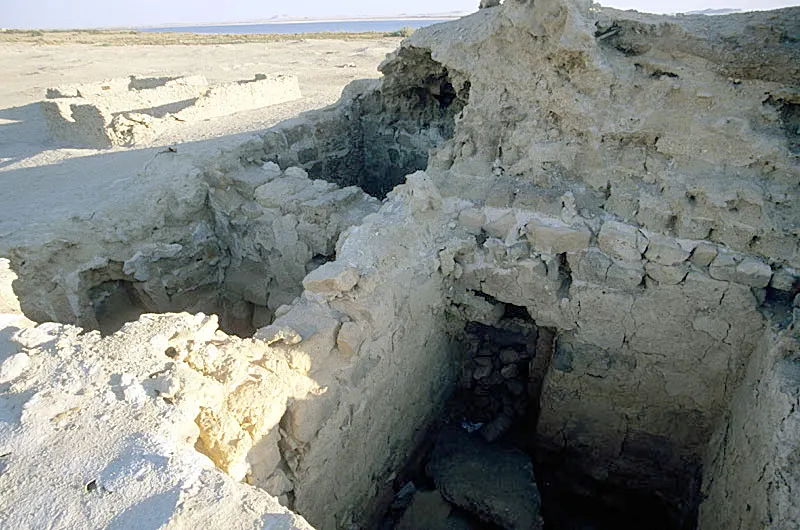
Short answer: A square limestone building near the spring, from between the 1st century BC and the early 3rd century AD. It was long called a temple; the latest survey thinks it was a house.
The building measures about 10.4 by 9.9 m and faces west to east. A wide staircase in one corner led to an upper floor of mud brick, of which only stubs survive. The Egyptian archaeologist Ahmed Fakhry, who visited Siwa regularly from 1933, took it for a tomb-temple; the Cologne team who re-examined it in spring 2009 read it as a large house, comparable to the tower houses of Roman-era towns in the Fayyum. Lower walls of other stone buildings, some still about 1 m high, stand to the north, and traces of a cemetery lie about 100 m to the south (all from the German Wikivoyage entry and the Bonn report). There are no signs or ticket office; you walk across open ground.
Zeitoun: what you are actually looking at
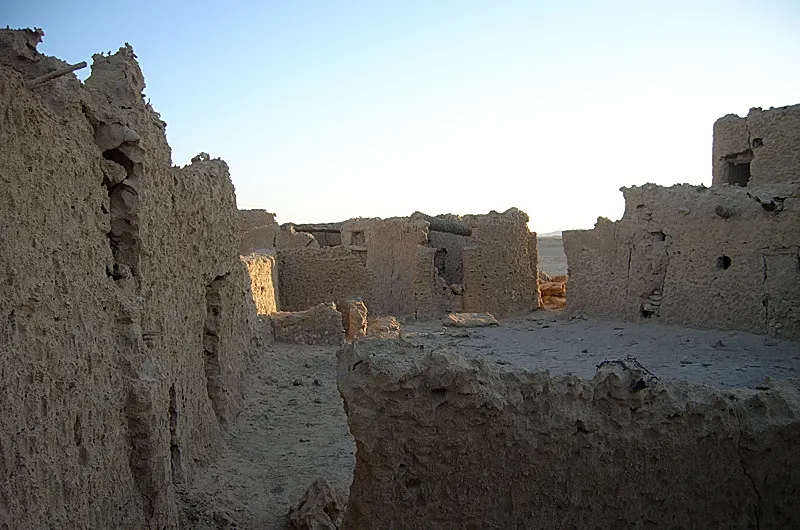
Short answer: Two layers. A ruined mud-brick village from the 19th century, and around it the buried remains of the biggest ancient town on the lake.
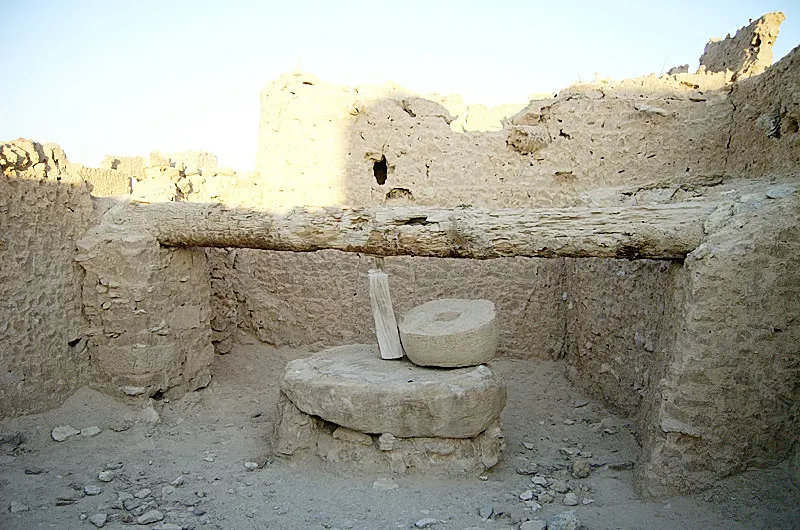
- The abandoned village. A 19th-century village of the Senussi religious order, standing on part of the ancient cemetery, with old tomb blocks reused in its walls. It is built of the salt-and-mud kershef that also made old Shali, and it crumbles the same way.
- The ancient town. About 1 km north-west of the village, on a rock plateau 3 to 5 m above the lake. Little shows above ground, because sand and a hard salt crust cover it, but the bumpy surface suggests house walls still standing 2 to 3 m high underneath.
- The tombs. The best-preserved tomb is a limestone block building, 8.8 by 4.2 m and 3.2 m high, with sloping walls and a doorway once carved with a winged sun disc. Fakhry also called this a temple; the 2009 team identified it as a tomb, with its closest parallels in late Ptolemaic and Roman tombs at Hermopolis in Middle Egypt.
Why it matters: in antiquity Zeitoun was the last stop on the caravan route east towards Bahariya, and the Bonn authors suggest these lakeside towns may be the "towns of Ammon" that Diodorus says Alexander the Great passed a day before reaching the Oracle Temple. Siwa's wealth in the Roman period came from dates, olives and olive oil; see Siwa's history.
A half-day plan
| Time | What |
|---|---|
| 08:00 | Leave the market square by car or 4x4 |
| 08:40 | Abu Shuruf: swim while the pool is quiet |
| 09:45 | Walk over to the Roman-era building |
| 10:15 | Drive on to Zeitoun |
| 10:45 | Walk the village edge and the plateau; keep to open ground |
| 11:45 | Drive back; town by about 12:45 for lunch |
In winter you can flip it: Zeitoun in the low afternoon light, then a short swim, back for dusk. In summer, keep to the morning plan and cut Zeitoun short, because there is no shade there.
When to go
Short answer: October to April for walking the ruins; early mornings all year for the pool. Avoid summer middays.
The eastern sites are exposed and the ruins reflect heat, so the season matters more here than in town. For month-by-month temperatures, see Siwa weather. Local families use the spring at weekends, so weekday mornings are usually quieter.
Costs and what to bring
| Item | Cost | Notes |
|---|---|---|
| Entry to the spring or ruins | No published ticket | None listed in the sources on this page (checked 17 November 2026) |
| Car or 4x4 with driver, half-day | Ask us | Depends on vehicle, season and whether you add Zeitoun |
| Tea at the spring shelter | Small; pay in cash | Buy a drink if you sit there |
| Permit for the far east | Ask us | We check before each trip; see permits and checkpoints |
Bring: passport, 2 litres of water each, cash in small notes, a towel, swimwear to wear under a T-shirt and shorts, sandals for the pool and closed shoes for the ruins, a hat, and a bag for your rubbish. There is nothing to buy at Zeitoun. See the full packing list and what to wear.
Families and accessibility
- Children: good for confident swimmers. The basin is deep, with no lifeguard or shallow end, so bring armbands for small children and stay within reach of non-swimmers.
- Limited mobility: the pool is about 200 m on foot from the road. Zeitoun is not suitable: there are no paths, the ground is uneven salt crust and sand, and seeing anything means scrambling.
- Toilets: none at Zeitoun. Use your lodge before leaving.
Mistakes to avoid
- Treating it as a bike ride. At 27 to 38 km by road each way, with sand at the end, it is not one. For cycling, see getting around Siwa.
- Climbing on walls. Kershef and old tomb blocks give way under weight, and the ancient town is unexcavated. Do not dig, collect pottery or move stones.
- Arriving at noon in summer. Zeitoun has no shade at all.
- Photographing people at the spring. Abu Shuruf is a village. Ask before taking pictures of anyone, and never of women; see our photography spots.
- Planning to drive on to Bahariya. The UK government (FCDO) advises against all but essential travel on the Bahariya to Siwa road, so we route via Cairo (gov.uk, updated 27 October 2026, checked 17 November 2026). More in is Siwa safe.
- Flying a drone. The UK government says not to import or use one in Egypt without prior Ministry of Defence permission (checked 17 November 2026).
What to combine it with
- Morning east, afternoon dunes: back for lunch, then the Great Sand Sea for sunset.
- Morning east, afternoon history: Gebel al-Mawta and Umm Ubayda, both close to town.
- Day 4 or 5: it fits the spare morning of our 5-day itinerary.
Ask for the eastern springs half-day on our Siwa oasis day tour or any of our Siwa trips, or contact us with your dates for the current price.
Where it is
Close-up: around Siwa town
- 1Shali and Siwa town
- 2Gebel al-Mawta
- 3Oracle Temple
- 4Umm Ubayda
- 5Cleopatra Spring
- 6Gebel Dakrour
- 7Fatnas
- 8Salt pools
- 9Adrère Amellal
- 10Shiatta (permit)
- 11Abu Shuruf
- 12Zeitoun
- 13Bir Wahed
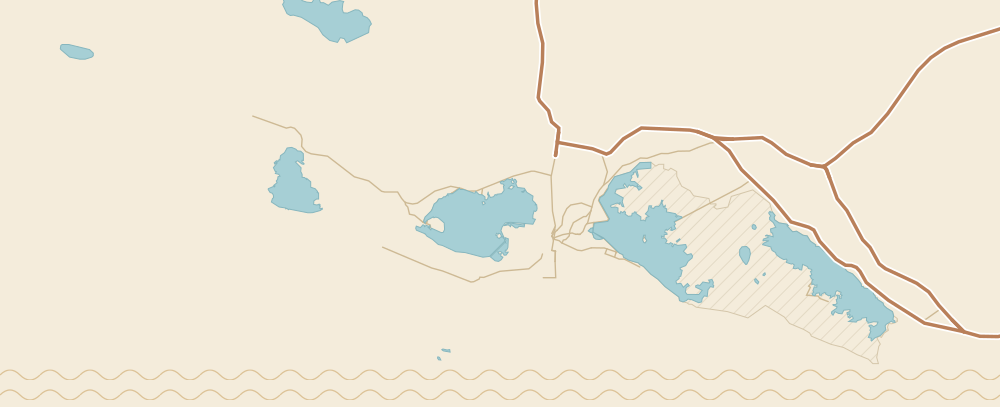
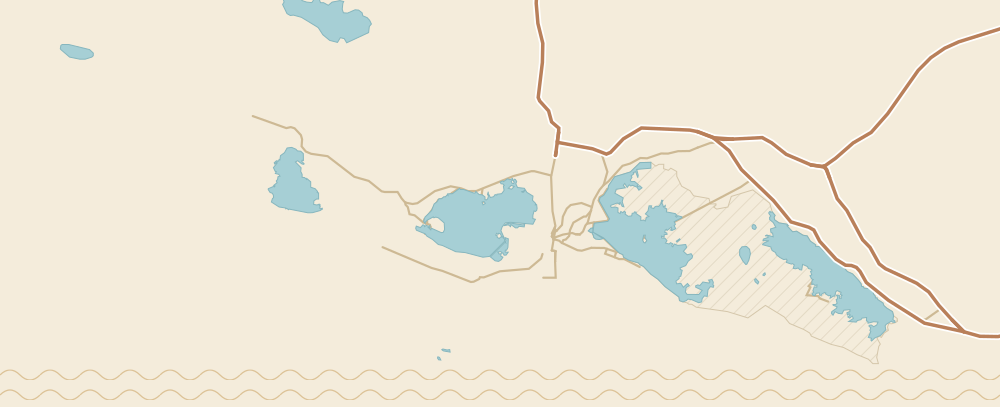
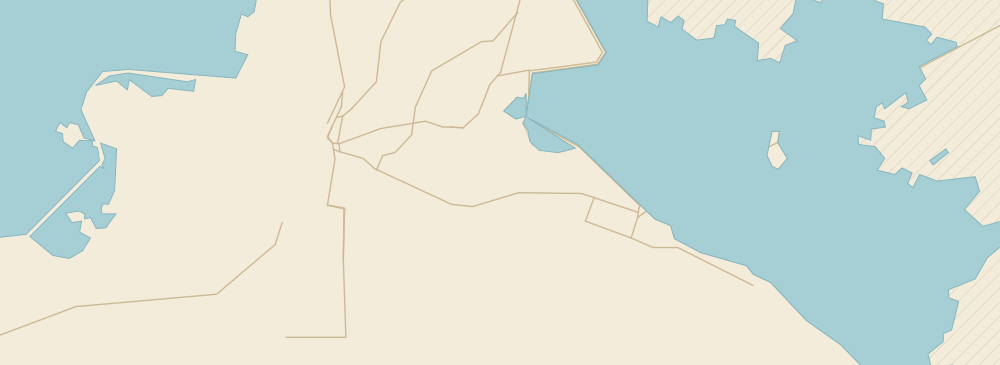
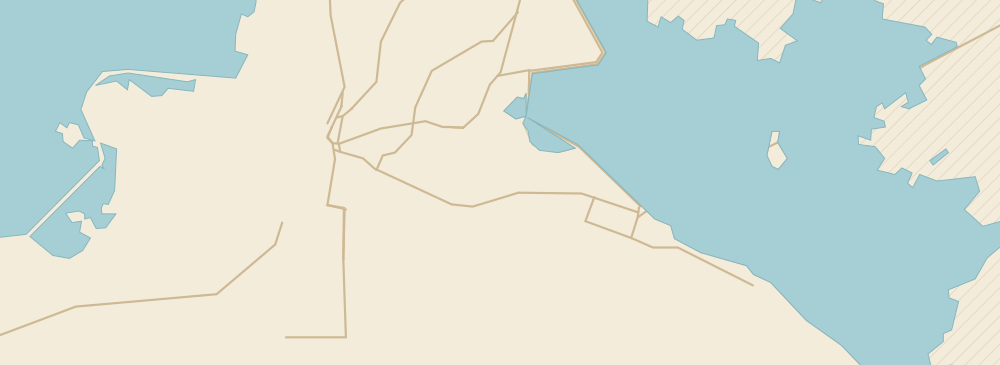
Lakes and roads drawn from OpenStreetMap; pin positions are approximate. The salt flats (hatched) dry out and flood with the seasons. Map data © OpenStreetMap contributors, ODbL.
Questions people ask
How far is Abu Shuruf from Siwa town?+
About 22 km in a straight line from the market square and 27 to 34 km by road, depending on which track is open. Allow 30 to 45 minutes each way by car.
Can you swim at Abu Shuruf?+
Yes, but the old basin is deep, about 5 m, and there is no lifeguard. Weak swimmers should stay at the edge. Swim in a T-shirt and shorts, and keep soap and sunscreen out of the water.
What is there to see at Zeitoun?+
A ruined village of the Senussi order from the 19th century, partly built over a Roman-era cemetery, plus the buried remains of a large ancient town on a low plateau by the lake. Walls are fragile, so look rather than climb.
Do I need a permit?+
Not for Siwa town. Rules for the far east of the oasis change, so we check with the authorities before your trip and carry any paperwork needed. Bring your passport.
Is there an entry fee?+
We know of no published ticket for either site. You pay for transport, and for a drink if you sit at the tea shelter by the spring. Ask us for the current car or 4x4 price.
Is it worth it on a short trip?+
On a 3-day trip, only if you have already seen the Oracle Temple, Cleopatra Spring and the sunset at Fatnas. On 4 days or more it is the best half-day for a quiet swim and empty ruins.
Can I combine it with a trip to Bahariya?+
No. The UK government (FCDO) advises against all but essential travel on the Bahariya to Siwa road, so we route via Cairo. Treat the east as a return trip from Siwa town.
Go with us
Trips that include this
3 days, 2 nights
Siwa Oasis in 3 Days from Cairo (Private Trip)About US$420 to 650 per person for two travellers
Check dates
About 8 hours
Siwa Oasis Day Tour (from Your Siwa Hotel)About US$65 to 80 per person for two travellers (about US$130 to 160 per car)
Check dates