The short answer
Siwa is a small, conservative oasis, so in town cover shoulders and knees, men and women alike. At public springs, swim in shorts and a T-shirt or leggings, not a bikini; lodge pools are more relaxed. In the desert wear long sleeves, a brimmed hat, a scarf and sunglasses by day, and from November to March a proper jacket at night.
Ask us on WhatsAppThe quick rules
Short answer: dress modestly wherever Siwans live and work, swim covered at public springs, and pack for a 14 to 17 °C swing between afternoon and night.
| Place | Distance from the market square | Wear |
|---|---|---|
| Market, Shali and town lanes | In the centre | Loose trousers or long skirt, sleeves over the shoulders |
| Gebel al-Mawta | 1 km north | Town clothes, closed shoes for the rocky slope, a hat |
| Cleopatra Spring | 3.4 km east | Swimsuit under shorts and a T-shirt, flip-flops, towel |
| Oracle Temple of Amun | 2.5 km east by road, Aghurmi | Town clothes, hat, shoes with grip for the climb |
| Fatnas Island | About 4.5 km west | Town clothes, a warm top for the ride back after sunset |
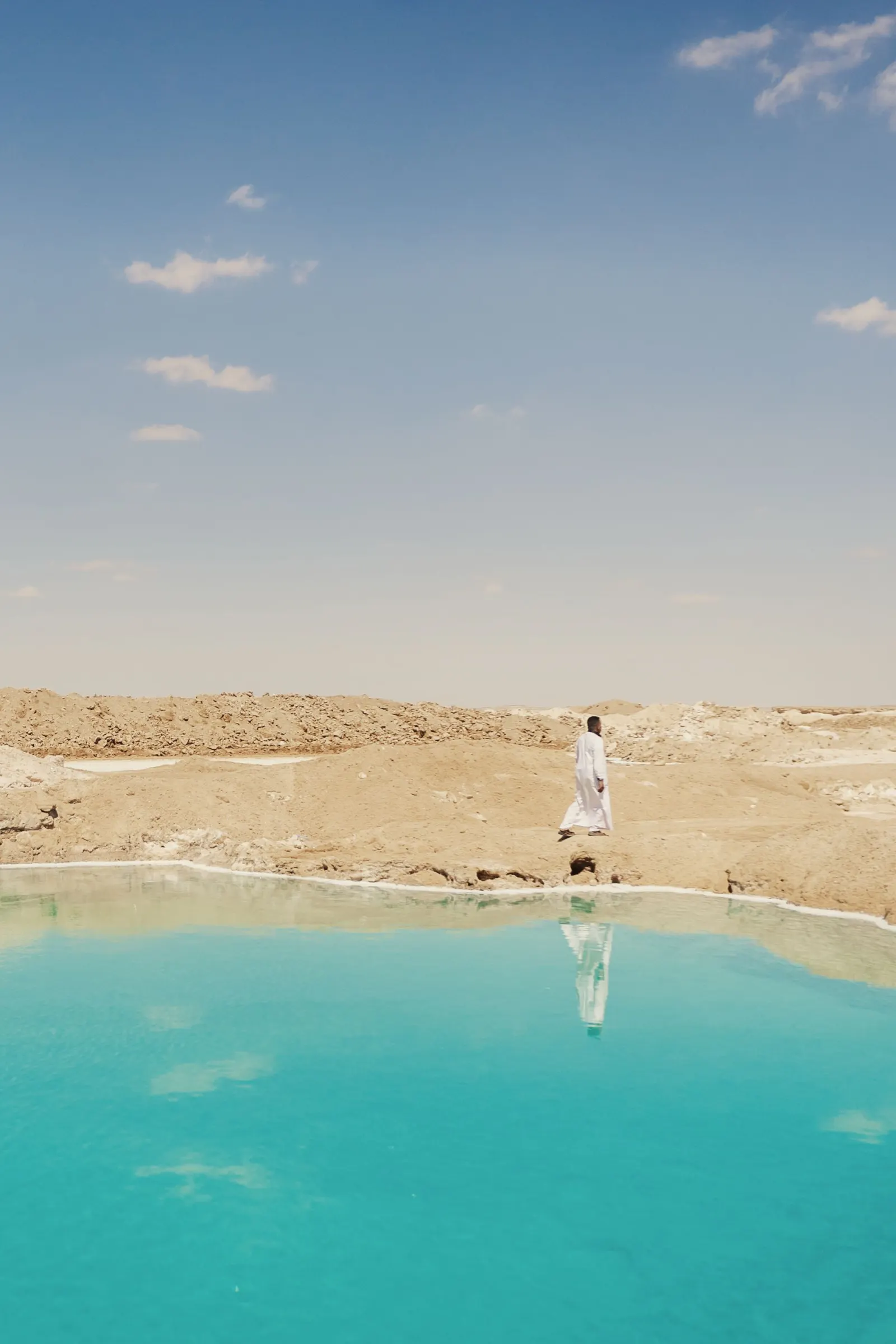
| Salt lakes | About 15 km out | An old swimsuit and T-shirt you do not mind ruining, water shoes |
| Great Sand Sea | By 4x4 only | Long sleeves, brimmed hat, scarf, sunglasses; a jacket for after dark |
| Lodge pools and rooms | Varies | What you like; check the lodge's own rules |
Distances come from our guides to each place. The sights near town are close enough that you go out in the clothes you wear all day, so pick one outfit that works for the market, the spring and the ride home.
Typical values in Siwa town. Nights out in the dunes are a few degrees colder; individual days vary.
Why modest dress matters here
Short answer: Siwa is rural, conservative and small, which is exactly where official advice asks visitors to cover up.
The UK government's Egypt advice asks visitors to "dress modestly, especially in rural areas, mosques and souqs" (FCDO safety and security, checked 17 November 2026). Siwa is all three at once. About 36,500 people live in Siwa district, the oasis and its villages (official CAPMAS estimate for mid-2023; the 2017 census counted 28,088), and families have known each other for generations, so a visitor in a vest top is noticed.
Many Siwan women wear the tarfutet, an all-enveloping shawl whose cloth, Wikipedia notes, comes from Kirdasa in Giza Governorate (Wikipedia, Siwa Oasis, checked 17 November 2026). Nobody expects a visitor to copy that. What people do notice is skin: bare shoulders, thighs and midriffs. Tight clothing draws more attention than a loose shirt that shows a forearm.
For men the line is simpler: long trousers in town, and no sleeveless tops in public. Knee-length shorts are fine at the lodge and in the desert.
The Siwa etiquette guide covers photography, alcohol and visiting homes. Women travelling alone will find more in Siwa for solo women travellers.
Fabric and colour for the sun
Short answer: loose, light-coloured and tightly woven. Long sleeves are cooler than sunburn.
Siwa's mean afternoon high reaches 37.5 °C in June and July in the WMO 1961-1990 normals, and recent decades run nearer 39 °C (figures on Siwa weather). Two health bodies point the same way for clothes:
- The NHS advises light-coloured, loose clothing and keeping out of the sun between 11am and 3pm to avoid heat exhaustion (NHS heat exhaustion and heatstroke, checked 17 November 2026).
- The World Health Organization says clothing is the best barrier against UV, that tightly woven or knitted fabric lets less through, and that a wide brim shields eyes, ears, face and the back of the neck (WHO, protecting against skin cancer, checked 17 November 2026).
Put together: a pale, loose shirt with a close weave, rather than a thin T-shirt you can see light through. Linen and cotton blends breathe well in town. Quick-dry synthetics suit spring days better: the WHO says polyester and lycra generally block more UV than cotton, especially when wet.
For eyes, the WHO recommends wraparound sunglasses blocking 100% of UV-A and UV-B, marked "UV400", and warns that a dark lens or a high price says nothing about protection. The salt crust around the lakes and the pale dunes throw a lot of glare.
Clothes by month
Short answer: winter is about warmth after dark, summer about shade by day, and the months between need both.
| Months | Town figures (WMO normals) | Daytime | Evening and night |
|---|---|---|---|
| December to February | Highs 19.3 to 21.5 °C, lows 5.6 to 7.1 °C | Long sleeves, a light jumper in the morning | Fleece plus a warm jacket, hat, thick socks; more for a desert camp |
| March and April | Highs 24.5 to 29.9 °C, lows 10.1 to 13.7 °C | Light long sleeves, hat, scarf for dusty wind | A fleece or jumper |
| May to September | Highs 34.0 to 37.5 °C, lows 17.8 to 21.7 °C | Loose pale long sleeves, wide brim, neck cover | T-shirt and trousers; a thin layer for night drives |
| October and November | Highs 25.0 to 30.5 °C, lows 10.2 to 15.5 °C | Long sleeves, hat | A jumper in October, a fleece by late November |
All figures are from the WMO normals for the town station, set out on Siwa weather. The station sits among the palm groves; open desert loses heat faster after sunset, so on a dune night expect colder air than the table shows. Month pages such as Siwa in December and Siwa in July go into more detail.
At springs and salt pools
Short answer: keep a swimsuit on under your clothes, and treat one outfit as your swimming kit for the whole trip.
Public springs are shared with local men and boys, so you swim in shorts and a T-shirt over your swimsuit, or leggings and a long top. Change behind a sarong or in the car; do not count on a changing room. Siwa springs compares the pools.
Practical points that save clothes:
- Salt pools: brine dries white and stiff in fabric. Wear something old and dark, and rinse it in fresh water the same day.
- Sulphurous water such as Fatnas can leave a smell in fabric, so swim in something you will wash straight away.
- Water shoes protect your feet from the sharp crust at the edges of the salt pools.
- After dark: a wet T-shirt on a tuk-tuk or bike in winter is cold. Pack a dry top for the ride back.
In the desert
Short answer: cover skin against sun and sand by day, and dress for cold the moment the sun drops.
On a 4x4 trip into the Great Sand Sea you are in open sun for hours, sometimes with wind lifting sand. A cotton scarf wrapped over nose and mouth deals with blowing grit; sunglasses keep it out of your eyes. Light long trousers stop sunburn on the shins and are easier than shorts when you sit on hot sand.
If you stay out for sunset, the temperature falls fast. From November to March bring a fleece and a windproof layer even on a half-day trip, because the drive back runs after dark. For a night in camp, add a warm hat, gloves and clothes you can sleep in; camping in Siwa explains how a camp night works.
Closed trainers are fine on dunes. Sand gets in either way, so loose laces and socks you can shake out help. In summer the sand surface gets too hot for bare feet by midday.
Mosques, Ramadan and celebrations
- Mosques: do not enter unless invited. If you are, women cover their hair with the scarf they already carry, everyone covers arms and legs, and shoes come off at the door.
- Ramadan: the same code, kept more strictly. The FCDO notes that clothing below local standards can cause more offence during the holy month (FCDO safety and security, checked 17 November 2026). Dates and tips are in Siwa in Ramadan.
- Weddings and festivals: if you are invited, a clean, plain long outfit is right. Siwan women traditionally wore locally made silver ornaments to weddings, gradually replaced by gold once the road and television arrived, and embroidery still decorates their dresses, trousers and shawls, according to Wikipedia; Siwan crafts shows where to see the embroidery today.
Families and travellers with limited mobility
- Children: young children are not held to the adult code, but older girls and boys are more comfortable in long shorts and T-shirts in town. A swim shirt with sleeves saves arguments about sunscreen at the springs.
- Babies and toddlers: loose clothing and a brimmed hat; a pushchair is little use on sand and unpaved lanes, so bring a carrier.
- Limited mobility: Shali, the Oracle Temple and Gebel al-Mawta all have uneven or rocky ground. Firm soles and ankle support matter more than any clothing choice. Tell us before you book and we will suggest the easier sights.
What it costs
Nothing on this page needs special kit; most travellers pack from their own wardrobe. If you want to pick up a scarf, a light galabiya or sandals in Siwa, ask us where to buy and for current prices, which we do not publish here. The bigger cost decisions are your trip and lodge: see Siwa trip cost.
Mistakes to avoid
- Dressing for the lodge, then walking into town. Change before the market, not after the first stares.
- A bikini at a public spring. Put shorts and a T-shirt over it.
- Trusting a dark lens. Check for UV400 or 100% UV-A and UV-B protection.
- Thin cotton as sun cover. If light shows through it, so does UV.
- One jumper for a January desert night. Town nights average 5.6 °C; the dunes are colder.
- Swimming in your best clothes. Salt and sulphur mark fabric.
Before you pack
The full checklist, with luggage, gear, documents and health kit, is on the Siwa packing list. For the season, start with best time to visit Siwa. If you are joining the 3-day trip from Cairo or the overnight desert camp, contact us with your dates and we will tell you how cold the nights are likely to be.
Questions people ask
Do women need to cover their hair in Siwa?+
No. Foreign women are not expected to wear a headscarf. Clothes that cover shoulders and knees are what matters; carry a light scarf for sun, sand or an invited visit to a mosque.
Can I wear shorts in Siwa?+
At your lodge, on a desert trip and at a lodge pool, yes. In town and in the market, long trousers or a long skirt are the respectful choice for men and women.
What should I swim in at Cleopatra Spring?+
A swimsuit with shorts and a T-shirt over it, or leggings and a long top. Local men and boys use the public springs, and a bikini there draws unwanted attention.
How cold does it get at night?+
In town, January nights average 5.6 °C and the record low is -2.2 °C (WMO normals). Open desert cools faster than the palm groves, so a desert camp in winter needs a warm jacket, hat and sleeping bag.
What colour clothes are best in the heat?+
Light colours keep you cooler, as the NHS advises for heat. Tightly woven fabric blocks more UV, says the WHO, so a loose, close-weave long-sleeved shirt does both jobs.
What shoes do I need?+
Sandals for town and springs, water shoes for the sharp salt crust, and closed trainers or light boots for dunes, Shali's lanes and Gebel al-Mawta.
Is the dress code different in Ramadan?+
It is the same code, kept more carefully. The UK government notes that clothing below local standards may cause more offence during Ramadan.
Go with us
Trips that include this
3 days, 2 nights
Siwa Oasis in 3 Days from Cairo (Private Trip)About US$420 to 650 per person for two travellers
Check dates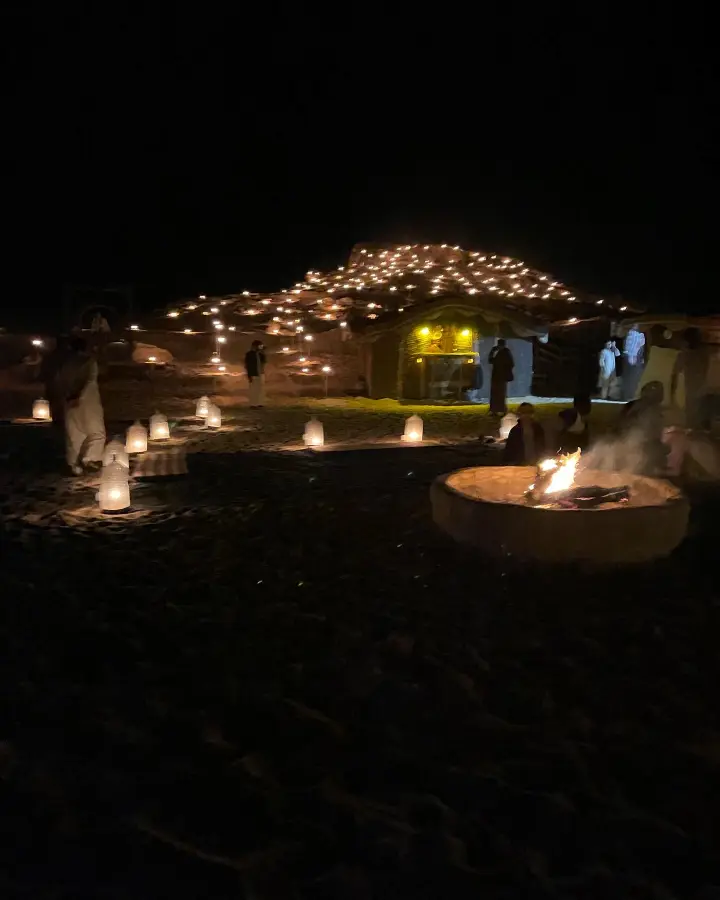
About 20 hours (afternoon to next late morning)
Overnight Desert Camp from Siwa (Private)About US$120 to 220 per person for two travellers
Check dates