The short answer
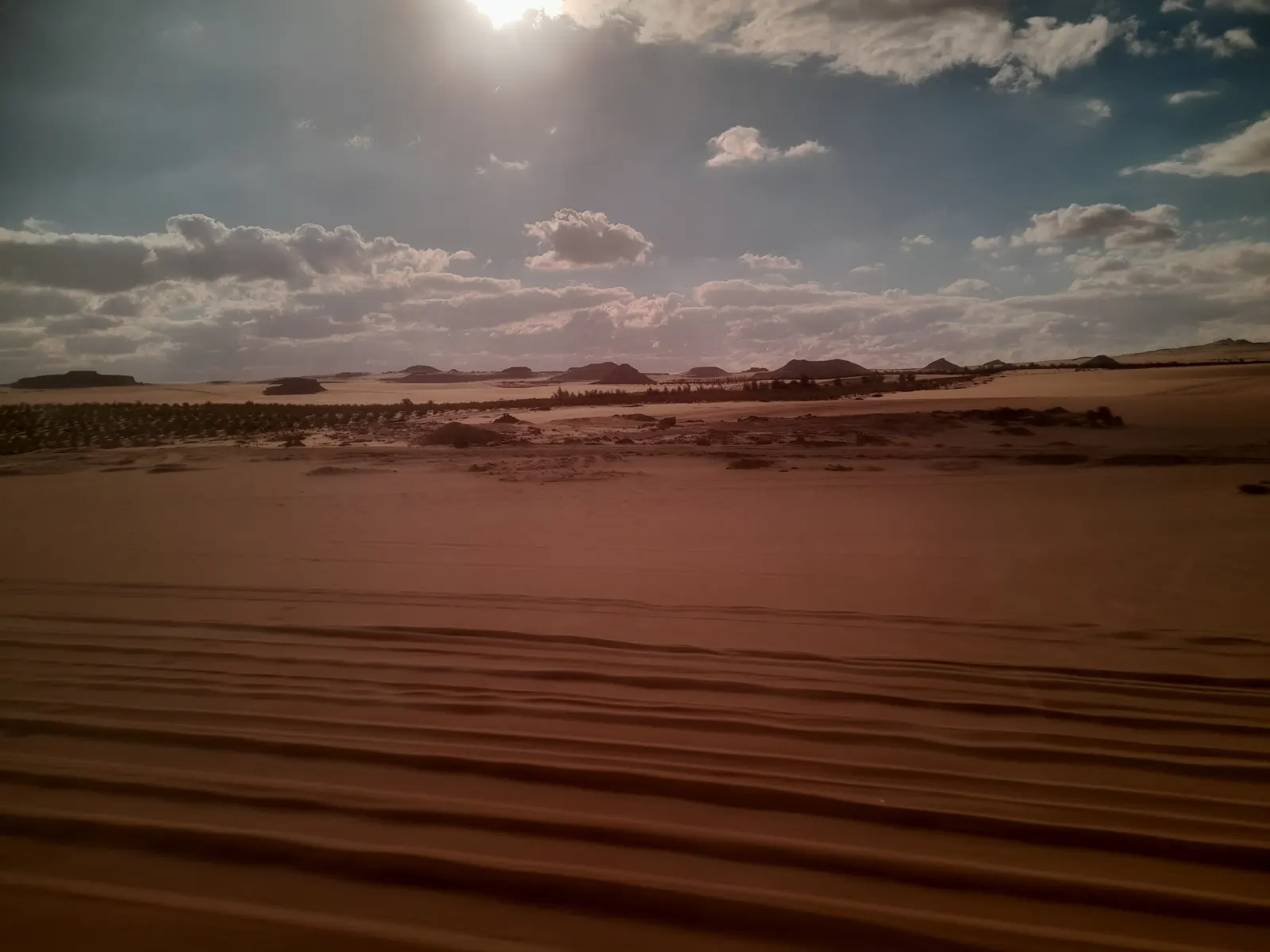
The Great Sand Sea is a dune field of about 72,000 km² that runs south from Siwa along the Libyan border. From Siwa you reach its edge in minutes by 4x4. A safari means dune driving, sandboarding, fossil shells, a soak at the Bir Wahed spring and sunset from a high ridge. You need a licensed operator and a desert permit.
Ask us on WhatsAppThe Great Sand Sea at a glance
Short answer: A 72,000 km² erg running south from Siwa for about 650 km along the Libyan border. Near Siwa you explore its northern rim by 4x4 on a half-day safari or an overnight camp: dune driving, sandboarding, fossils, a spring and sunset.
| Size | About 72,000 km² in Egypt and Libya |
| Length and width | About 650 km north to south, 300 km east to west |
| Dune pattern | Long ridges aligned roughly north to south |
| Distance from Siwa | Dunes begin a few kilometres south of town |
| How to visit | 4x4 with a licensed driver and guide |
| Classic safari | 14:00 to after sunset, about 5 hours |
| Overnight | Desert camp with dinner and stars |
| Permit | Ministry of Interior permit, arranged by the operator |
Figures from Wikipedia's Great Sand Sea entry (checked 17 November 2026), which adds that dunes blanket roughly 10% of Egypt's Western Desert and lie parallel to Libya's Calanshio Sand Sea, joining it in the north. Siwa town is about 50 km east of the Libyan border, which is closed to travellers.
What makes it special
Short answer: Scale and silence. Long parallel ridges run north to south across the horizon, with almost no plants, people or noise between them.
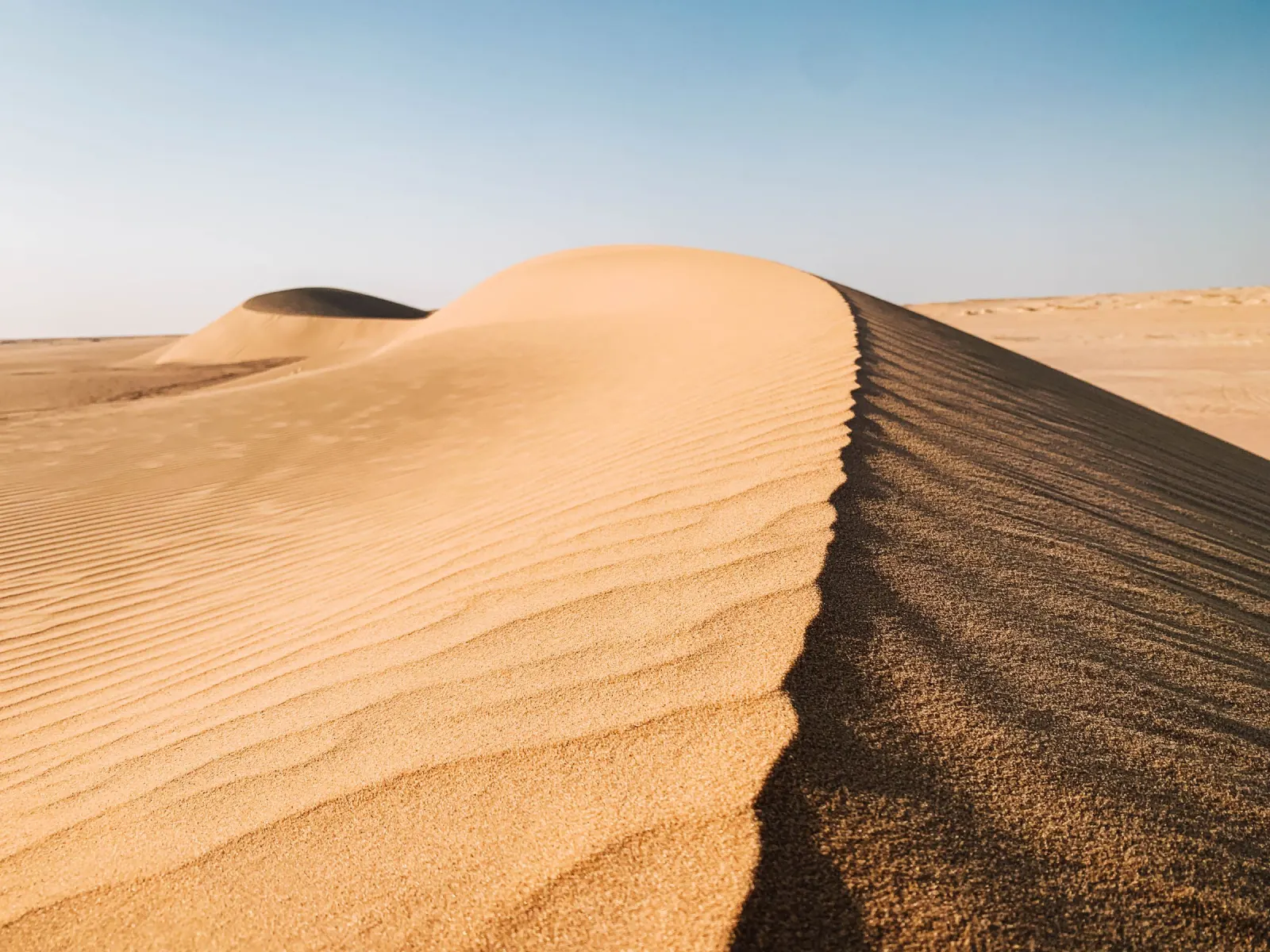
Wind shaped these ridges. A NASA Earth Observatory astronaut photograph (published 4 June 2012) shows linear dunes in its south-western part lying parallel to winds from the north, standing 20 to 30 m above the plains and spaced at a strikingly regular 1.5 to 2.5 km. From a ridge, that spacing reads like frozen ocean swell.
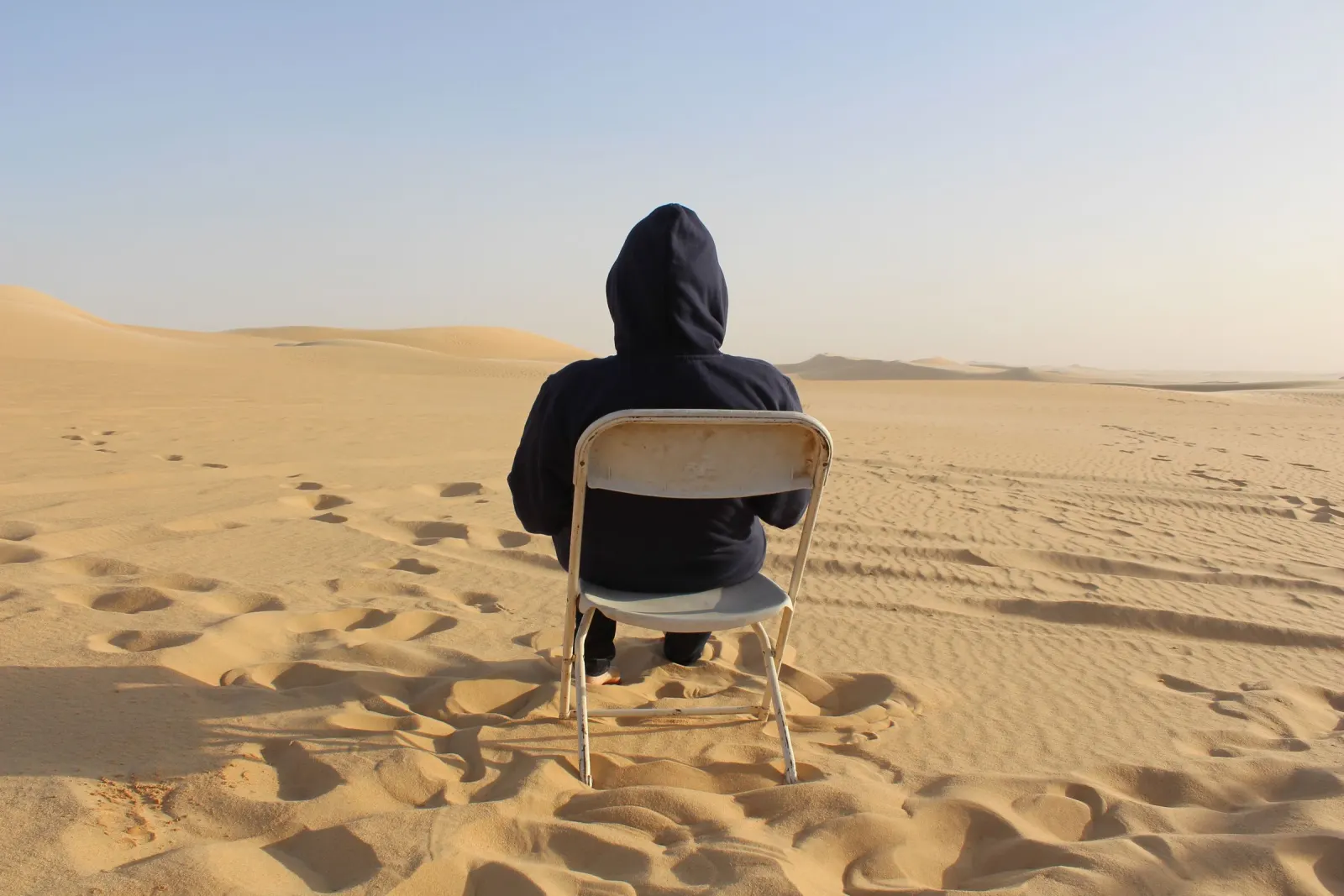
Near Siwa you see only the northern edge, which is plenty: sand walls rising straight off flat gravel and salt pans, with corridors of firmer ground between them.
In the remote south-west of Egypt, far from Siwa, lies the strewn field of Libyan Desert Glass, a natural silica glass about 29 million years old. A scarab on one of Tutankhamun's pectorals is carved from it (Wikipedia). It is not part of any Siwa itinerary.
The classic afternoon safari
Short answer: Leave at about 14:00 in a 4x4, ride the dunes, sandboard, swim at Bir Wahed, look for fossil shells and watch sunset from a high ridge, back by about 19:00.
- Into the dunes. Tyres are let down at the edge of the sand, a trick explorers worked out in the 1930s. Then come the climbs and steep drops.
- Sandboarding. On long, smooth faces. Boards are provided; see sandboarding.
- Fossil shells. Shells, sea urchins and corals left by a sea that covered this area tens of millions of years ago. Look, photograph, leave them.
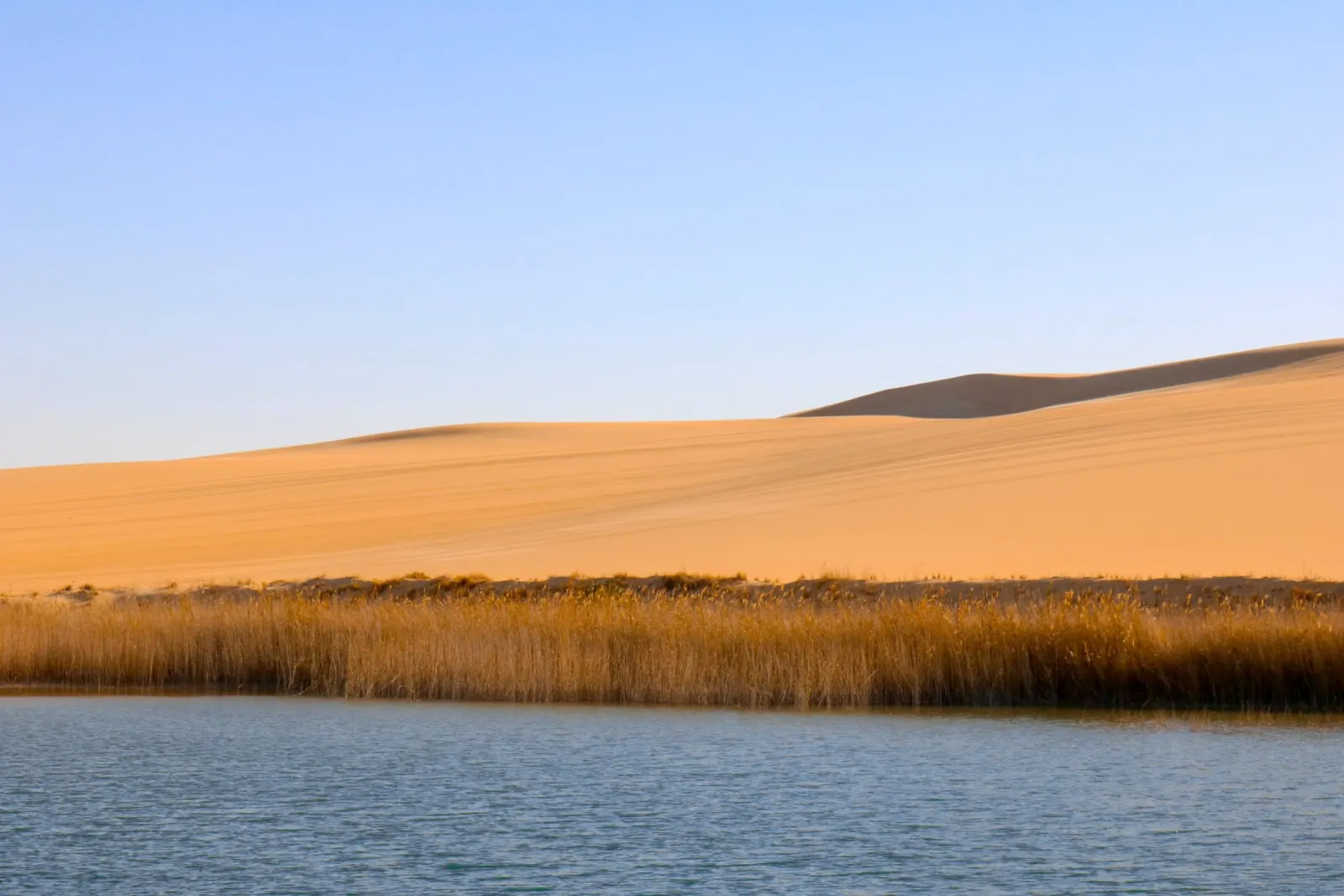
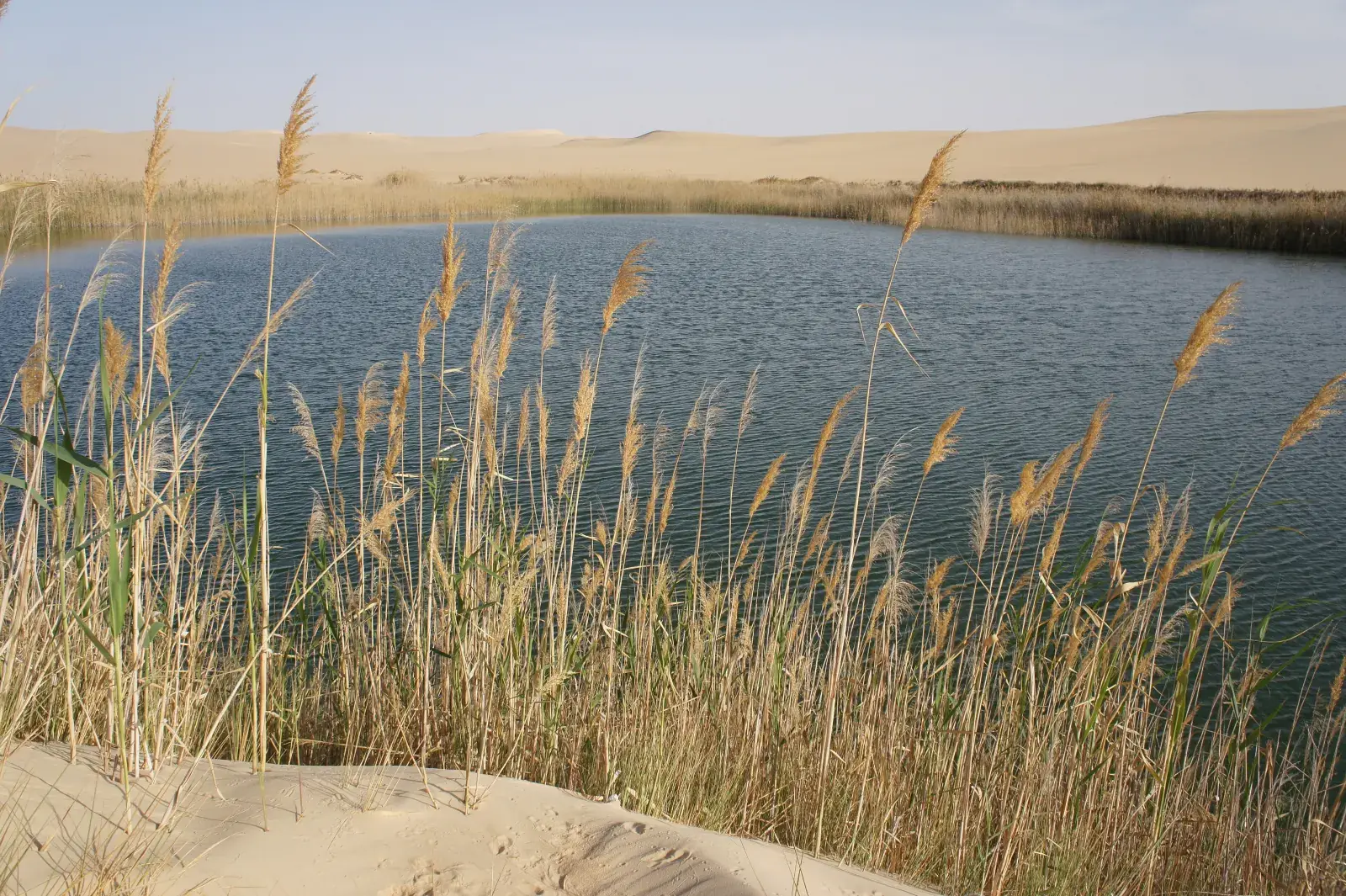
- Bir Wahed. A warm spring in a small pool among the dunes, with a cold freshwater lake nearby.
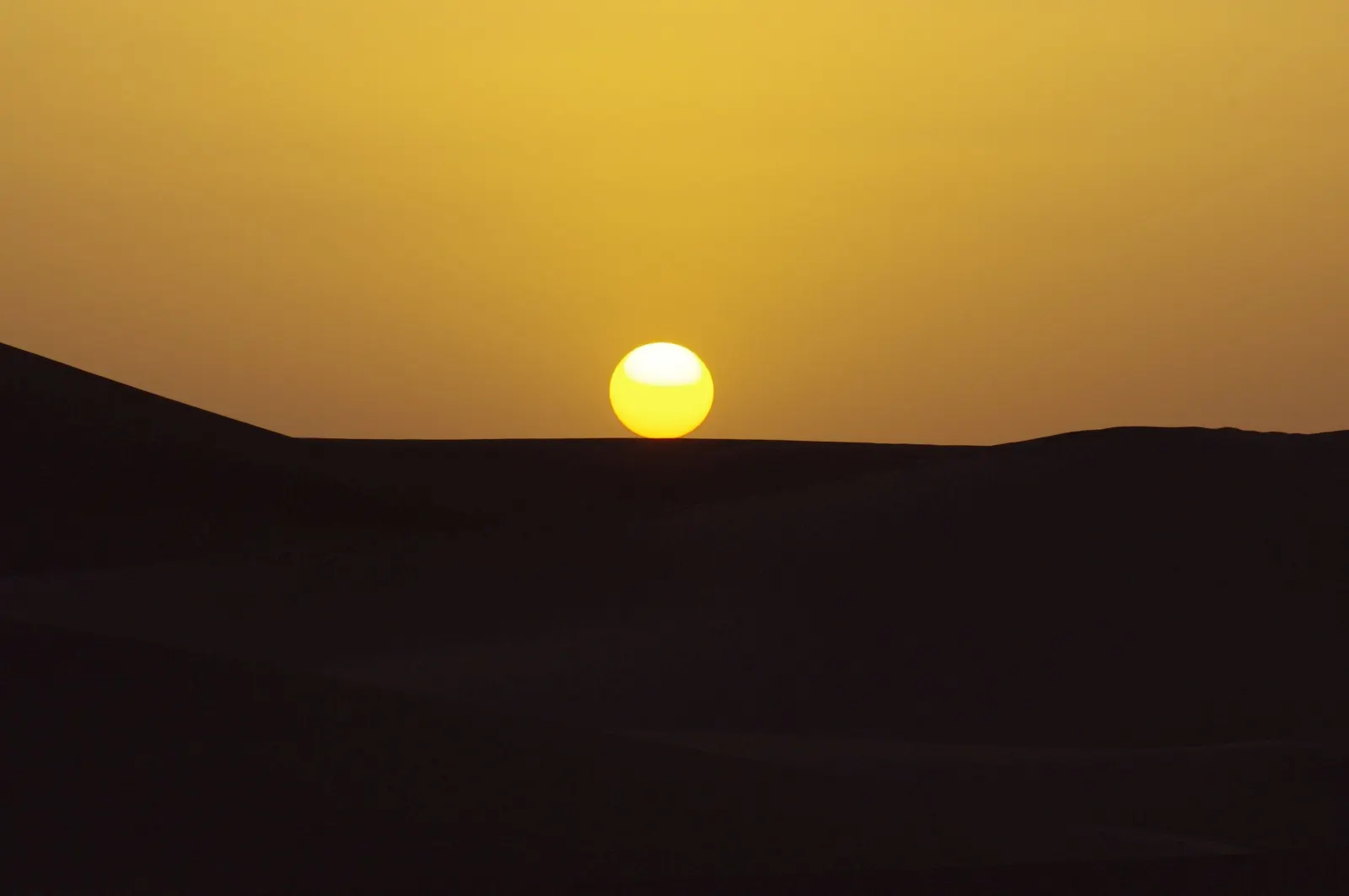
- Sunset. On a high dune with tea brewed on the fire.
For timings by month and carsickness tips, read what to expect on a 4x4 safari. Book the Great Sand Sea safari and ask us for current prices for your dates.
Overnight in the dunes
Short answer: Stay for dinner over the coals, Siwan tea, a fire and a sky full of stars. Camps range from mattresses under the open sky to private tents with beds.
Many travellers rate the night out as the best part. See camping in Siwa and our overnight desert camp. Pick a full-moon night to see the dunes by moonlight or a new moon for the Milky Way.
Permits, rules and travel advice
Short answer: Every trip off the asphalt needs a permit and a qualified guide. The UK FCDO exempts Siwa town from its Western Desert advice but does not name the open desert, so check before you book.
- Permit. The UK government tells off-road travellers in Egypt to hire a qualified guide and obtain an Interior Ministry permit (FCDO safety and security, checked 17 November 2026). We file it with your passport details.
- Western Desert advice. The FCDO warns against travel west of the Nile Valley and Delta unless essential, but lists exceptions, among them Siwa town and the Marsa Matruh to Siwa road (FCDO regional risks, checked 17 November 2026). The dunes around Siwa are not named in those exceptions. Read the current page and confirm your travel insurance covers a desert trip.
- Border zone. The same page advises against all travel within 20 km of the Egypt-Libya border, citing military operations there. Multi-day trips south toward Shiatta depend on permits that change often; ask us what we can run for your dates.
- Getting here. For the road from Bahariya, the UK government "advises against all but essential travel", so we route via Cairo.
Safety
Short answer: Go only with a licensed operator in a well-kept 4x4, ideally two vehicles for longer trips. Never drive the dunes yourself.
- Check the car: good tyres, a spare, a tow strap, and satellite or radio contact for longer trips.
- Wear a seatbelt; dune descents are steep.
- Carry plenty of water; the desert dehydrates you fast even in winter.
- Tell your lodge where you are going.
- Pregnant travellers and anyone with back problems should ask for a gentle drive or skip the dunes.
When to go
October to April is best. In summer the afternoon is too hot until about 17:00, so safaris start later. Spring can bring khamsin sandstorms that cancel trips.
What to bring
Sunglasses, a scarf against blown sand, a hat, closed shoes or sandals, a swimsuit for Bir Wahed, a warm layer for after sunset and a dustproof bag for your camera. See the packing list.
Explorers of the Great Sand Sea
| Who | When | What |
|---|---|---|
| Gerhard Rohlfs | 1873 to 1874 | Led the first European expedition to document the sand sea, which he named the Große Sandmeer |
| Prince Kamal el Dine Hussein | 1925 and 1926 | Egyptian royal who took Citroën half-tracks to the Gilf Kebir and gave it its name |
| Ralph Bagnold | 1929 and the 1930s | Drove Ford cars across the dunes; made the first recorded east-to-west crossing of the Libyan Desert in 1932 |
| Long Range Desert Group | 1940 to 1945 | Wartime patrol unit founded by Bagnold; used Siwa as a headquarters in 1941 and 1942 |
Rohlfs started from Dakhla aiming for Kufra in Libya. His loaded camels could not climb the north-south ridges, so the party turned north-west along the corridors between them and reached Siwa instead. On the way a rare downpour saved them; they built a cairn and called the spot Regenfeld, "rain field" (Wikipedia).
Bagnold is credited with the sun compass, which works where a magnetic compass is thrown by iron in the car, and his group began lowering tyre pressure on soft sand in the 1930s (Wikipedia). The LRDG carried steel sand channels to dig out stuck trucks, and fitted every vehicle with his sun compass; its patrols radioed reports to headquarters at Siwa until the unit withdrew on 28 June 1942 (Wikipedia).
Dune shapes
- Linear (seif) dunes: long ridges running roughly north to south, the dominant form here.
- Crescent (barchan) dunes: smaller moving dunes with a steep face on the downwind side.
- Star dunes: tall peaks where winds come from several directions.
Wildlife
Few animals, but look for fox tracks, beetle trails, lizards and, early in the morning, the footprints of small rodents. Birds pass through on migration.
Leave no trace
Take all rubbish back, keep vehicles off vegetation near springs, and do not collect fossils or stones.
Questions people ask
What area does the sand sea cover?+
Around 72,000 km² of dunes split between western Egypt and eastern Libya, some 650 km long and 300 km wide. Siwa sits on its northern edge.
How high are the dunes?+
It varies. NASA measured linear dunes in the far south-west rising 20 to 30 m above the plains between them. Near Siwa you will find slopes long and steep enough for sandboarding.
Do I need a permit?+
Yes. Leaving the asphalt in Egypt requires a desert permit from the Interior Ministry, plus a guide. Your Siwan operator files it with your passport details; it is usually included in the safari price, but ask to confirm.
Can I drive into the Great Sand Sea myself?+
No. Dune trips need a licensed Siwan crew, a filed permit and a driver who knows the sand. Self-driving in the dunes is unsafe and not permitted.
Does the UK travel advice cover the desert around Siwa?+
The FCDO exempts Siwa town and the road up from Marsa Matruh from its warning about the desert west of the Nile. The dunes are not named in that exemption, so read the latest page and ask your insurer first.
Can I see Libyan Desert Glass from Siwa?+
No. Its strewn field is in the remote south-west of Egypt, far beyond the reach of a Siwa safari or camp.
Go with us
Trips that include this
3 days, 2 nights
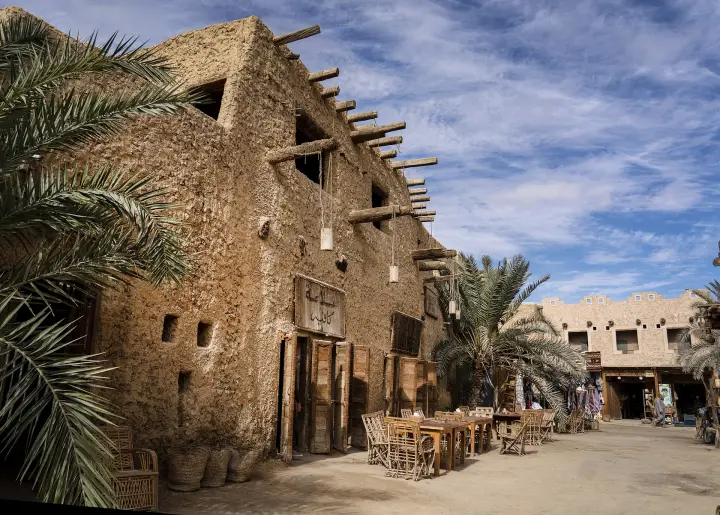
Siwa Oasis in 3 Days from Cairo (Private Trip)About US$420 to 650 per person for two travellers
Check dates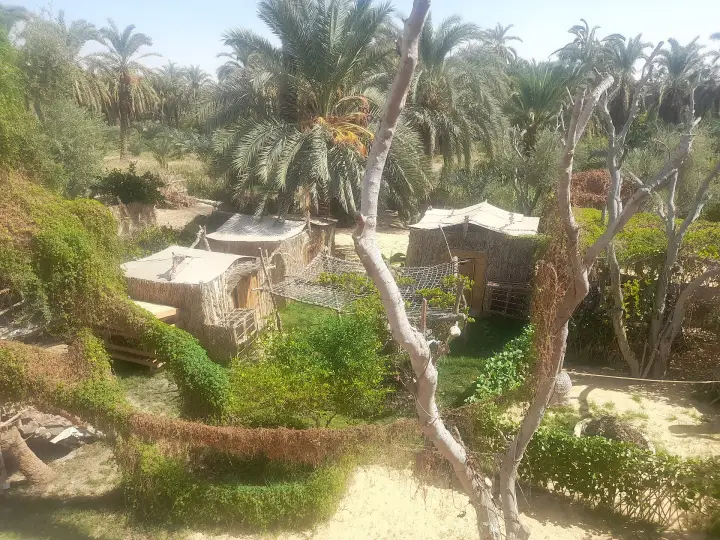
4 days, 3 nights
Siwa in 4 Days: Eco-Lodge and a Night in the Great Sand SeaAbout US$495 to 825 per person for two travellers (the lodge level decides the price)
Check dates
4 to 5 days (3 or 4 nights in Siwa)
Luxury Siwa: Candlelit Eco-Lodge EscapeOn request (depends on the lodge and season)
Check dates