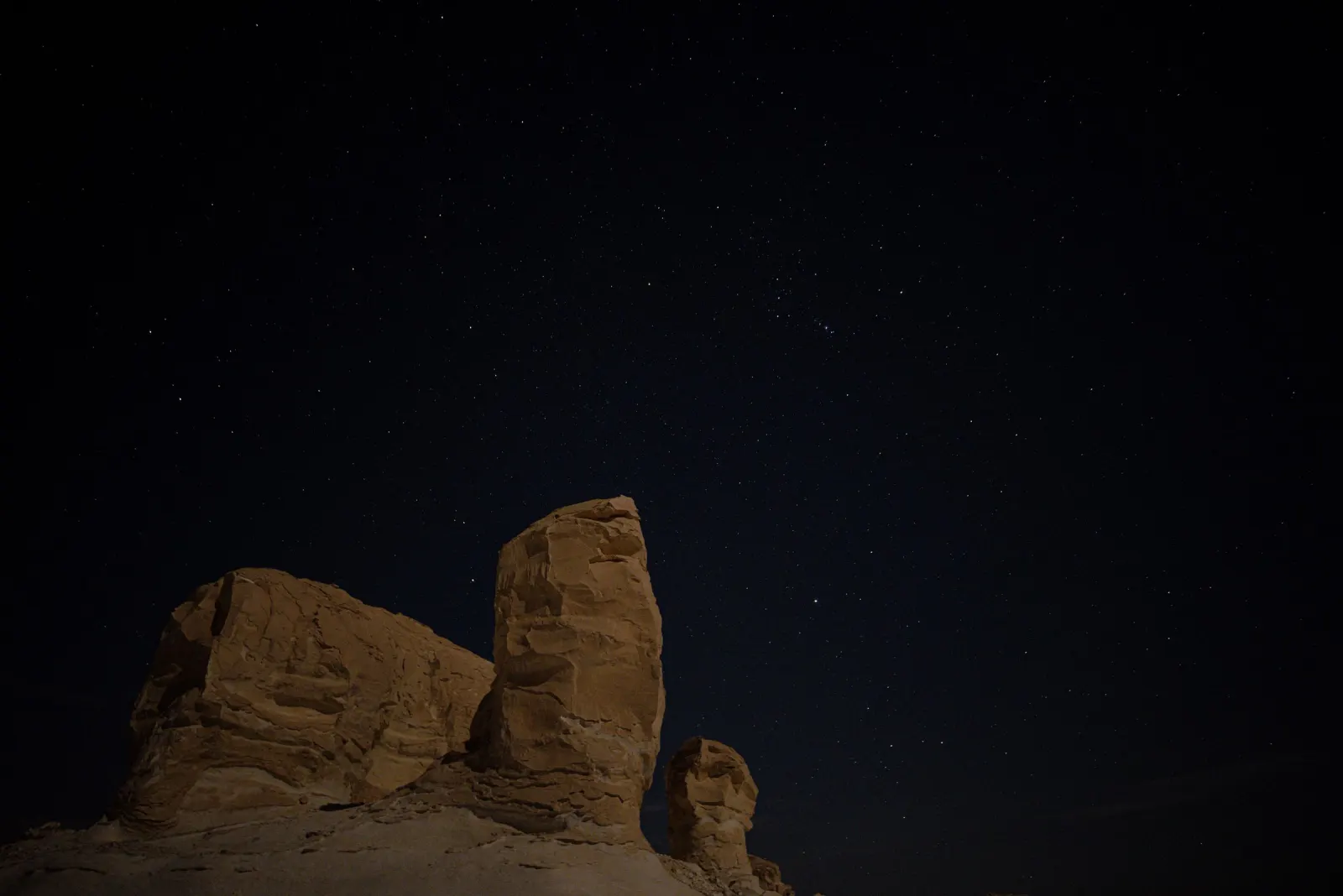
The short answer
For the best stars near Siwa, leave the town lights: a lodge on the oasis edge helps, the dune edge south of town is better, and a night camped in the Great Sand Sea is best. Pick a night within three days of a new moon. In December full darkness lasts almost 11 hours; in June under 7. Dress for cold from December to February.
Ask us on WhatsAppStargazing at a glance
Short answer: distance from lights matters more than anything you pack. Go to the dune edge or into the Great Sand Sea, within three nights of a new moon, and on a clear night you see the Milky Way with the naked eye. October to April gives long, dry nights; summer nights are short but put the Milky Way's bright core in the south.
| Darkest easy spot | The dune edge south of town, a short 4x4 drive from the market square |
| Darkest of all | A night camp in the Great Sand Sea, with a licensed 4x4 crew |
| Best nights | Within three nights of a new moon |
| Full darkness | About 18:46 to 05:39 in mid-December; 21:53 to 04:43 in mid-June |
| Coldest nights | January, mean low 6.1C; record -2.2C |
| What to bring | Warm layers, a red torch, binoculars if you own them |
Twilight times are for Siwa Oasis from timeanddate (checked 17 November 2026). Temperatures are the 1991-2020 normals in Wikipedia's Siwa Oasis climate table (checked 17 November 2026); our Siwa weather page has the month-by-month figures.
Why the sky here is so dark
Marsa Matruh is about 300 km north of Siwa: about 4 hours by road. It is the nearest sizeable town; to the south and west lies mostly empty desert. Siwa town is about 50 km east of the Libyan border, which is closed to travellers. Dry air adds to it: with little moisture or haze, stars stay sharp close to the horizon.
Astronomers grade sky darkness on the Bortle scale. On a truly dark site (class 2) the naked eye reaches stars of magnitude 7.1 to 7.5 and the summer Milky Way shows clear structure. In a suburban sky (class 5) the limit drops to 5.6 to 6.0 and the Milky Way looks washed out overhead (Wikipedia, Bortle scale). Siwa town sits between the two; the open sand sits near the dark end. That gap is the whole case for driving out.
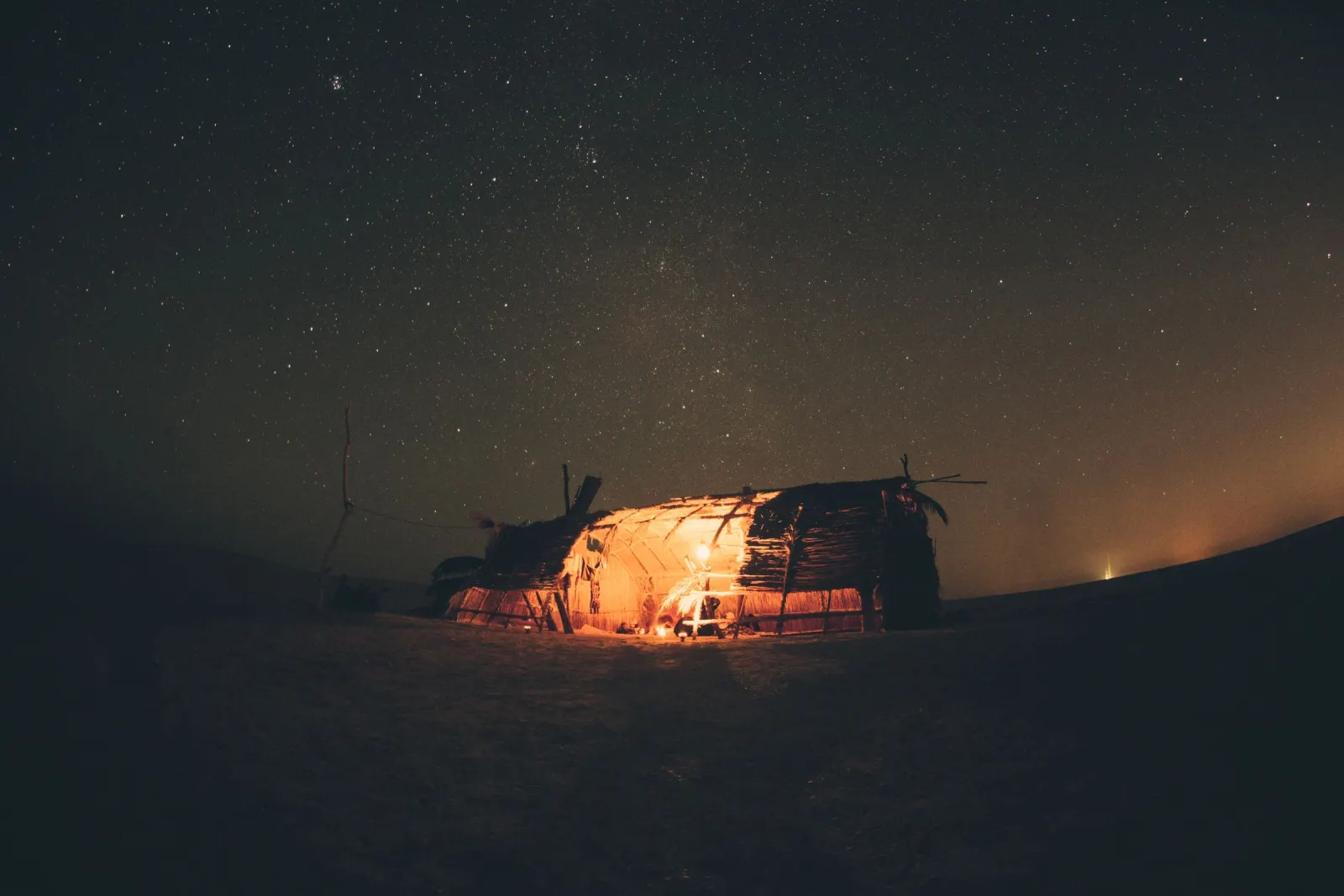
Where to watch, measured from the market square
Siwa's lights are concentrated in the town around Shali. Every kilometre south into the sand cuts the glow behind you.
| Spot | From the market square | How you get there | Darkness |
|---|---|---|---|
| Hotel roof or garden in town | 0 to 2 km | On foot | Poor: bright stars and planets only |
| Lodge on the oasis edge | Varies; ask your lodge | Car or tuk-tuk | Fair to good, depending on neighbours |
| Gebel Dakrour | About 4.4 km by road | Car or tuk-tuk; about 8 minutes by car | Fair; town glow to the north-west |
| Dune edge of the Great Sand Sea | A few km south | 4x4 with a licensed driver | Good; the town drops behind the sand |
| Camp deep in the Great Sand Sea | Beyond Bir Wahed, itself about 11 km south-west in a straight line | 4x4 with crew and permit | Excellent in every direction |
The Dakrour road distance and drive time are from an OSRM route from the square to the road end below the summit marked on OpenStreetMap; the Bir Wahed figure is the straight line to the cold spring as mapped on OpenStreetMap (both checked 17 November 2026). How far the crew drives on a given night depends on wind and sand; ask us. Our getting around Siwa guide covers tuk-tuks and bikes for the in-town options.
The dunes are not a do-it-yourself trip. The UK government advises using a qualified guide and a Ministry of Interior permit for off-road travel, and advises against driving outside main cities and resorts at night (FCDO Egypt safety and security, checked 17 November 2026).
When to go: the Moon first, then the season
The Moon decides the night. A bright Moon hides most stars for hours. Pick a date within three nights of a new moon. Upcoming new moons in Egypt time are 9 December 2026 (02:51), 7 January, 6 February, 8 March, 7 April, 6 May and 4 June 2027 (timeanddate moon phases for Siwa, checked 17 November 2026). The Siwa moon calendar 2027 lists every phase with the best night for each.
The season decides how long and how cold. Winter nights are long and cold; summer nights are short and warm.
| Season | Fully dark | Night low (mean) | What is up |
|---|---|---|---|
| Nov to Jan | About 18:45 to 05:40, nearly 11 hours | 12.1C Nov, 7.8C Dec, 6.1C Jan | Orion, Taurus, the Pleiades; Geminids and Quadrantids |
| Feb to Apr | Shrinking month by month | 7.3C Feb to 14.8C Apr | Canopus low in the south; Milky Way core before dawn from March |
| May to Aug | About 21:50 to 04:45 in June, under 7 hours | 19.3C May to 24.6C Aug | Milky Way core in the south in the evening; Scorpius, Sagittarius |
| Sep to Oct | Lengthening again | 21.8C Sep, 17.2C Oct | Core low in the south-west after dusk; comfortable nights |
Dark hours are from timeanddate's astronomical twilight figures for 15 December 2026 and 15 June 2027. Cloud or dust can still spoil a night, so a spare night is worth having.
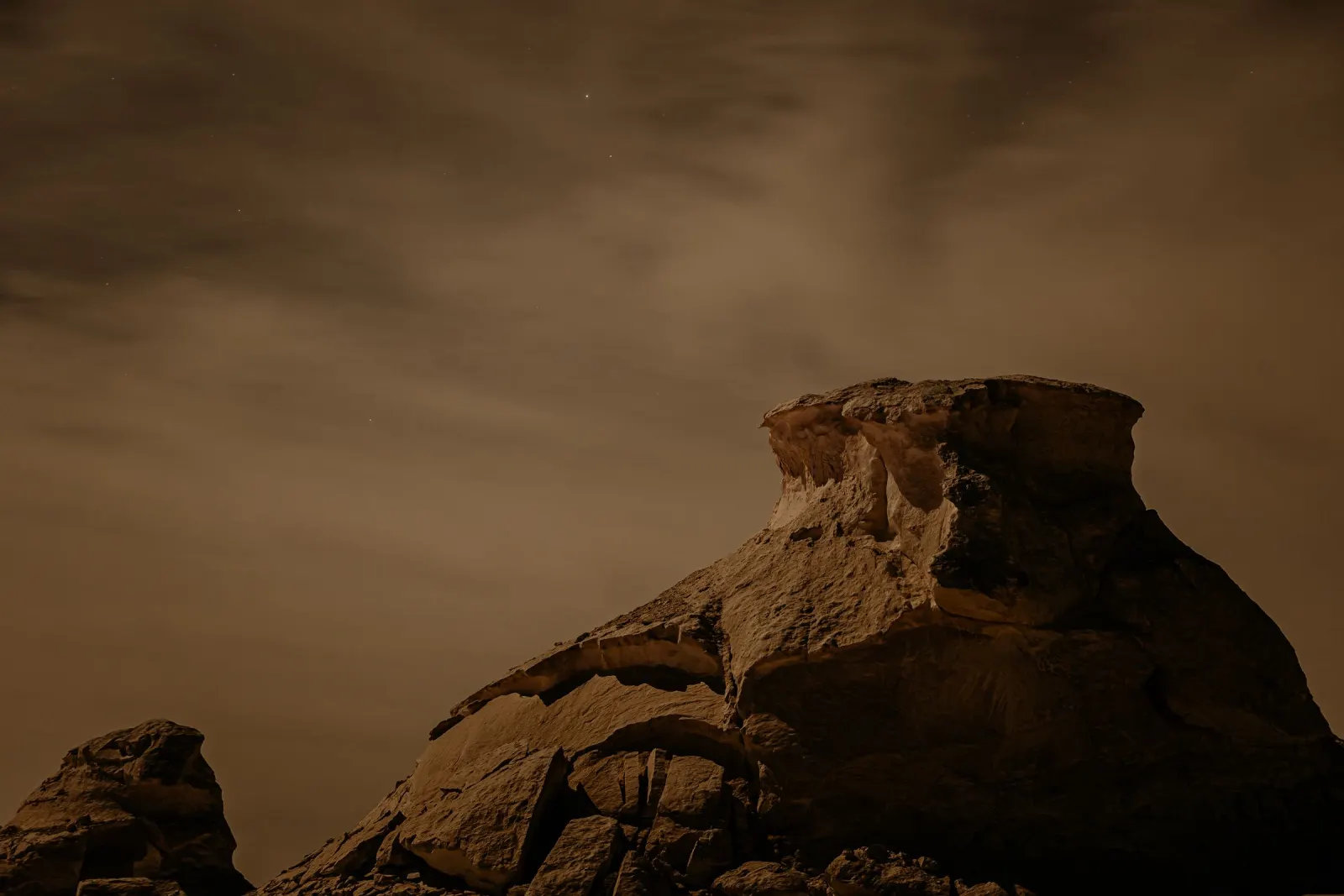
What you will see on a dark night
- The Milky Way. From Siwa's latitude, about 29.2N, the bright galactic centre never climbs much above 30 degrees, so it sits over the southern horizon. Face south and keep that horizon clear of fire and lamps. In winter you see the fainter outer band running through Orion and Taurus.
- Canopus. The second-brightest star in the sky never rises north of about 37N, so most of Europe never sees it (Wikipedia, Canopus). From Siwa it skims about 8 degrees above the southern horizon, highest around 21:00 in mid-February.
- Zodiacal light. A faint cone of light rising from the western horizon after dark in spring, or the eastern horizon before dawn in autumn (Wikipedia, zodiacal light). It needs a moonless sky and no town glow, which makes it a good test of how dark your spot is.
- Meteors and satellites. Satellites pass steadily in the first hours after dark. The meteor shower calendar rates every shower to the end of 2027; the next good one is the Geminids in December 2026.
- Planets. Bright, steady points that do not twinkle; a free sky app identifies them in seconds.
Ways to do it and what they cost
Prices below are the ranges on our own tour pages for two travellers sharing, checked 17 November 2026. These are private trips, so the per-person figure falls as your group grows. Ask us for a quote for your dates.
| Option | Time out | Darkness | Price |
|---|---|---|---|
| Hotel roof or garden | As long as you like | Poor to fair | Free |
| Stargazing evening at the dune edge | About 3.5 hours, back around 22:30 in winter | Good | About US$60 to 80 per person |
| Overnight desert camp | About 20 hours, afternoon to late morning | Excellent | About US$120 to 220 per person |
| Siwa Sky Nights, 4 days from Cairo | 3 nights, one in the dunes | Excellent | About US$530 to 880 per person |
A desert permit is needed for the Great Sand Sea. Our camp trips include it; bring your passport, because the permit needs your details.
What to combine it with
- An afternoon in the dunes. A 4x4 safari or a sandboarding session ends at sunset in the sand, so staying on for the stars adds no extra driving.
- A full camp night. Our camping in Siwa guide compares wild dune camps, glamping and fixed camps for comfort and toilets.
- A slow day after. After a late night, keep the next day light: the salt lakes or the town sights make an easy afternoon.
Families and accessibility
For children, the winter sky is dark early enough for them: by about 18:45 in mid-December. The short evening outing suits most families better than a camp night. Give each child a blanket and their own red torch, and keep them close to the group, because the dunes look the same in every direction after dark.
Soft sand is hard going for anyone with limited mobility, and the dunes have no step-free paths. A lodge garden on the oasis edge, or a spot beside the car on a firm track, still gives a far better sky than the town. Dune camps have no plumbing; tell us if a toilet tent or a fixed camp near town matters to you.
Mistakes to avoid
- Booking blind to the Moon. A full moon is lovely for dune walks but hides the Milky Way. Check the date before you book.
- Packing for the daytime. A 19.8C January afternoon turns into a 6.1C night on average, and you will be lying still. Bring a hat, gloves and a proper jacket; our packing list covers the rest.
- Ruining your night vision. Eyes take 20 to 30 minutes to adapt fully, and one bright screen undoes it (Wikipedia, adaptation of the eye). Use red light and turn phone brightness right down.
- Sitting by the fire. Firelight works like a streetlamp. Lie on a mat well away from it, facing south.
- Allowing only one night. High cloud or dust can hide a sky. Two nights in Siwa gives you a fallback.
Night-sky photography
Bring a sturdy tripod, a wide, fast lens and spare batteries kept warm in an inside pocket, because cold drains them fast. A dune crest or a rock makes a good foreground. Leave the drone at home: the UK government says not to import or use one in Egypt without prior Ministry of Defence permission, and that photographing military property is illegal (FCDO Egypt safety and security, checked 17 November 2026). Our photography spots guide covers daytime locations.
A daytime sky event: the 2027 eclipse
Short answer: on 2 August 2027 the sky over Siwa goes dark at midday for about five and a half minutes during a total solar eclipse, and bright stars and planets come out.
The new moon of 2 August also leaves the nights of eclipse week dark, so the same trip can include a night in the dunes. Read the 2027 eclipse in Siwa for times and where to stand, or contact us with your dates.
Questions people ask
Can I see the stars from Siwa town?+
The bright stars and planets, yes, from a rooftop or a dark corner of your hotel. Streetlights and lit buildings hide the faint ones and most of the Milky Way. A lodge on the oasis edge is noticeably better, and the dunes are best.
Can I see the Milky Way from Siwa town?+
Faintly at best. Go at least to the dune edge south of town, on a moonless night, and give your eyes 20 to 30 minutes to adjust.
When is the next new moon in Siwa?+
9 December 2026 at 02:51 Egypt time, then 7 January, 6 February, 8 March and 7 April 2027 (timeanddate, checked 17 November 2026). The three nights either side of each are almost as dark.
Do I need a telescope?+
No. A desert sky is best enjoyed with the naked eye, because meteors and the Milky Way need the whole sky. Binoculars are the one useful extra: they show star clusters, the Moon's craters and Jupiter's moons.
Is stargazing in Siwa suitable for children?+
Yes, if they can stay up and stay warm. In winter the sky is fully dark by about 18:45, so a short evening outing back by 22:30 suits families better than a full camp night. Bring a blanket each and a red torch.
Can I go into the desert at night on my own?+
Not into the dunes. The UK government advises a qualified guide and a Ministry of Interior permit for off-road travel, and advises against driving outside main cities and resorts at night. Stay in town or go with a licensed operator.
Can I fly a drone for night-sky photos?+
Not without prior permission from Egypt's Ministry of Defence, according to the UK government's travel advice. Plan on a tripod and a wide lens instead.
Go with us
Trips that include this
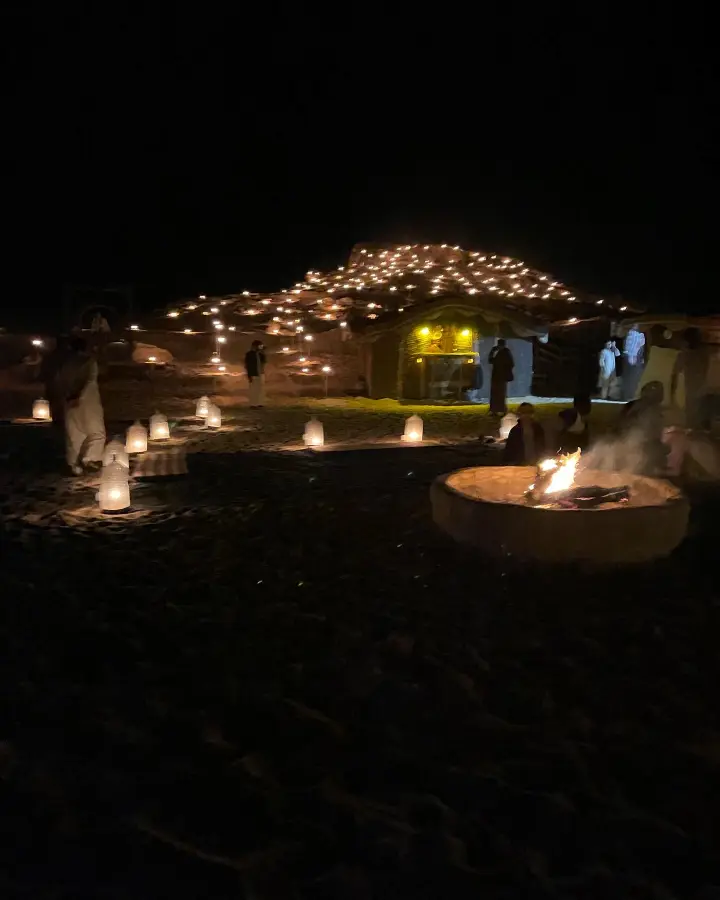
About 20 hours (afternoon to next late morning)
Overnight Desert Camp from Siwa (Private)About US$120 to 220 per person for two travellers
Check dates
4 days, 3 nights
Siwa in 4 Days: Eco-Lodge and a Night in the Great Sand SeaAbout US$495 to 825 per person for two travellers (the lodge level decides the price)
Check dates