The short answer
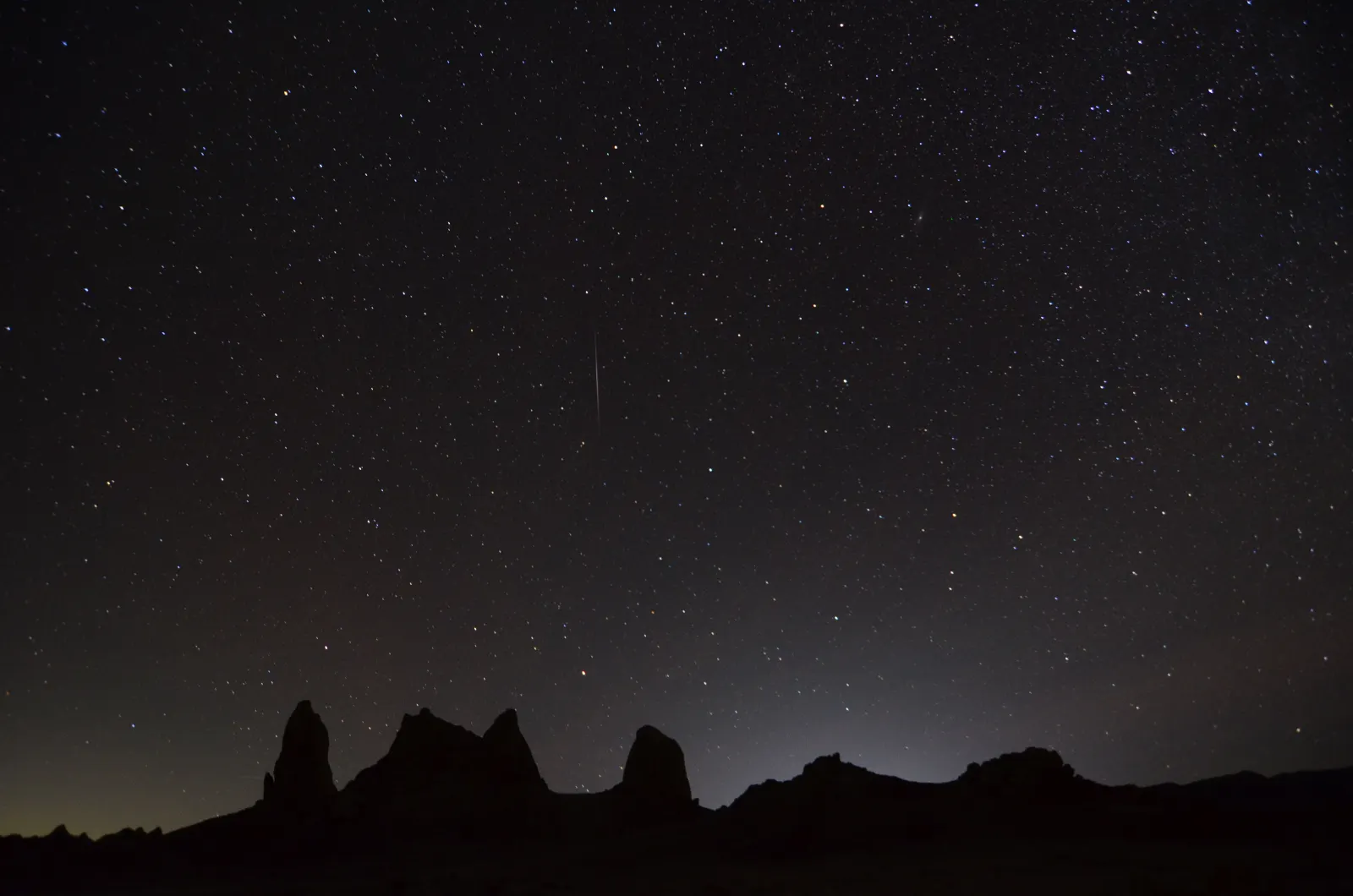
The Geminids peak on 14 December 2026 at about 14:00 UT, with a zenithal rate of 150 and a Moon only days past new, so the night of 13/14 December is the one to watch from Siwa. The radiant rises around 19:00, the crescent Moon sets about 21:10, and the richest hours run from about 22:00 until dawn twilight near 05:40 Egypt time.
Ask us on WhatsAppThe short version
Short answer: be out in the dunes on the night of 13/14 December 2026, lie back from about 22:00, and keep watching until the sky starts to pale around 05:40. That is the strongest meteor night of the season from Siwa.
The Geminids are the richest regular meteor shower of the year. The International Meteor Organization's 2026 Meteor Shower Calendar gives a maximum on 14 December at 14h UT, a zenithal hourly rate (ZHR) of 150 and activity from 4 to 20 December (checked 17 November 2026). In 2026 the timing is unusually kind: the Moon is new on 9 December at 02:51 Cairo time (timeanddate.com moon phases, checked 17 November 2026), so peak week sits on dark skies. Unlike most showers, which only come alive after midnight, the Geminid radiant in the constellation Gemini rises at dusk, so you get useful hours in the evening as well.
Why this shower is worth a desert night
Three facts from the IMO calendar shape how you should plan:
- The maximum is broad. The Geminids usually hold a ZHR of 100 or more for roughly 10 to 12 hours, so missing the exact peak time costs little.
- The peak time is reliable. The better-observed maxima of the past two decades all fell between 13 December, 21h UT and 14 December, 18h UT in 2026 terms. In Egypt time that is 23:00 on the 13th to 20:00 on the 14th, so the start of that window overlaps the dark hours from Siwa.
- The bright ones come late. Most returns show a larger share of bright Geminids towards the end of the main maximum. That favours the last dark hours before dawn on the 14th, and is one reason a second night (14/15 December) is not wasted.
NASA's Geminids page (checked 17 November 2026) adds that the parent body is 3200 Phaethon, an asteroid or possible "rock comet", that the meteors enter the atmosphere at about 35 km/s and tend to look yellow, and that you should allow about 30 minutes for your eyes to adapt to the dark.
The night, hour by hour
Sun and Moon times below are for Siwa town (29.2N, 25.5E) in Egypt time, which is UTC+2 in December, from timeanddate.com's sun and moon tables for those coordinates (checked 17 November 2026). Radiant heights are our own calculation. A camp out in the sand runs within a minute or two of them.
| Time (13/14 Dec) | Sky | Radiant height | What it means for you |
|---|---|---|---|
| 17:21 | Sunset | Below horizon | Drive out, set up, eat early |
| 18:45 | Astronomical twilight ends | Rises about 18:55 | Watch the east for long, grazing meteors |
| 20:00 | Crescent Moon (17% lit) low in the west | About 12 degrees | Few meteors, but slow and spectacular |
| 21:10 | Moonset | About 25 degrees | Sky fully dark from here |
| 22:00 | Dark | About 36 degrees | The best window opens |
| 00:00 | Dark | About 60 degrees | Rates build steadily |
| 02:15 | Dark | Near overhead (about 86 degrees) | Highest rates of the night |
| 04:00 | Dark | About 68 degrees | Still excellent, coldest hours |
| 05:38 | Astronomical twilight begins | About 47 degrees | Faint meteors fade out |
| 07:03 | Sunrise | Tea, then sleep |
On the second night, 14/15 December, the Moon is 25% lit and sets at 22:06, about an hour later, with twilight times unchanged.
Meteors seen soon after the radiant rises skim the upper atmosphere almost sideways. These earthgrazers are few, but their long, slow trails are worth an early start.
How many you will see
A ZHR of 150 is a standardised rate: one observer, radiant overhead, stars visible down to magnitude 6.5. Real counts are lower. NASA puts the ceiling at up to 120 Geminids an hour in perfect conditions and suggests 40 to 50 an hour as a more usual figure under dark skies. From the open desert with the radiant high after midnight, NASA's dark-sky figure is a fair working guide; from a lit lodge garden, expect fewer.
| Where you watch | What limits you | Rough expectation |
|---|---|---|
| Open dunes, after midnight | Haze, your field of view | Close to NASA's dark-sky figure |
| Dunes, 19:00 to 22:00 | Low radiant, Moon until 21:10 | Well below the dark-sky figure, some long grazers |
| Lodge garden outside town | Local lights, palms blocking the horizon | Mostly the brighter meteors |
Where to watch: dune camp or lodge rooftop
The Great Sand Sea gives you what town cannot: a black horizon in every direction and no streetlights washing out the fainter meteors. A camp among the dunes, with the fire allowed to burn down once dinner is over, is the setting we would choose for this shower.
If you cannot camp, a lodge well outside the town centre is a fair second choice. Find the darkest corner of the roof or garden, and ask staff to switch off outdoor lights for an hour. You will lose the faintest meteors but still see the bright ones, and the IMO notes the Geminids are known for bright meteors and fireballs.
Read our Siwa camping guide, the Great Sand Sea guide and our general stargazing guide for the bigger picture.
What to bring
Siwa town averages a December low of 6.5 °C in the WMO normals (see Siwa weather). The dunes are colder, and you are lying still for six or seven hours, so pack as if for a frosty night.
- A proper sleeping bag rated to around freezing, plus a foam mat or camp mattress between you and the sand.
- Down or synthetic jacket, hat, gloves and thick socks. Keep them on inside the bag.
- Something to lie back on. Meteors appear all over the sky; looking straight up from flat on your back beats craning your neck from a chair.
- A red head torch. White light undoes half an hour of dark adaptation in a second.
- A thermos of hot tea and snacks for the small hours.
- No telescope, no binoculars. They show a tiny patch of sky; meteors need the whole dome.
Our Siwa packing list and December guide cover the rest of a winter trip.
Photographing the Geminids
You do not need specialist kit, only patience and a camera that shoots in manual mode.
- Lens: the widest you own, ideally 14-24 mm on full frame, at its widest aperture.
- Settings: a typical starting point is ISO 3200 and 15-20 seconds, adjusted to your camera, with focus set manually on a bright star using live view.
- Shoot continuously with an intervalometer for hours. Meteors are luck; volume wins, and you can stack the hits later.
- Aim about 40-60 degrees away from Gemini, with a dune ridge in the frame for scale.
- Cold kills batteries. Carry spares in an inside pocket. A hand warmer strapped to the lens helps keep dew off.
- Leave the drone at home. The UK government's Egypt safety advice says you need prior permission from the Ministry of Defence to import or use one, with fines of EGP 5,000 to 50,000 or prison for breaking the rule (checked 17 November 2026). More ideas in our photography spots guide.
Honest caveats
December is Siwa's most humid month in the WMO normals, at 59%, though that still feels dry, and rain is close to nil. A thin veil of cloud or dust haze is possible on any given night; clear skies are the norm, not a guarantee. The ZHR is an idealised number, and your count will be lower. And because the IMO maximum falls in Egyptian daylight on the 14th, staying a second night in the desert, 14/15 December, is a sensible insurance policy if your dates allow.
Join our Geminids night
Our full moon and stars trip has a Geminids departure with its desert camp night on 13/14 December, with a guide who knows the sky and a camp set well away from any light. If you are already in Siwa, ask us about our overnight desert camp for the same night, and ask us for current prices and pick-up times.
After the Geminids
The next strong shower is the Quadrantids, on the night of 3/4 January 2027. The IMO's 2027 calendar puts the maximum at 03h 25m UT on 4 January, which is 05:25 Egypt time, with a ZHR of about 80 that can vary between roughly 60 and 200, and only a thin crescent Moon (checked 17 November 2026). The hours before dawn are the ones to target. In between, the Ursids peak around midnight on 22/23 December under a Moon about 96% lit and are not worth a special trip. See Siwa in winter and the meteor shower calendar for planning a January return.
Questions people ask
Which night is best for the Geminids in Egypt in 2026?+
The night of Sunday 13 into Monday 14 December. The maximum itself, around 16:00 Egypt time on the 14th, falls in daylight, so the dark hours of the night before give the highest rates you can actually see. The following night, 14/15 December, is a fair second chance, with the Moon setting about an hour later, though Geminid rates tend to fall away faster after the peak than they build before it.
Will the Moon spoil the Geminids this year?+
Barely. New moon is on 9 December, so on the 13th a crescent about 17 per cent lit hangs low in the west and sets near 21:10. By the time the radiant is high enough for strong rates, the Moon is gone.
How many meteors will I actually see?+
Fewer than 150 an hour. The ZHR is a standardised figure that assumes a perfect sky with the radiant straight overhead, and the IMO's maximum falls in daylight here. Your own count depends on haze, how dark your horizon is and how much sky you can see. Meteors tend to arrive in bursts with quiet spells between.
How cold is a December night in the Siwa desert?+
Siwa town averages a December low of 6.5 °C in the WMO normals, and open dunes under a clear sky lose heat faster than town. Lying still for hours makes it feel colder again, so bring a warm sleeping bag, a down jacket, a hat and gloves.
What causes the Geminids?+
Debris from 3200 Phaethon, a small body usually classed as an asteroid rather than a comet. Earth crosses its trail every December, and the grains hit the air at about 35 km/s, a medium speed by meteor standards, so many trails look unhurried.
Do I need a telescope or binoculars?+
No. Meteors flash across wide stretches of sky, and any optical aid narrows your view. Your eyes, fully dark-adapted, are the right instrument.
Go with us
Trips that include this
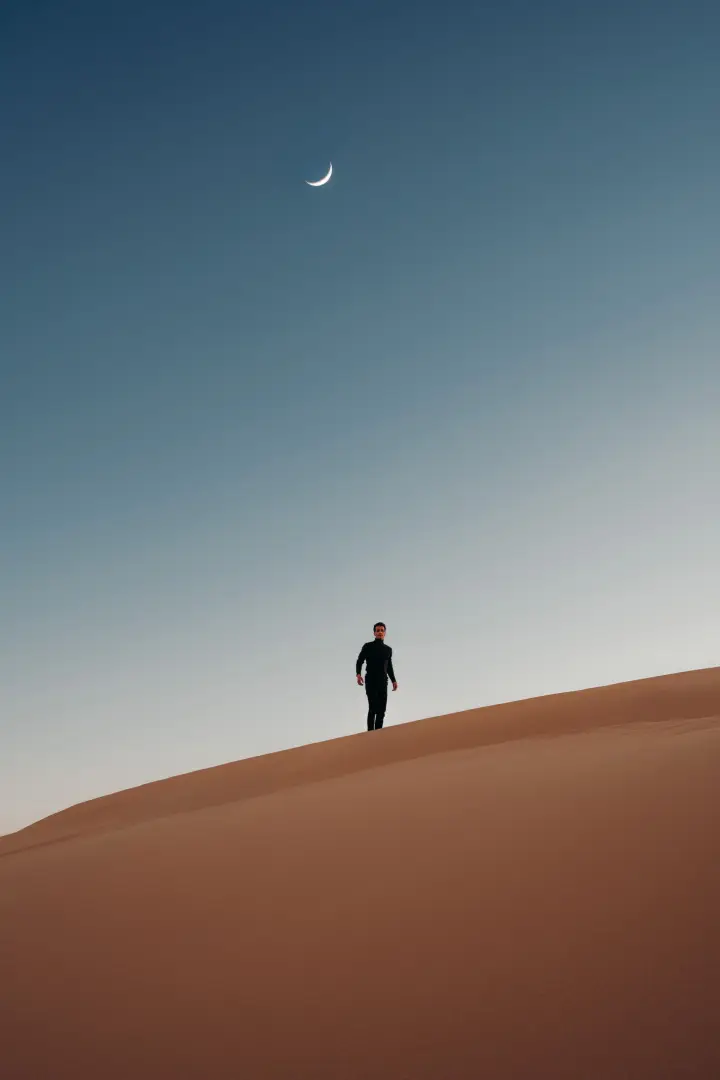
4 days, 3 nights
Siwa Sky Nights 2026-27: Meteor and Full-Moon TripsAbout US$530 to 880 per person for two travellers
Check dates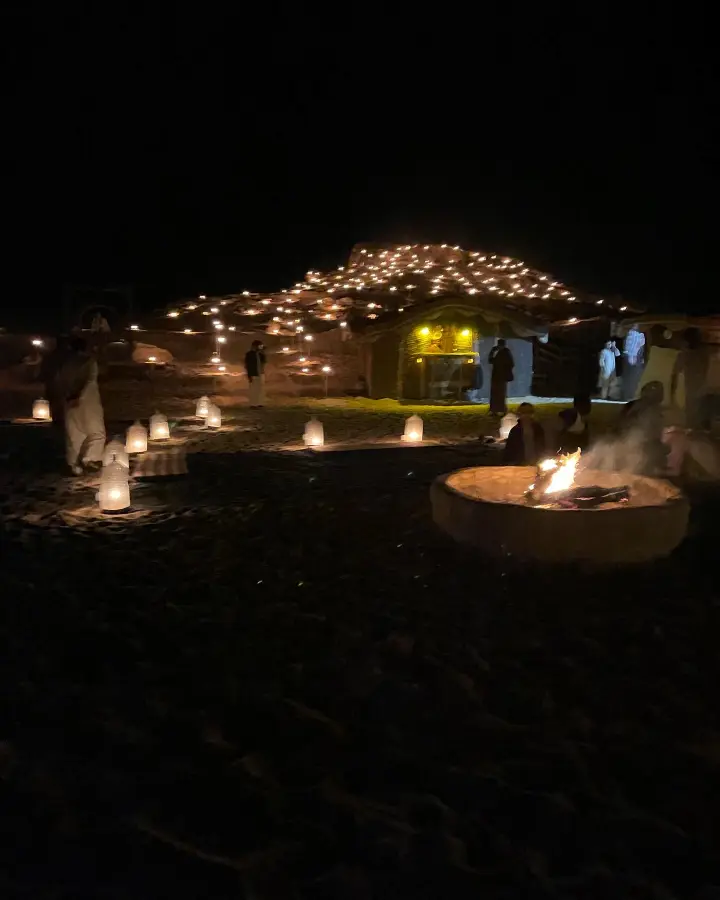
About 20 hours (afternoon to next late morning)
Overnight Desert Camp from Siwa (Private)About US$120 to 220 per person for two travellers
Check dates