The short answer
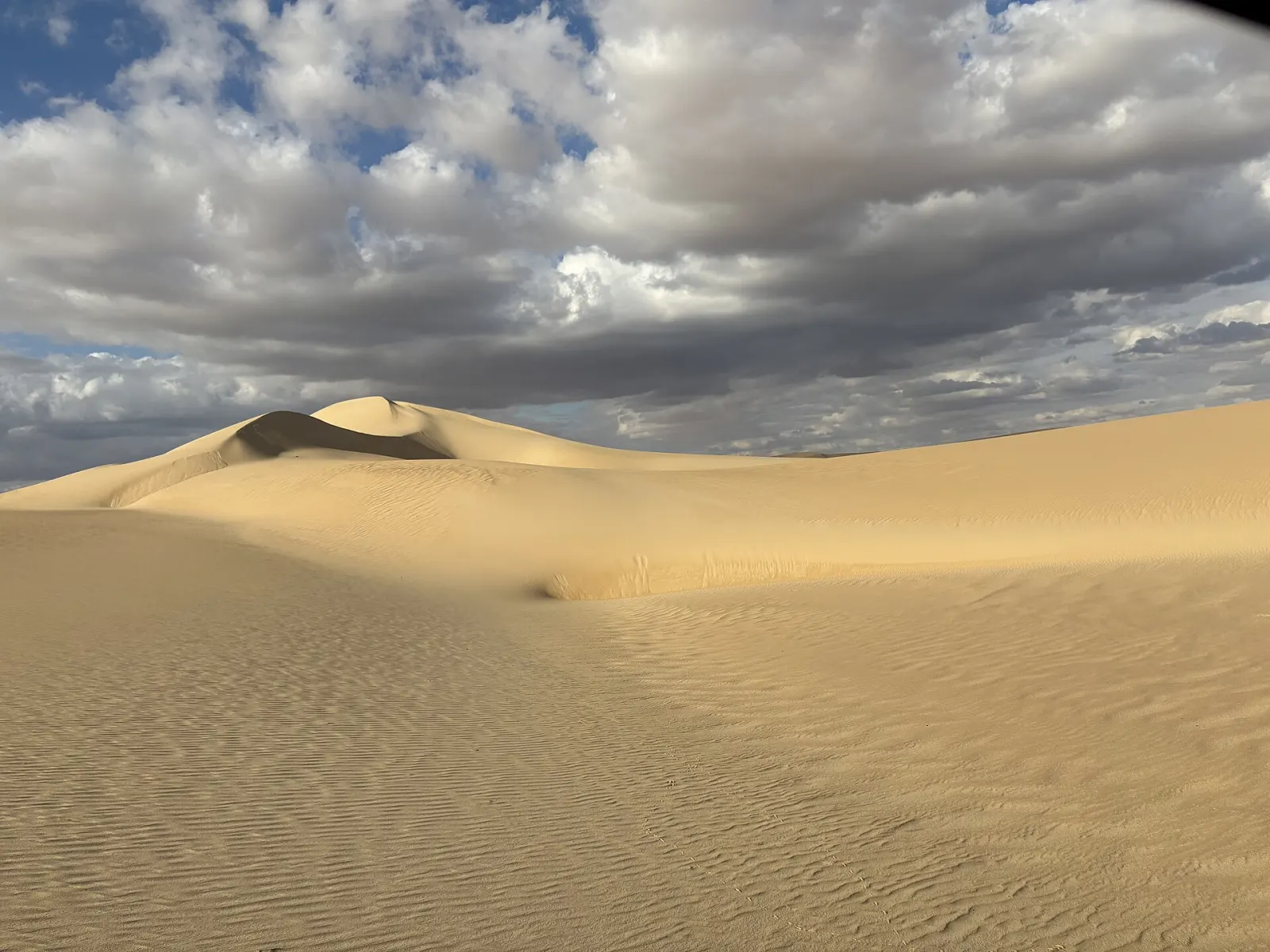
Sandboarding in Siwa is a stop on a 4x4 safari into the Great Sand Sea, whose dunes begin a few kilometres south of town. Your driver picks a long, clean slope, waxes the board and you ride down sitting like a sled or standing like a snowboard, then walk back up. No experience is needed; boards are included.
Ask us on WhatsAppSandboarding at a glance
Short answer: You sandboard on the dunes of the Great Sand Sea, a short 4x4 drive from Siwa town. It is part of the afternoon safari, boards are included, and anyone from young children to grandparents can ride sitting down. The only hard part is the climb back up.
| Where | Dunes of the Great Sand Sea, which begin a few km south of Siwa town |
| How | One stop on an afternoon 4x4 safari or an overnight camp |
| Experience | None needed |
| Ages | Children from about four, riding sitting down on gentle slopes |
| Best months | October to April |
| Best time of day | Late afternoon; around 17:00 or later from June to August |
| Cost | Included in the Great Sand Sea safari, about US$60 to 130 per person |
Siwa's dunes are a recognised sandboarding spot: Wikipedia's sandboarding article (checked 17 November 2026) lists the Great Sand Sea near Siwa among Egypt's locations, alongside dunes near Cairo and in Sinai.
How a run works
Short answer: Your driver stops at the top of a good slope, waxes the board and shows you how to sit or stand. You slide down, then walk back up along the ridge.
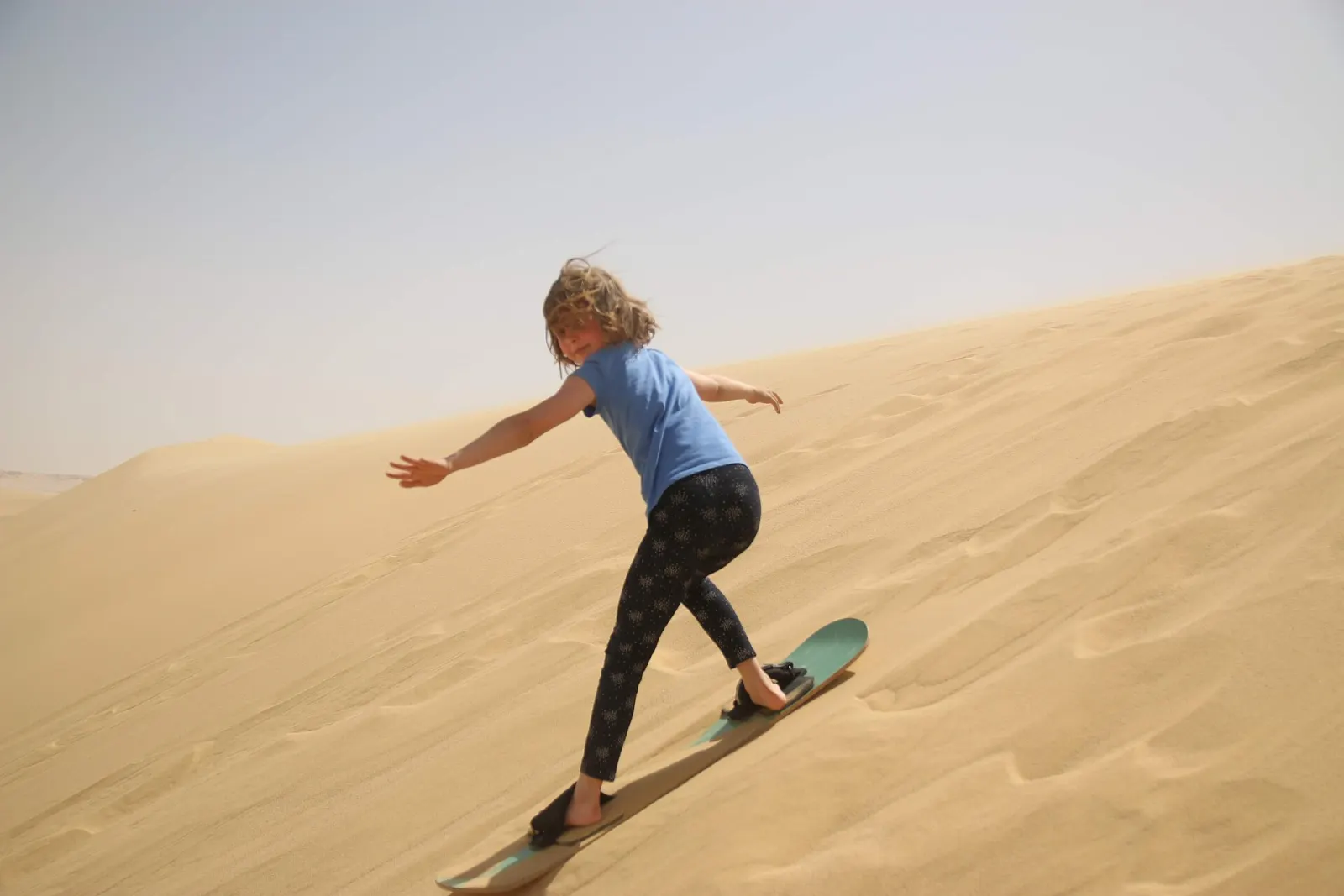
- Sitting or lying: the easiest way, like a sledge. Hold the front edge, lean back to slow down, lift your heels off the sand to go faster. Riding seated, on your belly or on your back is usually called sand sledding.
- Standing: like snowboarding but slower and softer. Boards usually have simple foot straps. Keep your weight on the back foot and your knees bent; most people fall a few times before a clean run.
- Wax: the driver rubs wax on the base between runs. Without it the board sticks; with it the same slope feels much faster.
There are no lifts in Siwa. Lifts on sand are rare: Wikipedia's example is Monte Kaolino in Hirschau, Germany, a small sand hill with a 120 m lift that hosted the Sandboarding World Championships until 2007 (Wikipedia, sandboarding, checked 17 November 2026). Depending on the slope, the climb takes a few minutes, and that, not the ride, is what tires people out. On a gentle slope the 4x4 can sometimes collect you at the bottom.
Sitting or standing?
| Sitting / lying | Standing | |
|---|---|---|
| Skill needed | None | A few falls first |
| Speed | Easy to control with your heels | Faster once you can carve |
| Best slope | Short, gentle, clean run-out | Longer, steeper face |
| Good for | Children, first-timers, bad backs | Snowboarders, surfers, skateboarders |
| Sand in your clothes | Some | A lot, after every fall |
If you already snowboard, the stance is the same, but the base drags more and turns are slower. Sandboard bases are much harder than snowboard bases, built mostly from laminates such as Formica, and are often rubbed with paraffin-based wax before runs (Wikipedia, checked 17 November 2026). If you want to ride standing, ask us which boards are available for your dates.
Where the slopes are
The Great Sand Sea is an erg of about 72,000 km², stretching about 650 km north to south and 300 km east to west along the Egypt-Libya border, and Siwa sits on its eastern side (Wikipedia, Great Sand Sea, checked 17 November 2026). Satellite images show its ridges running roughly north to south. Siwa town is about 50 km east of the Libyan border, which is closed to travellers.
Drivers use slopes on the way to Bir Wahed, the hot spring and cold lake about 15 km southwest of Siwa, so sandboarding, a soak and sunset fit into one afternoon. Long, smooth faces with a soft, flat run-out at the bottom are best; higher dunes give longer runs and longer climbs. Background on the landscape is on our Great Sand Sea page.
When to go
Short answer: October to April, in the late afternoon. In summer, wait until about 17:00, when the sun is lower and the sand has started to cool.
| Months | Mean afternoon high | Sandboarding |
|---|---|---|
| November to March | 19.3 to 25.0 °C | Comfortable all afternoon; cold at sunrise |
| April, May, October | 29.9 to 34.0 °C | Fine late in the day; spring winds can spoil it |
| June to September | 34.6 to 37.5 °C (up to about 39 °C in 1991-2020 data) | Only from about 17:00, or at sunrise from a camp |
Highs are the WMO 1961-1990 normals for the Siwa station, with the recent figure from 1991-2020 data; the full table and sources are on Siwa weather. Recent summers run warmer than the old normals, so plan a July or August trip for afternoons near 39 °C; see Siwa in July.
Hot sand. Official air temperatures are measured in the shade above the ground, and sand in full sun gets much hotter. The US National Park Service at Death Valley, another hot desert with dunes, notes ground readings there of over 200 °F (93 °C) and warns that touching a 120 °F (49 °C) surface for over five minutes can cause serious burns (NPS, June 2017, checked 17 November 2026). In July 2024 a visitor who rangers believe lost his shoes on Death Valley's Mesquite Flat Sand Dunes was carried off with burned feet and flown to hospital on a day when the air was around 123 °F (51 °C) (NPS, July 2024, checked 17 November 2026). Siwa's summer afternoons are cooler than that, but the lesson holds: from May to September, test the sand with your hand before going barefoot and keep footwear within reach.
Wind. February to April is the windy season, and April has the most days of blowing sand. On those days riding is gritty and you see less from the dune tops. Ask your driver to wait for a calmer afternoon, or move boarding to the sunrise slot if you are camping.
Tips
- Barefoot or socks. Shoes fill with sand; bare feet grip on the climb. Check the sand temperature first in warm months.
- Protect your eyes. Sunglasses or ski goggles, and a scarf over your nose and mouth on the way down.
- Leave your phone in the car, or in a zipped pocket. Sand gets into everything.
- Climb along the ridge, not straight up the face. It is longer but much easier.
- Drink water between runs. Climbing dunes is real exercise, even in winter.
- Wear clothes you do not mind ruining. Fine sand works into seams and zips; see what to wear in Siwa and the packing list.
Safety
Your driver chooses slopes with no rocks or plants at the bottom. Ride one at a time and wait until the person in front has moved out of the way. Keep children on short, gentle slopes and sitting down. If you have back or neck problems, ride sitting and slowly, or just watch. In Siwa the dunes are entered only with a licensed operator and a desert permit; see permits and checkpoints.
Stop when you are tired: legs heavy from climbing make for clumsy last runs. In hot weather, Death Valley rangers tell visitors to stay within a 10-minute walk of an air-conditioned vehicle, drink plenty of water and eat salty snacks (NPS, July 2024, checked 17 November 2026). In Siwa, rest in the shade of the 4x4 between runs rather than on the open dune.
Sandboarding with children
Children usually love it. Most start on a parent's lap, then ride alone sitting down on a short slope, with an adult waiting at the bottom. Keep sessions short in warm months and hand out water between climbs. Bring a spare set of clothes; sand ends up in every pocket. If dune driving worries you with a toddler, read what to expect on a 4x4 safari first.
How to add it to your trip
- Half day: the Great Sand Sea safari leaves around 14:00 (later in summer) with dune driving, sandboarding, fossil shells, Bir Wahed and sunset on a dune.
- Overnight: the desert camp, about US$120 to 220 per person for two travellers, adds a fire-cooked dinner, stars and a second chance to ride at sunrise. See camping in Siwa.
- Prices: current ranges for every trip are on Siwa tours and prices; contact us with dates and group size for an exact quote.
Sandboarding vs snowboarding
| Sand | Snow | |
|---|---|---|
| Speed | Slower | Faster |
| Falls | Soft | Harder, and cold |
| Getting back up | You walk | Lifts |
| Wax | Between every run or two | Occasionally |
| Kit | Board only, usually barefoot | Boots, bindings, layers |
| Season | Year-round, best October to April | Mostly winter |
Questions people ask
Do I need experience to sandboard in Siwa?+
No. Most people ride sitting or lying on the board, which takes no skill. Standing takes a few tries, and falls into soft sand rarely hurt.
Is sandboarding included in the safari price?+
Yes. Boards and wax come with our Great Sand Sea safari and the overnight desert camp. There is nothing extra to pay or rent.
How many runs will I get?+
As many as you want to climb for. The climb back up is what limits you, not the ride. When you have had enough, the safari moves on to the hot spring and sunset.
Can I sandboard in the morning?+
Yes, if you stay overnight in a desert camp. The sand is cool at sunrise, the light is soft, and there are fewer cars on the dunes than in the afternoon.
Can I sandboard barefoot in summer?+
Only late in the day. Sand in direct sun gets far hotter than the air and can burn bare feet. Touch it with your hand first, and keep socks or sandals in the car.
What age can children start?+
Young children ride sitting down on a short, gentle slope with an adult at the bottom, or on a parent's lap. Tell us your children's ages when you book and we will confirm what suits them.
Go with us
Trips that include this
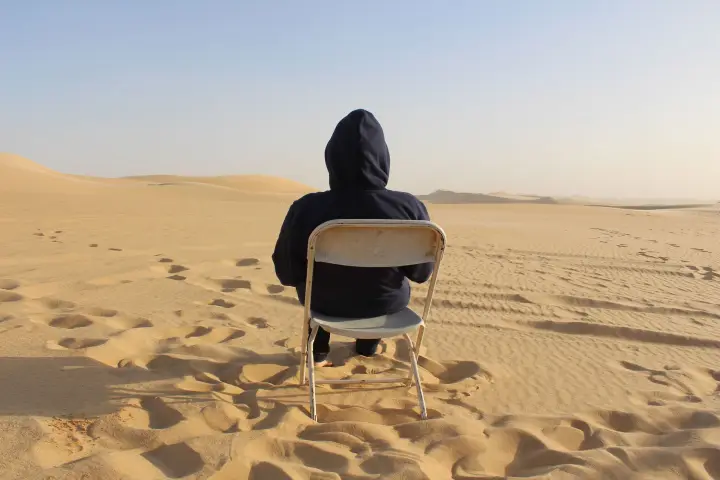
About 5 hours (afternoon to sunset)
Great Sand Sea Safari from Siwa (Half Day)About US$60 to 130 per person (shared or private car)
Check dates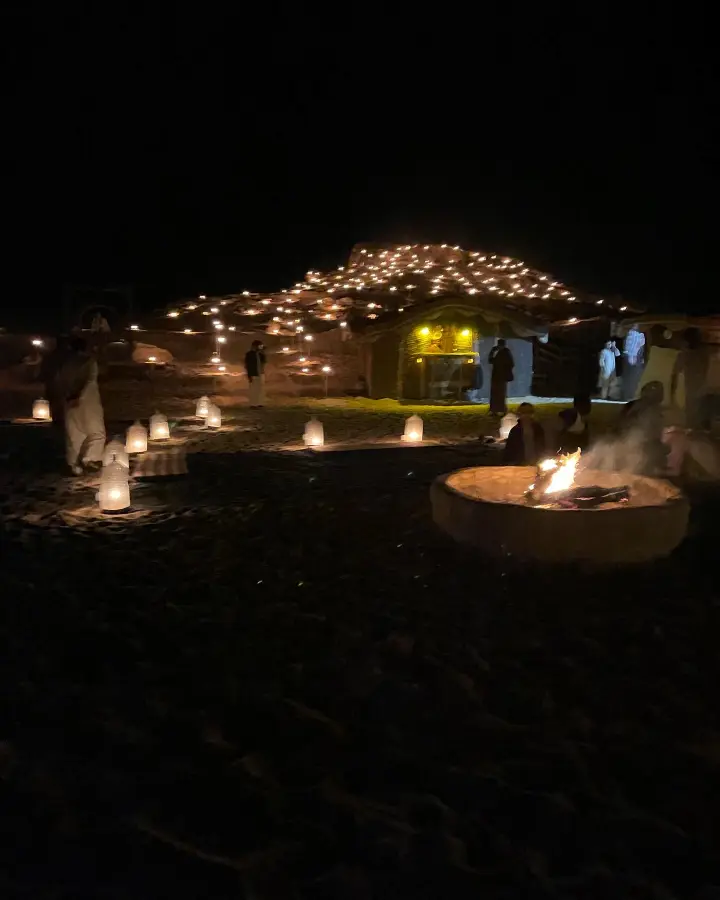
About 20 hours (afternoon to next late morning)
Overnight Desert Camp from Siwa (Private)About US$120 to 220 per person for two travellers
Check dates