The short answer
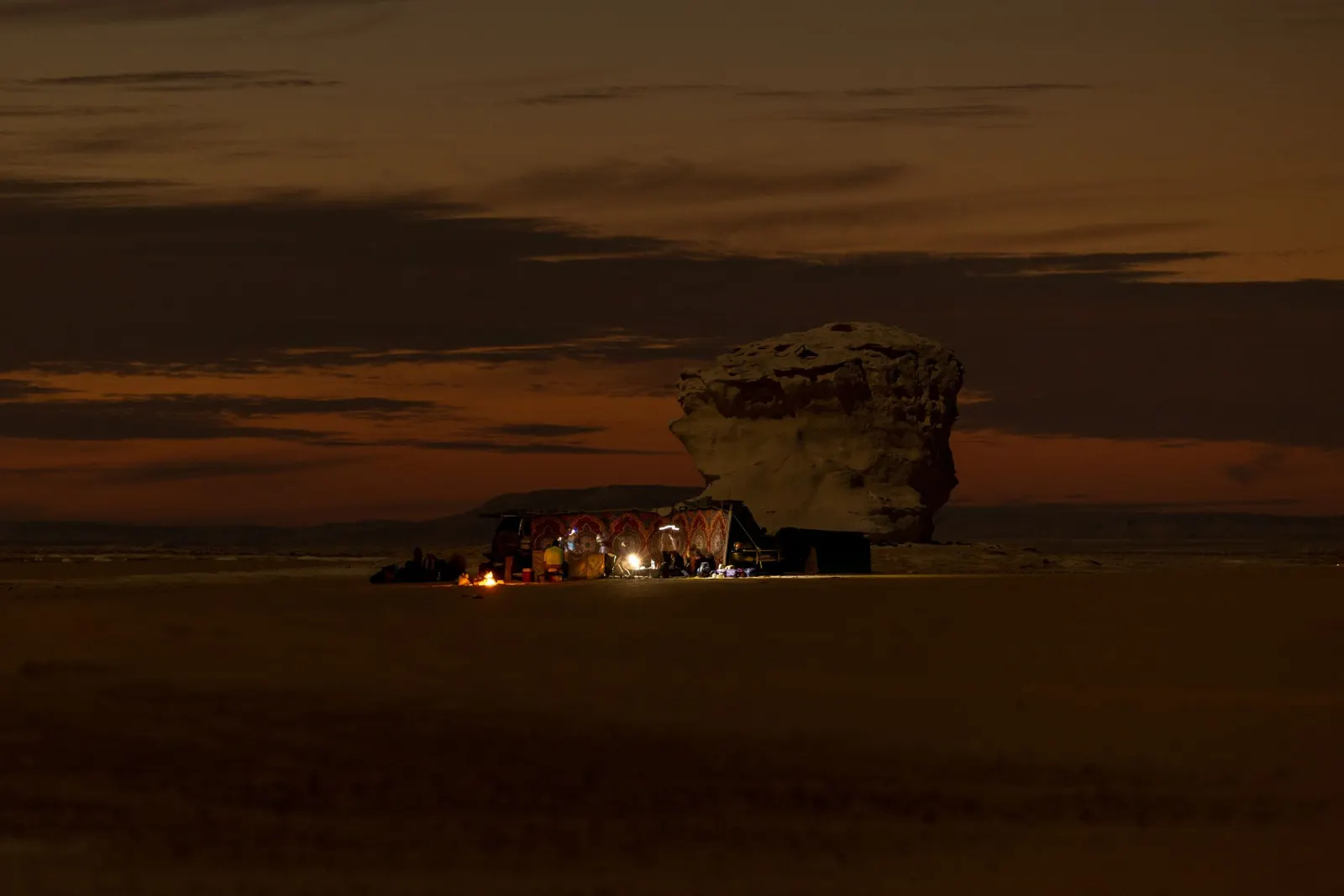
Siwa town's January nights average a low of 5.6C in the official WMO normals, with a record of -2.2C, and open dunes can feel colder still. Camping here means a crew-built camp deep in the Great Sand Sea, a private glamping set-up among the dunes, or a fixed hot-spring camp below Gebel Dakrour. Only the fixed camps have a toilet block.
Ask us on WhatsAppCamping in Siwa, in brief
Short answer: choose the camp by how much comfort you need, then choose the date by the sky you want. The dunes give silence and a black horizon. A fixed hot-spring camp gives a toilet block, a roof of sorts and a warm soak. Between December and February, wherever you sleep, the night is cold.
Our Siwa team has been taking guests out to sleep in the desert since 2012, and every winter the same three things catch people out: the cold after midnight, how simple the washing is, and how fast a phone battery dies. This page covers all three plainly, then helps you pick a night.
Three kinds of camp
| Wild dune camp | Private glamping | Fixed hot-spring camp | |
|---|---|---|---|
| Setting | A hollow between dunes in the Great Sand Sea, chosen on the day | Also in the dunes, set up for your party alone | A fixed site by a warm spring at the foot of Gebel Dakrour, where palms meet sand |
| Getting there | 4x4 with a driver-guide, well out into the sand | 4x4 with a driver-guide | A few kilometres from town by car |
| Sleeping | Mattresses and blankets on rugs, under open sky or in a tent | Proper beds and linen in a tent | Tents or simple huts |
| Water | Whatever the crew carries | Whatever the crew carries | A warm spring pool |
| Toilet | Trowel and a dune | Toilet tent | Basic toilet block |
| Darkness | Excellent in every direction | Excellent | Fair; town lights lie to the north-west |
| Desert permit | Yes | Yes | Not normally |
Wild dune camp. The real thing. The crew drives you deep among the dunes, often by way of Bir Wahed, a sulphur spring in the sand beside a cold lake, and picks a sheltered spot before dark. The sand sea itself is vast: Wikipedia gives about 72,000 km2, stretching about 650 km north to south from western Egypt into eastern Libya, with Siwa in its eastern part. A camp an hour or so into the dunes is a small corner of it, which is why the crew picks the spot, not a map. Background on the landscape is on our Great Sand Sea page.
Private glamping. The same setting with more comfort: beds rather than mattresses on rugs, and a toilet tent. It suits couples and anyone who wants the silence of the sand without roughing it.
Fixed hot-spring camp. Small camps below Gebel Dakrour, the ridge best known for its summer sand baths. The pools on the dune edge are warmer than the town springs, a real pleasure on a January evening; ask us for the current temperature at the camp we book. Expect some lighting, a shared dining area and other guests. These camps are the gentlest first night out and the least wild. More on Siwa's springs.
Night temperatures, month by month
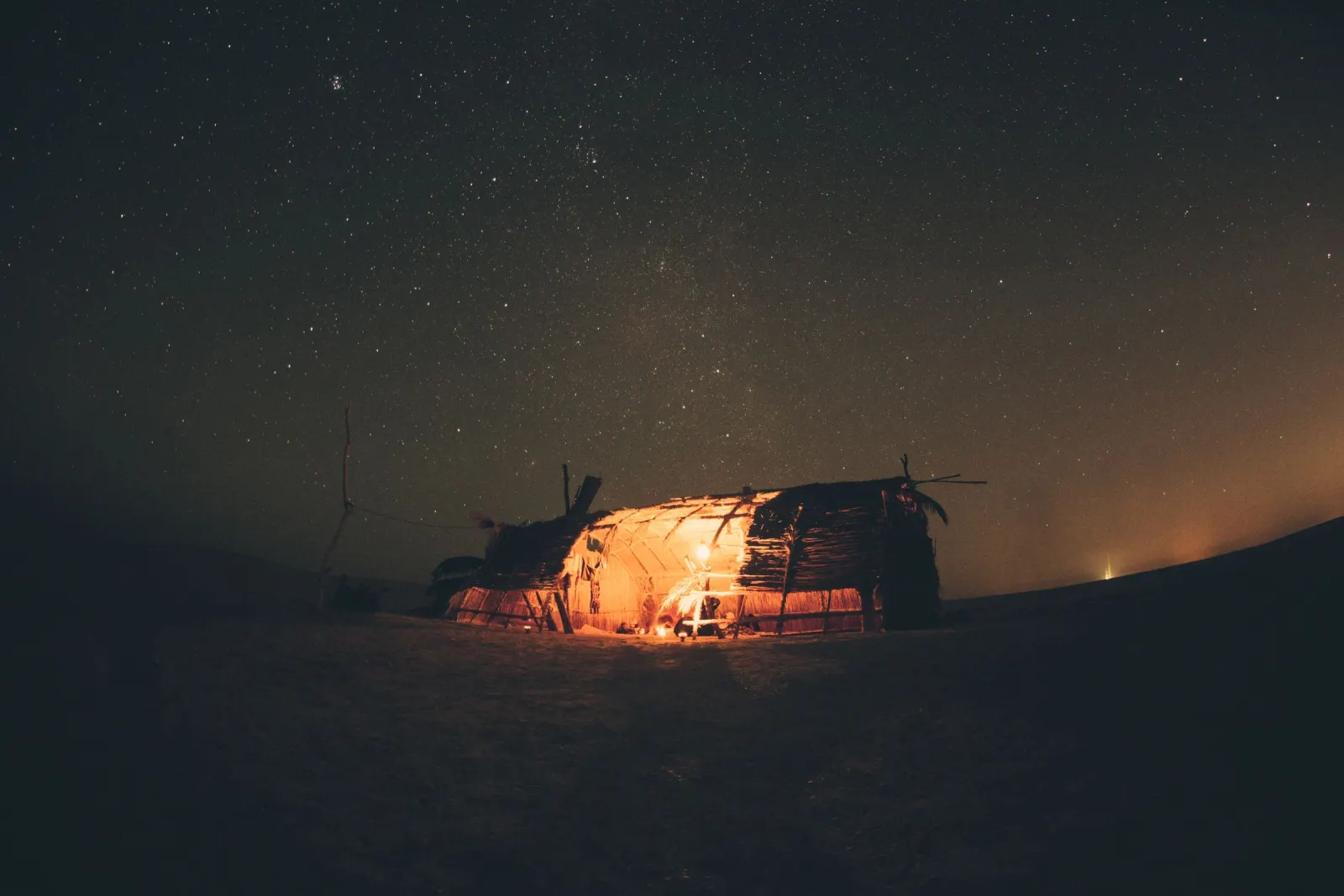
Highs, lows and record lows are Siwa town's official WMO 1961-1990 normals for station 62417 (NOAA copy, checked 17 November 2026), the latest WMO set published for Siwa. Recent decades run warmer: Meteostat's 1991-2020 lows, set out on our Siwa weather page, are about 1C higher on winter nights and about 2C higher in August and September. Open sand under a clear sky loses heat faster than the palm gardens, so read the low as a town figure and dress for colder in the dunes.
Sunset is for the 15th of each month in Egypt local time, from timeanddate.com (checked 17 November 2026). Clocks run an hour later from late April to late October.
| Month | Mean high | Mean low (town) | Record low | Sunset | Camp verdict |
|---|---|---|---|---|---|
| January | 19.3C | 5.6C | -2.2C | 17:41 | Coldest; four-season bag, hat, down jacket |
| February | 21.5C | 7.1C | -1.3C | 18:07 | Cold nights, bright days |
| March | 24.5C | 10.1C | 0.3C | 18:26 | Breezy; fine on a calm night |
| April | 29.9C | 13.7C | 5.7C | 18:44 | Windiest month; khamsin dust risk |
| May | 34.0C | 17.8C | 7.5C | 20:02 | Warm night, hot afternoon |
| June | 37.5C | 20.4C | 14.0C | 20:18 | Warm nights; drive out after the heat |
| July | 37.5C | 21.7C | 17.5C | 20:19 | Hot until well after dark |
| August | 37.0C | 21.4C | 15.9C | 19:58 | Short nights only |
| September | 34.6C | 19.5C | 11.7C | 19:23 | Warm; easing towards autumn |
| October | 30.5C | 15.5C | 7.8C | 18:48 | Excellent |
| November | 25.0C | 10.2C | 2.9C | 17:23 | Our favourite: the calmest month |
| December | 20.5C | 6.5C | -0.7C | 17:21 | Cold; the year's shortest evenings |
Wind matters as much as the thermometer. The same normals give a mean wind of 3.9 m/s in April, the highest of the year, against 2.1 m/s in November, the lowest. A still night at 6C feels far kinder than a breezy one at 10C, so the crew will tuck the camp behind a dune on the lee side.
For the season as a whole, read Siwa in winter and our best time to visit page.
Facilities, plainly
Toilets. None in the dunes. You take a trowel and a roll of paper behind the nearest ridge and carry used paper back out in a bag. On private camps we can put a toilet tent over a pit. Fixed camps have a toilet block; some travellers report it is basic and, at cheaper camps, not always clean.
Washing. No showers in the sand. Wet wipes, a flannel and a bottle of water see you through one night, and a spring soak on the way out helps. Some fixed camps have a shower, but hot water on demand is not a given.
Power and signal. Nothing in the dunes. Do not rely on charging at a fixed camp either; some may offer a socket for part of the evening, so ask. Signal tends to drop away not long after you leave the oasis, which is part of the point.
Insects. Open sand is usually quiet. Camps near water can have flies by day and mosquitoes at dusk; some travellers mention both, and basic huts, at budget spring camps.
What to pack for a desert night
Mattresses and blankets are normally provided, but a sleeping bag often is not, so check before you go.
- Sleeping bag from November to March, rated to around freezing in midwinter. A liner adds a little warmth.
- Insulated jacket, beanie, gloves and wool socks. You will sleep in them.
- Head torch with a red mode, to keep your night vision.
- Scarf or buff against wind and blown sand.
- Power bank, kept warm in a pocket.
- Dark swimwear you do not mind spoiling if a sulphur spring is on the route; the water can discolour pale fabric.
- Wet wipes, hand gel and a small rubbish bag.
- Sun hat and sunglasses for the drive back.
Everything else is on our packing list.
Permits and paperwork
Siwa town and the fixed camps on its edge normally need no permit. The Great Sand Sea is different. Canada's travel advice (updated 26 May 2026, checked 17 November 2026) says travel to desert areas needs a permit from the Travel Permits Department of Egypt's Ministry of Interior, and the UK's advice (checked 17 November 2026) says off-road trips need a qualified guide and a Ministry of Interior permit. Your licensed operator files it with your passport details; our camp prices include it.
Siwa town is about 50 km east of the Libyan border, which is closed to travellers. Canada advises against all travel within 50 km of that border and in the Western Desert generally; its exception covers Siwa itself, reached by the Marsa Matruh road, with a high degree of caution. A night in the dunes beyond the oasis falls outside that wording, so read your own government's advice and check that your insurance covers it. Details are on permits and checkpoints.
Staying safe
- Go with a licensed Siwan crew. Driving yourself into the sand is not an option: the desert permit goes through a licensed operator.
- Ask about back-up on remote trips. For deep or multi-day routes, ask whether a second vehicle and a satellite phone come along.
- Ask for gentle driving if you need it. Dune runs are thrilling but hard on bad backs, pregnancy and motion sickness.
- Read your insurance. Some policies exclude off-road driving, so check the wording. The UK advises checking that your cover includes rescue, as Egypt's authorities start one only once payment is guaranteed.
- No heater, stove or charcoal inside a closed tent. The NHS (reviewed 16 December 2025) warns against camping stoves in tents and lists gas and paraffin heaters as carbon monoxide sources. Cook and sit by the fire in the open; layers and a good bag keep you warm.
- Shake out your shoes in the morning and keep bags zipped.
More on safety in Siwa.
Time it with the sky
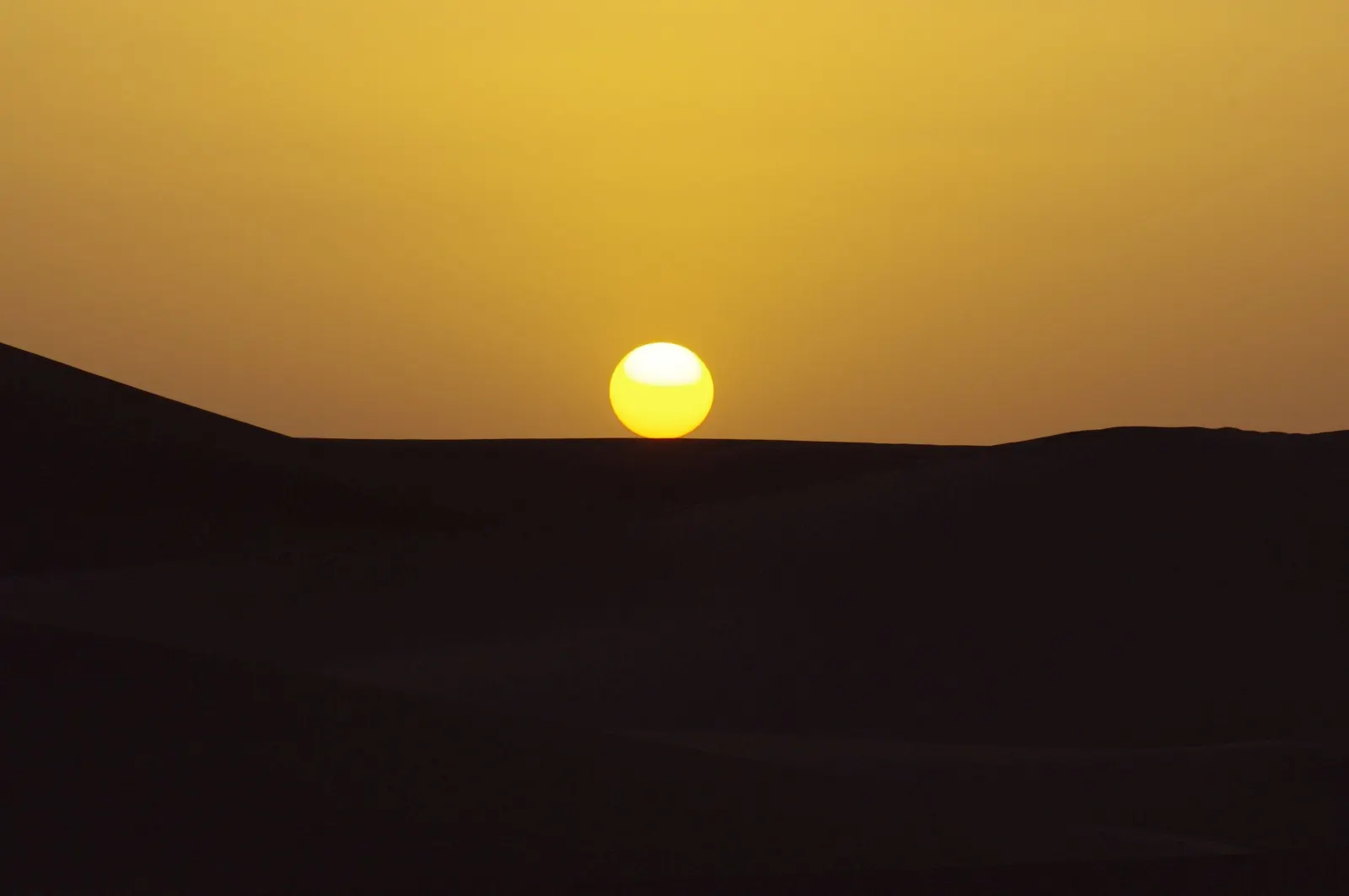
Moonlight changes a camp completely. A full moon throws shadows off every ridge and you will barely need a torch; a new moon gives the deepest black sky. These are the season's dates in Siwa local time from timeanddate.com (checked 17 November 2026).
| Month | New moon | Full moon |
|---|---|---|
| Nov 2026 | 9 Nov | 24 Nov |
| Dec 2026 | 9 Dec | 24 Dec |
| Jan 2027 | 7 Jan | 22 Jan |
| Feb 2027 | 6 Feb | 21 Feb |
| Mar 2027 | 8 Mar | 22 Mar |
| Apr 2027 | 7 Apr | 21 Apr |
The December, February and April full moons fall in the small hours (03:28 on 24 Dec, 01:23 on 21 Feb, 00:27 on 21 Apr), so the moonlit camp night is the one before: 23/24 December, 20/21 February and 20/21 April.
Two winter nights stand out. The Geminids on 13/14 December 2026 come with a crescent Moon that sets around 21:10. The Quadrantids peak before dawn on 4 January 2027, at about 05:25 Egypt time, with only a thin waning crescent rising around 04:25. See the Geminids night, the meteor shower calendar, the 2027 moon calendar and our stargazing guide.
What it costs
A private one-night dune camp costs about US$120 to 220 per person for two travellers, less per head in a larger group, with the desert permit included. A fixed hot-spring camp can cost less, as there is no long drive and no desert permit; ask us for a current quote. Prices updated November 2026.
Book your night
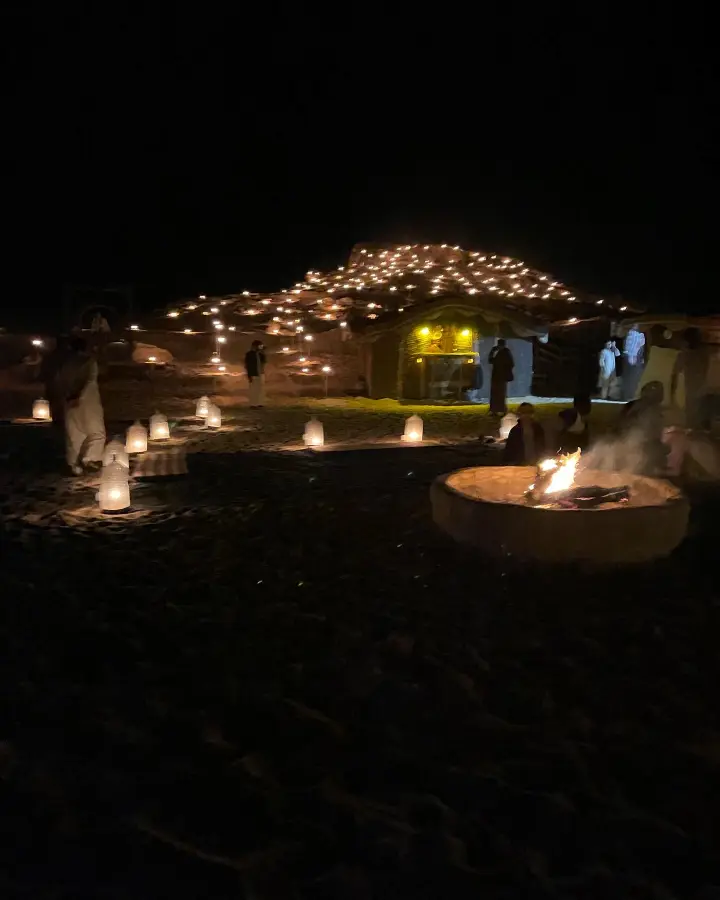
Our overnight desert camp is the simplest way in: dunes in the afternoon, a spring soak, sunset, dinner on the fire and sunrise over the sand, with the desert permit included. For a dated full-moon or meteor night, choose full moon and stars. The eco-lodge and desert camp trip pairs a night out with lodge comfort either side, and for a longer push into the sand there is the Great Sand Sea safari. Still deciding? Contact us with your dates.
Questions people ask
How cold does it get camping in Siwa?+
Colder than most people pack for. In the WMO normals, Siwa town's mean low is 5.6C in January, 7.1C in February and 6.5C in December, and the record low is -2.2C. On open sand under a clear, still sky it usually feels sharper than in town. From December to February bring a sleeping bag rated to around freezing.
Are there toilets and showers at Siwa desert camps?+
Fixed hot-spring camps have a basic toilet block, and some have a shower. Out in the dunes there is no plumbing: the crew hands you a trowel and points you behind a ridge, and on private camps they can pitch a toilet tent. Plan on no shower for a night in the sand.
Do I need a permit to camp in the Great Sand Sea?+
Yes. Canada's travel advice says desert areas need a permit from Egypt's Ministry of Interior, and a licensed operator files it with your passport details. The permit is included in our camp prices. Fixed camps on the oasis edge normally need no desert permit.
Is it better to camp at full moon or new moon?+
It depends on the night you want. A full moon lights the sand silver and you can walk the crests without a torch, but it hides most stars. New moon gives the darkest sky and, from about March to October, the bright core of the Milky Way at some hour of the night. Our moon calendar lists every date.
Can I use a gas heater or stove in my tent?+
No. The NHS warns never to use a camping stove or barbecue inside a tent, and gas or paraffin heaters also give off carbon monoxide. Headache, dizziness and nausea in a closed tent are warning signs: get into fresh air at once. Stay warm with layers and a good sleeping bag.
Can I charge my phone at a desert camp?+
Do not count on it. There is no electricity in the dunes, and phone signal fades soon after you leave the oasis. A fixed camp may offer a socket for part of the evening, but ask first. Bring a full power bank and keep it inside your sleeping bag, because cold drains batteries quickly.
Go with us
Trips that include this
About 20 hours (afternoon to next late morning)
Overnight Desert Camp from Siwa (Private)About US$120 to 220 per person for two travellers
Check dates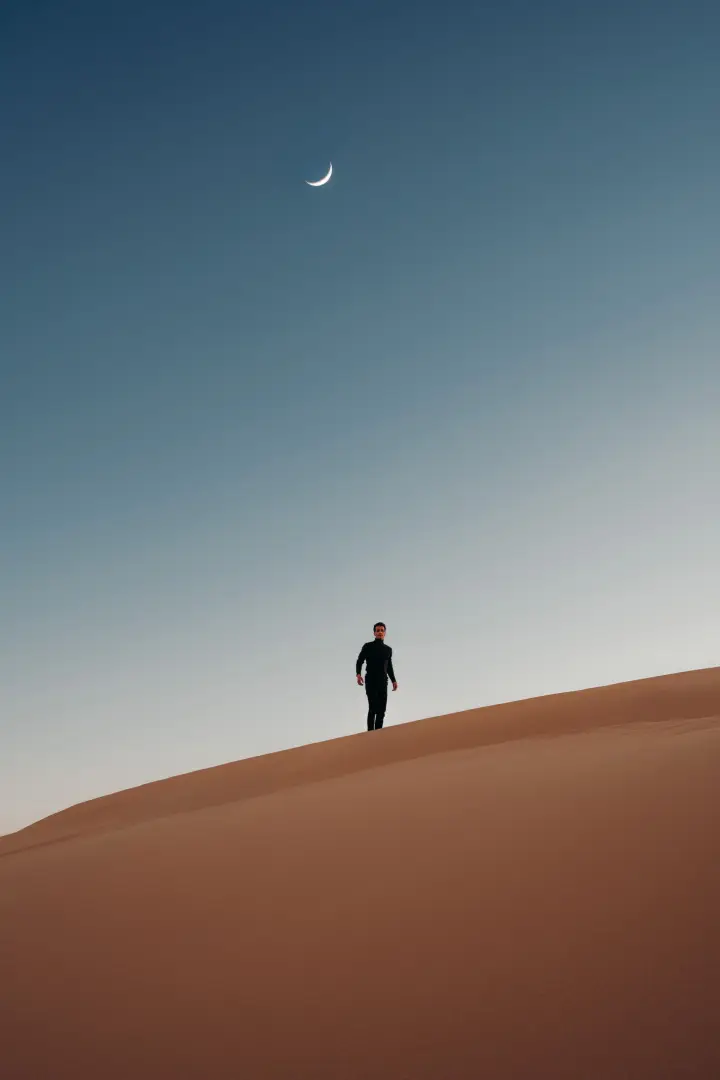
4 days, 3 nights
Siwa Sky Nights 2026-27: Meteor and Full-Moon TripsAbout US$530 to 880 per person for two travellers
Check dates
About 5 hours (afternoon to sunset)
Great Sand Sea Safari from Siwa (Half Day)About US$60 to 130 per person (shared or private car)
Check dates