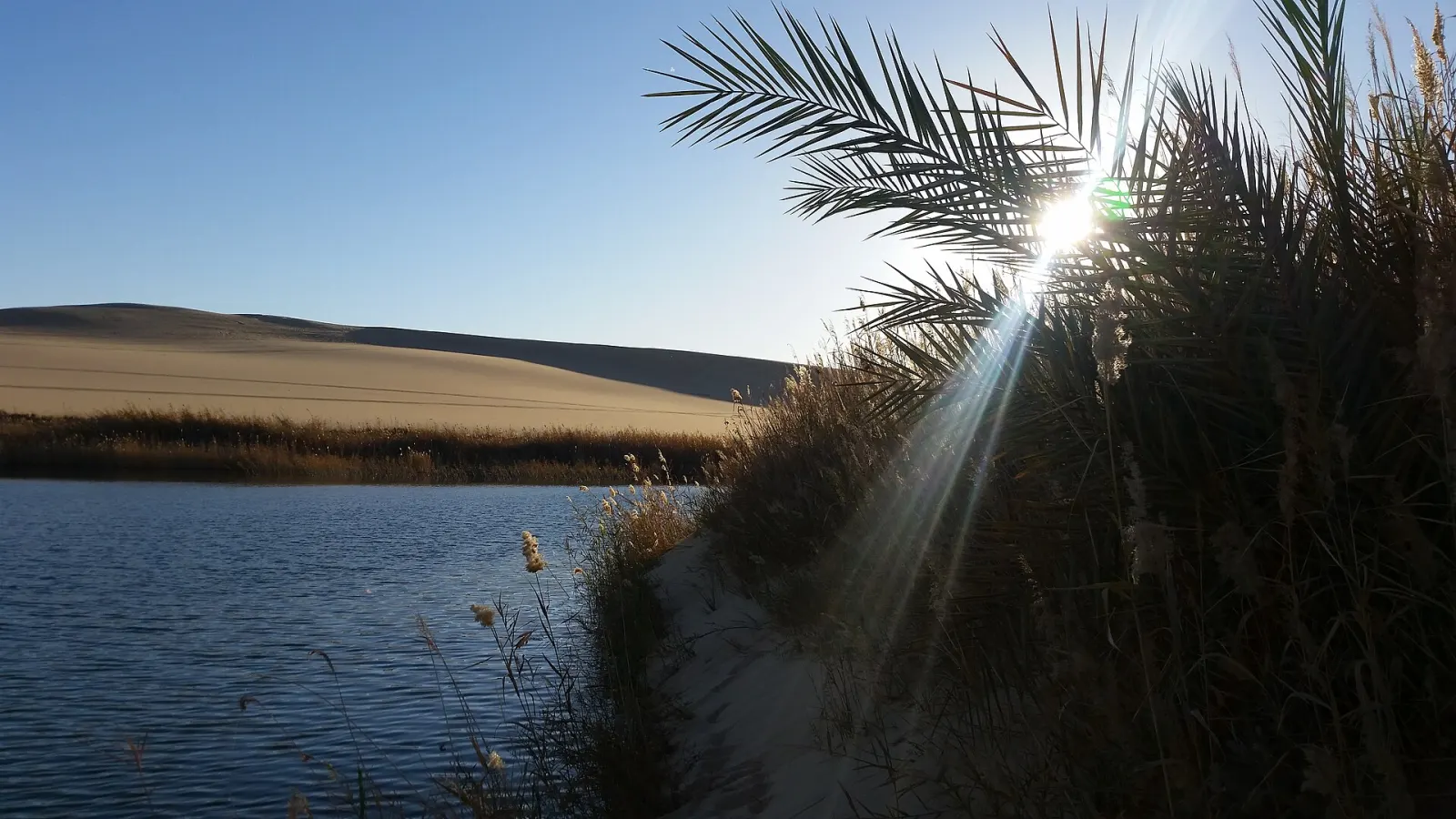
The short answer
Siwa has about 200 springs fed by groundwater. For a swim, most visitors pick Cleopatra Spring, 3.4 km from the market square and steady at about 29°C, the clearer Abu Shuruf 27 to 34 km east by road, or the warm pool at Bir Wahed in the dunes by 4x4. At public springs, wear a T-shirt and shorts over your swimsuit.
Ask us on WhatsAppSprings at a glance
Short answer: Of roughly 200 springs, visitors swim at five or six: Cleopatra Spring for the classic dip, Abu Shuruf for clear water, Fatnas before sunset, and Bir Wahed or the Dakrour camps for warm water. Many lodges also have their own spring-fed pools.
Distances are by road from the market square below Shali, measured on OpenStreetMap for our getting around Siwa guide.
| Spring | From the market square | Water | How to get there | Best for |
|---|---|---|---|---|
| Cleopatra Spring | 3.4 km east, Aghurmi | About 29°C, constant | Bike (17 min) or tuk-tuk | The famous swim; busy at weekends |
| Fatnas | About 4.5 km west | Warm, sulphurous | Bike (20 to 25 min) or tuk-tuk | A short dip before sunset |
| Dakrour camps | About 4.5 km south-east | Warm | Tuk-tuk or car, about 10 min | Winter evenings |
| Abu Shuruf | 27 to 34 km east | Mild, clear | Car or 4x4, 30 to 45 min | Clean water, few people |
| Bir Wahed | About 12 km south-west in a straight line, sand at the end | About 30°C pool; cold lake beside it | 4x4 with licensed driver only | Sunset on a desert safari |
| Kegar | West of town | Hot | Car; ask us for the current track | Local families in winter |
| Lodge pools | Varies | Mild | Your lodge | Privacy; normal swimwear |
Where the water comes from
Short answer: From groundwater under the Western Desert. Siwa lies in a depression that reaches about 20 m (65 ft) below sea level, so the water sits close to the surface and much of it flows up without pumping.
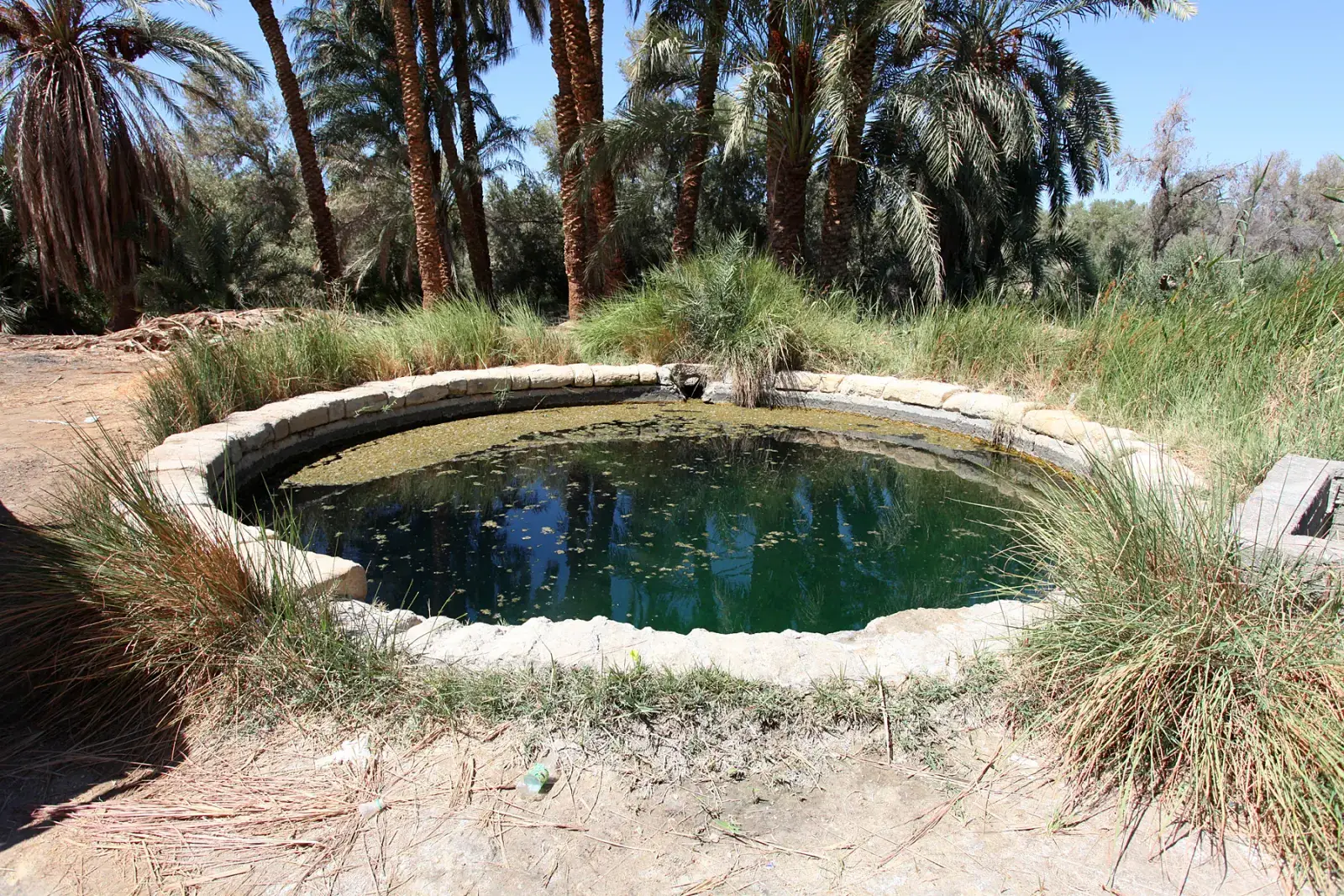
NASA's Earth Observatory notes that springs fed by shallow groundwater supply the surface water in the depression, and that the oasis sits on the Nubian Sandstone Aquifer System, one of the largest aquifers in the world. Wikipedia describes the oasis as watered by natural flowing artesian wells. Deep modern wells tap warmer, mineral-rich layers, which is why some newer pools on the dune edge are warmer and smell of sulphur, while the old town springs are milder.
The ancient Greeks knew one of these springs. Herodotus described a "fountain of the Sun" near the oracle of Ammon that ran coldest in the noon heat (Wikipedia). A likely reason is that spring water holds a steady temperature, so it feels cold against hot midday air and warm on a cool night.
Choosing a spring
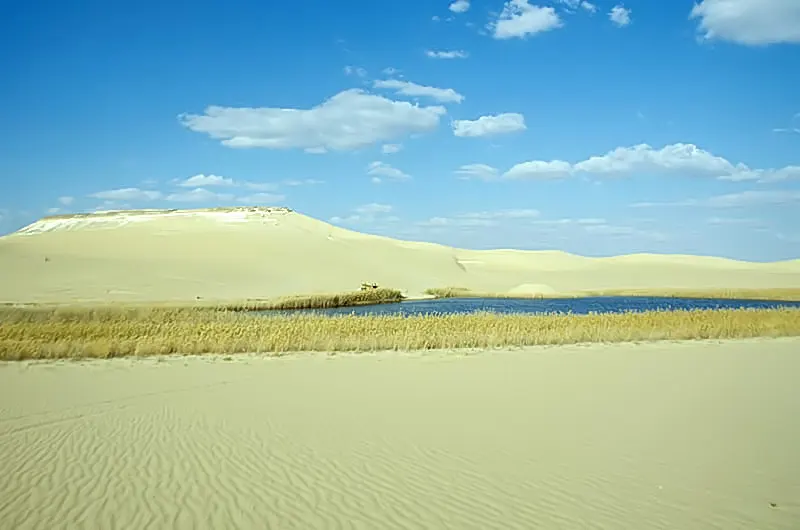
Short answer: Choose by what you want: history and cafés at Cleopatra Spring, clear water at Abu Shuruf, heat at Bir Wahed or Dakrour, privacy at your lodge.
- One swim on a short trip: Cleopatra Spring. It sits on the morning loop with the Oracle Temple and Umm Ubayda.
- Clear water and quiet: Abu Shuruf, as a half-day east of town. Leave early.
- After floating in the salt pools: any freshwater spring to rinse the brine off before it dries on your skin. The salt lakes are about 15 km out, so ask your driver to stop at a spring on the way back.
- Cold months: the Dakrour camps or Bir Wahed, in the warmest part of the afternoon.
- Women who want to swim in an ordinary swimsuit: a lodge pool. See eco-lodges and where to stay.
Getting there inside the oasis
The town springs are close together. Cleopatra Spring, Fatnas and the Dakrour camps are all within 5 km of the square on flat roads, so a hired bike covers two of them in a morning or an afternoon. Tuk-tuks run the same routes; agree the fare before you get in and arrange the pick-up time if you want a ride back after dark.
Abu Shuruf is too far to cycle, at 27 to 34 km each way, so go by car; the pool is a short walk from the road. Bir Wahed is inside the Great Sand Sea: no bike, tuk-tuk or ordinary car can reach it, and off-road travel needs a licensed driver and a desert permit filed by the operator. See permits and checkpoints and what to expect on a 4x4 safari.
| Plan | Springs | Transport | Time |
|---|---|---|---|
| Morning loop | Oracle Temple, Umm Ubayda, Cleopatra Spring | Bike or tuk-tuk | About 3 hours |
| Sunset by bike | Fatnas | Bike | Leave the square 90 minutes before sunset |
| Half-day east | Abu Shuruf, Zeitoun ruins | Car or 4x4 | 4 to 5 hours |
| Desert afternoon | Bir Wahed, dunes, sunset | 4x4 safari | Afternoon to after dark |
| Winter evening | Dakrour camp | Tuk-tuk or car | 2 to 4 hours |
When to go
Short answer: October to April for the warm pools; early morning all year for the busy town springs. Fridays and public holidays are the most crowded days everywhere.
The water does not change much with the season, but the air does. Using the WMO 1961-1990 normals for the Siwa station (full table on Siwa weather):
| Months | Mean afternoon high | Mean night low | What it means for a swim |
|---|---|---|---|
| December to February | 19 to 22°C | 6 to 7°C | Warm pools feel best; dry off fast and dress warmly |
| March to April, October to November | 24 to 31°C | 10 to 16°C | Good for every spring at any hour |
| May to September | 34 to 38°C | 18 to 22°C | Cool springs feel refreshing; skip the hot pools at midday |
In winter, the sun sets early: on 17 November 2026 sunset in Siwa was at 17:22, and it stays around 17:20 for the rest of the month (timeanddate.com, checked 17 November 2026). For a sunset swim at Fatnas or Bir Wahed, plan to be in the water by about 16:00.
| Time of day | Where |
|---|---|
| Early morning | Cleopatra Spring or Abu Shuruf, before families and groups arrive |
| Midday in summer | Rest in the shade; families come after school hours |
| Late afternoon | Fatnas, then stay for sunset |
| Evening, October to April | A camp under Gebel Dakrour |
Costs
There is no ticket at the public springs we know of, and no official fee schedule has been published. What you pay for is everything around the water: a drink at the café whose chairs and changing room you use, transport, and day fees at camps. Prices change often, so ask us for current figures rather than relying on old blog posts. For a whole-trip budget, see Siwa trip cost and tours and prices.
| Item | Who charges | Notes |
|---|---|---|
| Swim at a public spring | Usually nobody | Buy a drink if you use café seats |
| Bike or tuk-tuk to town springs | Bike shop or driver | Agree in cash before you set off |
| Car to Abu Shuruf | Driver | Half-day hire; ask us for a quote |
| Bir Wahed | 4x4 operator | Part of a desert safari, permit included |
| Hot spring camp | Camp owner | Day fee or a meal; ask us |
Swimming etiquette
- Siwa is conservative. Men swim in shorts. Foreign women usually swim in a T-shirt and shorts or leggings over a swimsuit; Wikivoyage's general advice is to keep shoulders and legs covered (Wikivoyage). See what to wear in Siwa.
- Siwan women do not swim in public springs. A lodge pool is more relaxed for women travelling alone; see Siwa for solo women travellers.
- No soap or shampoo, and let sunscreen soak in for half an hour before you get in: the water runs on to irrigate the gardens.
- Do not photograph local swimmers or women nearby. More on local customs in Siwa etiquette.
- Wear old, dark swimwear in sulphur pools. Wikivoyage warns that Bir Wahed's minerals stain costumes and towels.
Families and accessibility
- Children: the town springs are deep in the middle. Bring armbands and stay within arm's reach. Wikivoyage puts Bir Wahed's pool at about 30°C; keep small children out of anything hotter and limit time in warm pools. Ask us which lodges have shallow pools.
- Limited mobility: Cleopatra Spring has slippery stone steps and edges, and getting in is awkward. Abu Shuruf is about 200 m on foot from the road. Bir Wahed means walking on sand. Ask us which lodge pools have the easiest entry.
- Health: skip very hot pools if you are pregnant or have heart or blood-pressure problems, and ask your doctor before travel.
Mistakes to avoid
- Going to Cleopatra Spring on a Friday afternoon. It is the busiest slot of the week. Go on a weekday morning.
- Swimming in salt water without a rinse planned. The salt crusts on skin and hair within minutes in the sun.
- Getting out of a warm pool into a winter night. January nights average 5.6°C. Have a towel, fleece and dry clothes in reach.
- Cycling to Abu Shuruf. At 27 to 34 km each way, it is a car trip.
- Wearing your best swimsuit to Bir Wahed. The stains do not wash out.
- Leaving valuables on the edge. Keep them in the car or at your lodge.
Water and the future
The springs are not an endless supply. NASA notes that Siwa's drainage is poor, so excess irrigation water pumped from wells pools in the lakes, and the lakes' area has swung widely with farming (NASA Earth Observatory). Wikipedia notes that the two big salt lakes are fed by farm drainage. For the full story, see Lake Siwa. As a visitor, the useful thing you can do is keep showers short.
Safety
- Do not drink spring water; buy bottled water. NASA notes that near-surface groundwater here has a high salt content.
- Weak swimmers should stay at the edge of the town springs.
- Wear flip-flops on wet stone.
- For pharmacies and clinics, see health and pharmacies in Siwa.
Combine it
- Morning: Oracle Temple, Umm Ubayda, Cleopatra Spring.
- Afternoon: salt lakes, a freshwater rinse, then Fatnas for sunset.
- Desert day: Great Sand Sea, sandboarding, Bir Wahed at sunset.
- Evening: Gebel Dakrour camp, or stargazing on a moonless night.
On a trip
Our Siwa oasis day tour includes a swim at Cleopatra Spring, and the Great Sand Sea safari stops at Bir Wahed. We can add Abu Shuruf or a camp evening to any trip; contact us. See also things to do in Siwa.
Sources: spring count from Wikipedia and Egyptian Geographic; groundwater and drainage from NASA Earth Observatory; water temperatures for Cleopatra Spring and Bir Wahed from Wikivoyage (all checked 17 November 2026); Abu Shuruf from Lonely Planet; air temperatures from the WMO normals on our Siwa weather page.
Map of the oasis
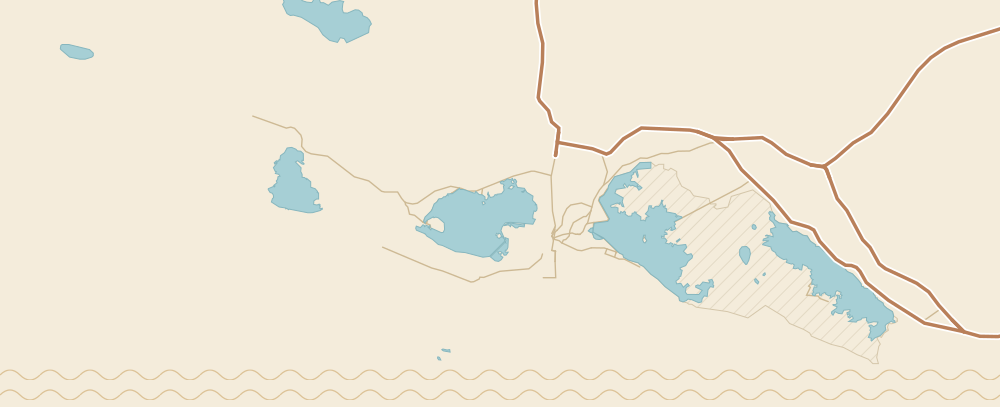
Close-up: around Siwa town
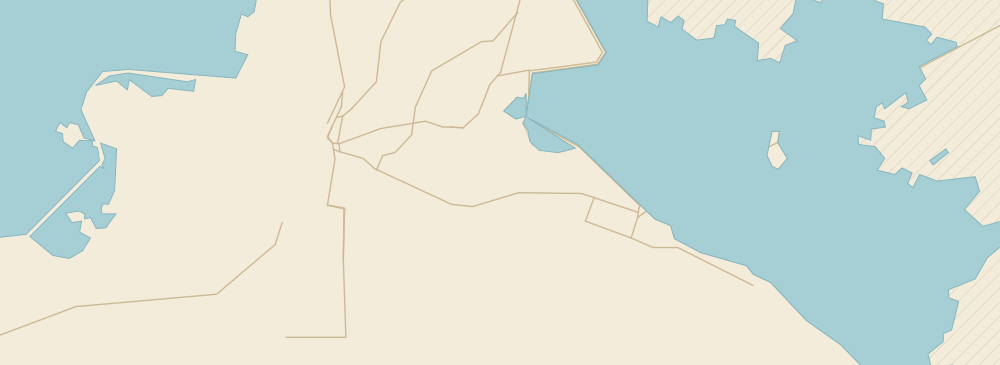
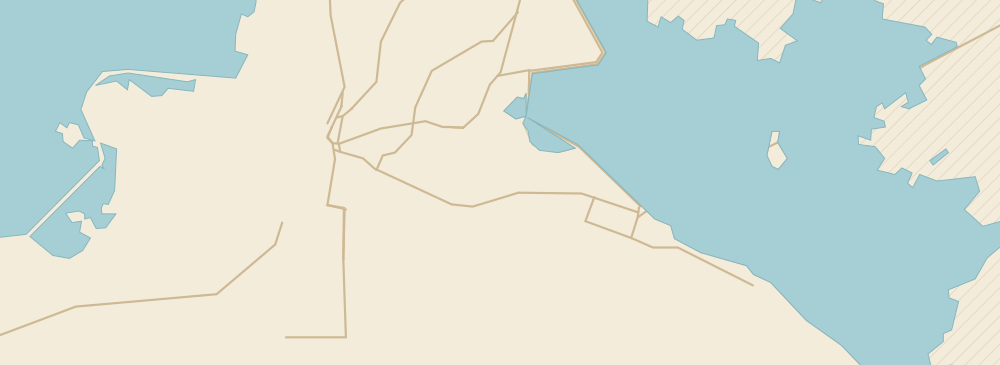
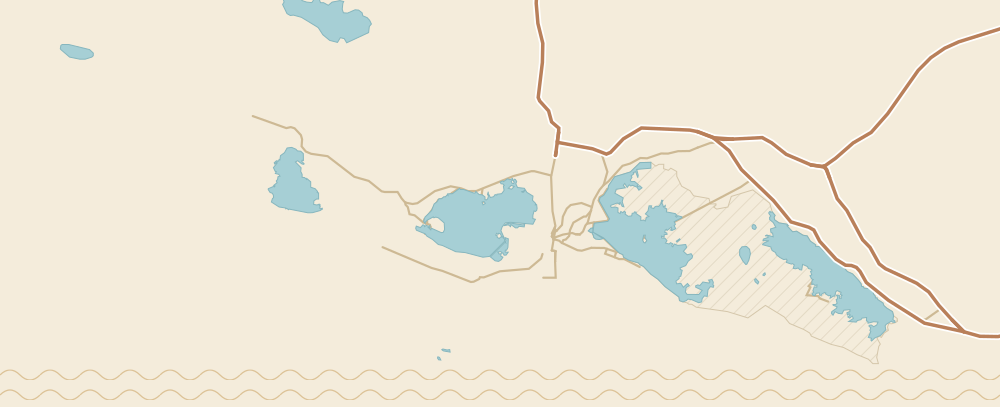
Lakes and roads drawn from OpenStreetMap; pin positions are approximate. The salt flats (hatched) dry out and flood with the seasons. Map data © OpenStreetMap contributors, ODbL.
Questions people ask
How many springs does Siwa have?+
About 200 natural springs, according to Wikipedia and Egyptian Geographic, plus many drilled wells. Only five or six are used by visitors for swimming; the rest water palm and olive gardens.
Which spring in Siwa is the warmest?+
The pools on the dune edge, such as Bir Wahed and the springs at the Gebel Dakrour camps, are warmer than the town springs. Wikivoyage puts Bir Wahed at about 30°C and Cleopatra Spring at 29°C.
Can you swim in Siwa's springs in winter?+
Yes. Spring water holds its temperature all year, so in January, when nights average 5.6°C, the pools feel warm. Swim in the early afternoon and have dry, warm clothes ready.
Do you have to pay to swim at Siwa's springs?+
Public springs usually have no ticket, but the cafés around them expect you to buy a drink if you use their seats or changing rooms. Hot spring camps may charge a day fee; ask us for current prices.
Can I reach the springs without a car?+
Cleopatra Spring, Fatnas and the Dakrour camps are all within 5 km of the market square, so a bike or tuk-tuk is enough. Abu Shuruf needs a car, and Bir Wahed needs a 4x4 with a licensed driver.
Are Siwa's springs good for children?+
Yes, with care. The town springs are deep in the middle and have slippery stone edges, so bring armbands for weak swimmers. Keep small children out of the hottest pools.
Is the spring water safe to drink?+
Do not drink it. Near-surface groundwater in Siwa is salty, according to NASA, and pools are not treated. Drink bottled water and keep your mouth closed in sulphur pools.
Go with us
Trips that include this
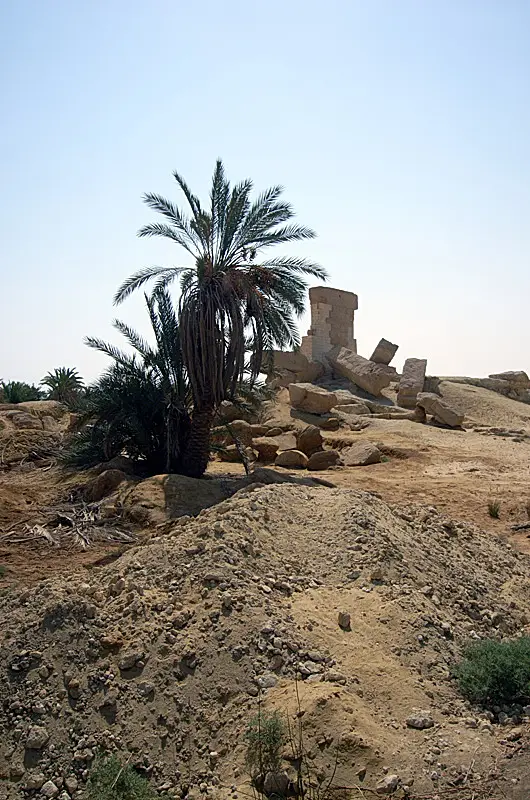
About 8 hours
Siwa Oasis Day Tour (from Your Siwa Hotel)About US$65 to 80 per person for two travellers (about US$130 to 160 per car)
Check dates
About 5 hours (afternoon to sunset)
Great Sand Sea Safari from Siwa (Half Day)About US$60 to 130 per person (shared or private car)
Check dates