- Duration
- About 8 hours
- Starts from
- Your hotel in Siwa
- Style
- Private car, driver and Siwan guide
- Price per person
- About US$65 to 80 per person for two travellers (about US$130 to 160 per car)
If you reach Siwa on your own, this private day with a Siwan guide covers the oasis in about 8 hours: the Oracle Temple and Umm Ubayda in the cool morning, the tombs of Gebel al-Mawta, Cleopatra Spring, a salt-lake float, Shali Fortress and sunset at Fatnas. It costs about US$130 to 160 per car, entry fees included.
Check dates on WhatsAppHighlights
- ✦The Oracle Temple of Amun, where Alexander the Great came in 331 BC
- ✦The painted Tomb of Si-Amun at Gebel al-Mawta
- ✦A swim at Cleopatra Spring and a float in a salt lake
- ✦Shali Fortress and the old market
- ✦Sunset over Lake Siwa from Fatnas
Day by day
Day 1
Morning: temples, tombs and a spring
Pick-up from your hotel after breakfast. First the Oracle Temple on the rock of Aghurmi, about 4 km east of town, and the single standing wall of the Temple of Umm Ubayda in the palms 400 m below it. Then Cleopatra Spring, about 1 km on, for a swim, and back across town to the rock-cut tombs of Gebel al-Mawta, just north of the centre.
Day 2
Afternoon: salt lake, Shali and Fatnas
Lunch in town and a rest through the warmest hours. Mid-afternoon, a float in a turquoise salt pool, 10 to 20 minutes from town by car, with a fresh-water rinse after. Then Shali Fortress and the old market, and on to Fatnas, about 4.5 km west of the square, for sunset over Lake Siwa.
Included
- ✓ Private car and driver for the day, never pooled with other travellers
- ✓ Siwan guide
- ✓ Entry fees to the sites in the itinerary
Not included
- – Lunch
- – Drinks at the Fatnas cafés
- – Tips
Who this trip is for
Short answer: Travellers who reach Siwa on their own, by the night bus or their own car, and want the main sights in one well-planned day with a car and a guide.
It suits first-time visitors, families, couples and anyone with only one or two days in the oasis. It also suits people who want the history explained on the spot rather than read from a phone in the sun.
Choose something else if:
- You are in Cairo and want us to handle the road. Our 3-day trip from Cairo includes this sightseeing day; the 2-day trip from Cairo is the shortest private option.
- You are coming by bus. The overnight bus, 2 days in Siwa plan pairs this day with a Great Sand Sea safari.
- You came for the dunes, not the ruins. Book the Great Sand Sea safari and see the town by bicycle.
- You like to set your own pace for free. Siwa town is small and flat; getting around Siwa shows how far each sight is by bike or tuk-tuk.
Getting to the start
Short answer: The day starts and ends at your hotel in Siwa. You need to arrive the day before.
There is no same-day way in from Egypt's big cities, which is why this day is sold for people already in the oasis. See why a Siwa day trip from Cairo does not work.
| From | By road | Notes |
|---|---|---|
| Cairo | ~750 km, ~9 h driving, ~10 h with stops | The West Delta night bus from Cairo takes 10 to 13 hours. |
| Alexandria | ~600 km, ~7.5 h driving, ~8.5 h with stops | See Alexandria to Siwa |
| Marsa Matruh | About 300 km and about 4 hours | Nearest airport with flights |
Siwa's airfield (SEW) has no scheduled passenger flights. The nearest airport with flights is Marsa Matruh (MUH), about 300 km and 4 hours north by road, and its flights run mostly in summer. For every route, read how to get to Siwa.
The route
Short answer: Every stop is within a short drive of the town centre. The order follows the heat and the light, not the map.
| Stop | Where | Time there |
|---|---|---|
| Oracle Temple of Amun | Aghurmi, about 4 km east of town | About an hour |
| Temple of Umm Ubayda | About 400 m south of the Oracle Temple | 15 to 20 minutes |
| Cleopatra Spring | About 1 km south of the Oracle Temple | 45 minutes to an hour |
| Gebel al-Mawta | About 1 km north of the town centre | About an hour |
| Salt lake float | 10 to 20 minutes by car | 1 to 2 hours |
| Shali Fortress | Town centre | 45 minutes to an hour |
| Fatnas | About 4.5 km west of the market square | Until after sunset |
The temples and tombs come first, while it is cool and the light is soft. The middle of the day is for lunch and a rest. The salt lake comes in the warm afternoon, when the water is most pleasant, and Fatnas about an hour before sunset, while the best seats by the water are still free.
One fixed point shapes the morning: the Ministry of Tourism and Antiquities lists the tombs of Gebel al-Mawta as open from 9:00 to 17:00 (ministry ticket list, checked 19 November 2026), so the painted tomb has to fall inside those hours.
What each stop is, and why it matters
Short answer: Two temples of Amun, a hill of painted tombs, an ancient spring, a salt pool, a ruined mud town and a lakeside sunset: most of Siwa's story in one loop.
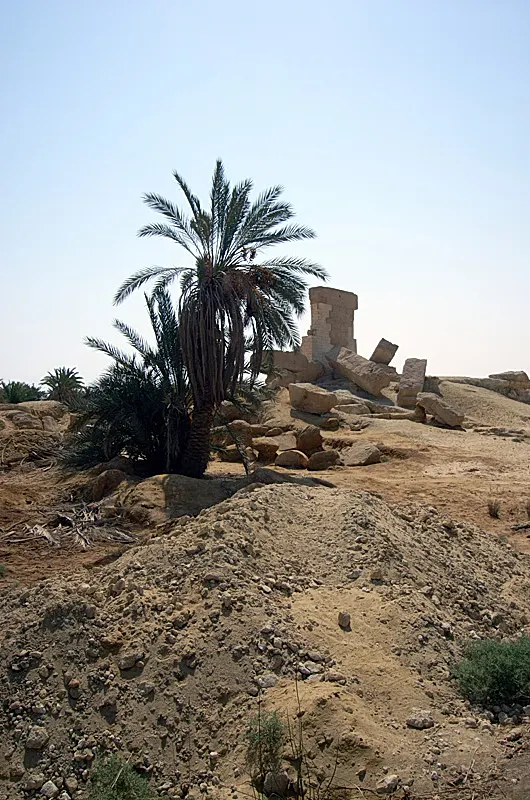
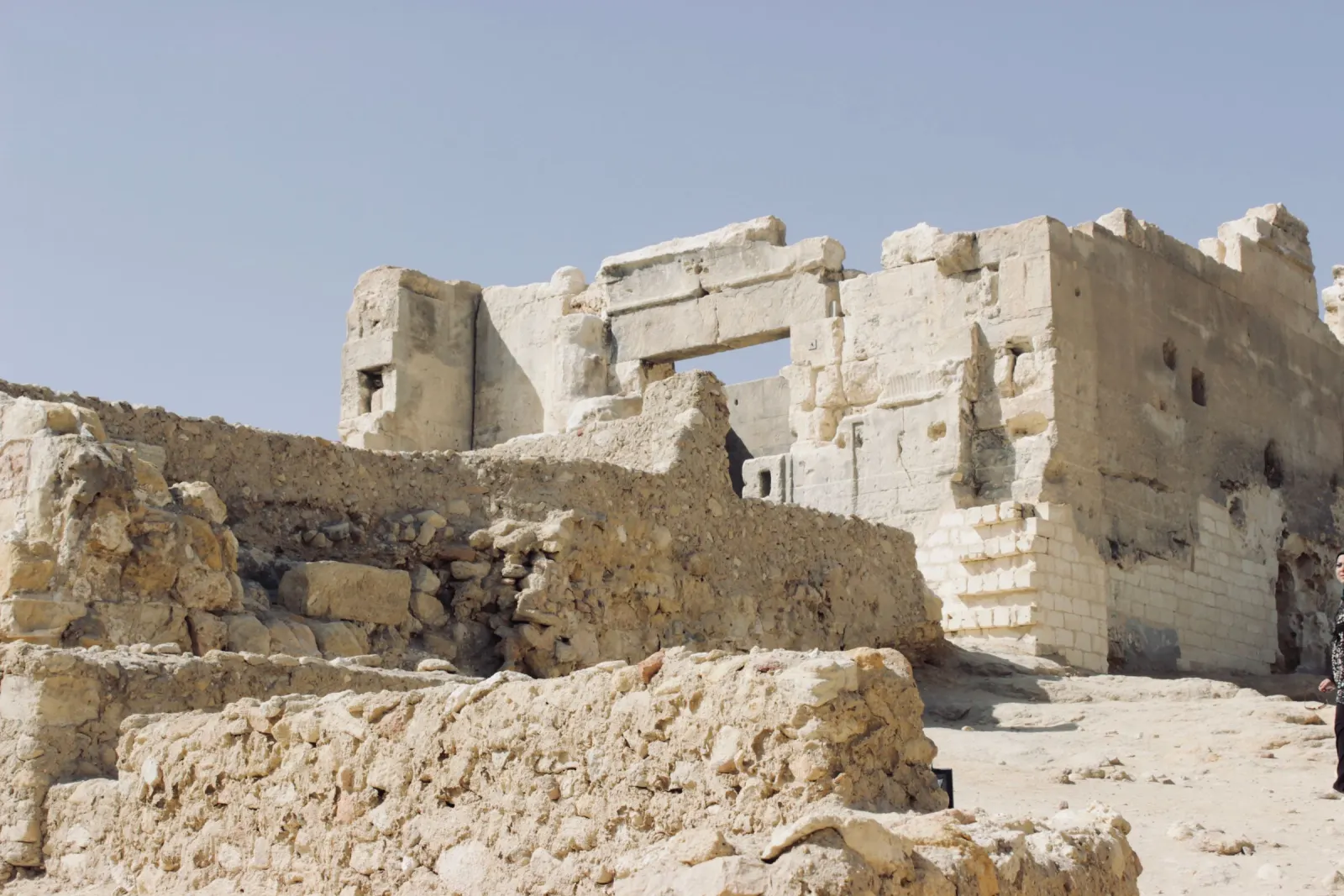
Oracle Temple of Amun. The shrine on the rock of Aghurmi was built by the pharaoh Amasis, who reigned 570 to 526 BC; his sanctuary has been excavated on the hill now called Aghurmi (Livius). Alexander the Great came to consult the oracle in 331 BC. The guide's account of what stood where is most of the visit. More in Alexander the Great in Siwa.
Temple of Umm Ubayda. A second temple, built under Nectanebo II, of which "a small wall fragment and several blocks of the roof remain" (Livius). It takes a few minutes, but it shows how large the sacred complex once was.
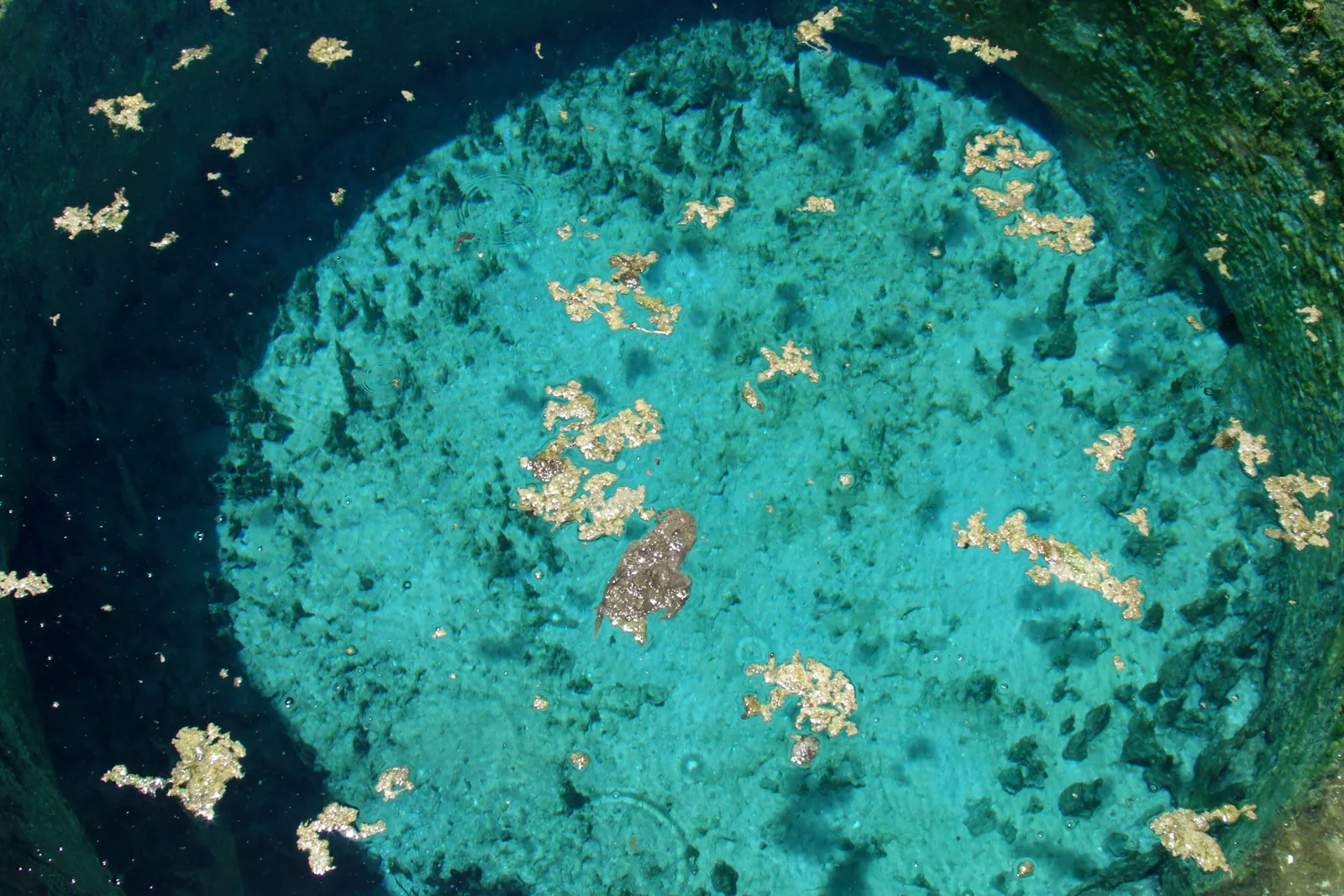
Cleopatra Spring. Wikipedia describes it simply as "an antique natural spring" (Wikipedia). Livius identifies it with the Spring of the Sun that Herodotus wrote about in the 5th century BC, whose water he claimed changed temperature through the day (Livius). Today it is a stone-lined pool where locals and visitors swim. See also Siwa springs.
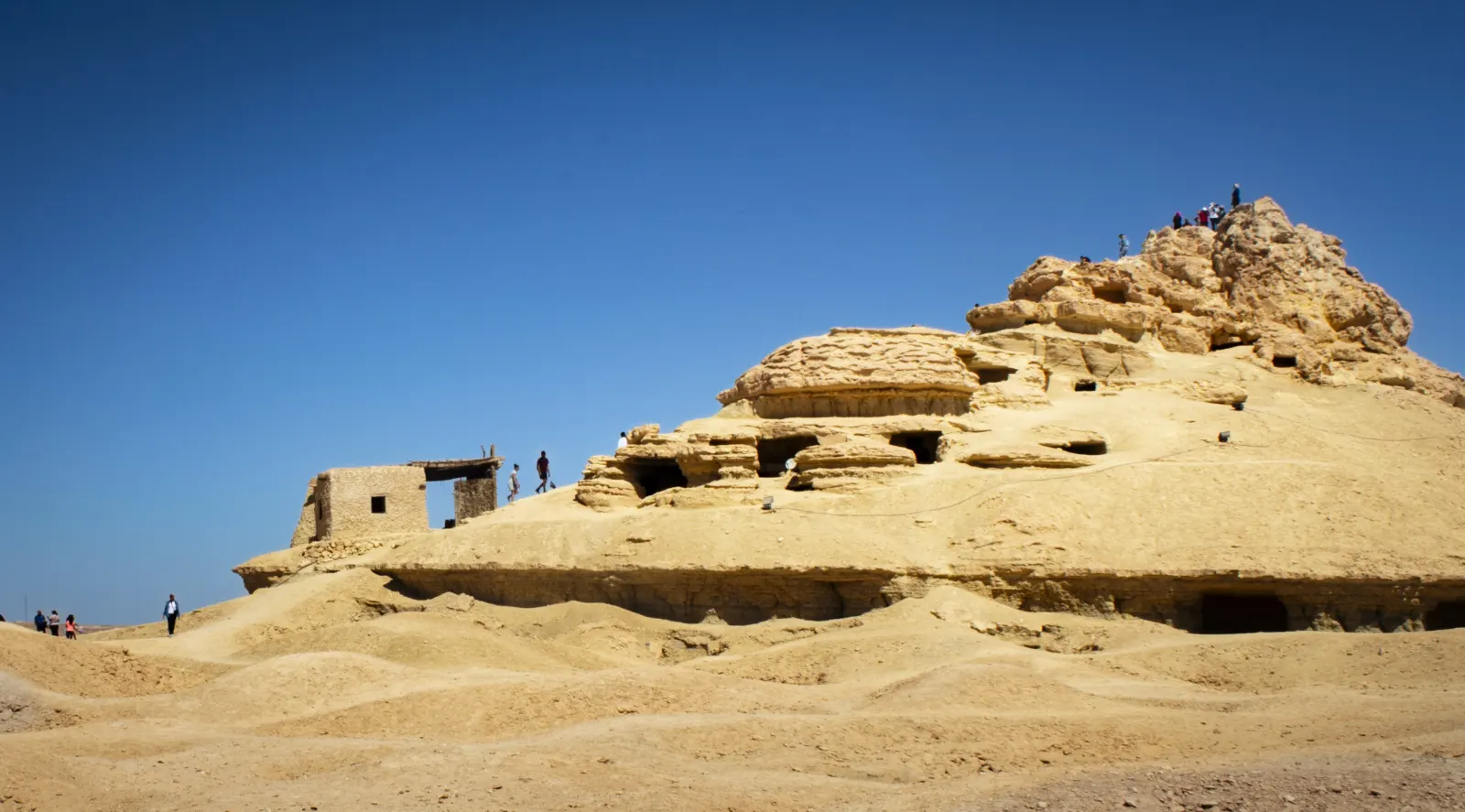
Gebel al-Mawta. The "Mountain of the Dead" is a Roman-era necropolis with dozens of rock-cut tombs (Wikipedia). Egyptian Streets reports that the earliest burials date to the 26th Dynasty, that Siwans found the tombs in 1944 while sheltering from the fighting of the Second World War, and that the Tomb of Si-Amun shows a Greek landowner or merchant praying to Egyptian gods (Egyptian Streets).
Salt lake float. Siwa sits in a depression that reaches about 20 m below sea level, with several salty lakes and evaporation ponds used to harvest salt; visitors can float in the dense water of the salt ponds (NASA Earth Observatory). More in Siwa salt lakes.
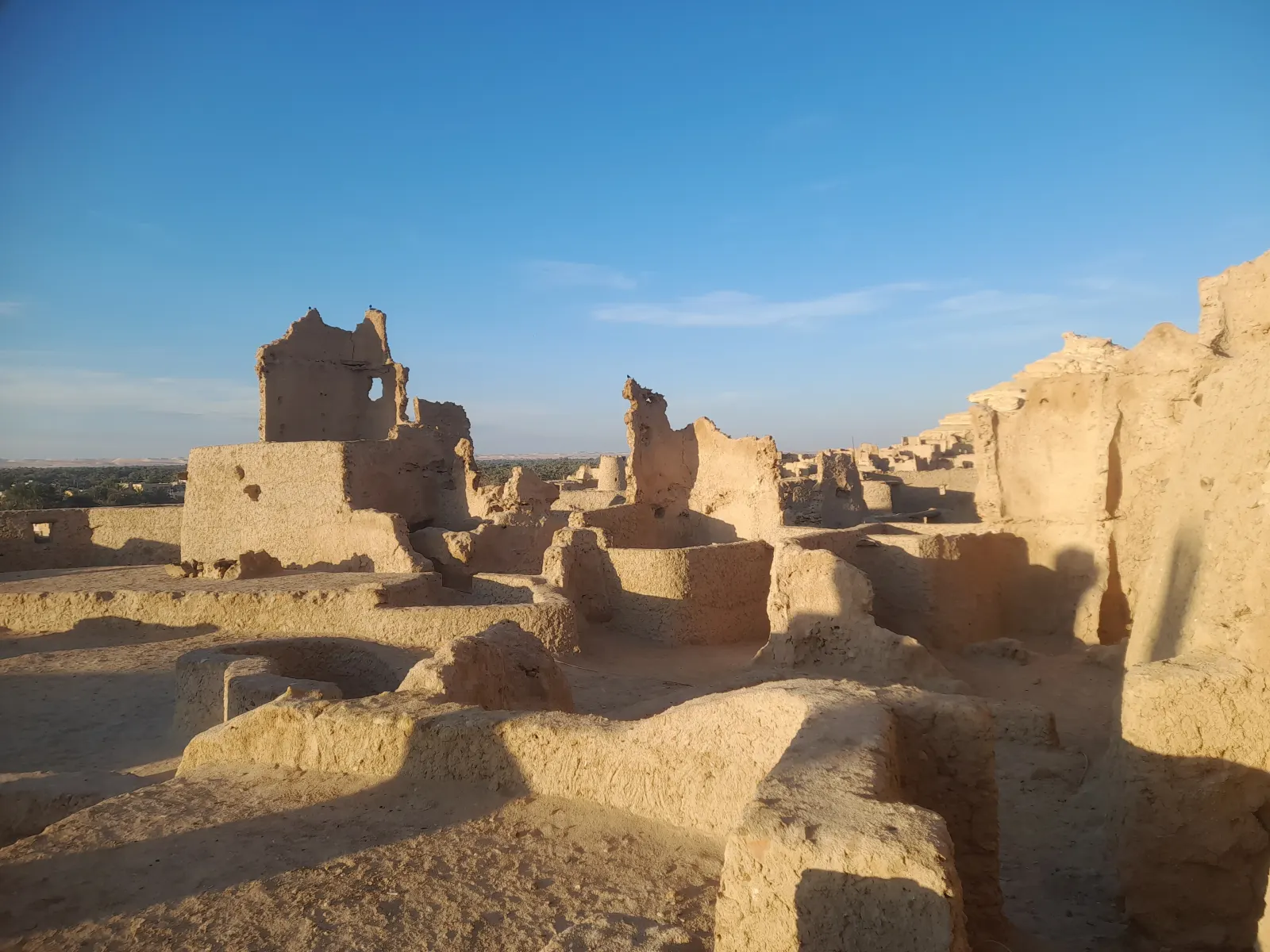
Shali Fortress. The old town was built of salt and mud-brick with palm logs on natural rock, and was abandoned after three days of heavy rain damaged it in 1926 (Wikipedia). An EU-funded restoration was inaugurated in November 2020 (EU Delegation to Egypt). The building method is explained in kershef architecture.
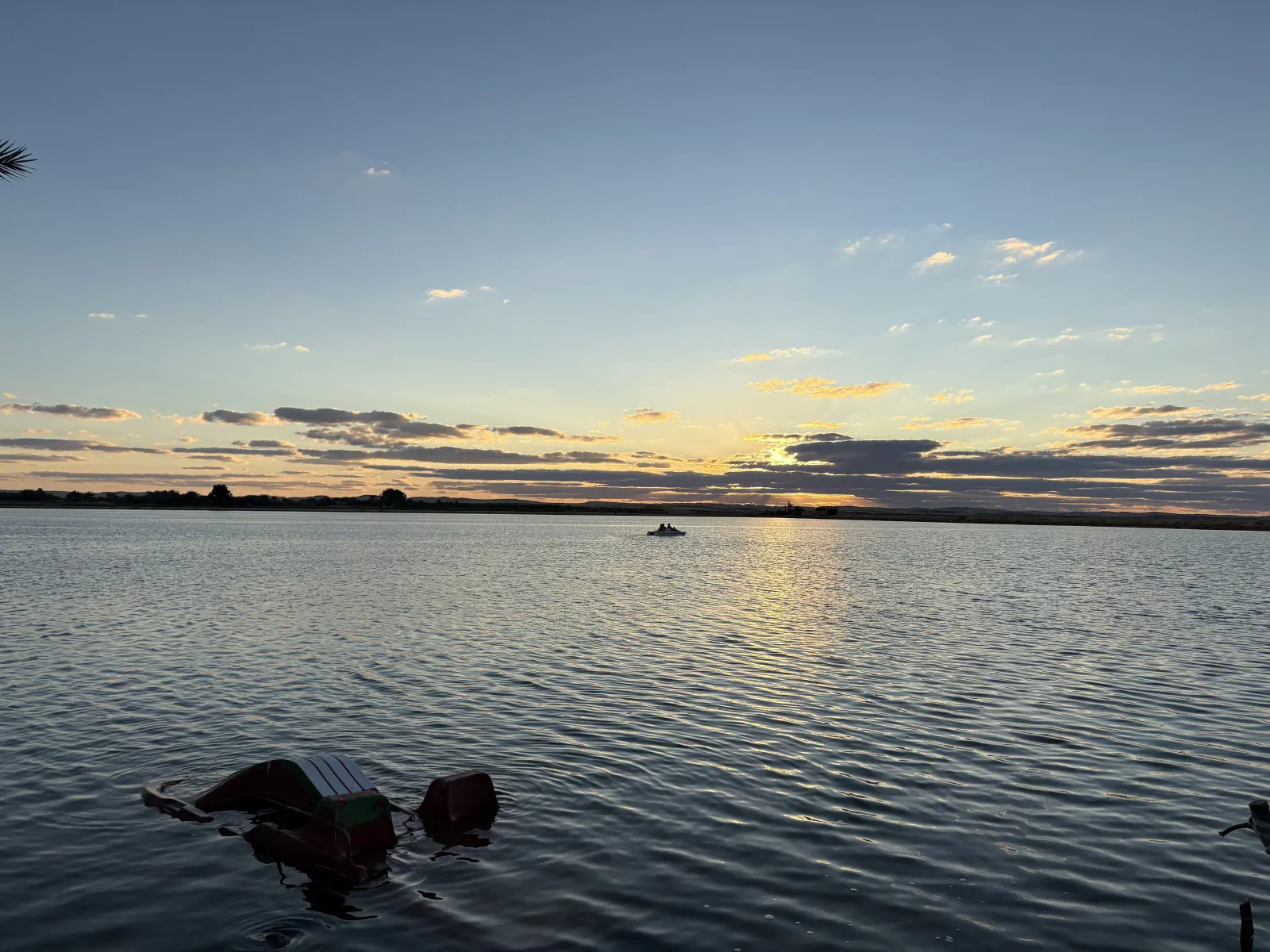
Fatnas. A palm-fringed spot on the shore of Lake Siwa where the day ends with the sun dropping over the water. See Fatnas Island.
For the wider background, read Siwa history.
Private, and on your clock
Short answer: Your own car, driver and guide. We never put other travellers in your car, so you are not herded round on a coach timetable.
Linger at the tombs, skip the salt lake, or stay at Fatnas after dark: the day bends to you. The per-car price covers up to four travellers; for a larger group, ask us for a quote.
Prices
Short answer: About US$130 to 160 per car (about EGP 7,200 to 8,800), or about US$65 to 80 each for two travellers and about US$35 to 40 each for four.
The price includes the car, driver, Siwan guide and entry fees. Lunch, café drinks and tips are extra. Prices updated November 2026. We send an exact quote for your date on WhatsApp. See Siwa tours and prices for how the per-car price works.
Season and weather
Short answer: October to April is the comfortable window. Summer works only with an early start and a long break in the middle of the day.
Rain is rare: NASA puts Siwa's rainfall at about 10 mm a year (NASA Earth Observatory), so the day is almost never lost to weather. Heat and daylight are what change.
| Season | How we run the day |
|---|---|
| October, November, March, April | The plan as written |
| December, January | Salt-lake water is cold and sunset at Fatnas falls between about 17:20 and 17:45, so the float moves to midday and the afternoon is for Shali and Fatnas |
| May to September | Early start, rest from late morning until mid-afternoon, finish at Fatnas |
Monthly temperatures are in Siwa weather; see also best time to visit and Siwa in winter.
What to bring
Short answer: Swim things, sun protection, shoes with grip and cash in Egyptian pounds.
- Swimwear, flip-flops and an old towel for the spring and the salt lake. The salt pools have no showers; bring a bottle of fresh water to rinse.
- Closed shoes with grip for the climb at Aghurmi and the paths at Shali.
- Hat, sunglasses and sun cream; plenty of drinking water.
- A light layer for Fatnas after sunset in the cooler months.
- Clothes that cover shoulders and knees in town and at the sites. See what to wear in Siwa.
- Cash for lunch and the cafés. At Fatnas, ask the price before you order. See money, ATMs and internet.
Siwa is effectively dry: as far as we know, no shop in town sells alcohol. The full list is in the Siwa packing list.
Accessibility and families
Short answer: Good for families; mixed for limited mobility, because three stops involve uneven ground.
The Oracle Temple stands on the hill of Aghurmi, Shali is a ruined town of salt and mud-brick built on natural rock, and the Gebel al-Mawta tombs are cut into a rocky hill. Tell us about any mobility needs when you book and we will plan which stops to walk and which to see from the car. For children, the short hops between stops and the long lunch break help; the salt pool needs close watching so nobody gets salt water in their eyes.
Doing it independently
Short answer: You can see the same places by bicycle or tuk-tuk for less money. You give up the explanations, the car between distant stops and a planned order.
| This tour | On your own | |
|---|---|---|
| Transport | Private car and driver all day | Bicycle or tuk-tuk; a car for the salt pools |
| Context at the sites | Siwan guide | Read up in advance |
| Entry fees | Included | You buy each ticket yourself |
| Planning | Order set by heat and light | Your own |
| Cost | Per car, see prices above | Lower |
If you go alone, start at Gebel al-Mawta when it opens and keep the salt pools, which lie furthest out, for when you can hire a car. Getting around Siwa has distances from the market square.
Add to your stay
- The Great Sand Sea safari the next afternoon, for the dunes and a hot spring.
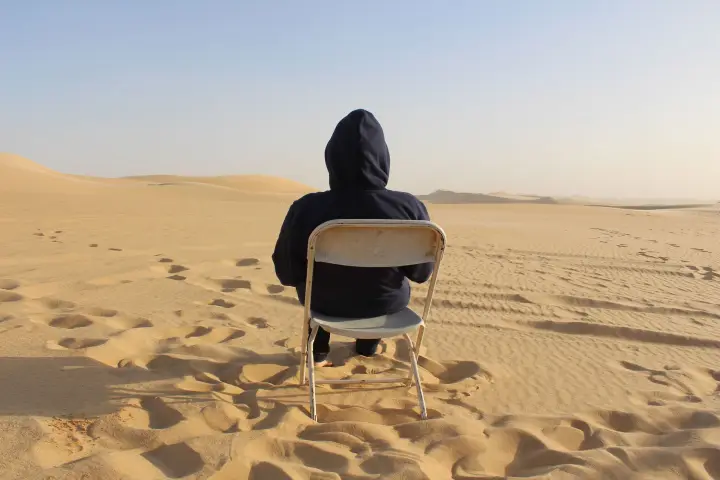
- A stargazing evening with a fire in the desert and a bed in town afterwards.
- A morning at the Siwan House Museum and the crafts shops; see Siwan crafts.
To book or ask a question, contact us or browse all tours.
Questions people ask
Can I do Siwa without a guide?+
Yes. The town is flat and the sights near it are easy by bicycle or tuk-tuk. A guide adds the stories behind the oracle and the tombs, which are small, partly ruined sites, and saves time between them. For the Great Sand Sea you must go with a licensed local driver.
Can we add the Great Sand Sea on the same day?+
Not comfortably. The 4x4 safari leaves around 14:00 and ends with sunset in the dunes, so it replaces the afternoon here, not adds to it. Most guests do this day first and the safari the next afternoon.
Can we change the order or drop a stop?+
Yes. The car and guide are yours, so you can swap the salt lake for a quieter spring such as Abu Shuruf, add the Siwan House Museum near Shali, or end the day at Shali instead of Fatnas.
Is the day tour suitable for children?+
Yes. Distances between stops are short, the springs and salt lake are a hit with children, and there is a long midday break. Bring sun hats and plenty of water, and tell us children's ages when you book.
Is lunch included?+
No. Your guide stops at a restaurant in town, where a simple lunch costs little, and you pay there. Tell us if you would rather eat at your lodge.
Can I join with limited mobility?+
Partly. The Oracle Temple sits on a hill of ruins, Shali is a ruined mud-brick town on rock and the tombs are cut into a rocky hill, so all three involve uneven ground. Tell us before booking and we will plan which stops to view from below or from the car.
Can I do this tour as a day trip from Cairo?+
No. Siwa is about 750 km from Cairo by road: about 9 hours of driving, or about 10 hours with stops. This day starts at your hotel in Siwa, so you need to be in the oasis the night before.
Is the salt-lake float safe for non-swimmers?+
The water is so salty that you float without effort, but keep it out of your eyes and any cuts, and do not swallow it. Children should be watched closely. Bring fresh water to rinse off afterwards.
Go with us
Trips that include this
About 5 hours (afternoon to sunset)
Great Sand Sea Safari from Siwa (Half Day)About US$60 to 130 per person (shared or private car)
Check dates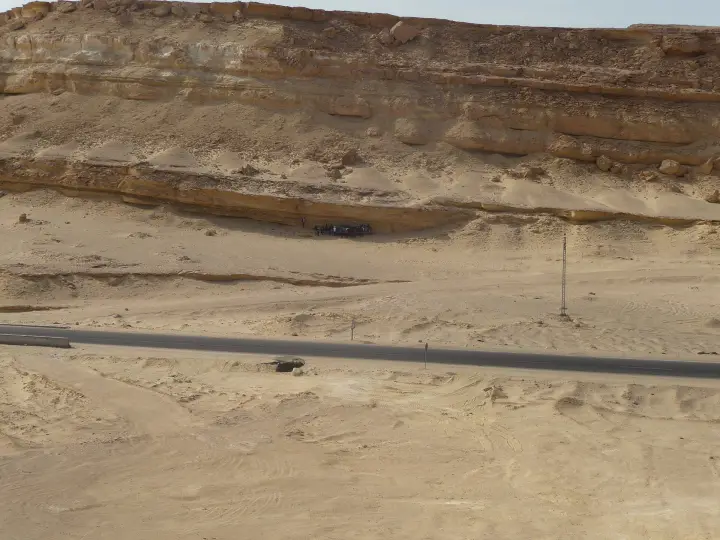
2 days and 1 night in Siwa, plus the overnight bus each way (3-day version on request)
Siwa by Overnight Bus: 2 Days from Siwa Bus StationAbout US$220 to 360 per person for two travellers (bus fare extra)
Check dates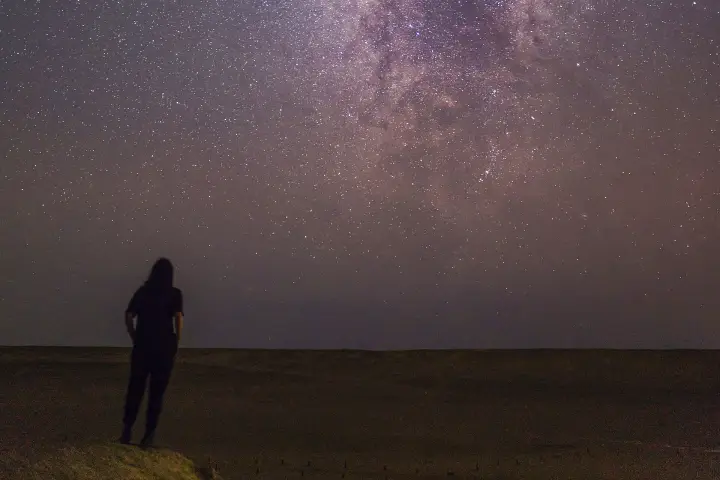
About 3.5 hours hotel to hotel, with about 2 hours on the sky
Siwa Stargazing Evening: 2 Hours at the Sand Sea EdgeAbout US$60 to 80 per person for two travellers
Check datesHow booking works
Free written quote
Message us on WhatsApp. We reply with the plan and a total price in writing, with no obligation.
50% deposit
To confirm, you usually pay 50% of the tour price; the balance is due before you arrive.
Permits handled
We arrange the desert permits; we just need a passport copy for each traveller.
Clear cancellation
Charges rise from 35% to 100% as your date gets closer. If weather spoils a camp night, we move it where we can or refund that night's camp portion.