The short answer
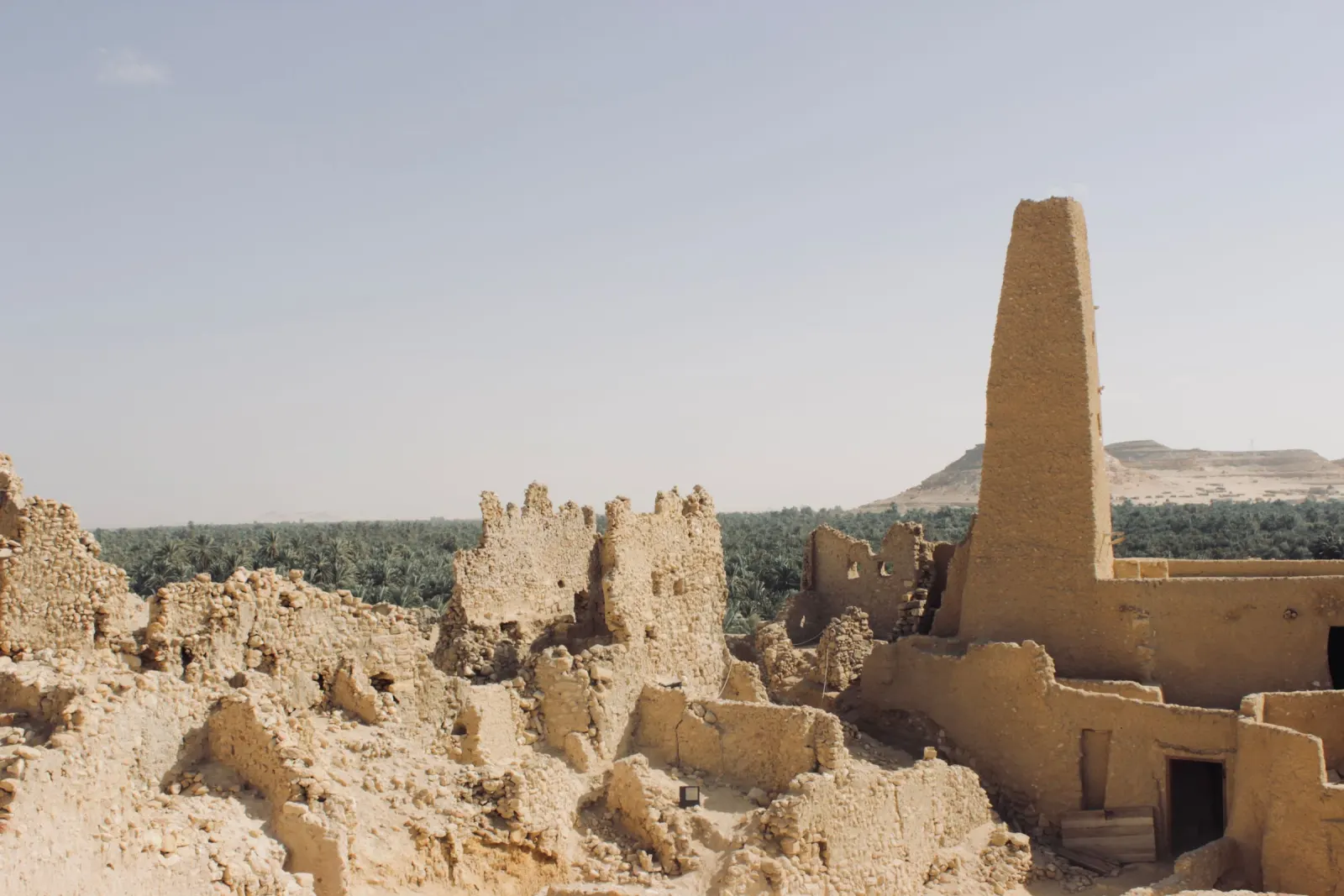
The Oracle Temple of Amun stands on the rock of Aghurmi, 2.5 km by road east of Siwa's market square. Pharaoh Amasis (570 to 526 BC) built the first shrine, and its oracle became famous across the Greek world. In 331 BC Alexander the Great crossed the desert to consult it and left saying he had heard what he wished. The remains are fragmentary. Allow about an hour.
Ask us on WhatsAppThe Oracle Temple in one minute
| What | Temple of the oracle of Amun, on the rock of Aghurmi |
| Built | 26th Dynasty, under Pharaoh Amasis (ruled 570 to 526 BC) |
| Famous visitor | Alexander the Great, winter 332 to 331 BC |
| Where | Aghurmi village, 2.5 km by road east of the market square below Shali |
| Time needed | 45 minutes to an hour |
| Best time | Opening time in the morning, or late afternoon light |
| Shade | None on the rock |
| Combine with | Umm Ubayda (about 400 m south) and Cleopatra Spring |
Why this temple mattered
Short answer: An Egyptian pharaoh built it partly to win over the oasis, and Greek pilgrims made it famous. Greeks treated it as one of their great oracles, with Delphi and Dodona.
The shrine was built by Amasis, who ruled Egypt from 570 to 526 BC. Livius (checked 17 November 2026) reads this as a political move to gain the support of Libyan tribes, and notes that the local ruler of the oasis appears as Amasis's equal rather than his subject. Livius also judges that the cult stayed Libyan in nature and was only lightly Egyptianised.
Greeks met the god through the colony of Cyrene to the north-west and identified Amun with Zeus. Herodotus says Croesus of Lydia sent sacrifices to Ammon; Livius names Cimon, Alexander and Hannibal among later visitors. Plutarch's Life of Lysander shows how the oracle was ranked: Lysander, after failing to bribe the priestess at Delphi and the priestesses of Dodona, tried Ammon next (Plutarch, Lysander 25, on LacusCurtius).
Herodotus (Histories 3.26) also tells of an army of 50,000 sent by the Persian king Cambyses II against the oracle around 525 BC and buried by a sandstorm on the way. Wikipedia's article on the lost army notes that many Egyptologists regard the story as apocryphal, and that one scholar has argued the army was defeated by an Egyptian rebel instead.
Alexander's visit
In the winter of 332 to 331 BC, after founding Alexandria, Alexander marched west along the coast to Paraetonium (Marsa Matruh) and then south across the desert. Strabo, quoting Callisthenes, says the party "was saved by rainfalls and by the guidance of two crows" (Strabo 17.1.43, on LacusCurtius), and adds that Callisthenes had every reason to flatter. Alexander entered the sanctuary alone and never said what he asked. Wikipedia sums up the outcome: his court historians claimed the oracle confirmed him as divine and as the legitimate pharaoh. No coin from his lifetime is known to show him with horns; after his death Ptolemy I and Lysimachus put his portrait on coins with the ram's horn of Amun (Wikipedia: Horns of Alexander). The full story of the journey is in Alexander the Great in Siwa.
How the oracle worked
Short answer: Priests carried the god's image in a boat and moved where the god pushed them; the movements were read as answers. It did not speak in verse like Delphi.
Diodorus, writing in the 1st century BC, describes the god's image "encrusted with emeralds and other precious stones", carried on a golden boat by eighty priests who went wherever the god directed them, followed by girls and women singing hymns (Diodorus 17.50, on LacusCurtius). Strabo adds the key difference from Greek oracles: replies came "mostly by nods and tokens", not in words as at Delphi.
Diodorus also says the god's sanctuary lay inside a fortress with three rings of wall: the old rulers' palace in the centre, the sanctuary and women's quarters in the second ring, and the guards in the outer one. The fortified hill of Aghurmi fits that picture, and you climb through what is left of the later village walls on the way up.
Famous consultations
| Who | When | What the source says | Source |
|---|---|---|---|
| Croesus of Lydia | 6th century BC | Offered sacrifices to Ammon | Herodotus, via Livius |
| Cambyses II of Persia | c. 525 BC | Sent an army against the oracle; it vanished in the sand | Herodotus 3.26; widely doubted |
| Cimon of Athens | c. 450 BC | His envoys were told to leave because Cimon "was already with" the god; he had just died | Plutarch, Cimon 18 |
| Lysander of Sparta | c. 400 BC | Offered the priests "much money"; they reported him to Sparta | Plutarch, Lysander 25 |
| Alexander the Great | 331 BC | Greeted by the priest as son of the god | Diodorus 17.51; Strabo 17.1.43 |
| Hannibal | Date not recorded | Named as a visitor | Livius |
Some of these stories are legend. They still show how far the oracle's reputation travelled.
After Alexander: decline and reuse
By the time Strabo wrote, around the turn of the millennium, he could say the oracle "has been almost abandoned, though it was held in honour in earlier times"; Romans, he explains, preferred the Sibylline books. It was not entirely forgotten: Livius records an inscription from the reign of Trajan (98 to 117 AD), and after the coming of Islam the old oracle building was turned into a mosque. That is why a mosque and minaret stand among the ruins today.
What you see
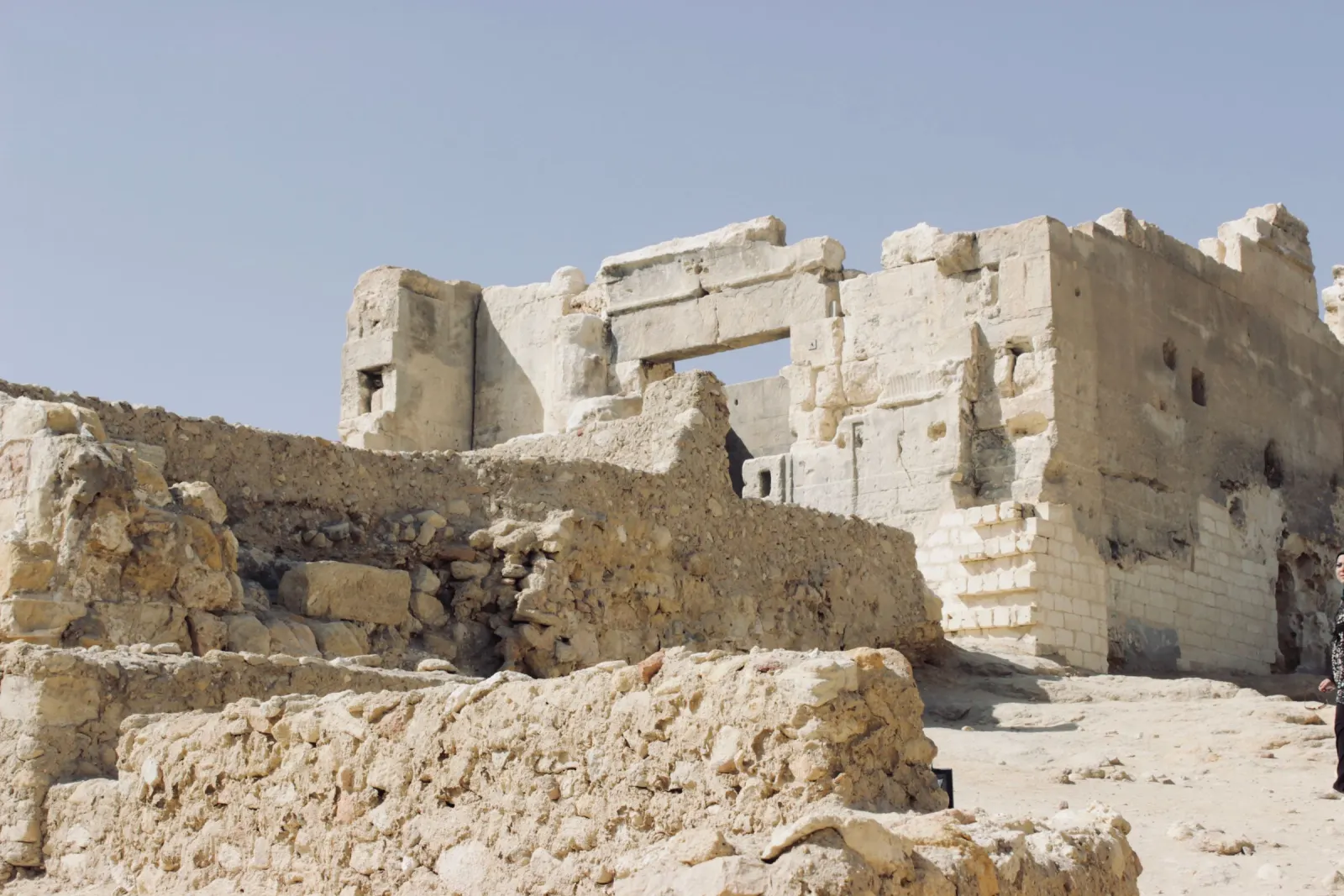
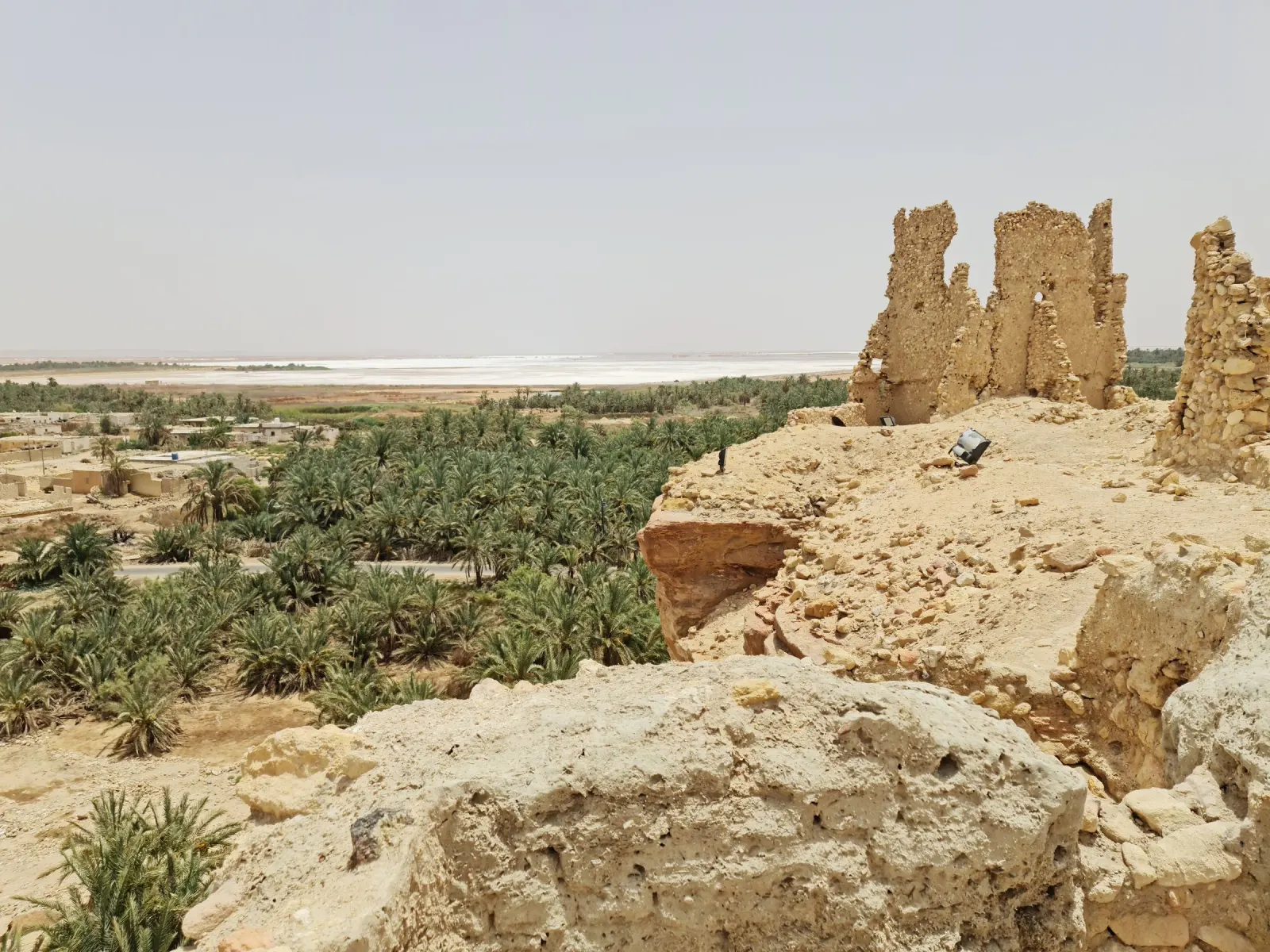
The temple sits on a limestone outcrop above the palm gardens, inside the ruins of Aghurmi, a fortified mud-brick village like Shali. Wikipedia describes the oracle temple's remains as fragmentary, with some inscriptions dating from the 4th century BC.
- The approach climbs through the ruined village, past the old gate and the rock-cut well, to the temple's court.
- The temple itself is small: a forecourt, a hall and the sanctuary, in local limestone. Livius notes it does not look like a typical Egyptian temple, which matches the local character of the cult.
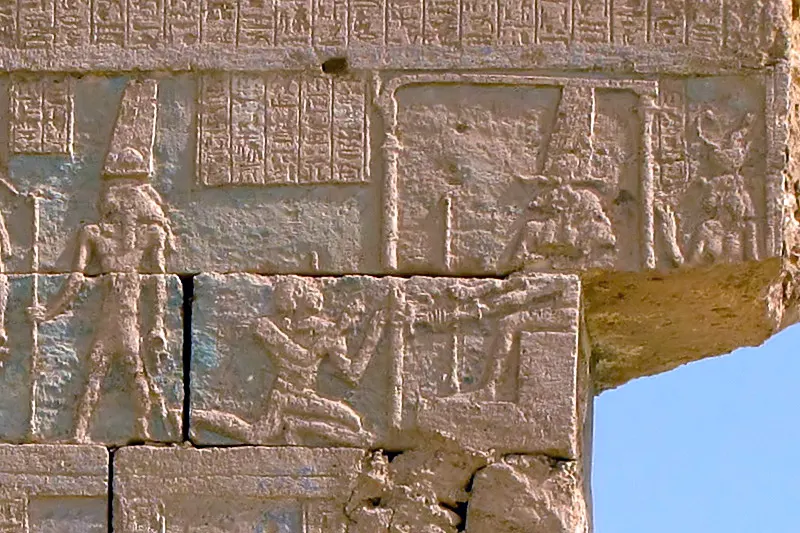
- Decoration is sparse; only faint traces survive in the inner rooms.
- A narrow passage runs beside the sanctuary. One popular theory is that priests used it to speak unseen; no ancient source confirms it.
- The mosque and minaret date from the village's Islamic period.
- The view from the top: palm gardens all round, Gebel Dakrour to the south and the lakes beyond.
The equinox alignment
Wikipedia records that in late 2013 an equinox sunrise alignment over the Aghurmi mound, at both the spring and autumn equinoxes, was announced, seen from the ruined Timasirayn temple 12 km away across Lake Siwa, and that the first known public viewing was on 21 March 2014. The alignment is real; what it meant to the builders is not known, and many claims made online go well beyond the evidence. Seeing it means a pre-dawn start and a drive to the far side of the lake; ask us how we get there. Never look at the sun directly.
Visiting
| Tickets | Entry fee paid at the gate in Egyptian pounds; ask us for the current figure |
| Hours | Ask us for current opening hours; arrive at opening to have it to yourself |
| Getting there | About 13 minutes by bicycle, 6 to 10 minutes by tuk-tuk or car, 35 to 45 minutes on foot |
| Footwear | Closed shoes with grip; the path is uneven with steps |
| Accessibility | Steps and uneven ground on the climb; ask us before booking if mobility is a concern |
| Combine | Walk to Umm Ubayda, then go on to Cleopatra Spring for a swim |
From late spring to early autumn the rock is very hot at midday. See Siwa weather for monthly figures and getting around Siwa for bikes and tuk-tuks.
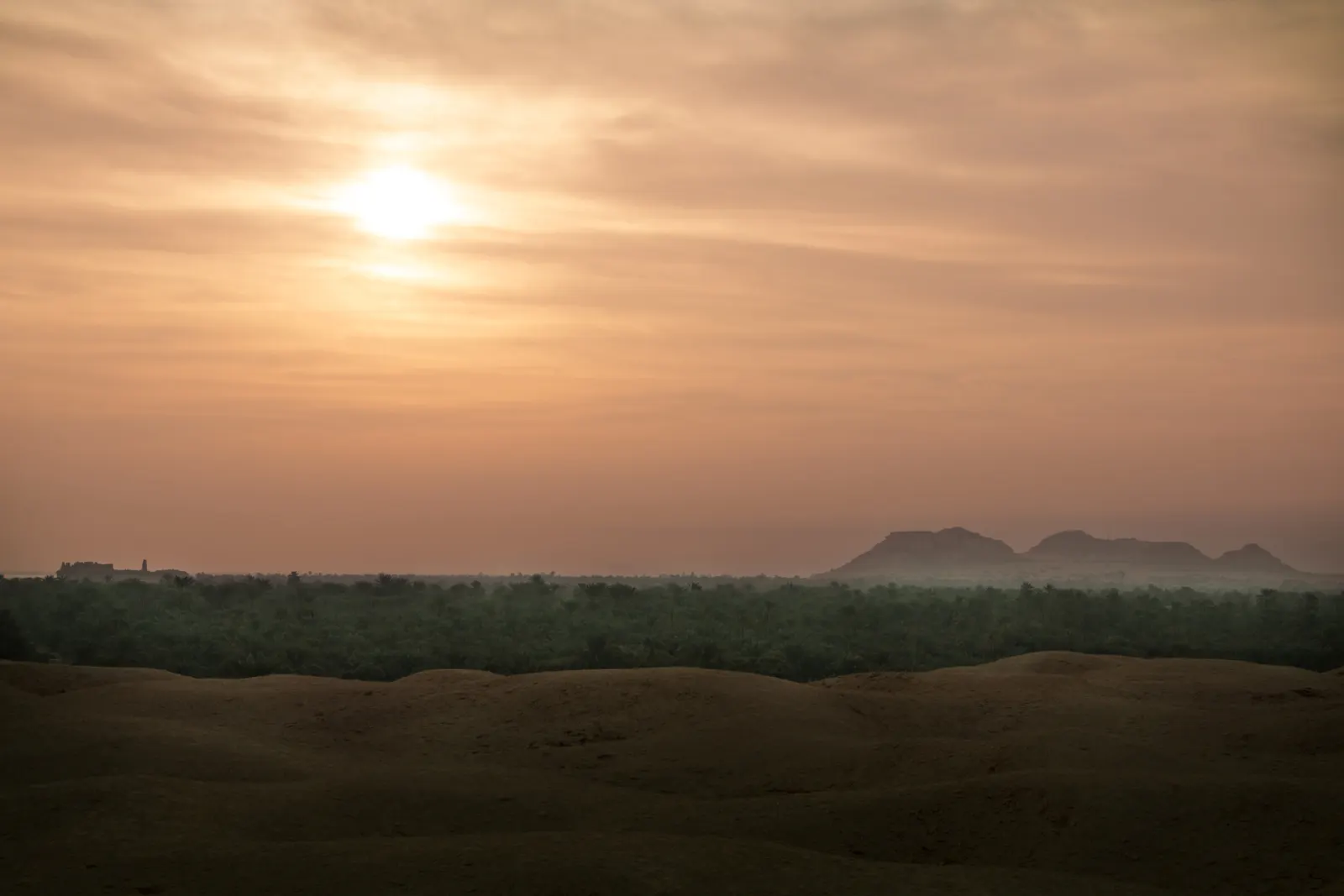
Aghurmi village
Aghurmi was once Siwa's second fortified settlement after Shali. Look for the old gate, the deep well cut through the rock, which let the village hold out in a siege, and the minaret. For the wider timeline, see Siwa history.
Photography
Shoot from below in the late afternoon for the ruins against the sky, and from the top for the palms. More viewpoints are in Siwa photography spots.
On a trip
Our Siwa in 3 days, Siwa from Alexandria and Siwa oasis day tour all include the Oracle Temple. For dates and prices, contact us.
Where it is
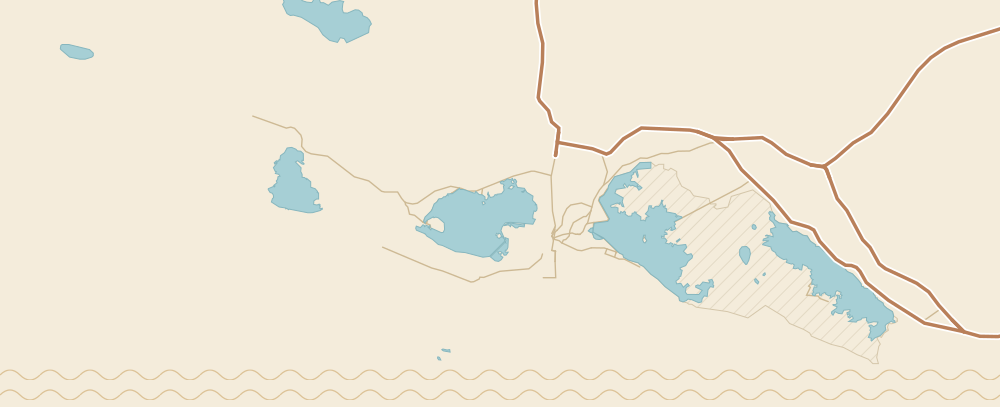
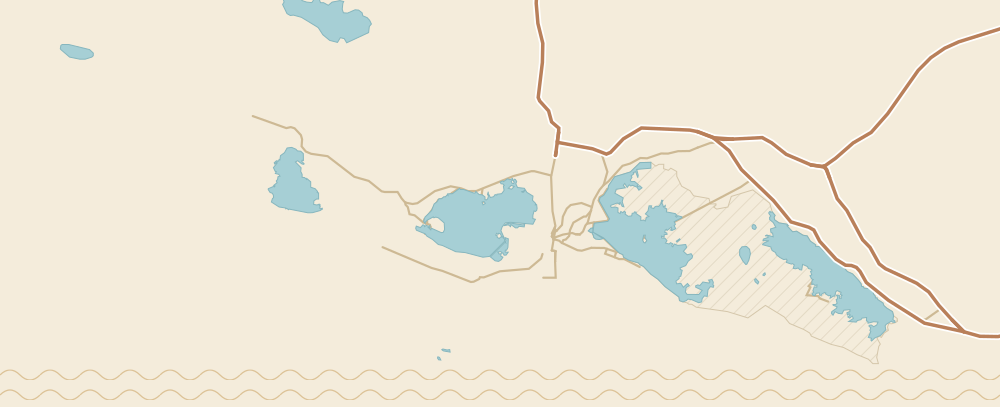
Close-up: around Siwa town
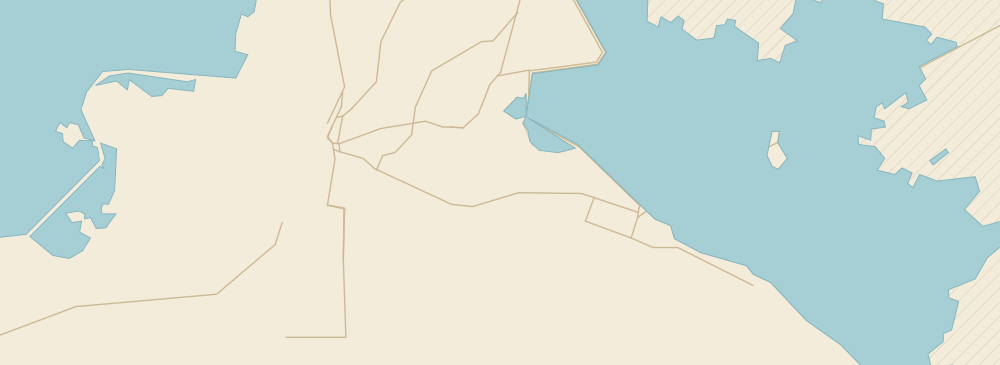
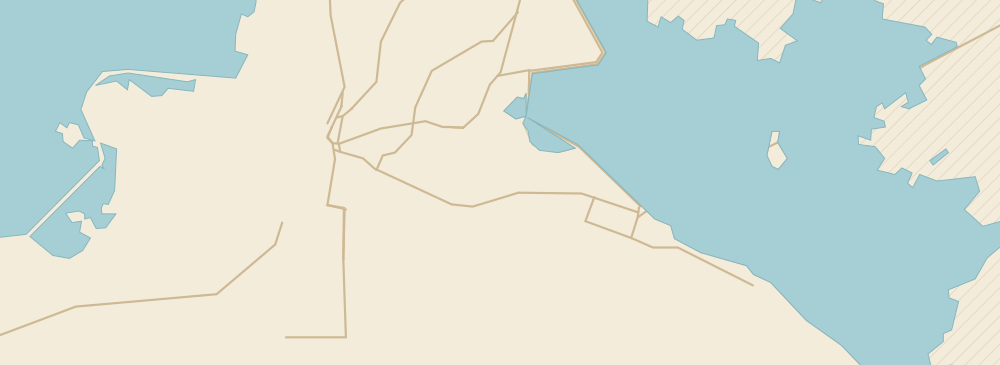
Lakes and roads drawn from OpenStreetMap; pin positions are approximate. The salt flats (hatched) dry out and flood with the seasons. Map data © OpenStreetMap contributors, ODbL.
Questions people ask
What did the oracle tell Alexander?+
Nobody knows exactly. Alexander went into the sanctuary alone. Callisthenes, his court historian, claimed the priest called him son of Zeus, and after his death his successors put his portrait on coins with the ram's horn of Amun.
Is the Oracle Temple the same as the Temple of Umm Ubayda?+
No. Umm Ubayda was a second temple of Amun, built under Nectanebo II in the 4th century BC, about 400 m south in the gardens. Only one decorated wall of it survives.
Did Alexander the Great really visit Siwa?+
Yes. Diodorus and Strabo, drawing on Alexander's own historians such as Callisthenes, describe his journey to the oracle in the winter of 332 to 331 BC. They disagree on details, not on the visit.
How did the oracle give answers?+
Diodorus says priests carried the god's image on a golden boat and moved as the god directed; Strabo says answers came mostly by nods and signs rather than spoken words.
Is the Oracle Temple decorated?+
Only lightly. Most walls are plain limestone, and the remains are fragmentary. The setting, the story and the view over the palm gardens are the highlights.
How much does it cost and when is it open?+
There is an entry fee, paid at the gate in Egyptian pounds. Fees and hours change, so ask us for the current figures before you go.
Can I see the equinox sunrise over the temple?+
Yes, at the spring and autumn equinoxes, from the ruined Timasirayn temple 12 km away across Lake Siwa. It means a pre-dawn start off the main roads; ask us about transport.
Go with us
Trips that include this
3 days, 2 nights
Siwa Oasis in 3 Days from Cairo (Private Trip)About US$420 to 650 per person for two travellers
Check dates
4 days, 3 nights
Siwa in 4 Days: Eco-Lodge and a Night in the Great Sand SeaAbout US$495 to 825 per person for two travellers (the lodge level decides the price)
Check dates
4 to 5 days (3 or 4 nights in Siwa)
Luxury Siwa: Candlelit Eco-Lodge EscapeOn request (depends on the lodge and season)
Check dates