The short answer
Siwa is flat and compact, so a bike reaches almost every sight. From the market square, the Oracle Temple is 2.5 km by road, Cleopatra Spring 3.4 km, Gebel Dakrour 4.5 km and Fatnas 4.7 km. The classic eastern loop is about 9 km, or 12 km with Dakrour. Ride early or before sunset, and carry water and a light.
Ask us on WhatsAppCycling at a glance
Short answer: Siwa lies in a depression that reaches about 20 m below sea level, with no climbs between the sights, and almost everything a visitor sees is within 5 km of the market square below Shali. A bike is the cheapest and most enjoyable way to cover it. Sand, heat and darkness are the only real obstacles.
| Route | Distance | Riding time at 12 km/h | Surface | Best time |
|---|---|---|---|---|
| Gebel al-Mawta and back | 3.4 km | About 20 min | Paved | Morning, from 9:00 when the tombs open |
| Oracle Temple and back | 5 km | About 25 min | Mostly paved | Early morning or late afternoon |
| Eastern loop: Mawta, Oracle, Umm Ubayda, Cleopatra Spring | About 9 km | About 45 min | Paved road and garden lanes, some sand | Morning, swim at the end |
| Eastern loop plus Gebel Dakrour | About 12 km | About 1 hour | Sandier towards Dakrour | Morning |
| Fatnas for sunset | About 9.5 km | About 50 min | Flat, mostly paved | Leave 75 to 90 minutes before sunset |
| Gebel Dakrour and back | About 9 km | About 45 min | Paved road, sand and stones at the foot | Late afternoon, for the view |
Distances are by road from the market square, measured on OpenStreetMap and set out on our Siwa map. Riding times are unhurried; add time for stops, swims and sandy stretches where you may need to push.
Why Siwa suits a bike
Short answer: Flat ground, short distances, light traffic and shade from the palms. The catch is sand on some lanes and strong sun.
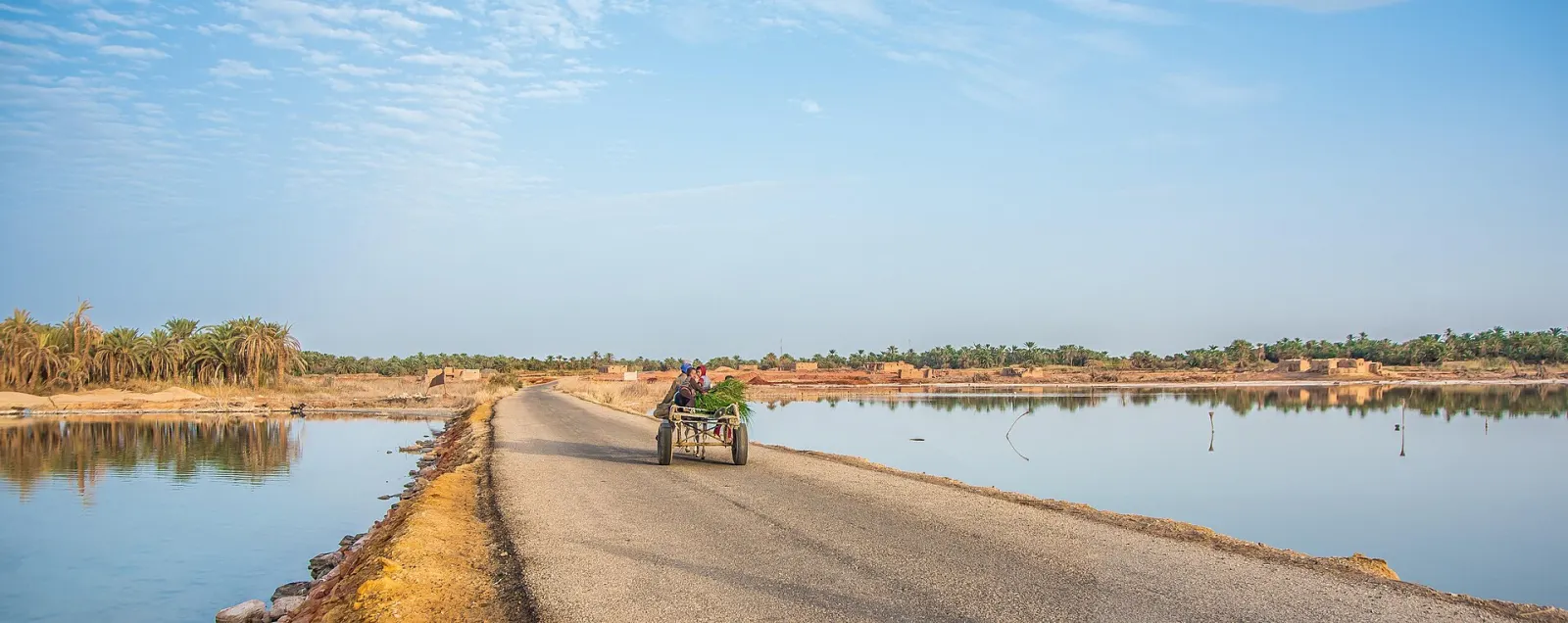
Wikivoyage calls bicycles the best way to explore Siwa and its surroundings, and adds that sand-covered streets can be a challenge for inexperienced cyclists (Wikivoyage, Siwa, checked 21 November 2026). Both points hold. The main roads out to Aghurmi and Fatnas are tarmac; the lanes through the gardens mix tarmac, packed earth and drifts of sand. Where sand has blown across a lane, get off and push for a few metres rather than fighting it.
The oasis as a whole runs about 80 km east to west, but the part visitors use is small. Inside the town core, walk: Shali and the House of Siwa museum are both within about 300 m of the market square. Use the bike for the ridge east of town, the springs belt and the lake shore.
Renting a bike
Short answer: Shops around the market square rent simple bikes by the half or full day, and some lodges lend them. Check the bike before you pay.
Most hire bikes are basic single-speed machines; Wikivoyage describes gear-less models and advises checking that the bike is sturdy, the brakes work and the handlebars are not cracked or bent. We do not print hire prices, because Siwa's printed prices go out of date quickly: Wikivoyage still lists LE10 a day, far below what you will pay now. Ask your lodge for the going rate and pay in Egyptian pounds cash. See money, ATMs and internet.
| Check | Why it matters |
|---|---|
| Both brakes | Sandy lanes and loose gravel need sure stopping |
| Tyres and pump | Palm thorns and stones on garden lanes |
| Handlebars and saddle | Cracked bars are a known problem; raise the saddle to your height |
| Front and rear light | Lanes outside the centre are unlit |
| Lock | For leaving the bike at the spring or temple |
| Basket or rack | Water, towel and swimsuit for Cleopatra Spring |
| Bell | Donkey carts and people walking in narrow lanes |
| Return time | Agree whether a late-evening return is allowed |
If you are staying at a lodge outside town, ask whether it lends bikes: from the White Mountain lodges about 15 km out, riding into town and back is a long day before you have seen anything.
Route 1: the eastern loop (about 9 km, or 12 km with Dakrour)
Short answer: The standard Siwa ride: tombs, the Oracle, a ruined temple and a swim, all on the ridge and gardens east of town.
| Leg | Distance | What you see |
|---|---|---|
| Market square to Gebel al-Mawta | 1.7 km | The hill of rock-cut tombs; the Tomb of Si-Amun keeps its paintings. Tickets and hours on the Gebel al-Mawta page |
| On to the Oracle Temple at Aghurmi | 2.6 km | The temple where Alexander the Great consulted the oracle, on its rock above the old village |
| Umm Ubayda | 0.5 km | The one carved wall left of a 4th-century BC temple of Amun |
| Cleopatra Spring | 0.9 km south | A round stone-lined pool, steady at about 29°C, with cafés beside it |
| Gebel Dakrour, optional | 1.8 km south-east | A limestone ridge with a view over palms, town and dunes |
| Back to the square | 3.4 km from Cleopatra Spring, or 4.5 to 5 km from Dakrour | Garden lanes and walled date and olive gardens |
The loop runs from the square north and east along the ridge, then south through the palm gardens to the springs. The road to Aghurmi is paved; the lanes between Umm Ubayda, Cleopatra Spring and Dakrour are where you meet sand.
The Ministry of Tourism and Antiquities list gives Gebel al-Mawta's hours as 9:00 to 17:00, so leave the square at about 08:45 if you want the tombs first. The same ministry list gives EGP 120 for a foreign adult at the Oracle Temple (and at Gebel al-Mawta); fees change at short notice, so carry spare Egyptian pounds. Bring a swimsuit, T-shirt and shorts for Cleopatra Spring, and swim before the midday heat. Allow three to four hours with stops.
Route 2: Fatnas for sunset (about 9.5 km return)
Short answer: West along Fatnas Road to the palm-fringed spit on Lake Siwa, 4.7 km each way, flat and mostly paved.
Leave the square 75 to 90 minutes before sunset. The road runs west with the lake opening on your right, and Fatnas sits on its southern shore. There is no ticket; the cafés expect you to order, so ask the price first. Watch the sun go down behind the far shore, then ride back in the dusk with lights on, or put the bike on a tuk-tuk if the driver agrees.
Because the return is always in the dark or near it, this is the route where lights matter most. Tuk-tuks and pick-ups share the road.
Route 3: Gebel Dakrour (about 9 km return)
Short answer: South-east along the Dakrour road through the gardens to the ridge at the edge of the dunes. Climb for the view, then ride back before dark.
Gebel Dakrour is 4.5 km by road from the square. The last stretch to the rock is sand and stony ground, so leave the bike at the foot and climb on foot: there is no made path, and the rock crumbles, so wear closed shoes. Our Gebel Dakrour guide has sunset times and the climb. Warm-spring camps sit at the foot, and in July and August this is where the sand baths take place.
Past Dakrour the gardens give out to open sand. Do not ride on into the dunes: they are the start of the Great Sand Sea, which needs a 4x4 and a permit.
Route 4: a short town ride (3 to 5 km)
Short answer: For an arrival afternoon or a first test of the bike: the square, Gebel al-Mawta and the lanes round Shali.
Ride to Gebel al-Mawta and back (3.4 km), then lock the bike in the square and walk up Shali, the mud-brick old town, and round the House of Siwa museum. Shali is not for bikes: its lanes are steep, narrow and uneven. Finish in a café on the square; evenings in Siwa covers where to go after dark.
Route 5: the salt pools (about 29 km return), for strong riders
Short answer: Possible, but long: 14.6 km each way by road, over an hour in each direction, with no shade on the last stretch.
The salt pools are on the far side of the oasis, and most visitors go by car or tuk-tuk in 20 to 25 minutes. If you ride, go early in the cool months, carry at least two litres of water each, and plan to float, rinse and ride back before the afternoon heat. The salt dries on skin and saddle, so bring fresh water to rinse. For most people, a car out and the bike for the town sights is the better split.
Heat, light and time of day
Short answer: Cool months: ride all day, but the light goes early. Hot months: ride at dawn and in the evening, and rest in between.
| Months | Mean high (WMO) | Sunrise / sunset on the 15th | Cycling plan |
|---|---|---|---|
| December to February | 19 to 22°C | 06:57 to 07:13 / 17:21 to 18:07 | Any time of day; a jacket for the ride home |
| March and April | 25 to 30°C | 05:52 to 06:28 / 18:26 to 18:44 | Mornings and late afternoons; watch for dusty wind |
| May to September | 34 to 38°C | 06:18 to 07:02 / 19:23 to 20:19 | Before about 10:00 and after about 17:00 only |
| October and November | 25 to 31°C | 06:41 to 07:19 / 17:23 to 18:48 | Warm days and cool evenings; good riding all day |
Temperatures are the official WMO normals and sunrise and sunset times are from timeanddate.com, both on our Siwa weather page; summer times include Egypt's daylight saving. In late November the sun sets at about 17:20, so a Fatnas sunset ride means leaving the square by about 16:00.
Carry more water than you think: at least a litre each for the eastern loop in the cool months, and twice that from May to September. There is little shade on the open road to Fatnas or round the salt pools.
Safety and the road
The UK government's travel advice says road accidents in Egypt are common because of variable road conditions, dangerous driving and poor enforcement (FCDO safety and security, checked 21 November 2026). Siwa's roads are quiet by Egyptian standards, but the same habits apply:
- Ride on the right and expect overtaking tuk-tuks and pick-ups without much warning.
- Use a light after sunset. Garden lanes have no street lights, and carts often have none either.
- Slow down on sand. Drifts across a lane can stop the front wheel dead.
- Wear sunglasses and a scarf on windy days, when blown sand stings.
- Bring your own helmet if you want one; do not assume the shop has them.
- Save the number of your lodge and a tuk-tuk driver, in case of a puncture far from town.
Dress and etiquette on the bike
You ride past homes, gardens and mosques, so dress as you would in town: shoulders and knees covered, loose clothes rather than lycra. Cycling shorts under a pair of loose trousers or a long skirt over leggings both work. Greet people you pass. Do not ride into private gardens or along irrigation channels unless invited, and never photograph Siwan women or children. Siwa etiquette and what to wear in Siwa cover the details, and Siwa for solo women travellers covers travelling alone.
A full bike day
| Time | Plan | Distance |
|---|---|---|
| 08:45 | Square to Gebel al-Mawta for the 9:00 opening | 1.7 km |
| 10:00 | Oracle Temple and Umm Ubayda | 3.1 km |
| 11:00 | Swim and tea at Cleopatra Spring | 0.9 km |
| 12:30 | Back to town for lunch, then rest | 3.4 km |
| About 16:00 in November | Fatnas for sunset, back with lights | 9.5 km |
That is about 18.5 km of easy riding. For where to eat in between, see restaurants in Siwa. Add a Great Sand Sea safari on another afternoon for the dunes and Bir Wahed, which no bike can reach.
Families and limited mobility
Older children who ride confidently can manage the eastern loop; split it over two mornings for younger ones, with Cleopatra Spring as the reward. Hire bikes are mostly adult-sized, so ask about smaller bikes or child seats before you count on them. If cycling is hard for anyone in your group, a tuk-tuk covers the same loop in well under an hour, or take our Siwa oasis day tour by car. More in getting around Siwa.
Mistakes to avoid
- Riding at midday from May to September. Mean highs are around 37 to 38°C.
- No light for the ride back from Fatnas or Dakrour. You will be on unlit lanes at dusk.
- Not testing the brakes. Do it before you pay, not on the first sandy slope.
- Riding into the dunes. Past Dakrour, the desert needs a 4x4 and a permit.
- Trusting guidebook distances. The Oracle Temple is often printed as 4 km from town; by road from the square it is 2.5 km.
- Leaving swim kit behind. The eastern loop ends at Cleopatra Spring.
Plan it
Cycle the eastern loop on your first full morning and Fatnas on your first evening, then spend a day on the things to do in Siwa that need wheels with an engine. Our 3-day itinerary shows how the bike days fit. Browse all tours, or contact us to add a car or a desert afternoon to a trip built around cycling.
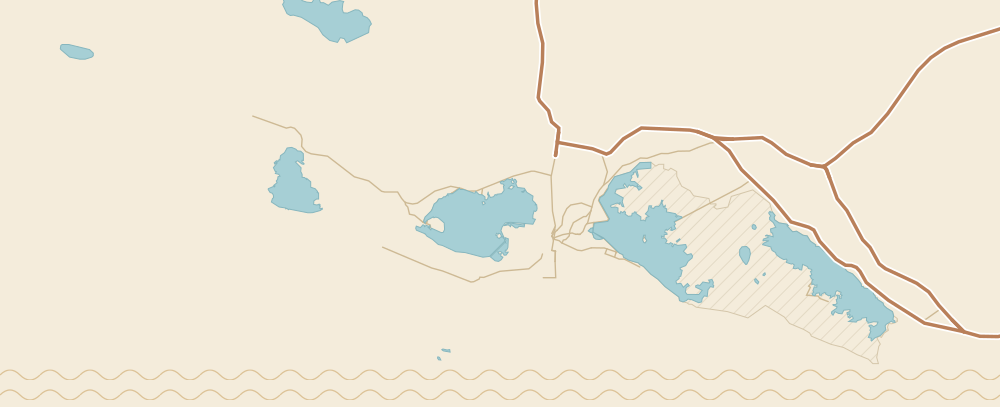
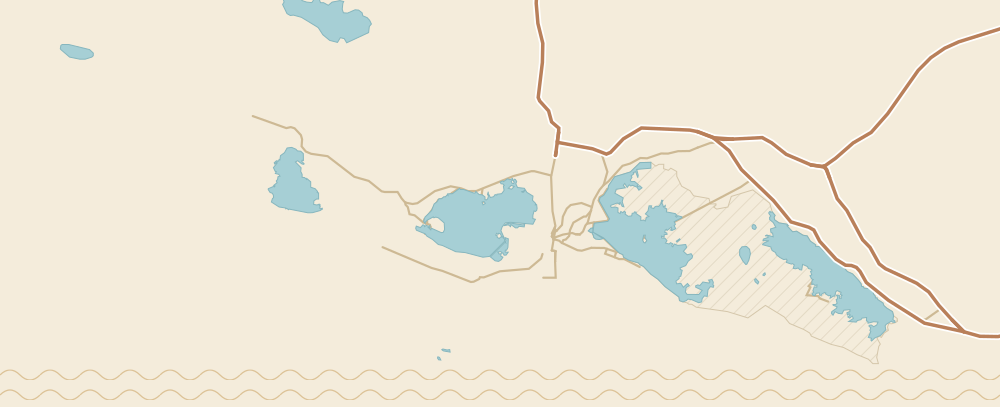
Map of the oasis
Close-up: around Siwa town
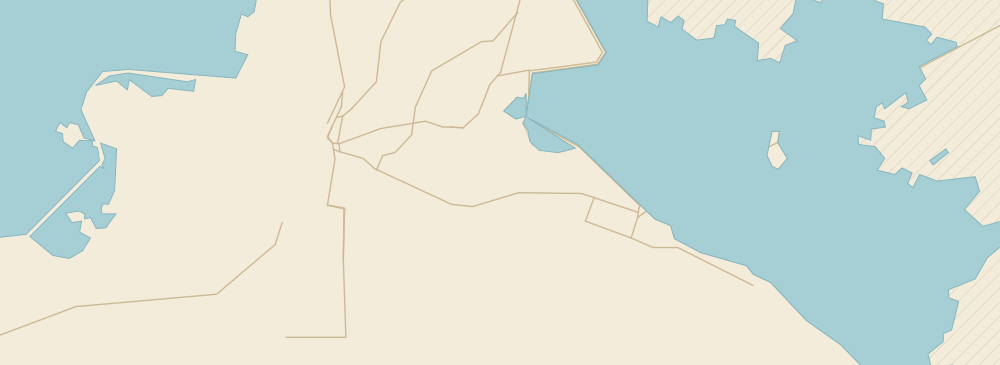
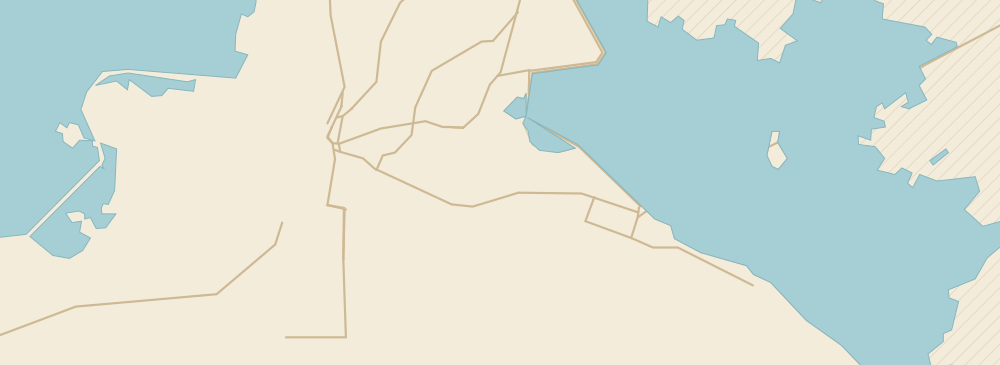
Lakes and roads drawn from OpenStreetMap; pin positions are approximate. The salt flats (hatched) dry out and flood with the seasons. Map data © OpenStreetMap contributors, ODbL.
Questions people ask
Is cycling in Siwa safe?+
By day, yes, for anyone used to riding a bike. The land is flat and traffic is light, but you share the lanes with tuk-tuks, pick-ups and donkey carts, and garden lanes are unlit. Fit a front and rear light if you will ride after sunset.
How far can I cycle in Siwa?+
Every sight within 5 km of the market square is an easy ride: Gebel al-Mawta, the Oracle Temple, Umm Ubayda, Cleopatra Spring, Gebel Dakrour and Fatnas. The salt pools, 14.6 km away by road, are over an hour each way. Bir Wahed and the dunes are 4x4 only.
Where can I rent a bike in Siwa?+
Bikes are rented from shops around the market square, and some lodges lend them. Most are basic single-speed bikes. Check the brakes, tyres and saddle, ask for a lock and a light, and agree the price and return time before you ride.
What is the best time of day to cycle?+
From October to April, any time, with mornings and late afternoons the most pleasant. From May to September, ride before about 10:00 or after about 17:00; mean highs reach 37.5°C in June and July.
Can I cycle to the Great Sand Sea or Bir Wahed?+
No. The tarmac gives way to sand south of Gebel Dakrour, and Bir Wahed is about 12 km south-west of the square with no road at the end. Desert trips need a 4x4, a licensed driver and a permit.
Are there e-bikes or children's bikes?+
We cannot confirm any e-bike hire in Siwa, and hire bikes are mostly adult-sized. Ask the shop whether it has a smaller bike or a child seat rather than assuming.
Go with us
Trips that include this
About 8 hours
Siwa Oasis Day Tour (from Your Siwa Hotel)About US$65 to 80 per person for two travellers (about US$130 to 160 per car)
Check dates
4 days, 3 nights
Siwa in 4 Days: Eco-Lodge and a Night in the Great Sand SeaAbout US$495 to 825 per person for two travellers (the lodge level decides the price)
Check dates