The short answer
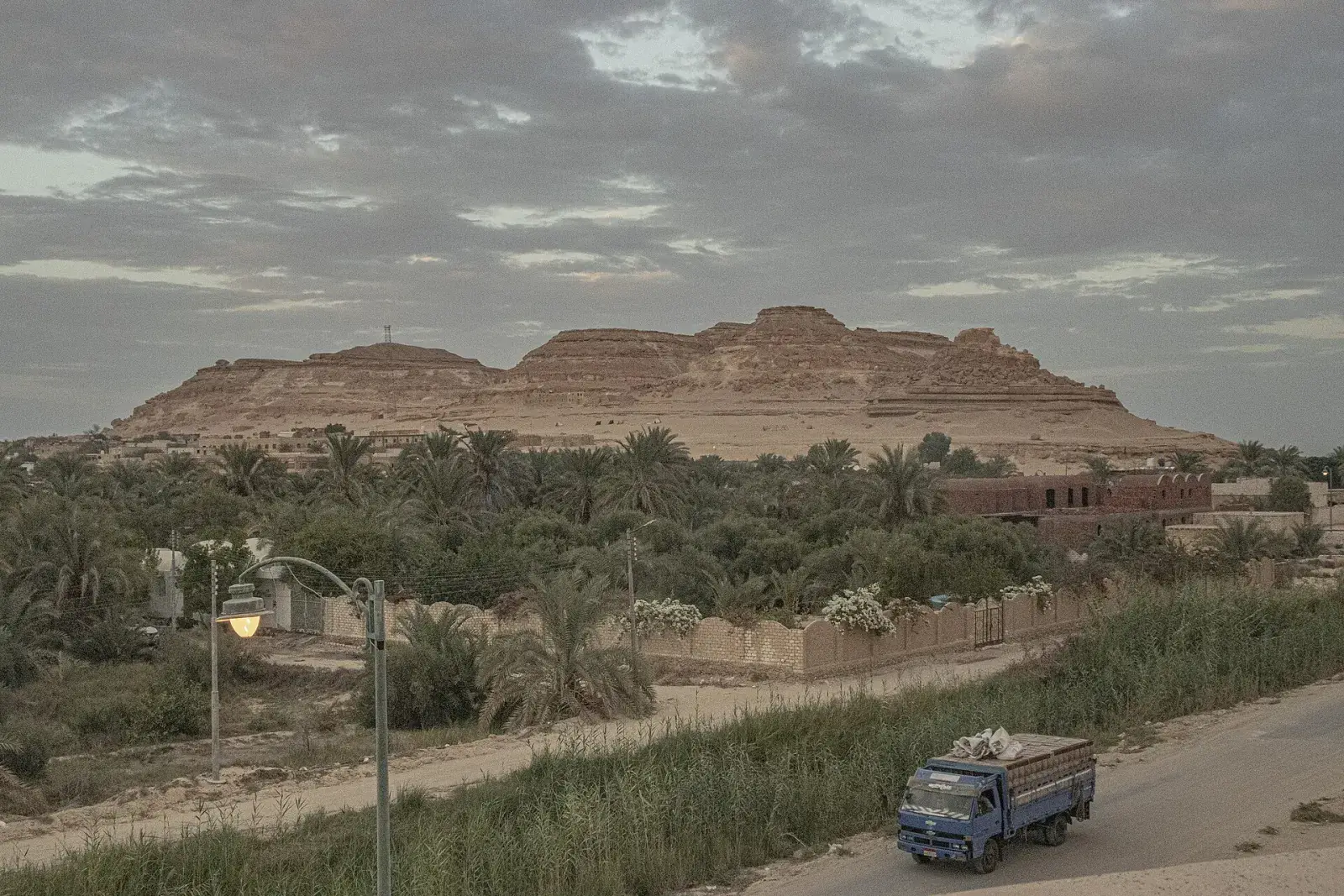
Gebel Dakrour is a limestone ridge on the south-east edge of Siwa, about 4.5 km by road from the market square. Climb it in the last hour of daylight for a view over palms, town and dunes. It hosts summer hot-sand baths (July and August) and the three-day Siyaha festival around October's full moon, with warm-spring camps at its foot.
Ask us on WhatsAppGebel Dakrour at a glance
Short answer: a bare limestone ridge where the palm gardens of the oasis end and the first dunes begin. Go for the view at sunset, a warm soak at a spring camp on a winter evening, a sand bath in high summer, or, respectfully, the Siyaha gathering in October.
| Where | South-east edge of the oasis; summit at about 29.188 N, 25.553 E on OpenStreetMap |
| From the market square | About 4.5 km by road; about 3.7 km in a straight line |
| Height | Roughly 70 m above the market square, which itself lies below sea level |
| Best for | Sunset view, spring camps (October to April), sand baths (July and August) |
| Siyaha | Three days around the October full moon; 15 October in 2027 |
| Time needed | Allow about an hour for the climb and the view; longer for a camp evening |
| Permit | None needed |
Getting there from the market square
Short answer: a 10-minute tuk-tuk ride or a 25 to 35 minute bike ride along the Dakrour road (شارع الدكرور), which leaves town heading south-east through the gardens.
Distances and times here come from OpenStreetMap routing between the square below Shali and the foot of the ridge (checked 17 November 2026): about 4.4 km for a car, a little longer by the bike-friendly lanes, and about 5.6 km on foot. The height difference is from SRTM satellite elevation data. The final stretch to the rock is sand and stony ground.
| Way to go | Time from the square | Notes |
|---|---|---|
| Tuk-tuk | About 10 min | Agree the fare and a pick-up time before you set off; do not count on finding one at the foot after dark |
| Car with driver | About 10 min | Easiest for families and for a camp dinner after sunset |
| Bicycle | 25 to 35 min | Flat, but the last part is sandy and you may push; bring lights for the ride back |
| On foot | About 75 min | Possible on a winter morning; not sensible in summer heat |
Lanes outside the centre are unlit, so plan the ride back before you leave. Our getting around Siwa guide and Siwa map give distances to the other sights.
When to go
Short answer: late afternoon from October to April. In summer, only at dawn or in the evening, unless you have come for a sand bath.
There is no shade on the ridge. Mean afternoon highs in the WMO normals reach 37.5 °C in June and July, while January nights average 5.6 °C, so a winter camp evening needs a warm layer (full figures on Siwa weather).
| Month | Sunset in Siwa | What works at Dakrour |
|---|---|---|
| November 2026 | 17:32 on 1 Nov, 17:19 on 30 Nov | Start up by about 16:30; spring soak afterwards |
| July 2027 | 20:21 on 1 July, 20:10 on 31 July | Sand bath around midday; climb in the evening |
| October 2027 | 18:48 on 15 Oct, 17:33 on 31 Oct | Siyaha around mid-month; lodges fill |
Sunset times from timeanddate.com for Siwa Oasis (checked 17 November 2026); summer and early-October times include Egypt's daylight saving, which ends late in October. Start down within 15 minutes of sunset: loose rock is harder to read in dusk light.
The climb and the view
Short answer: a short climb with no path on loose rock. From the top you see the gardens, the town and the salt lakes to the north and the dunes to the south.
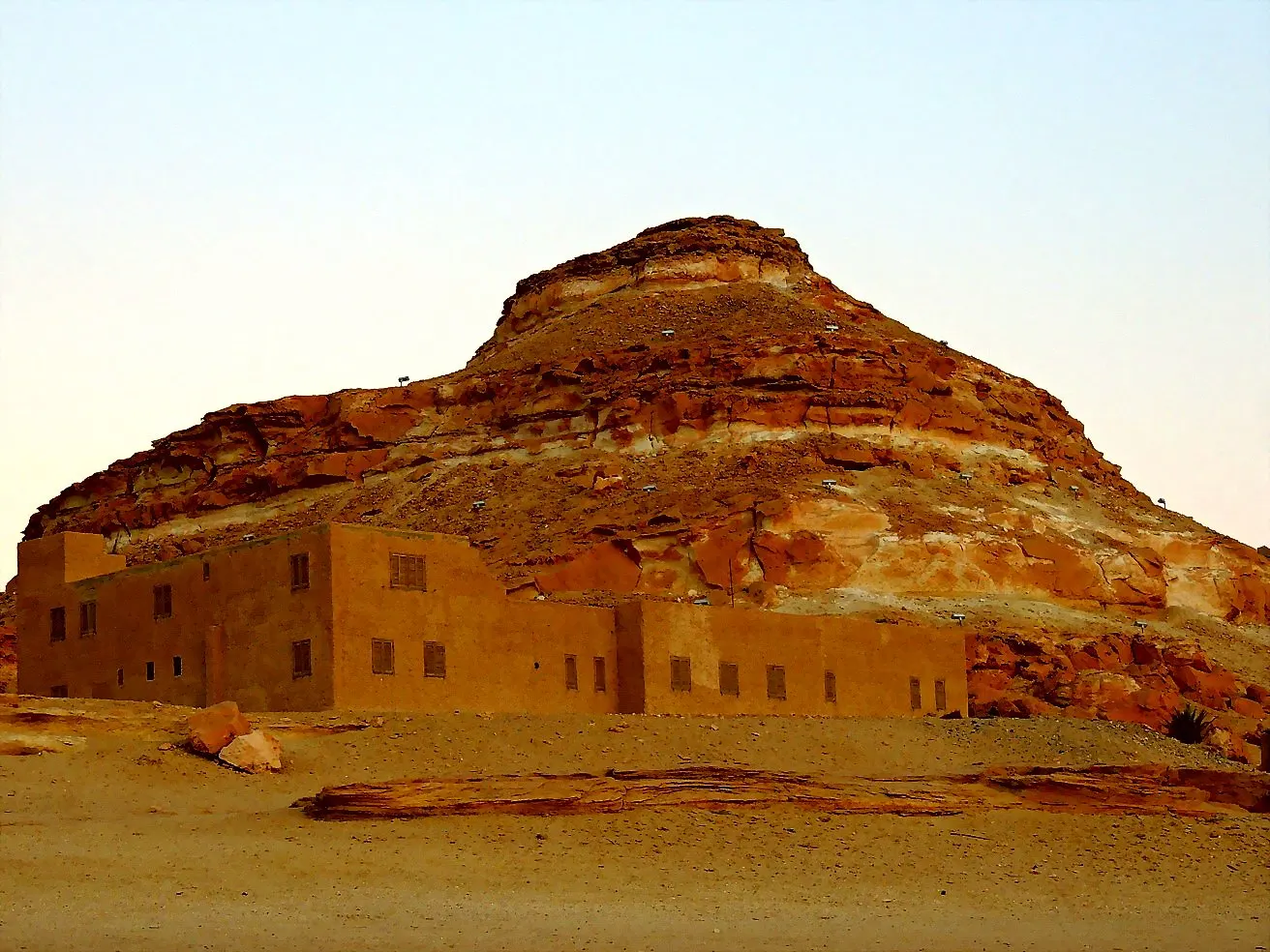
Dakrour is a limestone scarp, one of the eroded hills that Siwans call mountains (adrar in Berber). Wikipedia describes the oasis rock as layers of porous limestone alternating with marls and clays, which is why the surface crumbles under your feet. Wikivoyage notes several rock tombs cut into the ridge, plain and without inscriptions; look, but do not climb into them.
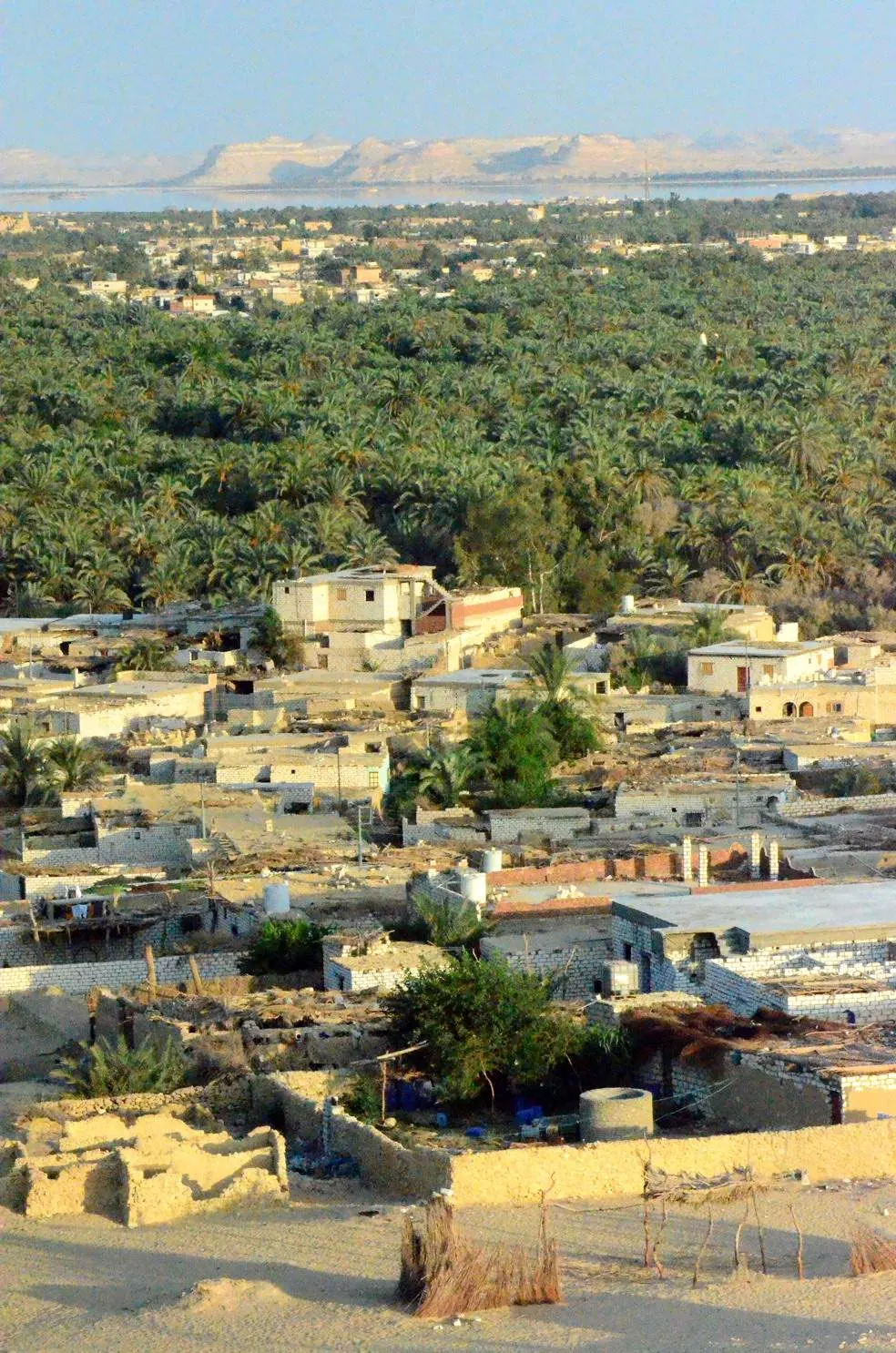
From the upper ledges you can pick out the mud-brick core of Shali, the hill of Gebel al-Mawta, the shine of Lake Siwa and, on the far side, dune ridges heading south into the Great Sand Sea. For photos, face north to catch the gardens in low side-light; more ideas in our photography spots guide.
Sand baths (July and August)
Short answer: an attendant buries you to the neck in sun-heated sand for a short spell, then you rest in a closed tent with a hot drink. It is a folk remedy for rheumatism, not proven medicine.
Wikivoyage mentions about 20 minutes in the hot sand, said locally to help rheumatism. Sessions run when the sand is hottest; ask us about single sessions or multi-day courses. Skip it with heart or blood-pressure problems, in pregnancy, or with young children. The step-by-step, what to bring and how we book an attendant are on our sand baths page.
The Siyaha festival (October)
Short answer: a three-day religious and community gathering of Siwan men on the hill, with prayer, Sufi chanting and a shared meal, held around the October full moon.
Ahram Online (October 2014), citing Egypt's National Folklore Archive, traces it to a Sufi sheikh who brought feuding groups from the east and west of the oasis together on Dakrour to eat and pray, and asked them to return every year. According to Wikipedia, the food is bought collectively with money gathered by the mosques, nobody eats until the caller gives the word, women celebrate separately in the village, and a closing march runs from Dakrour to Sidi Sulayman square.
Ahram Online glosses the name as "tourism" and describes the gathering as the successor to an old harvest feast, but it is not staged for visitors: Wikivoyage calls it a family reunion rather than a tourist event. If you come, dress modestly, stay at the edges, and ask before any photo. The 2027 full moon falls on 15 October at 16:47 local time (timeanddate.com, checked 17 November 2026); Siwa sets the days itself. See Siwa in October and events and holidays 2027.
Warm springs and camps at the foot
Short answer: a few simple camps and cafés sit around warm springs on the dune side. Come for a swim and tea, dinner under the stars, or a night in a tent or basic room.
They work best on cool evenings from October to April. Expect shared bathrooms and simple food. Siwa is conservative, so at a camp spring wear a T-shirt and shorts over your swimsuit unless the camp tells you otherwise. Camp names and owners change, so we check which are clean and open before we send anyone. Background on the water is in Siwa's springs; for a night further from lights, see camping in Siwa.
Costs
Short answer: the ridge and the view cost nothing beyond your transport. Camps, sand baths and rides are paid separately.
| Item | What to expect |
|---|---|
| Climbing the ridge | No ticket office on the ridge itself |
| Tuk-tuk from the square | A short-hop fare; agree it first |
| Spring camp day visit | Small entry fee or a food order, set by each camp |
| Sand bath | Priced per session or per multi-day course |
Prices change each season. Ask us for current figures before you go.
Combine it with
- Classic day: the Oracle Temple and a swim at Cleopatra Spring in the morning, lunch in town, then the Dakrour climb at sunset.
- Dune afternoon: sandboarding or a 4x4 safari, ending with dinner at a Dakrour camp.
- Two sunsets, two days: Dakrour one evening, Fatnas the next; one looks over palms and sand, the other over water. Our evenings in Siwa guide compares them.
- Summer: an early swim, a sand bath at noon, a long rest, and the climb after the heat breaks. See Siwa in summer.
- Night sky: stay on at a camp after dark on a night near the new moon; see stargazing in Siwa.
Mistakes to avoid
- Climbing in sandals. The rock breaks away underfoot; wear closed shoes with grip.
- Starting too late. Leaving the square at sunset means coming down in the dark. Leave 60 to 90 minutes before.
- No ride back arranged. Tuk-tuks are scarce at the foot after dark; book the return or keep your driver.
- Midday climbs from May to September. There is no shade and no water on the ridge.
- Treating Siyaha as a show. It is a religious gathering; filming people without asking gives offence. Read Siwa etiquette and what to wear.
- Wandering into the dunes past the camps. The desert proper needs a licensed 4x4 driver and a permit.
Families and accessibility
Children who walk confidently can do the lower ledges holding an adult's hand; keep them back from drops and out of the tombs. Sand baths are not for young children. The summit is out of reach for wheelchair users and anyone unsteady on loose ground, but a car can reach the camps and the flat sand at the foot, where the ridge still glows at sunset. Tell us your needs and we will plan around them.
On a trip
Our Siwa by overnight bus, 2 days stops at Gebel Dakrour for the view after lunch on day 2, and the winter sun week spends an afternoon soaking in a hot spring at a Dakrour camp. We can add a sand bath, a camp dinner or a Siyaha visit to other Siwa trips; contact us or browse all tours.
Where it is
Close-up: around Siwa town
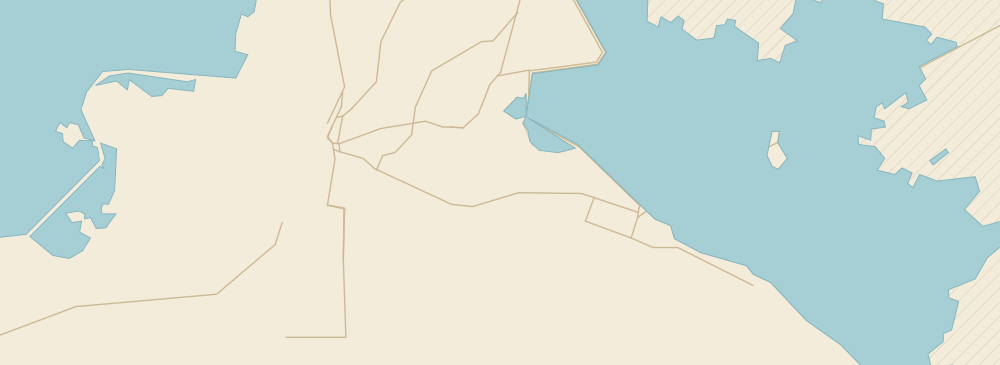
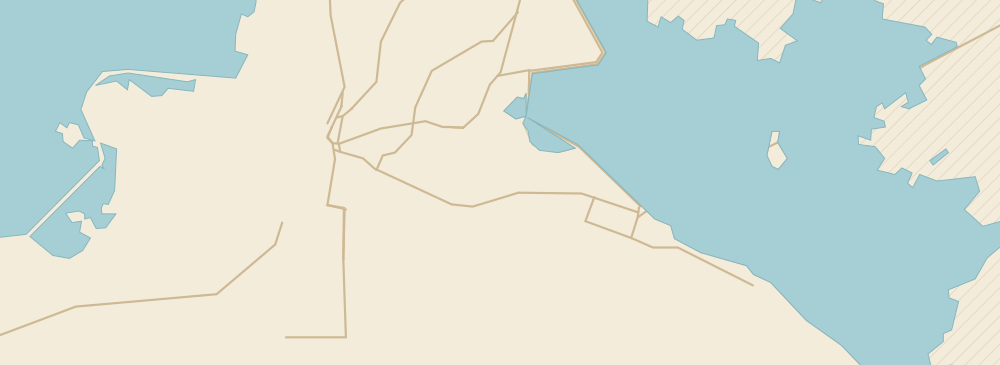
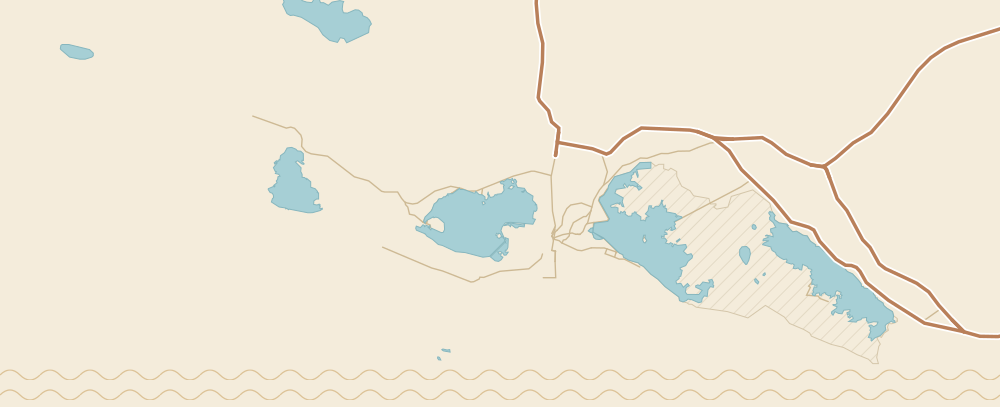
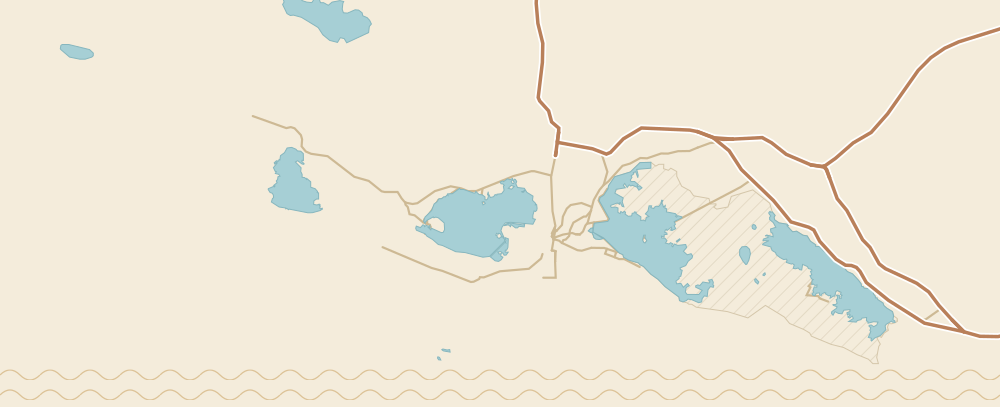
Lakes and roads drawn from OpenStreetMap; pin positions are approximate. The salt flats (hatched) dry out and flood with the seasons. Map data © OpenStreetMap contributors, ODbL.
Questions people ask
How far is Gebel Dakrour from Siwa town?+
About 4.5 km by road from the market square below Shali, or about 3.7 km in a straight line. Allow about 10 minutes by tuk-tuk or car and 25 to 35 minutes by bike.
Do I need a ticket or permit?+
No desert permit is needed: Dakrour is inside the oasis, not out in the Great Sand Sea. Camps and sand-bath attendants charge for their own services; ask us for current prices.
When is the best time to climb it?+
The last hour before sunset from October to April. In November 2026 the sun sets between 17:32 (1 November) and 17:19 (30 November); in July it sets after 20:00, so in summer go at dawn or in the evening.
Is Gebel Dakrour worth visiting outside summer?+
Yes. The sand baths are summer-only, but the view, the dune edge and a warm soak at a spring camp are at their best on cool evenings between October and April.
Is the climb hard?+
It is short but there is no made path. The lower ledges are an easy scramble on loose, crumbly rock; the upper part needs care. Wear shoes with grip and come down before dark.
When is the next Siyaha festival?+
Siyaha follows the October full moon, which in 2027 falls on 15 October. Siwa fixes the exact three days locally, so treat mid-October 2027 as provisional.
Is it suitable for children or people with limited mobility?+
Children who are steady on their feet can manage the lower ledges with an adult. The summit is not wheelchair-accessible, but the camps and the flat sand at the foot can be reached by car.
Go with us
Trips that include this
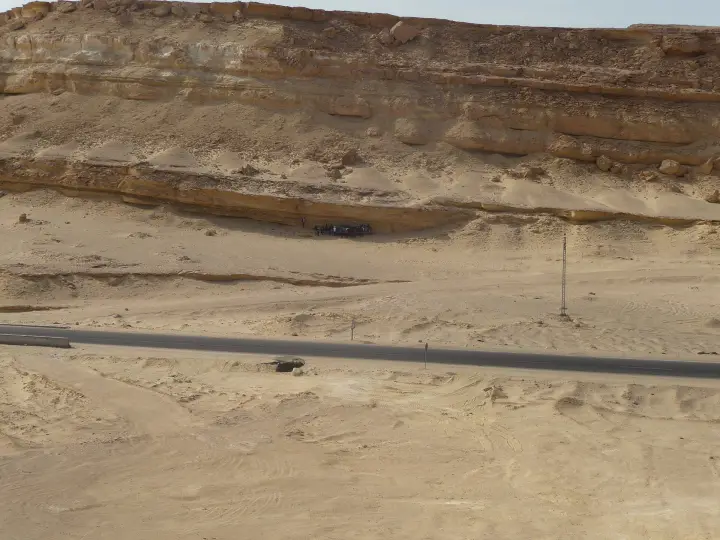
2 days and 1 night in Siwa, plus the overnight bus each way (3-day version on request)
Siwa by Overnight Bus: 2 Days from Siwa Bus StationAbout US$220 to 360 per person for two travellers (bus fare extra)
Check dates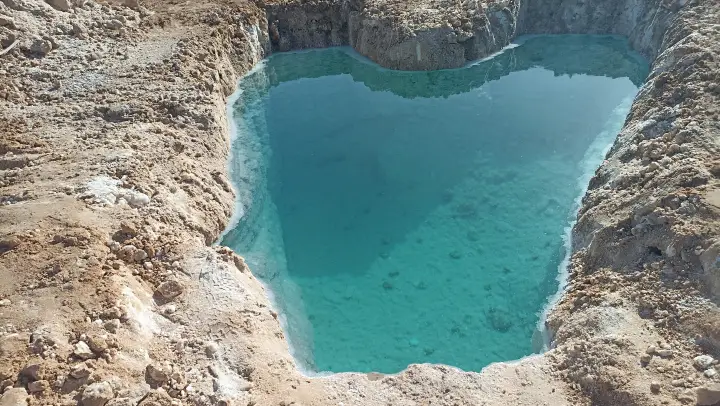
7 days, 6 nights
Siwa Winter Sun Week: 7 Slow Days, December to FebruaryOn request: mid-range, set by the lodge you choose and your dates
Check dates