The short answer
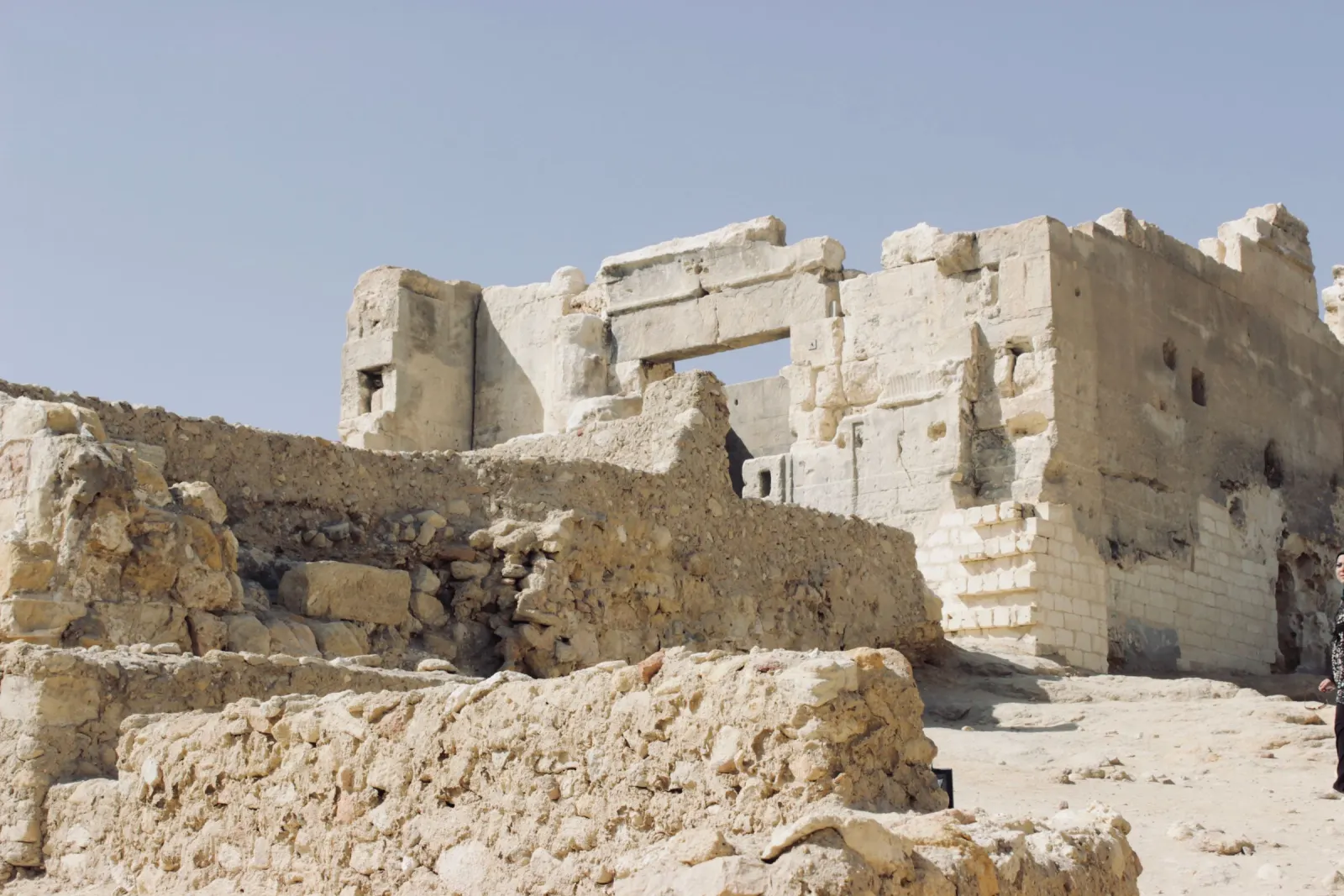
In the winter of 332 to 331 BC Alexander the Great marched from the new site of Alexandria along the coast to Paraetonium (Marsa Matruh), then south across the desert to consult the oracle of Amun at Siwa. The priest greeted him as the god's son. Its temple still stands on the rock of Aghurmi, 2.5 km by road from Siwa's market square.
Ask us on WhatsAppAlexander's visit at a glance
Short answer: Months after taking Egypt from the Persians, Alexander left the site where he was founding Alexandria, followed the coast west to Paraetonium and turned south into the desert to reach the oracle of Amun. He came back hailed as the god's son, and the sanctuary he entered still stands at Aghurmi, a short ride from Siwa town.
| When | Winter 332 to 331 BC |
| Route | Alexandria → Paraetonium (Marsa Matruh) → desert → Siwa |
| Coastal leg | About 280 km, according to Aristobulus as reported by Arrian |
| Main ancient sources | Arrian, Plutarch, Diodorus, Curtius, Strabo (drawing on Callisthenes) |
| Result | Greeted as son of Amun; later shown with ram's horns on coins |
| Where to see it now | Oracle Temple, Aghurmi, 2.5 km by road from the market square |
Why he made the detour
Short answer: Arrian gives three reasons: the oracle had a name for telling the truth, the heroes Perseus and Heracles were said to have consulted it, and Alexander wanted to trace his own birth to Ammon.
Arrian, writing in the 2nd century AD from earlier eyewitness accounts, says Alexander set out from a wish to rival Perseus and Heracles, both of whom he counted as ancestors. He adds a dry note that Alexander went either to learn more about his origins or to be able to say he had. You can read the passage in M. M. Austin's translation on Livius (Anabasis 3.3 to 3.4).
There was a political logic too. Egyptian kings were by tradition sons of Amun, and the Greeks equated Amun with Zeus. Recognition at Siwa spoke to his new Egyptian subjects and to the Greek world at once. Wikipedia's Siwa Oasis article notes that his motives remain contested; the honest answer is probably all of the above.
What the ancient writers say happened
Short answer: The accounts agree on a hard crossing saved by rain and animal guides, and on a private consultation whose content Alexander kept to himself. They disagree on the details.
| Episode | Arrian (from Ptolemy and Aristobulus) | Plutarch (from Callisthenes and others) |
|---|---|---|
| Thirst | Heavy rain fell, which Alexander credited to the god | Rain ended the fear of thirst and firmed the sand |
| Losing the track | A south wind buried the route markers | The guides lost their bearings |
| Guides | Ptolemy: two talking snakes. Aristobulus: two crows | Ravens flew ahead and called stragglers back at night |
| The greeting | Not described | The priest addressed him as the god's son |
| The questions | He heard the answer he hoped for | Whether his father's killers were punished; whether he would rule all mankind |
| The way back | Aristobulus: same road. Ptolemy: straight to Memphis | Not described |
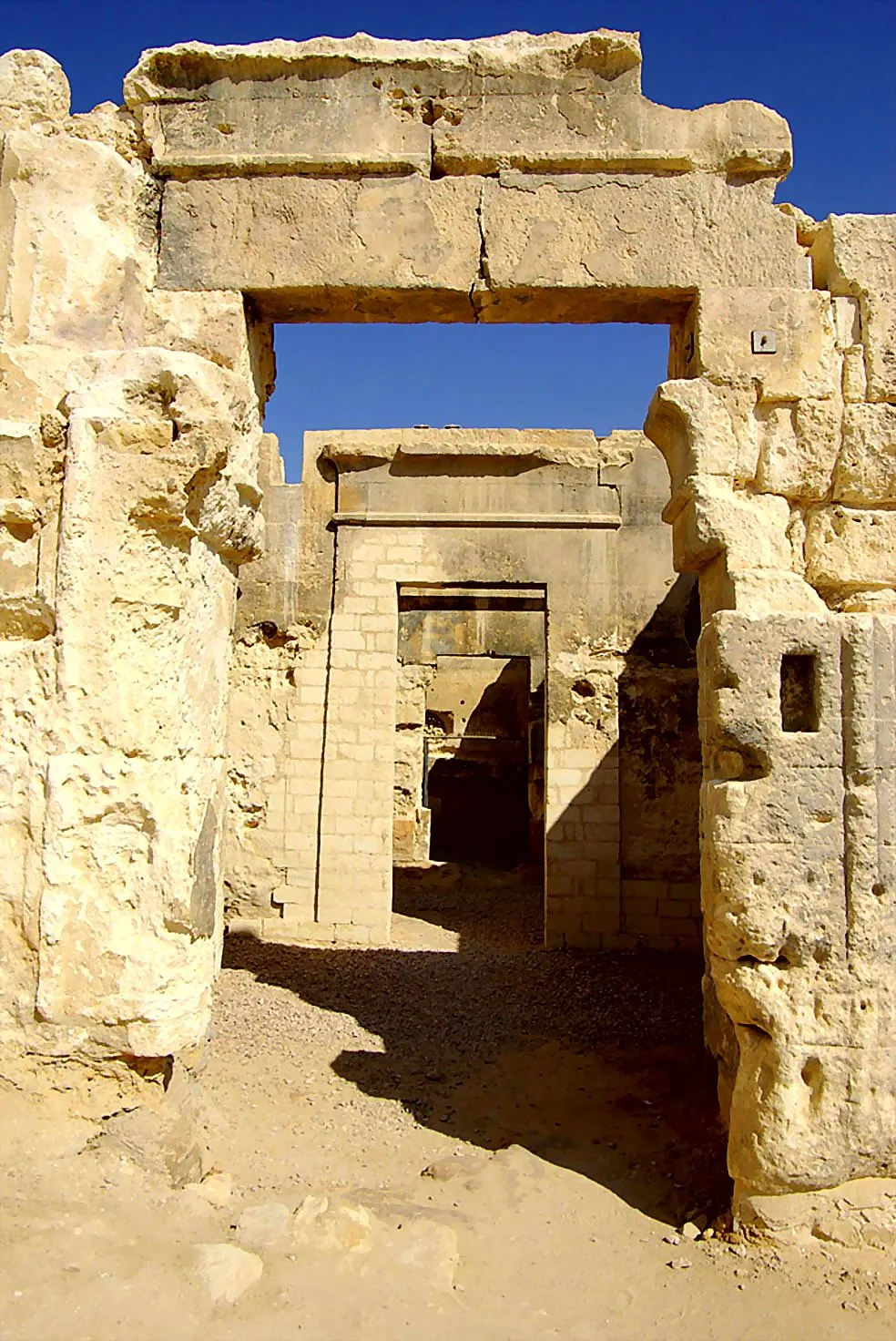
Plutarch's version is in chapters 26 and 27 of his Life of Alexander, available on LacusCurtius at the University of Chicago. It contains the best-known detail: the priest, speaking Greek as a foreign tongue, meant to say "O paidion" (my son) and said something heard as "O pai Dios" (son of Zeus). Plutarch presents this as a story others tell, not as fact.
He also quotes a letter in which Alexander told his mother, Olympias, that he had received secret answers he would share only with her. He never saw her again, so whatever he heard went with him.
Read the table as literature as much as history. Ptolemy and Aristobulus were officers on the campaign, but they wrote decades later, and Callisthenes was the court historian whose job was to make the king look favoured by the gods.
Then and now: the same route
Short answer: The road from Alexandria to Siwa still runs along the coast to Marsa Matruh and then south, so a modern drive retraces Alexander's line almost exactly, in a day instead of weeks.
| Leg | Alexander, 331 BC | Today |
|---|---|---|
| Alexandria to Paraetonium | About 280 km on foot along an empty coast where water could still be found | Fast coastal highway |
| Paraetonium to Siwa | Sandy, waterless track with no landmarks | Marsa Matruh is about 300 km north of Siwa: about 4 hours by road. |
| Whole journey | Not recorded; on foot and horseback | Siwa is about 600 km from Alexandria by road: about 7.5 hours of driving, or about 8.5 hours with stops. |
If you are coming from Cairo instead, Siwa is about 750 km from Cairo by road: about 9 hours of driving, or about 10 hours with stops. The practical details of each approach are in Alexandria to Siwa and Siwa from Marsa Matruh. There is no shortcut by air: Siwa's airfield (SEW) has no scheduled passenger flights.
Visiting the oracle today
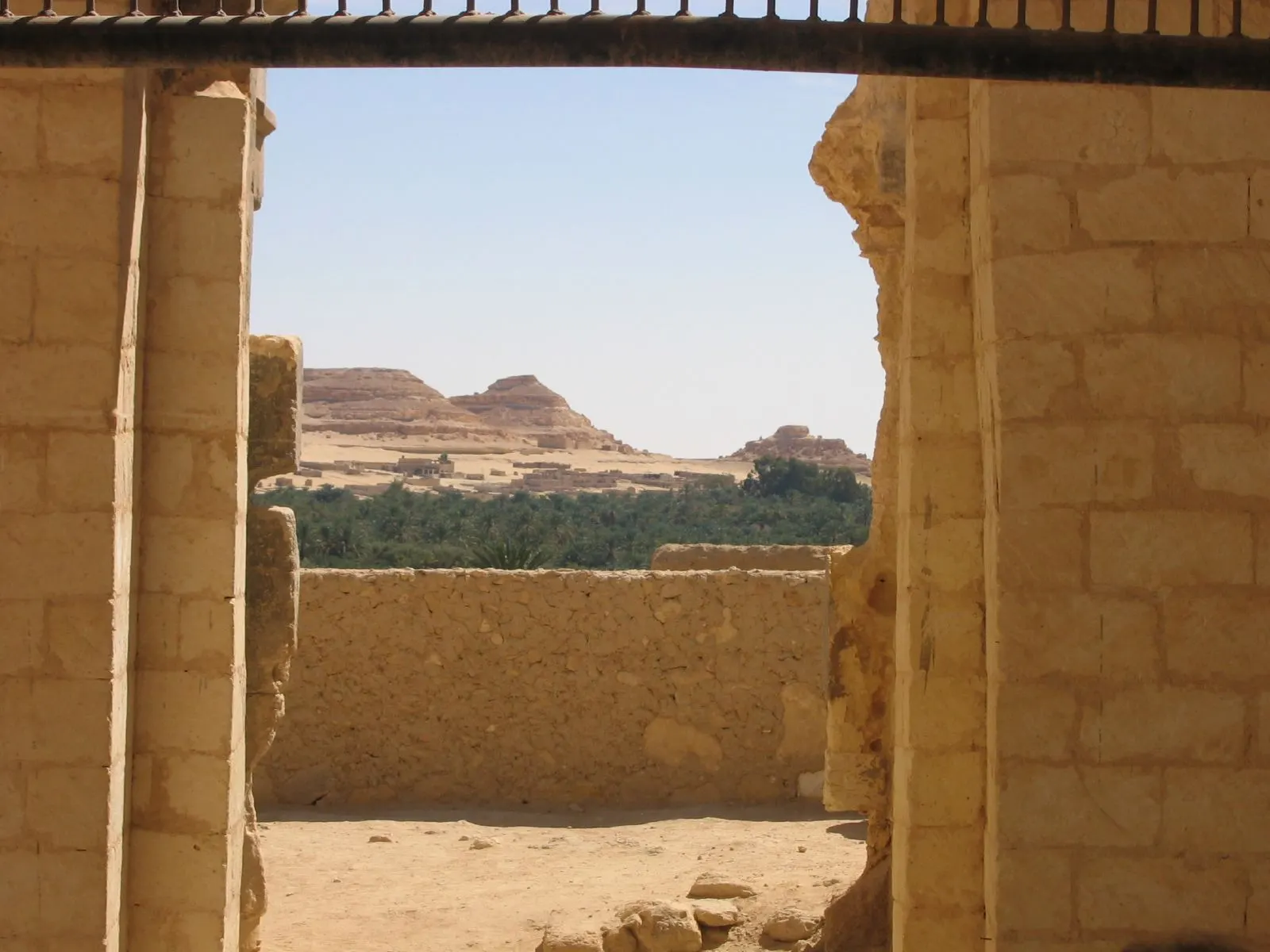
Short answer: Go to the Oracle Temple at Aghurmi in the first hour after opening or in the late afternoon, give it about an hour, and walk on to Umm Ubayda and Cleopatra Spring.
Getting there from the market square
The sites linked to Alexander's visit sit in a tight cluster east of town. Distances below are by road from the market square below Shali, measured on OpenStreetMap, as on our Siwa map.
| Place | By road | By bike | Tuk-tuk or car | Why it matters to the story |
|---|---|---|---|---|
| Oracle Temple, Aghurmi | 2.5 km | 13 min | 6 to 10 min | The sanctuary Alexander entered |
| Umm Ubayda | 2.8 km | 14 min | 7 to 10 min | Second temple of Amun, a few hundred metres south |
| Cleopatra Spring | 3.4 km | 17 min | 8 to 10 min | Spring on the same side of town; good for a swim after |
| Gebel al-Mawta | 1.7 km | 8 min | 5 min | Tombs from the Late Period to Roman times, including Ptolemaic burials made after his visit |
Some guidebooks print 4 km to the Oracle Temple; from the square it is 2.5 km by road. Walking takes roughly 35 to 45 minutes each way. For bikes and tuk-tuks, see getting around Siwa.
Tickets and opening times
Foreign visitors pay an entry fee at the gate in Egyptian pounds. The figures published online are years out of date, so we do not print one here: ask us for the current fee and opening hours when you book, or check at the gate. Carry cash in small notes.
Season and time of day
Alexander crossed in winter, and so should most visitors. The rock of Aghurmi has no shade, and from late spring to early autumn the middle of the day is hot; see Siwa weather for monthly figures and best time to visit Siwa for the trade-offs. In any season, arrive at opening or come back in the late afternoon, when the light is better for photographs from the top.
Mistakes to avoid
- Arriving without the story. Do not count on site signage to explain it. Read this page or the Oracle Temple guide first, or go with a guide.
- Expecting carved walls. The temple is small and mostly plain limestone. The point is where you are standing and the view over the gardens.
- Going at midday in the warm months. There is nowhere to shelter on the rock.
- Searching for "Alexander's tomb". The structure Liana Souvaltzi announced as his tomb in 1995 was disputed by the Greek Ministry of Culture, which questioned whether it was a tomb at all (Wikipedia, Tomb of Alexander the Great). It is not a visitor site. Siwa town is about 50 km east of the Libyan border, which is closed to travellers.
- Wrong footwear. The path climbs through crumbling mud-brick lanes; wear closed shoes with grip.
Families and accessibility
The climb is short but uneven, with steps and loose ground, and the sanctuary is not reachable by wheelchair. Telling children the snakes-or-crows story on the way gives the ruins a point; small ones need a hand on the upper path. Carry water and sun hats, and plan the visit before or after the hottest hours.
A half-day on Alexander's trail
Short answer: About three to four hours covers the oracle and its neighbours at an easy pace.
- Oracle Temple at opening. About an hour on the rock, including the ruined village of Aghurmi and its rock-cut well.
- Umm Ubayda. A short walk south. One decorated wall survives of the second Amun temple.
- Cleopatra Spring. A few minutes further on. Swim or sit at the edge before the heat builds.
- Back to town for lunch, then Shali or the House of Siwa museum in the afternoon to see how the oasis lived long after the oracle fell silent.
For the wider timeline, from the oracle's rise in the 6th century BC to the founding of Shali, see Siwa history.
Legacy
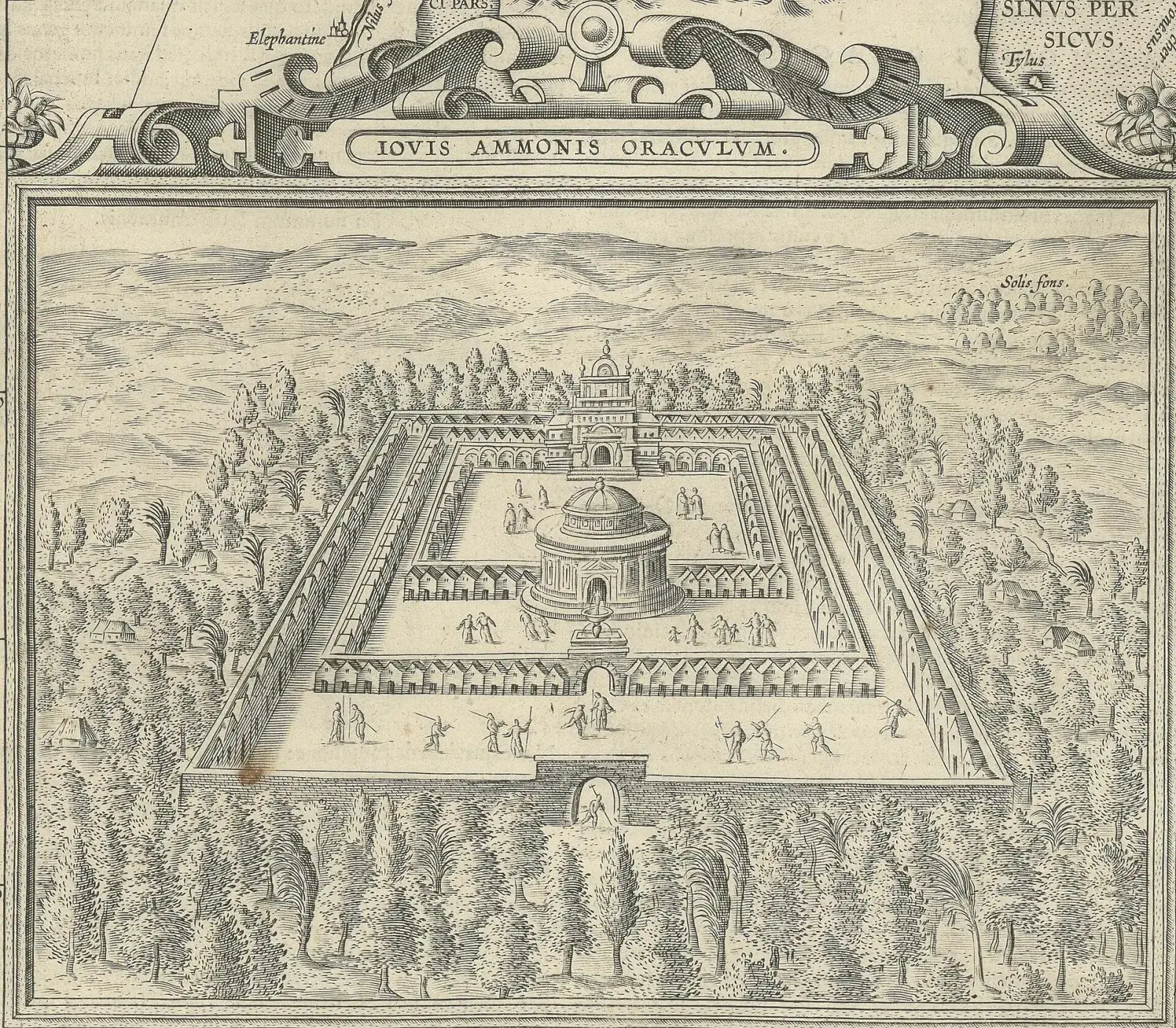
Short answer: Alexander honoured Amun for the rest of his life, and after his death the ram's horn became part of his public image.
His successors put his portrait on their coins with the curling horn of Ammon above the ear. The silver tetradrachms of Lysimachus, one of his generals, are the best-known example: the Corpus Nummorum record of one in the British Museum, struck at Lysimacheia in Thrace around 297 to 281 BC, describes the diademed head of the deified Alexander with the horn of Ammon. Curtius and Justin say he asked to be buried at Siwa. Instead Ptolemy I buried him at Memphis, and the body was later moved to Alexandria (Wikipedia, Tomb of Alexander the Great).
Follow his footsteps
Our Siwa from Alexandria trip follows his line along the coast and across the desert to the Oracle Temple. If you are already in town, the Siwa oasis day tour starts the morning at Aghurmi. For dates and prices, contact us.
Questions people ask
Which route did Alexander take to Siwa?+
West along the Mediterranean coast to Paraetonium (modern Marsa Matruh), then south through the desert. The modern road follows the same line, so driving from Alexandria today retraces it.
What did Alexander ask the oracle?+
Arrian says only that he heard the answer he wanted. Plutarch reports a story that he asked whether his father's killers had all been punished and whether he would rule all mankind, but Alexander himself told his mother the answers were secret.
Can I see the place where Alexander consulted the oracle?+
Yes. The Oracle Temple on the rock of Aghurmi is the same sanctuary, 2.5 km by road east of the market square. Allow about an hour, and pay the entry fee at the gate.
Is Alexander buried in Siwa?+
No evidence supports it. Ancient writers say his body went to Memphis and then Alexandria, and a 1995 claim to have found it near Siwa was disputed by the Greek Ministry of Culture.
How long did the journey take then, and how long does it take now?+
The sources give no exact day count, but the army marched through waterless country on foot. Today Siwa is about 600 km from Alexandria by road: about 7.5 hours of driving, or about 8.5 hours with stops.
Is the Oracle Temple suitable for children and older visitors?+
The path up through the ruined village is short but uneven, with steps and no shade. The sanctuary is not reachable by wheelchair, and anyone unsteady on their feet needs a hand. Children cope well if they are not out in the midday heat.
Go with us
Trips that include this
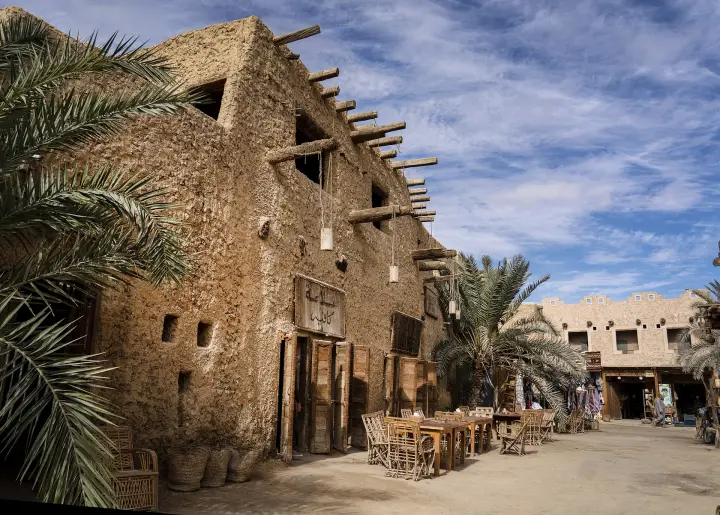
3 days, 2 nights
Siwa Oasis in 3 Days from Cairo (Private Trip)About US$420 to 650 per person for two travellers
Check dates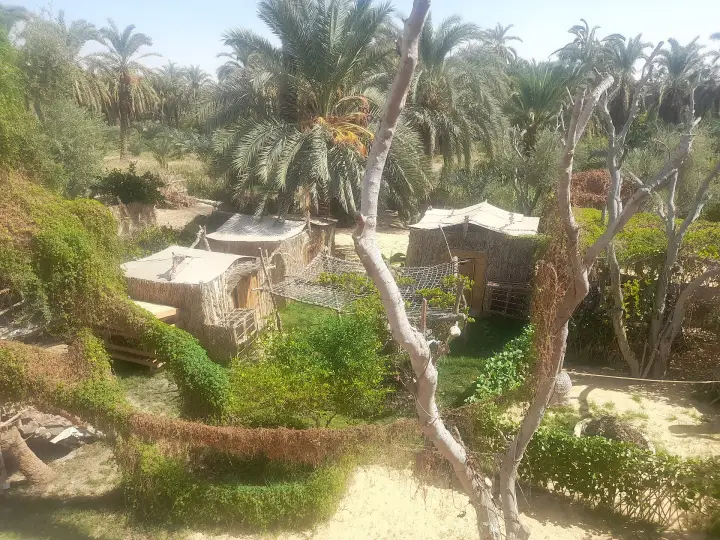
4 days, 3 nights
Siwa in 4 Days: Eco-Lodge and a Night in the Great Sand SeaAbout US$495 to 825 per person for two travellers (the lodge level decides the price)
Check dates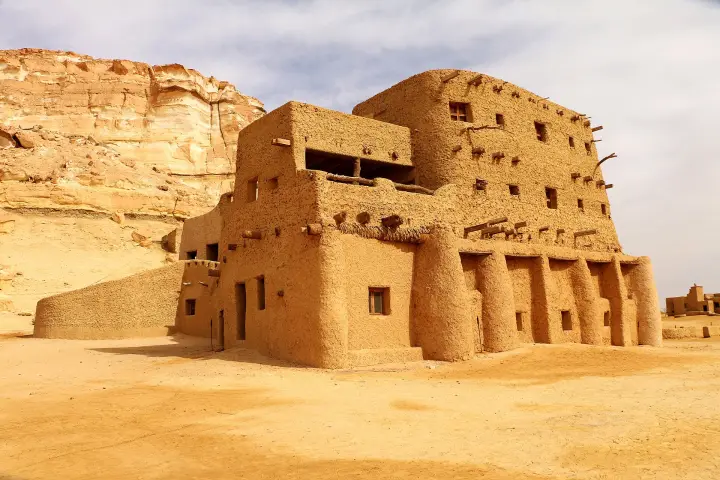
4 to 5 days (3 or 4 nights in Siwa)
Luxury Siwa: Candlelit Eco-Lodge EscapeOn request (depends on the lodge and season)
Check dates