The short answer
From September 1940 Siwa was a British frontier outpost facing Italian Libya, held by riflemen and Australian cavalry, and from November 1941 it was headquarters of the Long Range Desert Group. The LRDG left on 28 June 1942 after Tobruk fell. Italy's Giovani Fascisti occupied the oasis from 22 July until 6 November 1942, leaving after the Axis defeat at El Alamein.
Ask us on WhatsAppSiwa's war at a glance
Short answer: Siwa sat about 50 km from the border between Egypt, where British forces were based, and Italian Libya. The British garrisoned it from September 1940, used it as the Long Range Desert Group's headquarters from November 1941, and pulled out in June 1942. Italian troops held it from July to November 1942, until El Alamein forced them back.
| Date | Event | Source |
|---|---|---|
| 1915 to 1917 | First World War: the Sanusi order uses Siwa as a base against the British | Wikipedia: Siwa Oasis |
| September 1940 | A company of the 1st King's Royal Rifle Corps digs and wires defences at Siwa | Australian official history, To Benghazi |
| 3 December 1940 | A squadron of the 6th Australian Divisional Cavalry arrives | Same |
| 25 December 1940 to 21 March 1941 | Siege and capture of the Italian fort at Giarabub, across the Libyan border | Wikipedia: Siege of Giarabub |
| April 1941 | LRDG G and Y patrols based at Siwa | Wikipedia: LRDG |
| November 1941 | LRDG headquarters moves from Kufra to Siwa | Same |
| 2 March to 21 July 1942 | The LRDG "road watch" on the Tripoli to Benghazi road, with patrols rotating from Siwa until June | Same |
| 28 June 1942 | After the fall of Tobruk, the LRDG leaves Siwa | Same |
| 1 to 27 July 1942 | First Battle of El Alamein | Wikipedia: Second Battle of El Alamein |
| 22 July 1942 | Italy's Giovani Fascisti division occupies Siwa | Wikipedia: 136th Division |
| 23 October to 4 November 1942 | Second Battle of El Alamein; the Axis retreats west | Wikipedia, as above |
| 6 November 1942 | The Italians abandon Siwa | Wikipedia: 136th Division |
The Australian account is chapter 12 of Gavin Long's To Benghazi, the official history volume, transcribed on HyperWar. All sources checked 21 November 2026.
1940 to 1941: a frontier outpost
Short answer: When Italy entered the war, Siwa became Egypt's western sentry post. British riflemen and then Australian cavalry held it and used it to attack the Italian fort at Giarabub.
Siwa town is about 50 km east of the Libyan border, which is closed to travellers today. In 1940 the far side was Italian Cyrenaica, and the nearest Italian stronghold was Giarabub (Jaghbub), an oasis about 110 km to the north-west in a straight line, just inside Libya. According to the Australian official history, a company of the 1st King's Royal Rifle Corps reached Siwa in September 1940 and dug and wired defences across the routes from the west.
In November the British decided to replace it with Australians. A squadron of the 6th Australian Divisional Cavalry arrived on 3 December 1940, followed on 17 December by the regimental headquarters. From Siwa the Australians probed and then besieged Giarabub. After a long siege the main attack came at dawn on 21 March 1941, and by early afternoon some 600 prisoners had been taken. The official history records that a platoon of Senussi organised at Siwa helped salvage captured equipment afterwards, and that in April 133 Senussi were moved from Giarabub to Siwa with their belongings.
1941 to 1942: home of the Long Range Desert Group
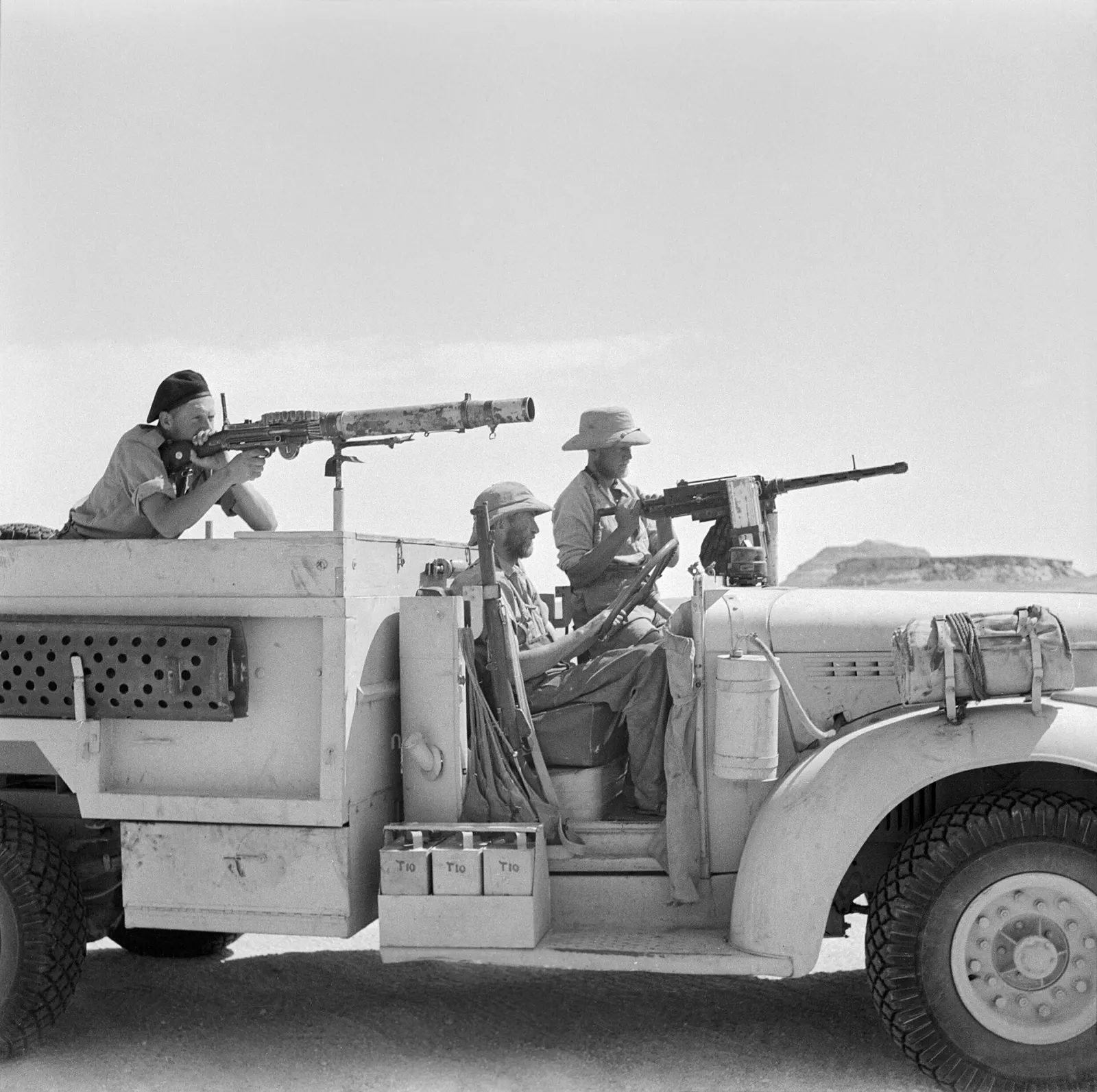
Short answer: The LRDG was a tiny unit of desert specialists, mostly New Zealanders at first, who drove modified trucks hundreds of kilometres behind Axis lines. From November 1941 to June 1942, Siwa was their headquarters.
Major Ralph Bagnold, a pre-war desert explorer, proposed the idea to General Wavell in June 1940, and the unit was formed on 3 July 1940 as No. 1 Long Range Patrol Unit. It was renamed the Long Range Desert Group in November 1940 and never had more than 350 men, all volunteers (Wikipedia: LRDG, checked 21 November 2026).
| Patrol or squadron | Who they were |
|---|---|
| R and T patrols | New Zealanders, the original core, from the Divisional Cavalry and 27th Machine-Gun Battalion |
| S Patrol | Southern Rhodesians |
| G Patrol | British Guardsmen, Coldstream and Scots Guards |
| Y Patrol | British yeomanry, mainly the Nottinghamshire Yeomanry |
| Indian Long Range Squadron | Volunteers from Indian cavalry regiments; joined the LRDG in December 1941 |
Siwa mattered because of where it sat. To the south-west lay the Great Sand Sea, which Bagnold's pre-war expeditions had learned to cross, and beyond it the Axis supply lines in Libya. After the Axis withdrew from Cyrenaica at the end of 1941, the LRDG also used Jalo oasis in Libya as a forward base.
In this period the patrols:
- Watched the road. From 2 March 1942 the LRDG kept a continuous watch on the coastal road between Tripoli and Benghazi, a few miles from the Italian monument known as Marble Arch. Three patrols rotated: one watching, one driving out and one returning to Siwa. The watch was kept up until 21 July 1942, after the LRDG had left Siwa.
- Ferried the SAS. In December 1941 LRDG patrols twice carried David Stirling's newly formed SAS to and from raids on Axis airfields.
When Tobruk fell in June 1942 and Rommel's forces pushed into Egypt, Siwa was too exposed. The LRDG withdrew on 28 June 1942, part to Cairo and Kufra and part to Faiyum.
July to November 1942: the Italian occupation
Short answer: Italian troops of the Giovani Fascisti ("Young Fascists") division held Siwa for about three and a half months. Malaria hit them harder than any enemy.
The 136th Giovani Fascisti division occupied the oasis on 22 July 1942, according to the division's Wikipedia article. The same article says malaria affected almost the entire garrison, with about 800 men hospitalised. The Axis defeat at El Alamein forced the division to abandon Siwa on 6 November 1942.
Two often-repeated details deserve caution. Wikipedia's Siwa article says Rommel's Afrika Korps "took possession three times" and that a small Egyptian puppet government-in-exile was set up at Siwa; we have not found a detailed source for either, so treat them as unconfirmed.
Siwans and the war: Gebel al-Mawta
Short answer: Siwan families hid in the ancient rock-cut tombs of Gebel al-Mawta while the armies fought over the region, and came across painted chambers in the process.
The Mountain of the Dead is a limestone hill pitted with tombs from Ptolemaic and Roman times, 1.7 km by road from the market square. Egyptian Streets (2019) says the people of Siwa went to the hill to hide while German, British and Italian troops fought over this part of the desert, and found the tombs along the way. It dates the discovery to 1944. That date sits awkwardly with the fighting, which had moved west by the end of 1942, and the Egyptian archaeologist Ahmed Fakhry had already carried out careful archaeological work in the oasis in 1938 and 1941 (JAHA review of the 2014 Si-Amun publication). The most likely reading is that wartime sheltering opened up decorated chambers that were then recorded properly over the following years; the exact sequence is not well documented in the sources we could check.
What you see today: the painted Tomb of Si-Amun and a few others, opened by a guardian, plus a view from the summit over the town and palm groves. Our Gebel al-Mawta guide has the ministry's ticket price and hours.
Siwa in film and books
The oasis appears briefly as an LRDG base in the 1958 British film Ice Cold in Alex (Wikipedia). The Hungarian explorer László Almásy, the real figure behind The English Patient, explored the same deserts. The LRDG has its own shelf of memoirs, and R. L. Kay wrote the New Zealand war history volumes on the unit.
What you can see today
Short answer: In Siwa itself, stories and landscape rather than monuments. On the way, El Alamein has the cemeteries, memorials and museum.
In Siwa
Distances are by road from the market square, measured on OpenStreetMap, as on our Siwa map.
| Place | Distance | The wartime link |
|---|---|---|
| Gebel al-Mawta | 1.7 km | Where Siwans sheltered; painted tombs |
| Shali | Walk up from the square | No wartime role (abandoned after the 1926 rains), but the best view over the oasis |
| Great Sand Sea | From about 10 km south | LRDG country; 4x4 only, with a permit and licensed driver |
We know of no signed wartime sites in the oasis. A guide can tell the story at Gebel al-Mawta and in the dunes, and some older Siwans have family memories of the war years; ask before recording anyone.
On the road: El Alamein and Marsa Matruh
| Stop | Distance from Siwa | What is there |
|---|---|---|
| Marsa Matruh | About 300 km, about 4 hours | Rommel's Hideout, a rock-cut cave now a small military museum (Wikipedia: Mersa Matruh) |
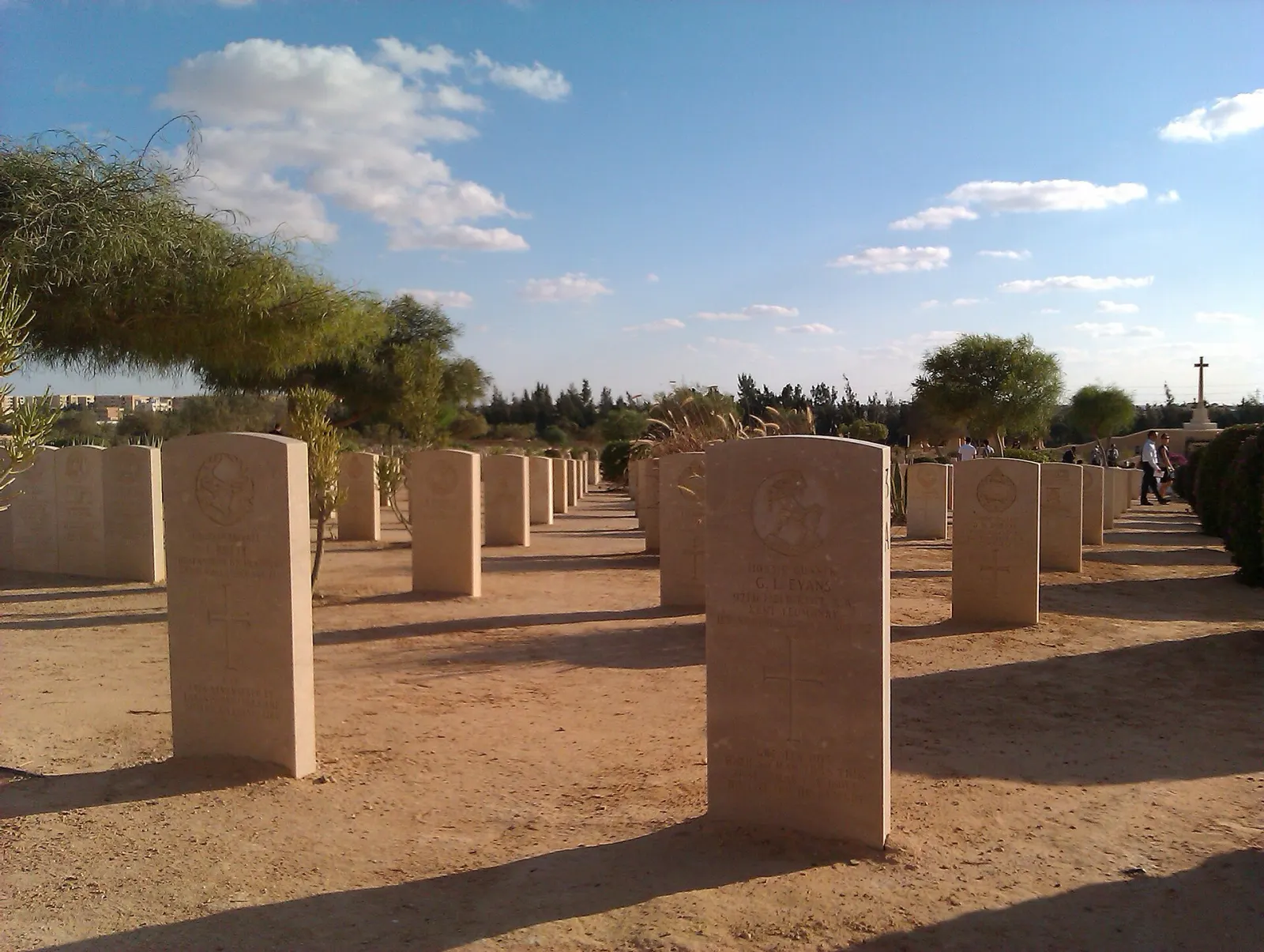
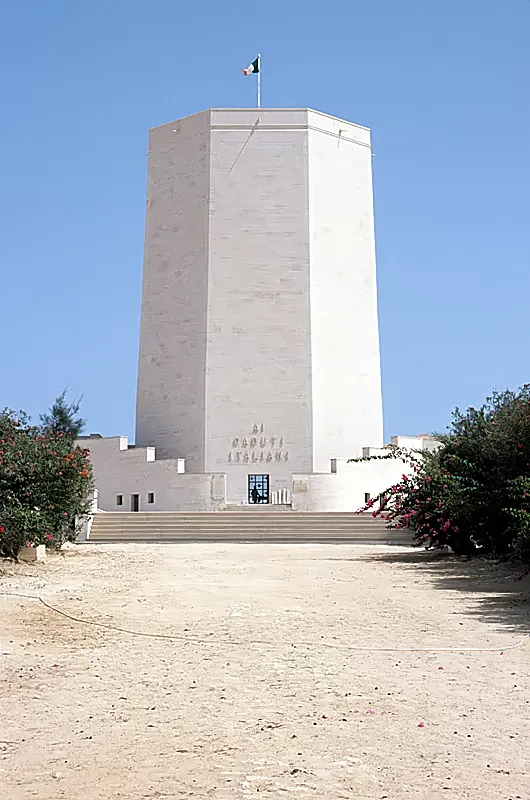
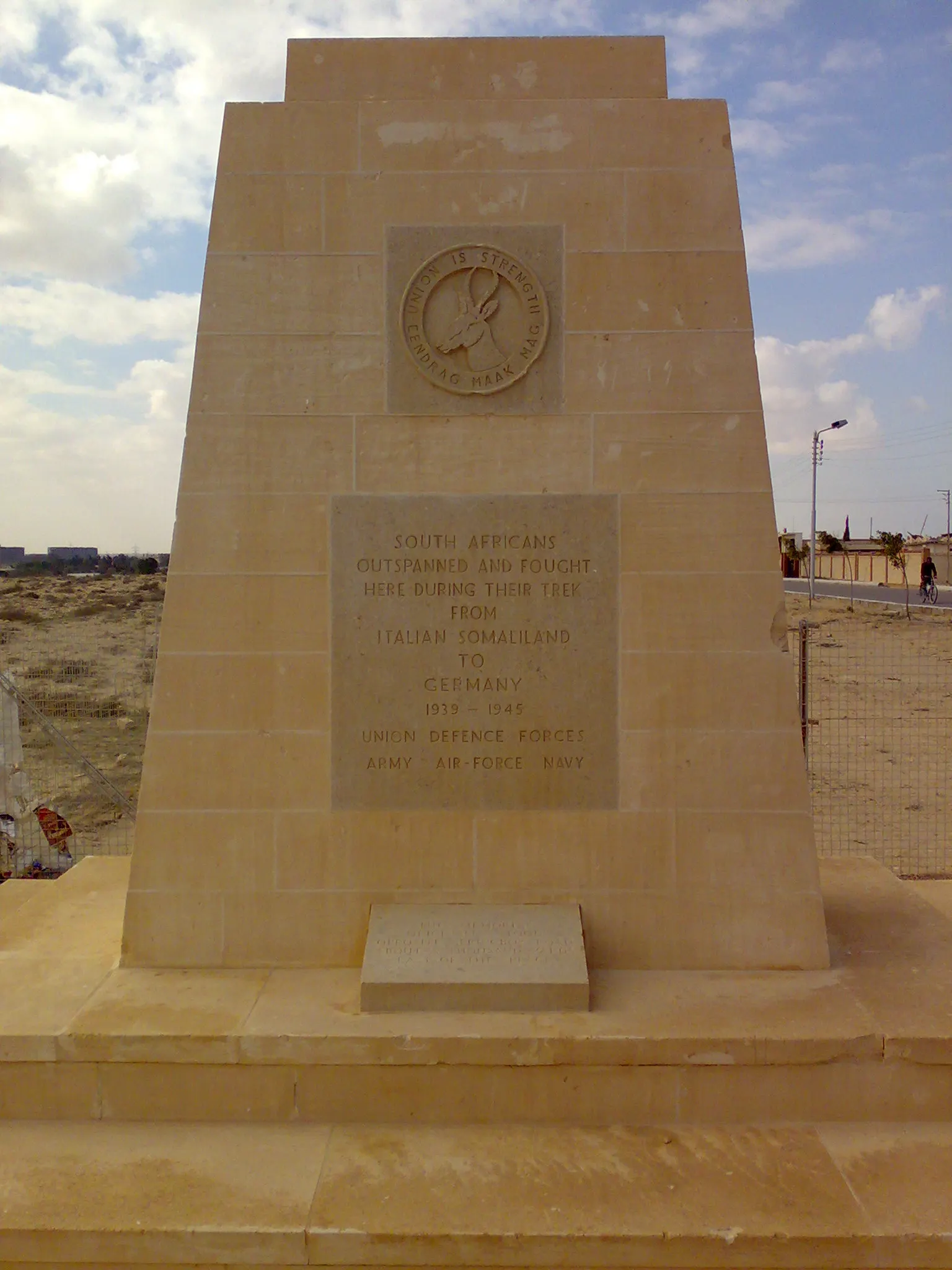
| El Alamein | About 490 km, about 6 hours of driving | The Commonwealth War Cemetery, with more than 7,200 burials, and the Alamein Memorial, naming almost 12,000 servicemen with no known grave (CWGC); the German and Italian memorials a few kilometres west; a military museum |
Allow one to two hours at El Alamein. In December and January, when the light goes early, it is usually better to stop on the drive back rather than on the way to Siwa. Siwa is about 750 km from Cairo by road: about 9 hours of driving, or about 10 hours with stops, so an El Alamein visit turns a long day into a very long one unless you break the journey.
Timing
October to April is the comfortable season for Gebel al-Mawta, the dunes and the coast. In summer, visit the tombs at opening time and leave the desert for late afternoon. See Siwa weather and best time to visit Siwa.
Respect
Gebel al-Mawta is an antiquities site and a place with recent family memories. Do not touch the painted plaster, keep to the paths, and do not photograph Siwans without asking. The El Alamein cemeteries are war graves still visited by families; dress and behave as you would at any cemetery. More on local customs in Siwa etiquette.
See it with us
Our Siwa from Alexandria trip runs along the coast road past El Alamein and can stop at the cemetery and museum. Siwa in 3 days includes Gebel al-Mawta and the dunes. For the wider story, from the oracle to the 1926 rains, read Siwa history. For dates and prices, contact us or browse all tours.
Questions people ask
Were there battles in Siwa during the Second World War?+
No major battle was fought in the oasis itself. It was a base and a jumping-off point: Australian cavalry operated from Siwa to besiege the Italian fort at Giarabub (Jaghbub), about 110 km north-west in a straight line, which fell on 21 March 1941.
What was the Long Range Desert Group?+
A small British reconnaissance unit founded by Ralph Bagnold in July 1940, never more than 350 volunteers, many of them New Zealanders. Its patrols drove deep behind Axis lines, and from November 1941 to June 1942 it was based at Siwa.
Did the Axis occupy Siwa?+
Yes. Italy's 136th Giovani Fascisti division occupied the oasis on 22 July 1942 and abandoned it on 6 November 1942, after the defeat at El Alamein. Malaria put about 800 of the garrison in hospital.
Did Siwans shelter in the tombs of Gebel al-Mawta?+
Yes, according to local accounts reported by Egyptian Streets: families hid in the rock-cut tombs while the armies fought over the region, and in doing so came across painted chambers. It dates those finds to 1944.
Are there WWII remains to see in Siwa?+
We know of no marked wartime sites in the oasis. The places to go are Gebel al-Mawta, where Siwans sheltered, and the Great Sand Sea, the terrain the LRDG crossed. The big memorials and museum are at El Alamein.
Can I combine Siwa with El Alamein?+
Yes. El Alamein lies on the main road from Cairo and Alexandria, about 490 km and 6 hours' drive from Siwa. Allow one to two hours there for the cemetery and museum.
Go with us
Trips that include this
3 days, 2 nights
Siwa from Alexandria: 3-Day Private TripAbout US$400 to 625 per person for two travellers
Check dates
3 days, 2 nights
Siwa Oasis in 3 Days from Cairo (Private Trip)About US$420 to 650 per person for two travellers
Check dates