The short answer
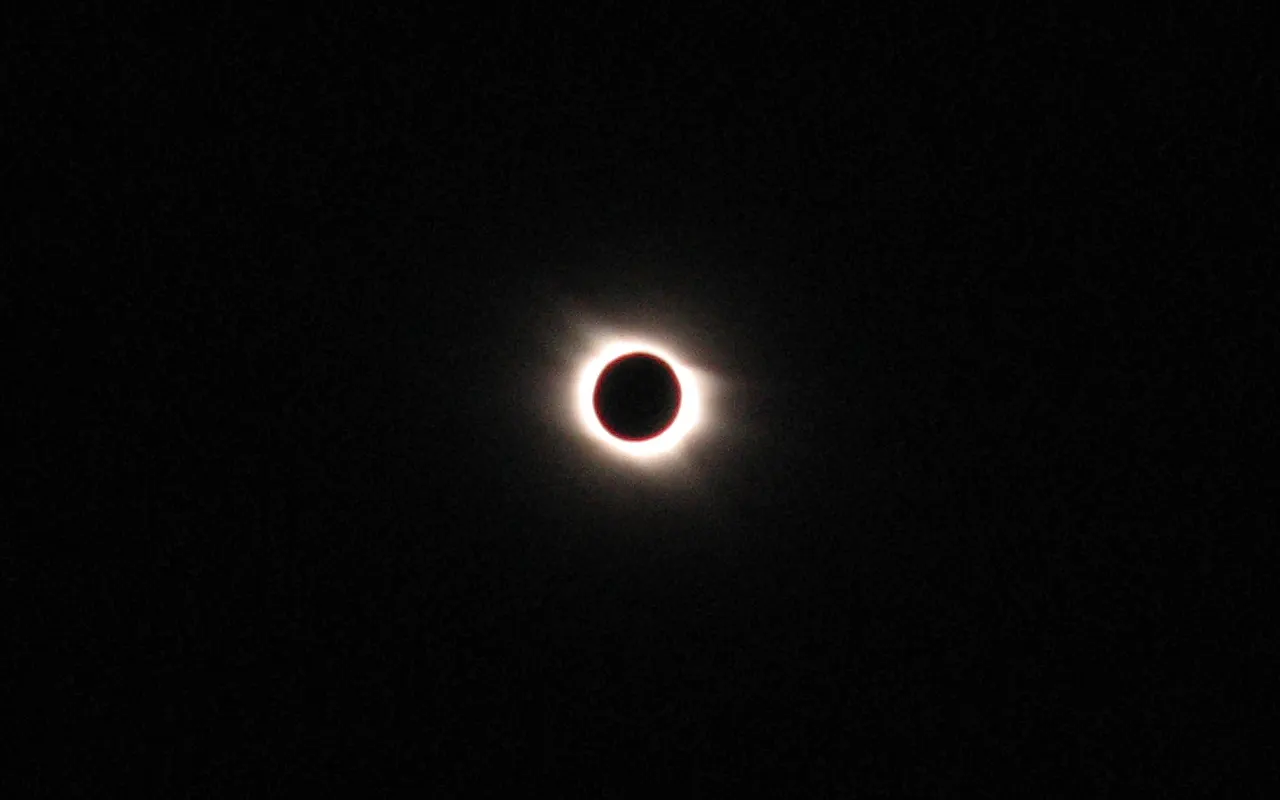
Siwa is where Egypt goes dark first on Monday 2 August 2027: 5 min 33 s of totality in town, or about 6 min 19 s near the centreline on the road to Matruh. Bahariya gets 6 min 19 s, Sohag and Luxor about 6 min 23 s. Marsa Matruh, Kharga town, Aswan, Cairo and Alexandria stay in partial eclipse. Expect clear skies; plan for heat and crowds.
Ask us on WhatsAppThe 2027 eclipse from Siwa's side of Egypt
Short answer: The Moon's shadow enters Egypt at Siwa on Monday 2 August 2027 and sweeps south-east to the Red Sea beyond Luxor. Anywhere inside that band sees the Sun completely covered for up to about 6 minutes 23 seconds around midday. Cairo, Alexandria and Marsa Matruh are outside it and get a partial eclipse only.
In Fred Espenak's NASA path data for 2 August 2027, greatest duration (6 min 23.2 s) falls near 26.8N 31.1E, between Asyut and Sohag, and greatest eclipse (6 min 22.6 s) near 25.5N 33.2E, a little east of Luxor. The band is about 255 km wide as it crosses into Egypt and about 258 km wide as it leaves.
Siwa is the first stop on that track, and it is the one we know. This page sets the oasis against the rest of Egypt on four points: length of totality, ease of travel, heat, and crowds. For a comparison written from Bahariya and the White Desert, see our sister site's where to watch the 2027 eclipse in Egypt.
Totality by place, starting at Siwa
Short answer: Siwa town gets 5 min 33 s and the Matruh road near the centreline about 6 min 19 s. Further down the track, Bahariya gets 6 min 19 s and Sohag and Luxor about 6 min 23 s. Marsa Matruh, Kharga town, Aswan, Cairo and Alexandria get none.
Times below are Egypt summer time (UTC+3) for Monday 2 August 2027, listed in the order the shadow arrives.
| Where | Totality begins | Lasts | Totality ends | Sun altitude | Partial eclipse runs |
|---|---|---|---|---|---|
| Siwa town | 12:42:34 | 5 min 33 s | 12:48:07 | 75.5 degrees | 11:22:17 until 14:08:03 |
| Matruh road, near the centreline | around 12:42 (exact once the site is fixed) | about 6 min 19 s | about 75 degrees | about 11:22 until 14:08 | |
| Marsa Matruh | no totality | 97.5% partial | 74.7 degrees | 11:24:17 until 14:07:26 | |
| Bahariya (Bawiti) | 12:50:20 | 6 min 19 s | 12:56:39 | 78.7 degrees | 11:29:40 until 14:15:30 |
| Asyut | 12:56:55 | 6 min 8 s | 13:03:03 | 80.6 degrees | 11:35:35 until 14:21:28 |
| Sohag | 12:58:47 | 6 min 24 s | 13:05:11 | 81.2 degrees | 11:37:20 until 14:23:25 |
| Luxor | 13:02:05 | 6 min 23 s | 13:08:28 | 81.8 degrees | 11:40:20 until 14:26:30 |
| Kharga town | no totality | 99.5% partial | 82.3 degrees | 11:36:09 until 14:23:27 | |
| Aswan city | no totality | 99.9% partial | 82.9 degrees | 11:42:54 until 14:29:48 | |
| Cairo | no totality | 94.7% partial | 77.6 degrees | 11:33:15 until 14:16:11 | |
| Alexandria | no totality | 93.3% partial | 76.1 degrees | 11:29:45 until 14:11:59 |
Each town's numbers come from Eclipseando: Siwa, Marsa Matruh, Bahariya, Asyut, Sohag, Luxor, Kharga, Aswan, Cairo and Alexandria. As a cross-check, timeanddate gives Siwa Oasis 5 min 31 s (timeanddate) and Sohag 6 min 23 s. For the Matruh road we used NASA's central-line duration, 6 min 19.0 s to 6 min 20.0 s between roughly 25.3E and 26.1E; the point where the road meets the line, near 29.7N 25.8E, is our own working. Every value is for a single spot, normally the town centre, and moves by a few seconds over short distances. Calculators can differ from each other by as much as about 15 seconds. All values were checked on 15 November 2026.
What the numbers mean for Siwa:
- Siwa sees totality roughly 20 minutes ahead of Luxor. The shadow runs from north-west to south-east, so the oasis is early and its Sun sits slightly lower in the sky.
- Partial is not "nearly total". Even at 97.5 per cent on the Matruh coast, or 99.9 per cent at Aswan, there is no darkness and no corona, and eclipse glasses stay on throughout. If you are coming to Egypt for this, stand inside the band.
Siwa against the other options
Short answer: Siwa trades a little totality and a long road for an empty horizon and a quiet oasis. The Nile Valley trades crowds for the longest totality and easy flights.
Siwa. All of the oasis lies in the band. The town gets 5 min 33 s; heading north-east on the Marsa Matruh road gains about 45 seconds near the centreline. It is small, quiet and traditional, with mud-brick lodges and springs, and the Great Sand Sea starts at the edge of the oasis. Ahram reports that Egypt is preparing a viewing event in Siwa as well. The price is distance: Cairo is a full day away by road. Our Siwa eclipse guide covers contact times, where to watch and how to deal with the heat.
Marsa Matruh. The coast misses totality. Matruh works as a night's stop on the drive to Siwa, and the road south from it crosses the centreline about three-quarters of the way to the oasis. See Siwa from Marsa Matruh.
Bahariya. Bawiti is almost on the centreline, with 6 min 19 s. It lies about 370 km by road from Cairo (Wikipedia), a much shorter trip than Siwa, and is the base for the Black and White Deserts. Siwa vs Bahariya compares the two oases as places to stay.
Sohag and Asyut. These Nile towns sit closest to the point of greatest duration. Sohag city gets 6 min 24 s; Asyut, north of the centreline, 6 min 8 s. Neither has Luxor's choice of tourist hotels, and both see fewer foreign visitors.
Luxor. Roughly 6 min 23 s in the city and an hour's flight from Cairo, with plenty of hotels and Nile cruise boats and the temples to fill the other days. Many organised eclipse programmes are based here, and Egypt is preparing official viewing events in the city (Ahram Online report of 27 October 2026). It is likely to draw the largest eclipse crowds in Egypt.
Kharga. The town is outside the band. Reading NASA's limit table, we put the southern edge of the shadow about 35 km due north of town, or around 30 km off at its closest point to the north-east. Close to that edge totality is only seconds long, so a long eclipse means a drive well north towards Asyut. Kharga is worth a visit that week, but not on eclipse day.
Aswan. The city reaches 99.9 per cent with no totality. Eclipseando's nearest totality is at Daraw, around 37 km north, and lasts just 3 min 17 s. On a Nile cruise, check that the boat will be tied up at Luxor or further north on 2 August.
Weather odds
Short answer: About as good as total eclipses get. Cloud is very unlikely anywhere on Egypt's stretch of the track; heat and dust haze are what to plan for.
In his Eclipsophile analysis of 2027, eclipse climatologist Jay Anderson notes that summer cloud is almost unknown over Libya and Egypt, and that 23 years of satellite records show no eclipse-day cloud in August over some sections of the track across western Egypt. Siwa and Bahariya are the two sites he rates most reliable: virtually no chance of cloud, and comparatively low exposure to dust storms.
| Area | Chance of cloud | What else to watch for |
|---|---|---|
| Siwa and Bahariya | Almost none | Shallow night fog between Matruh and Siwa, gone long before midday |
| Nile Valley, Asyut to Luxor | Very low; cloud starts to climb slightly above zero at Luxor | Thin high cirrus can soften photographs of the outer corona; occasional dust |
| Mediterranean coast | Not relevant | Outside the path of totality |
The same analysis puts average August dust haze on the centreline at an aerosol optical depth of just about 0.3 until the track gets past Luxor.
Heat: the factor that decides the day
Short answer: Every site in the band is fiercely hot at midday in early August. Wherever you watch from, arrange shade, water and air conditioning.
| Place | August mean high | August mean low | Record high | Source |
|---|---|---|---|---|
| Siwa | 38.7C (37.0C in the WMO 1961-1990 normals) | 23.6C (21.4C) | 46.2C | Meteostat 1991-2020; WMO normals and record on Siwa weather |
| Marsa Matruh | 30.5C | 22.7C | 43.0C | 1991-2020, via Wikipedia |
| Luxor | 41.2C | 25.6C | 47.0C | 1991-2020, via Wikipedia |
| Kharga | 41.2C | 25.2C | 46.8C | 2000-2020, via Wikipedia |
For 2 August in Luxor, Eclipsophile's 17-year average high is 42.0C, and it warns that Egyptian afternoons can get close to 50C. At mid-eclipse the Sun stands 75 to 82 degrees high, so natural shade barely exists. The temperature drops noticeably as the light goes before totality, though only briefly.
- Bring or book proper shade at your viewing spot, not just a hat.
- Plan at least three litres of water per person between 10:00 and 15:00, with oral rehydration salts.
- Keep cameras and phones out of direct sun until you need them.
- Have an air-conditioned room to return to straight after totality.
In Siwa itself, read Siwa in August and our health and pharmacies guide.
Access and crowds
Short answer: Siwa and Bahariya mean a long drive and few beds; Luxor is the quickest to reach and the busiest. Whichever you pick, book rooms and transport early.
| Place | Getting there from Cairo | Beds | Likely crowds |
|---|---|---|---|
| Siwa | About 750 km by road via the coast and Marsa Matruh: about 9 hours of driving, or about 10 hours with stops | Small lodges and camps | Small oasis, limited capacity |
| Bahariya | About 370 km by road | Small hotels and camps | Smaller oasis, stretched that week |
| Sohag, Asyut | Train or road along the Nile | Fewer tourist hotels than Luxor | Fewer foreign tours |
| Luxor | About 1 h by air, or the overnight train | Large hotels and cruise ships | Base for many foreign eclipse tours; likely the busiest |
On 27 October 2026 Ahram Online wrote that operators in at least ten foreign markets, from the UK and Germany to Japan and Australia, already had eclipse departures listed as limited, sold out or waitlisted, for programmes in Luxor, Siwa, Bahariya and elsewhere along the track. The report also notes that this reflects individual operators' allocations and does not mean every hotel or tour in Egypt is full.
Advice that holds wherever you go:
- Get there two days ahead at least. Roads, trains and checkpoints will be busier than normal, and it takes a day or two to adjust to the heat.
- Don't plan to leave on the afternoon of 2 August, when everyone else is on the road too.
- Have your passport on you every day, above all on desert roads with checkpoints. For the Western Desert, see permits and checkpoints.
- Pack eclipse glasses from home certified to ISO 12312-2, as the American Astronomical Society recommends. Certified glasses may be hard to find locally that week.
Siwa or Luxor for the eclipse
Short answer: Choose Siwa if you want a quiet oasis and dark desert nights with nearly as much totality near the centreline; choose Luxor if you want the longest totality, quick flights and the temples.
| Siwa | Luxor | |
|---|---|---|
| Totality | 5 min 33 s in town; about 6 min 19 s near the centreline on the Matruh road | 6 min 23 s in the city |
| Totality starts | 12:42:34 in town | 13:02:05 |
| Sun height | 75.5 degrees | 81.8 degrees |
| Cloud odds | Almost none | Very low |
| August mean high | 38.7C (1991-2020; Siwa weather) | 41.2C (1991-2020) |
| Getting there | About 750 km by road, about 10 h with stops | About 1 h flight from Cairo, or the overnight train |
| Beds | Small lodges and desert camps; few rooms | Large hotels and Nile cruise ships |
| Crowds | Small oasis, limited capacity | Many organised eclipse tours; likely the busiest |
| Rest of the week | Springs, salt lakes, the Great Sand Sea and dark skies | Karnak, the Valley of the Kings and the Nile |
Sources: totality, start times and Sun height from Eclipseando for Siwa and Luxor; the centreline figure from NASA; cloud odds from Eclipsophile; August highs from the 1991-2020 normals linked in the heat table above. Checked 15 November 2026.
Luxor's extra 50 seconds are genuine, yet both places offer a long totality with the Sun high in an almost certainly clear sky. What really separates them is the rest of the week. Eclipse day is also new moon, so Siwa's evenings on either side have no moon, ideal for camping out and stargazing; see the 2027 moon calendar and the meteor shower guide. For the broader choice between the two, read Siwa or Luxor.
Watching from Siwa with us
Short answer: Our private 7-day Siwa eclipse trip from Cairo is planned for 29 July to 4 August 2027 (dates confirmed on registration), with a provisional viewing site near the centreline on the Matruh road. Register interest now.
The Siwa total solar eclipse tour gets to Siwa four days before the eclipse and leaves two days after, with an air-conditioned lodge, plus shade, water and glasses at the viewing site, and an optional night camping in the Great Sand Sea. The site stays provisional until we have checked access in person; if the road site falls through, we watch from the oasis. Prices, deposit and lodge-hold terms are on request. For everything Siwa-specific, from contact times to what totality looks like from the oasis and eye safety, read the 2027 eclipse in Siwa, and see how to get to Siwa and where to stay.
Questions people ask
Where in Egypt is the 2027 total solar eclipse visible?+
The band of totality, roughly 255 to 258 km across, comes into Egypt over the Western Desert by Siwa, heads south-east over Bahariya and the Nile Valley between Asyut and Luxor, and exits over the Red Sea. Siwa, Bahariya, Asyut, Sohag, Qena and Luxor all lie in it. Cairo, Alexandria, Marsa Matruh, Kharga town and Aswan city lie outside.
Which place in Egypt has the longest totality?+
On NASA's figures the maximum on the whole track, 6 min 23.2 s, falls on the centreline in the Nile Valley around Sohag and Asyut governorates. Eclipseando gives Sohag city 6 min 24 s and Luxor 6 min 23 s. A few seconds between towns near the middle of the band make no practical difference.
Is Marsa Matruh in the path of totality?+
No. The town lies just north of the shadow and gets a partial eclipse, with about 97.5 per cent of the Sun hidden; it never gets dark. Drive south towards Siwa, though, and the road crosses the centreline, where totality runs to about 6 min 19 s.
Can I see totality from Kharga Oasis?+
The town itself misses out: it lies a little south of the band and peaks at a 99.5 per cent partial eclipse. To reach totality you would head north on the Asyut road, and further still for a long one.
What time is the eclipse in Egypt?+
Siwa is first: totality begins there at 12:42:34 Egypt summer time (UTC+3). Luxor is last, at 13:02:05. The partial eclipse begins roughly 80 minutes ahead of totality and finishes roughly 80 minutes after it. All times here are Egypt summer time.
Siwa or Luxor for the eclipse?+
Choose Siwa for a quiet oasis and dark desert nights, and Luxor for the longest totality and easy flights. Siwa town gets 5 min 33 s, and a site on the Matruh road near the centreline about 6 min 19 s, but it is a 10-hour drive from Cairo with stops. Luxor gets 6 min 23 s, is about an hour's flight from Cairo and is the base for many organised eclipse tours.
Go with us
Trips that include this
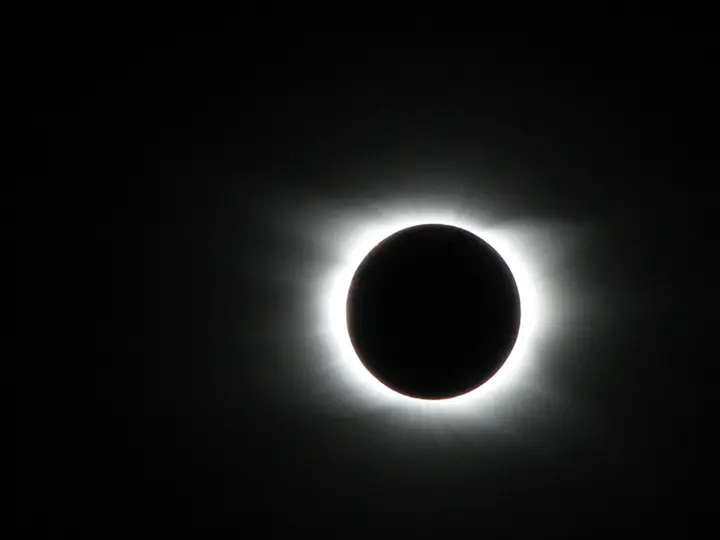
7 days, 6 nights (planned dates: 29 July to 4 August 2027, confirmed on registration)
Siwa Total Solar Eclipse Tour 2027 (29 Jul to 4 Aug)On request (set by group size, the lodge you choose and whether you add a camp night)
Check dates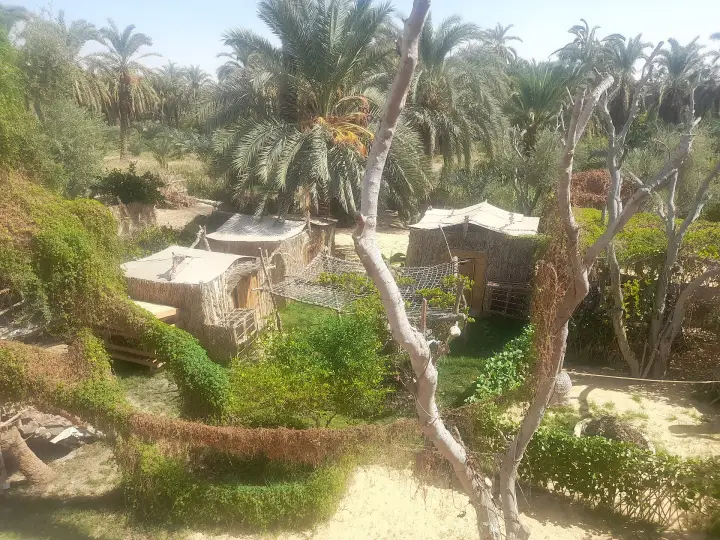
4 days, 3 nights
Siwa in 4 Days: Eco-Lodge and a Night in the Great Sand SeaAbout US$495 to 825 per person for two travellers (the lodge level decides the price)
Check dates