The short answer
Siyaha, also called Eid el-Solh, is Siwa's own festival of reconciliation: three days around the October full moon when Siwan men gather on Gebel Dakrour to pray, chant and share a meal of fattah, then march back into town. In 2027 the full moon falls on 15 October, but Siwa fixes the days locally, so treat mid-October as provisional and visit only as a respectful onlooker.
Ask us on WhatsAppSiyaha at a glance
Short answer: Siyaha is a three-day gathering of Siwan men on Gebel Dakrour, held around the October full moon after the date harvest. They pray, chant Sufi dhikr, eat a shared meal and settle old quarrels, then march back into town on the fourth morning. Wikipedia describes it as unique to Siwa, and visitors are onlookers, not an audience.
| Names | Siyaha (also spelled Seyaha or Saha), Eid el-Solh (feast of reconciliation), Eid el-Hasad (harvest feast), mulid of Sidi Sulayman |
| When | Three lunar days around the October full moon; 15 October in 2027 |
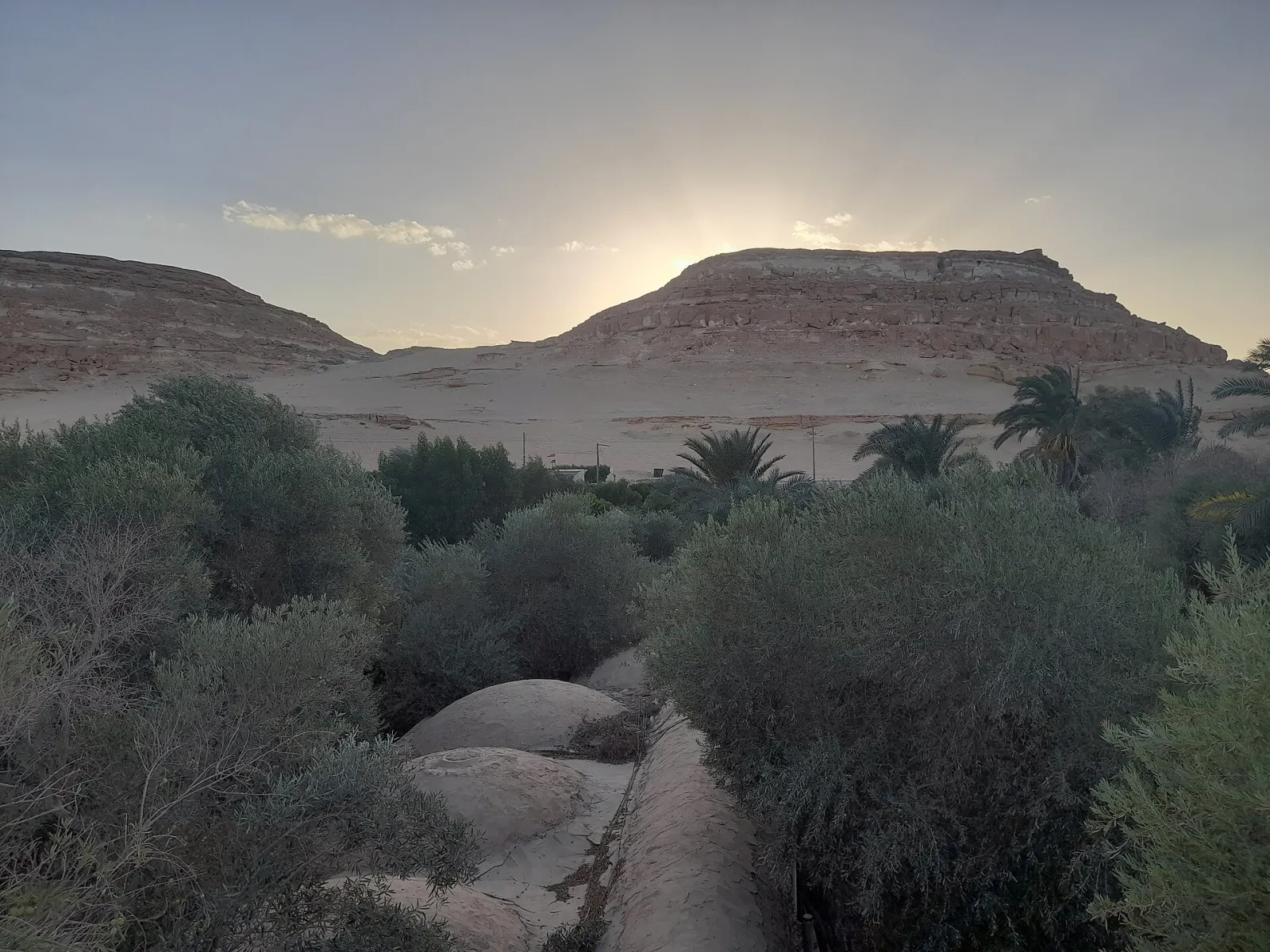
| Where | Gebel Dakrour, about 4.5 km by road south-east of the market square |
| Who takes part | Siwan men and boys on the hill; Siwan women celebrate in the village |
| What happens | Prayer, Sufi chanting, a communal meal of fattah, reconciliation, a closing march |
| Visitors | Welcome to watch from the edges, with a guide and with care |
| Permit | None: Dakrour is inside the oasis, not the desert |
What the festival is
Short answer: A reconciliation feast. According to tradition, a Sufi sheikh ended a feud between the east and west of the oasis by bringing both sides to eat and pray together on Dakrour, and asked them to come back every year.
Siwa was long divided between eastern and western groups. Ahram Online tells how a Sufi sheikh invited the two parties to share food and dhikr (religious chanting) on Dakrour hill after a major dispute, and asked them to make the visit annual (Ahram Online, 15 October 2014, checked 21 November 2026). Daily News Egypt names him as Sheikh Muhammad al-Madani, who brought the elders together to eat from each other's food (Daily News Egypt, 23 October 2019, checked 21 November 2026).
The same Ahram piece describes the gathering as the successor to a much older harvest feast, which fits its timing: it comes when the dates are in, families have food to give and the heat has broken. Wikipedia says it is held in honour of Sidi Sulayman, the town's traditional patron saint, and that it is unique to Siwa (Wikipedia, Siwa Oasis, checked 21 November 2026).
What the name means
The Arabic word siyaha is the everyday word for tourism, and Ahram Online glosses the festival's name that way. Wikipedia points out that the festival and its name are older than tourism in Siwa, so the coincidence misleads visitors into thinking it is staged for them. It is not. Wikivoyage puts it plainly: a Siwa family reunion, not a tourist event (Wikivoyage, Siwa, checked 21 November 2026). Our Siwi people and culture page has more on Siwa's Sufi traditions and the Siwi language.
What happens, day by day
Short answer: Three days of prayer, chanting and food on the hill, a meal shared by everyone at once, and a march back to town on the fourth morning.
| When | What happens | Source |
|---|---|---|
| Before | Mosques collect money and the food is bought collectively; households help prepare it | Wikipedia |
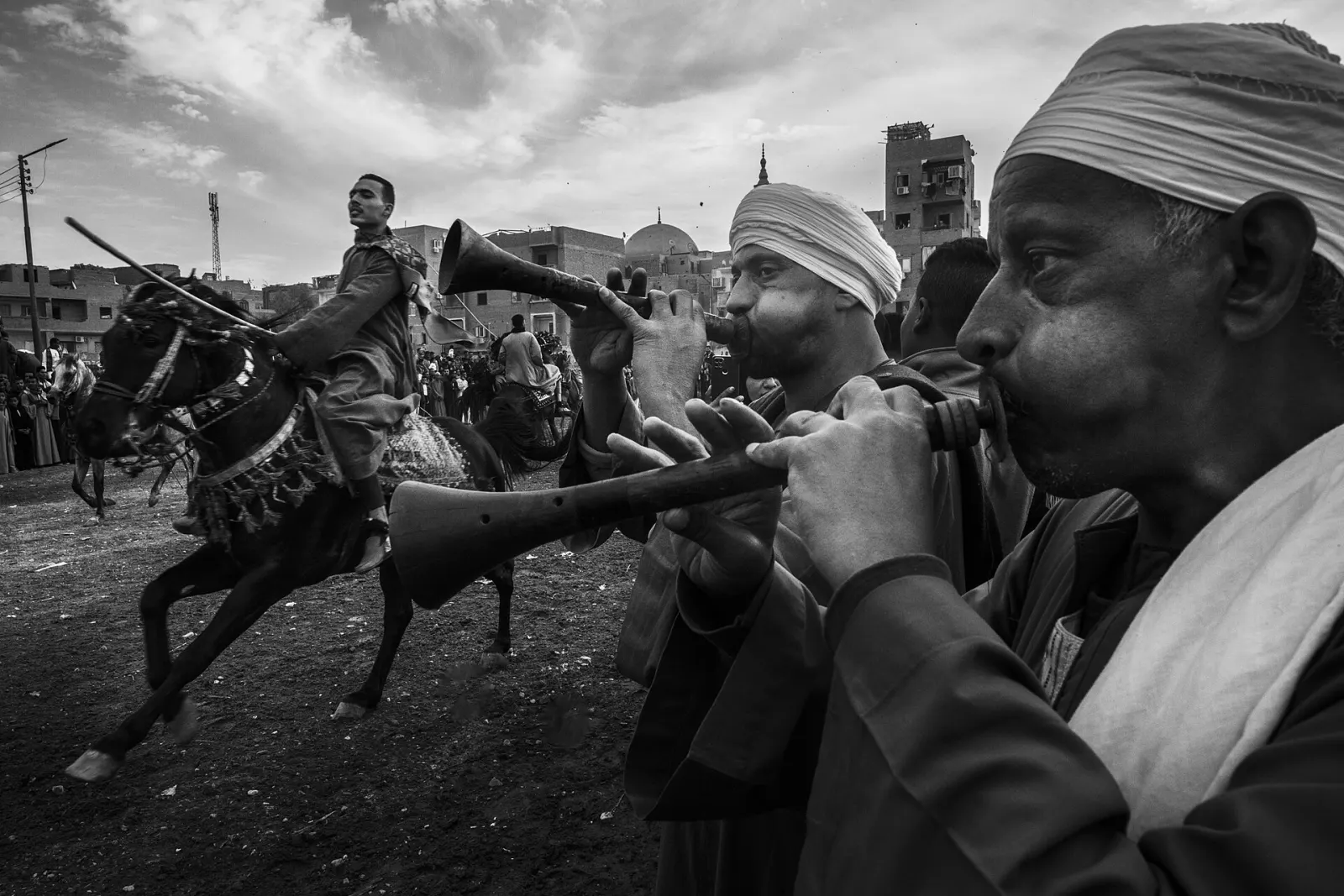
| Days 1 to 3 | Men gather on Dakrour to pray, chant thanks to God and settle disputes between families | Wikipedia; Daily News Egypt |
| Each midday | After the noon (dhuhr) prayer, a caller announces the meal and everyone eats together, so nobody eats first | Wikipedia |
| Evenings | Sufi dhikr: rhythmic chanting and religious songs | Ahram Online |
| In the village | Siwan women celebrate separately, with singing, dancing and drums | Wikipedia |
| Day 4, early | Men march from Dakrour to Sidi Sulayman square in town with flags and spiritual songs, marking the end and a fresh start | Wikipedia |
The meal is fattah: rice, toasted bread and meat. The point is that it is shared: every family eats the same food at the same moment. Daily News Egypt describes the closing as a large communal meal and a walk to one of Siwa's main mosques, where the imam announces the end of the ceremonies. Accounts differ in detail from year to year and source to source, which is normal for a living festival.
When it is: how the date is set
Short answer: There is no published calendar. Siwans hold it over three lunar days around the October full moon, and the community fixes the exact days each year, often only a few weeks ahead.
Ahram Online says the festival is usually held in mid-October, or when the moon is full. Wikipedia describes the celebration as lasting three qamari (lunar) days, and Daily News Egypt calls them the three lunar nights of October. The full moon is the anchor; the dates are a local decision. We have not found an official announcement for any year, and none for 2026.
That is why the calendar date moves. The October full moon falls about 11 days earlier each year until it slips back to late in the month:
| Year | October full moon (Siwa local time) | What to expect |
|---|---|---|
| 2026 | 26 October, 07:11 | Passed |
| 2027 | 15 October, 16:47 | Siyaha expected over three days around it, roughly 14 to 17 October including the closing march |
| 2028 | 3 October, 19:25 | Early in the month; confirm the days with us well ahead |
Full moon times are from timeanddate.com for Siwa's coordinates (checked 21 November 2026). The 2027 range is our working estimate, not an announcement. The full moon calendar for every month is on our Siwa moon calendar 2027.
How to plan around it
- Treat the dates as provisional until Siwa announces them. Ask us; we pass on the dates once they are fixed.
- Keep two or three days of slack either side if the festival is the reason for your trip.
- Book beds early. Lodges can fill around the festival. In 2027 it also falls a week after the 6 October Armed Forces Day long weekend; see Siwa events and holidays 2027.
- Do not confuse it with the dates festival. The International Egyptian Dates Festival is a government trade fair; its ninth edition ran in Siwa from 14 to 16 October 2026, but its host oasis changes and no 2027 host had been announced when we checked.
Visiting respectfully
Short answer: Go with a Siwan guide, dress very modestly, stay at the edges, ask before every photo and leave if you sense you are in the way.
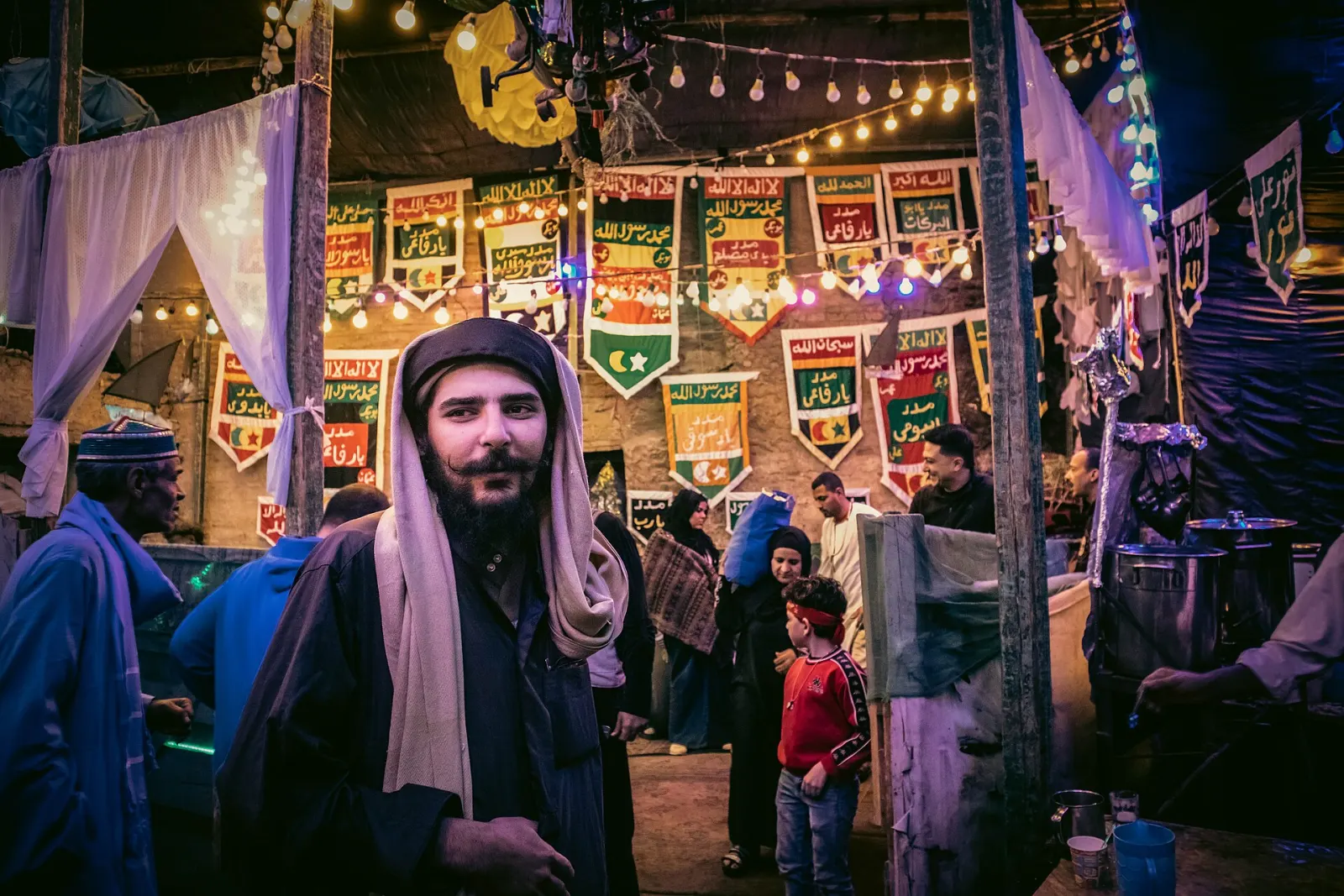
Siwa is a small, conservative Muslim community, and Siyaha is a religious occasion. You are a guest at someone else's prayer, not a spectator at an event. A Siwan guide matters more on these three days than on any other: they know which parts are open to onlookers and when to step back.
| Do | Do not |
|---|---|
| Go with a Siwan guide and follow their lead | Walk into the middle of the prayer or the meal rows |
| Wear loose clothes covering arms and legs; women bring a scarf | Wear shorts, sleeveless tops or tight clothes |
| Ask before photographing any man, and accept a no | Photograph Siwan women or children at all |
| Put the camera away during prayer and dhikr | Use flash or film the chanting without permission |
| Accept food or tea if offered, with your right hand | Refuse hospitality abruptly, or offer money |
| Keep to the edges and keep your voice down | Fly a drone: it needs prior Ministry of Defence permission |
| Leave quietly when your guide suggests it | Treat it as a show or ask for anything to be repeated |
On photography, Egypt's Ministry of Tourism rules ask for written consent before photographing Egyptians and put children off limits; our Siwa etiquette guide sets out the rules and sources. The UK government advises that drones need prior permission from Egypt's Ministry of Defence (FCDO safety and security, checked 21 November 2026). For clothing, see what to wear in Siwa.
Women visitors
The gathering on the hill is a men's gathering; Siwan women celebrate in the village. Foreign women may be able to watch some parts from the edge with a guide, dressed more conservatively than usual. Do not expect to be invited into the women's celebrations in town, and do not try to photograph them. If your group includes women, tell us when you book so we can plan the visit around what is appropriate that year. See also Siwa for solo women travellers.
Getting there and timing your visit
Gebel Dakrour is about 4.5 km by road from the market square: about 10 minutes by tuk-tuk, 22 minutes by bike on the Siwa map figures. No permit is needed. On festival days, expect the road and the foot of the hill to be busy; go with your guide's car or agree a tuk-tuk pick-up time in advance, because finding one at the foot after dark is hard at any time.
Mid-October weather is warm by day and mild at night: the WMO mean high for October is 30.5°C and the mean low 15.5°C, and on 15 October the sun sets at about 18:48 (Siwa weather). Bring water, a hat for the midday meal and a layer for the evening. Our Siwa in October guide covers the rest of the month.
What else to do that week
Siyaha takes over Dakrour, but the rest of the oasis carries on. October is also the height of the date harvest, the springs are warm and the desert is pleasant again.
| Day | Plan |
|---|---|
| Morning | The Oracle Temple and a swim at Cleopatra Spring |
| Afternoon | A Great Sand Sea safari, with sunset in the dunes |
| Evening | Dinner in town; see evenings in Siwa |
| A quieter day | Shali, the House of Siwa museum and the market |
Avoid planning the Dakrour climb or a spring-camp evening on festival days: the hill belongs to the festival. Go before or after; our Gebel Dakrour guide covers the climb, the view and the camps.
Mistakes to avoid
- Booking flights around a date you read online. No date is official until Siwa sets it.
- Expecting a performance. There is no stage, no programme and no ticket.
- Taking photos without asking. Above all of women and children, and never during prayer.
- Dressing for the weather rather than the occasion. Cover up, even when it is hot.
- Going without a guide. You will not know which parts are open to you.
- Leaving beds to the last minute. Lodges can fill around the festival.
Plan it
If Siyaha is the reason for your trip, contact us with a window of dates and we will confirm the days as soon as Siwa sets them, arrange a Siwan guide for the hill and build the rest of the week around it. For context, read Siwa history and Siwi people and culture; for the year as a whole, the best time to visit Siwa. All our trips are on the tours page.
Questions people ask
When is Siyaha in 2027?+
Expected over three days around the full moon of 15 October 2027, roughly 14 to 17 October including the closing march. Siwa sets the days locally and late, so keep two or three days of slack either side and ask us before booking flights.
Can tourists attend the Siyaha festival?+
Visitors can watch parts of it from the edges, ideally with a Siwan guide. It is a religious and family gathering, not a show: dress very modestly, keep a low profile, ask before any photo and follow your guide's lead.
Why is it called Siyaha?+
Ahram Online glosses the name as tourism, but Wikipedia notes that the name predates tourism. It is also called Eid el-Solh, the feast of reconciliation, and the mulid of Sidi Sulayman, Siwa's patron saint.
Can women visitors go?+
Foreign women may be able to watch some parts with a guide, dressed more conservatively than usual and staying at the edge. Siwan women do not join the men on the hill; Wikipedia says they celebrate in the village.
Where is Gebel Dakrour?+
On the south-east edge of the oasis, about 4.5 km by road from the market square below Shali, or about 10 minutes by tuk-tuk. No desert permit is needed.
Is Siyaha the same as the Siwa dates festival?+
No. The International Egyptian Dates Festival is a government trade fair that moves between oases; its 2026 edition was in Siwa from 14 to 16 October. Siyaha is a Siwan religious gathering held every year at Gebel Dakrour.
Go with us
Trips that include this
3 days, 2 nights
Siwa Oasis in 3 Days from Cairo (Private Trip)About US$420 to 650 per person for two travellers
Check dates
4 days, 3 nights
Siwa in 4 Days: Eco-Lodge and a Night in the Great Sand SeaAbout US$495 to 825 per person for two travellers (the lodge level decides the price)
Check dates
4 to 5 days (3 or 4 nights in Siwa)
Luxury Siwa: Candlelit Eco-Lodge EscapeOn request (depends on the lodge and season)
Check dates