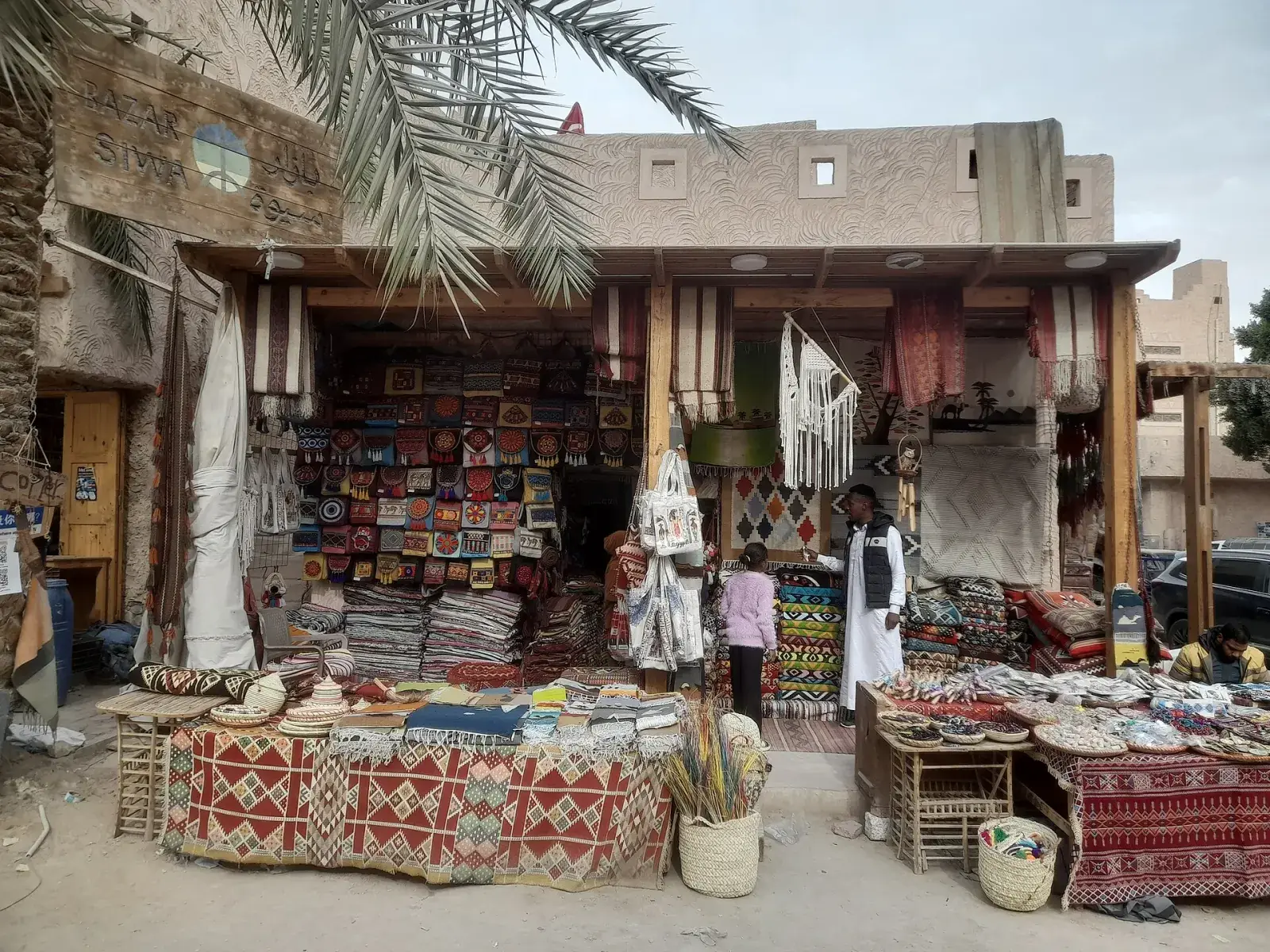
The short answer
The buys most worth making in Siwa are what the oasis grows and makes: semi-dry dates, olive oil and table olives, dried Siwa mint, carved salt, women's embroidery and coiled palm-leaf baskets. Nearly all the shops are on and around the market square below Shali. Pay cash in Egyptian pounds, taste before you buy, treat "antique" silver with suspicion and never photograph Siwan women.
Ask us on WhatsAppShopping at a glance
Short answer: Buy what Siwa produces. Food comes first: the oasis grows about 280,000 date palms and large olive groves. Then salt from its lakes, mint from its gardens and the embroidery and baskets made in Siwan homes. Everything is within a few minutes' walk of the market square.
| What | Made in Siwa? | What to check | Packs well? |
|---|---|---|---|
| Semi-dry dates | Yes, the oasis's main crop | Variety and harvest year; taste first | Very well |
| Date paste and stuffed dates | Yes | Sealed packs | Well |
| Olive oil | Yes | A sealed bottle; ask when it was pressed | Checked bag only |
| Table olives | Often, not always | Ask which variety and whose trees | Sealed jars or pouches only |
| Dried mint and herbal tea | Yes | Smell it: dry, green and strong | Very well, and light |
| Carved salt | Yes, from the lakes | Chips, cracks, damp | Heavy; chips easily |
| Embroidery | Yes, by Siwan women | Hand stitching, who made it | Folds flat |
| Palm-leaf baskets | Yes | Tight, even coils | Light; big ones are bulky |
| Silver jewellery | Mostly new work in old styles | Sold as new, with a receipt | Yes |
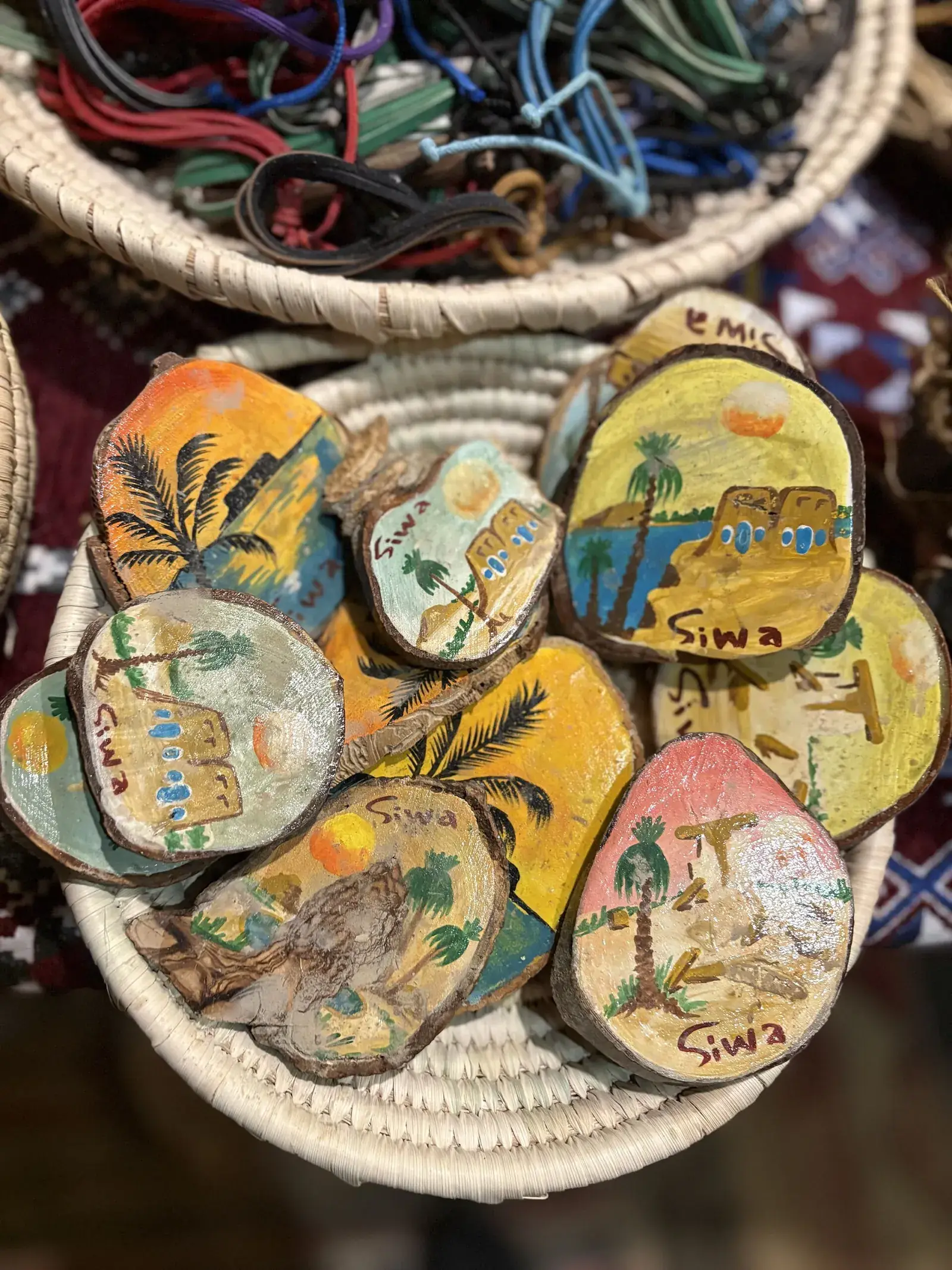
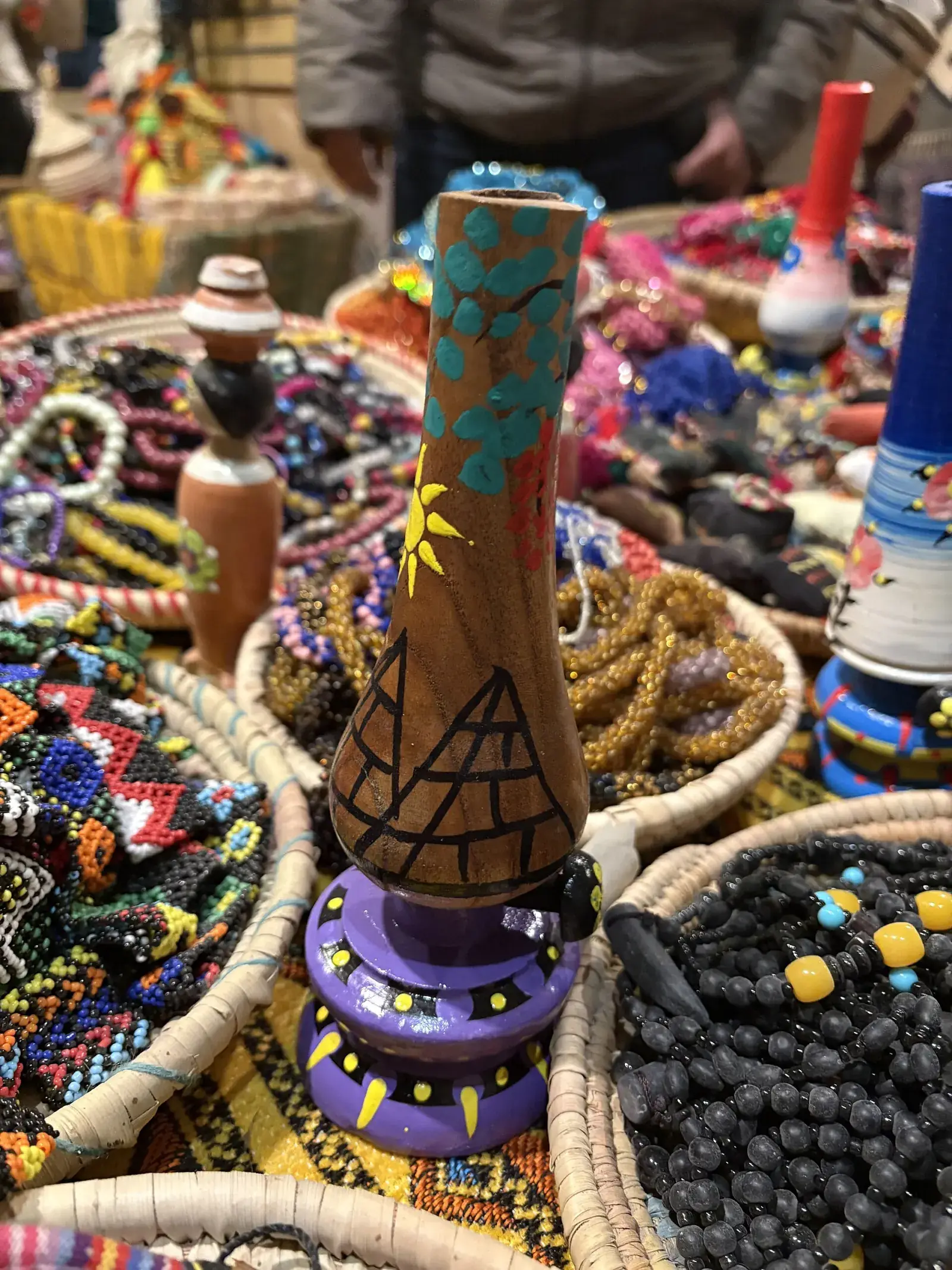
| Magnets, beads, rugs | Often not | Ask where it was made | Yes |
The UN Food and Agriculture Organization counts about 280,000 date palms in Siwa, producing about 25,000 tonnes of dates and 27,500 tonnes of olives a year (FAO, Siwa dates system, checked 21 November 2026). Those two crops fill most of the shelves.
Where to shop
Short answer: The market square below Shali, and the lanes running off it. That is the whole shopping district.
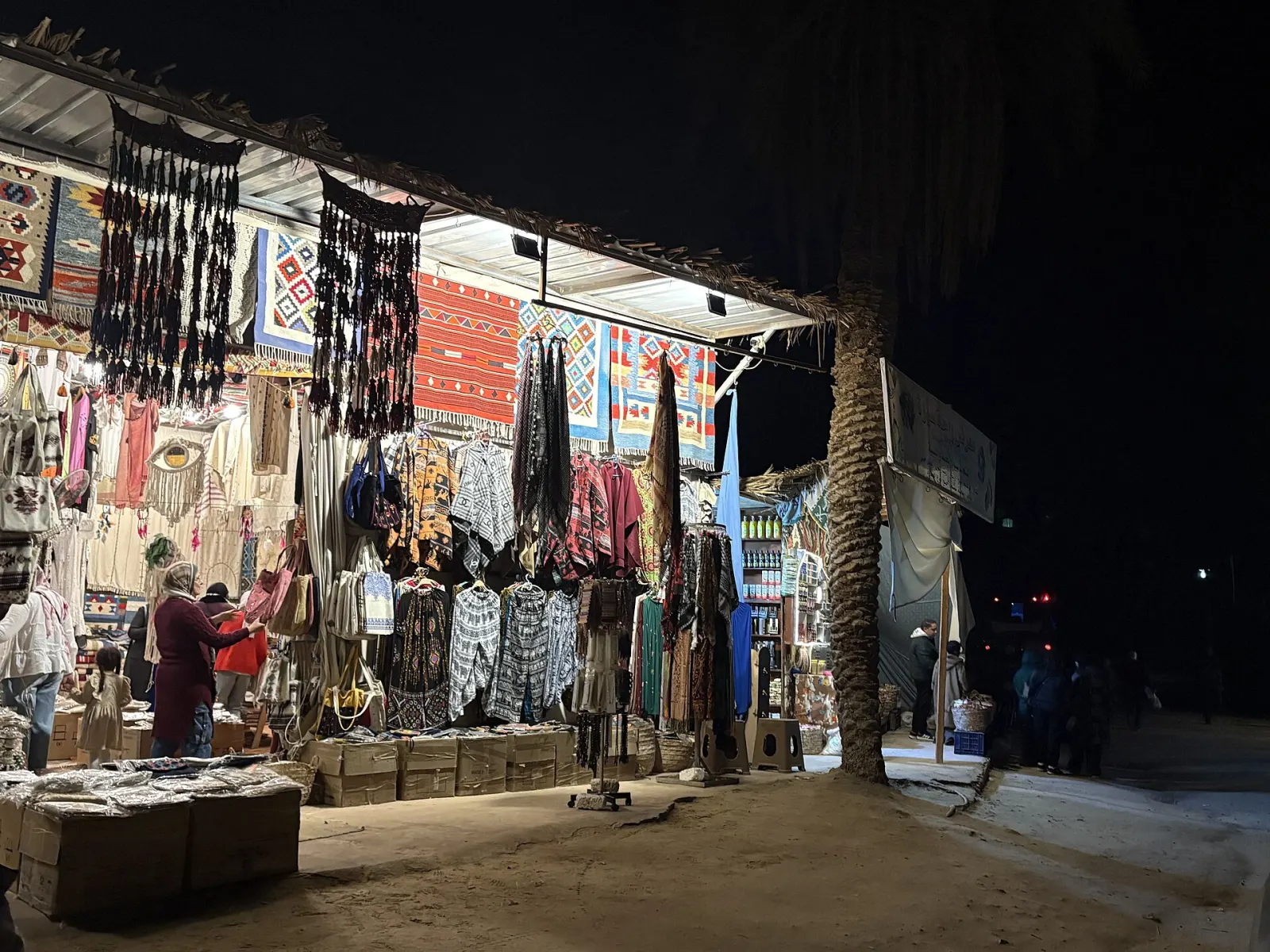
Frommer's describes Midan el Souk, the market square, as Siwa's shopping hub, with small stores selling local weaving, embroidery and simple jewellery (Frommer's, checked 21 November 2026). Date and olive shops, craft shops, grocers and cafés sit side by side around it, with the floodlit walls of Shali behind. Wikivoyage also places the date shops around Market Square (Wikivoyage, checked 21 November 2026).
| Place | From the market square | Good for |
|---|---|---|
| The square and its lanes | 0 to a few hundred metres | Dates, oil, tea, crafts, salt pieces |
| House of Siwa museum | 0.2 km on foot | Seeing old silver and wedding dresses before you buy |
| Shali | 0.3 km on foot | A climb and the view, between shops |
| Your lodge | Varies | Ask whether it sells local oil, dates or crafts |
| Salt lakes | 14.6 km by road | Seeing where the salt comes from |
Shop names change, so we do not list them here. Ask your lodge or guide which shops are open this season, and look in three or four before you buy anything costly. For directions and distances, use our Siwa map.
Dates
Short answer: The souvenir everyone takes home. Buy semi-dry dates, which keep for months, and taste two or three kinds first.
Siwa's dates are sold all over Egypt, and Wikivoyage's enthusiastic write-up rates them highly; that is a matter of taste, so try a few kinds. In the shops you will find loose dates sold by weight, boxed dates, dates stuffed with nuts and agwa, a pressed date paste for baking. Ask to taste before you buy.
- Semi-dry or dried for travelling; fresh dates in autumn are a treat to eat in Siwa, not to carry.
- Ask the variety and the harvest. The new season's dates arrive from October.
- Buy small first, then go back for a bigger box of the one you liked.
The harvest itself runs through autumn; for the season and the calendar of events around it, see Siwa in October and Siwa food.
Olive oil and olives
Short answer: Siwan oil is pressed in the oasis and sold in bottles in the same shops as the dates. Table olives, green and black, sit beside it.
Not every jar on a Siwa shelf is Siwan: olives from elsewhere in Egypt are sold here too. Ask which variety it is and whose trees it came from. For oil, ask for a sealed bottle and when it was pressed; the olive harvest runs mainly in late autumn and early winter, so new oil appears towards the end of the year.
To taste before you buy, order a dish cooked with local oil at dinner: restaurants in Siwa lists where to eat.
Salt
Short answer: Lamps, candle holders, bowls and soaps carved from lake salt. Heavy, fragile and very Siwan.
NASA's Earth Observatory notes the evaporation ponds used for salt harvesting around Siwa's lakes (NASA, checked 21 November 2026). Daily News Egypt reported in 2020 that salt handicrafts were the community's main source of income after dates, olives and herbs, and listed lamps, decorative pieces, soaps, ashtrays and candles among the products (Daily News Egypt, checked 21 November 2026).
Sellers sometimes make health claims for salt lamps; treat those as sales talk. Choose a piece you like the look of, check it for cracks, and remember that a lamp counts against your baggage allowance. A small candle holder is the easier souvenir. Keep salt away from liquids in your bag and somewhere dry at home.
Mint, tea and herbs
Short answer: Dried Siwa mint and the oasis's tea blends are the lightest souvenir you can buy.
FAO lists Siwa spearmint among the oasis's garden crops grown for sale. Wikivoyage notes red and green tea leaves sold in the date and olive shops. Smell before you buy: good dried mint is green and strong, not grey and dusty. It goes in hand luggage, weighs almost nothing and tastes of the oasis back home.
Crafts
Short answer: Embroidery and baskets are the crafts most made in Siwa today. Silver is for looking at, unless you are happy with new work.
The full guide is Siwan crafts: colours, stitches, silver shapes and basket coils. In brief:
- Embroidery. Siwan women's work in bright thread on dark cloth, now on shawls, bags and cushion covers. Hand stitching is slightly uneven on the back; machine work is perfectly regular. Dense all-over stitching costs far more than a single border, because it takes far longer to make.
- Baskets. Coiled palm leaf, often trimmed with leather and wool. Tight, even coils last; loose ones sag. A flat food cover packs inside a suitcase lid.
- Silver. Most pieces are recent work in the old shapes. See the real thing at the House of Siwa museum first.
- Rugs, beads, magnets. Some are made in Siwa and some are not. If it matters to you, ask where it was made and by whom.
Buying directly from Siwan makers or women's projects usually puts more of the money in the hands of the woman who did the work. Ask the shopkeeper; it is a normal question.
How to judge what you buy
| Item | Good sign | Warning sign |
|---|---|---|
| Dates | Glossy, intact skins; you were offered a taste | Sticky, fermented smell; crushed boxes |
| Olive oil | Sealed bottle, clear answer on when it was pressed | Unlabelled refills of unknown age |
| Mint | Green, strongly scented | Grey, dusty, mostly stalks |
| Salt pieces | Clean edges, no hairline cracks | Damp patches, chipped corners |
| Embroidery | Uneven back, hand-sewn buttons and shells | Perfectly repeated machine pattern |
| Baskets | Tight, regular coils | Loose coils, glued trims |
| Silver | Sold as new work, with a receipt saying so | "Old" pieces with a family story attached |
Taking it home
Short answer: Dates, dried mint and crafts are easy. Liquids go in the hold. Antiques do not go at all.
| Item | Rule | Source (checked 21 November 2026) |
|---|---|---|
| Dates into Great Britain | Allowed without a phytosanitary certificate, as are processed and packaged plant products | GOV.UK, bringing fruit and vegetables into Great Britain |
| Dates into the EU | One of five fruits travellers can bring without a phytosanitary certificate | European Commission, plant health |
| Olive oil, olives in brine | Liquids: checked bag, sealed and wrapped | Your airline and departure airport |
| Objects over 100 years old | Antiquities under Egyptian law; smuggling one out is a criminal offence carrying prison and, in the 2010 text, a fine of EGP 100,000 to 1 million (penalties may since have been raised) | Egypt's antiquities law as amended in 2010, Article 41 (English text, UNESCO archive) |
Outside the UK and the EU, check your own customs authority before you fly and declare food if asked. Tape the caps on bottles, put them in a plastic bag and wrap them in clothes in the middle of the case. Wrap salt and pottery separately from anything wet.
Money and bargaining
Short answer: Cash in Egyptian pounds, small notes, light bargaining on crafts only.
Card payment is rare in Siwa's shops, and the few ATMs can run dry on holidays; see money, ATMs and internet. Carry small notes, because breaking a large note is awkward for a small shop.
We do not print shop prices, because they change with the season and the exchange rate. Old printed figures are a poor guide: Wikivoyage still lists dates at LE7 to 8 for a 500 g box, a figure that is clearly out of date. Ask your lodge for a rough idea before you go out.
Bargaining is a conversation, not a contest. Food usually has a set price. For crafts, ask the price, compare, and agree a figure without grinding the maker down over small sums. Frommer's sums up the market as browse and haggle; Siwans expect a little of both, politely.
Photos and etiquette in the market
- Never photograph Siwan women, in a shop, in the square or in the background of a wide shot. Never photograph children. Siwa etiquette explains why, and the Ministry of Tourism rules behind it.
- Ask before photographing a shopkeeper or his stall. Most will say yes to a shot of the goods; accept a no.
- Do not film while walking through the market. Women end up in the frame without consent.
- Dress modestly in town: shoulders and knees covered. See what to wear in Siwa.
- Accept tea if offered. It does not oblige you to buy.
When to shop
| Time | What to expect |
|---|---|
| Morning | Calm, cooler, good for choosing |
| Afternoon | Quieter; some shops close in the heat, especially from May to September |
| Evening | The liveliest time, with Shali lit up behind the square |
| Friday midday | Many shops pause for prayers |
| Ramadan | Quiet by day, busy after sunset; see Siwa in Ramadan |
| October to December | New-season dates, then new olive oil |
Families and limited mobility
The square and the lanes around it are flat, with a mix of paving, packed earth and sand. Shali is the one steep, uneven stretch. Children enjoy choosing a basket or a small salt piece; keep small hands away from shelves of salt lamps and pottery.
Mistakes to avoid
- Buying "antique" silver. It is either not old or not legal to take home.
- Packing oil in hand luggage. It will be taken at security.
- Packing salt next to liquids. A leak dissolves edges and stains everything.
- Buying the first shawl you see. Quality varies more than price.
- Expecting to pay by card. Bring cash.
- Photographing makers or shoppers. Ask about the maker instead.
Plan it
An hour covers the square; add 20 to 40 minutes for the House of Siwa museum first. Shop in the evening after a day of sights, or on your last morning before the drive out: Siwa is about 750 km from Cairo by road, so buy the oil before you set off. Our Siwa oasis day tour passes the square, and the 3 days from Cairo trip leaves time for it. See also things to do in Siwa, browse all tours, or contact us.
Questions people ask
Do I need to bargain in Siwa?+
Lightly, and only for crafts. Food such as dates and olive oil is usually sold at a set price. For embroidery or baskets, ask the price, compare in two or three shops and settle without pushing hard over small sums.
Can I pay by card in Siwa shops?+
Rarely. Shops work in cash, in Egyptian pounds, and Siwa's few ATMs can run out on holidays. Bring small notes from Cairo or Alexandria.
Can I take Siwa dates home?+
Into the UK and the EU, yes: dates are on both lists of fruit that travellers can bring without a plant health certificate (checked 21 November 2026). Buy them packed and sealed. Other countries set their own rules, so check yours.
Can I take olive oil on the plane?+
Pack it in your checked bag, sealed, taped and wrapped in clothes. A large bottle in hand luggage is likely to be stopped at security.
Is the silver in Siwa's shops antique?+
Almost never. Most is new work in the old shapes. Egyptian law treats objects over 100 years old as antiquities that cannot be traded or taken out of the country, so a real antique is a legal risk, not a bargain.
When are the shops open?+
Mornings and evenings, with a quieter spell in the afternoon heat and around Friday midday prayers. Hours vary by shop and season; evenings around the square are the liveliest time.
Go with us
Trips that include this
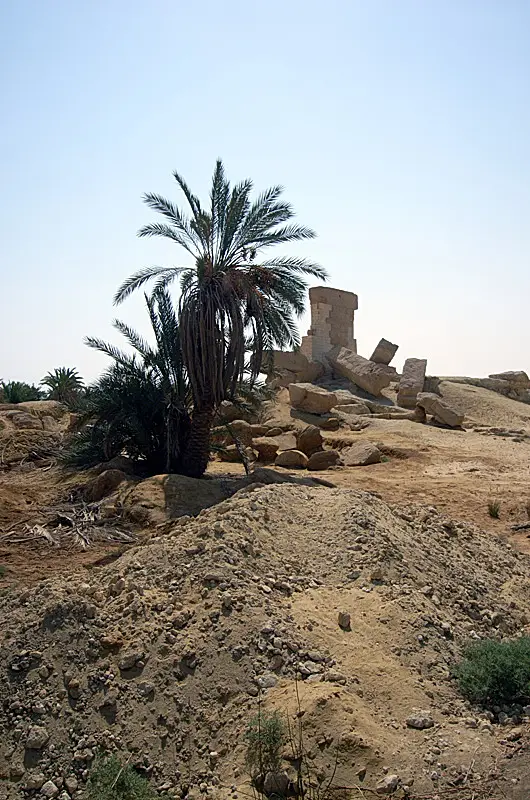
About 8 hours
Siwa Oasis Day Tour (from Your Siwa Hotel)About US$65 to 80 per person for two travellers (about US$130 to 160 per car)
Check dates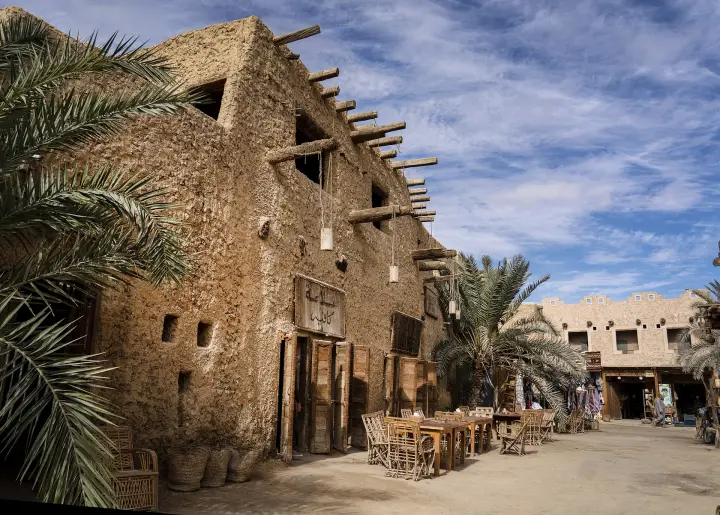
3 days, 2 nights
Siwa Oasis in 3 Days from Cairo (Private Trip)About US$420 to 650 per person for two travellers
Check dates