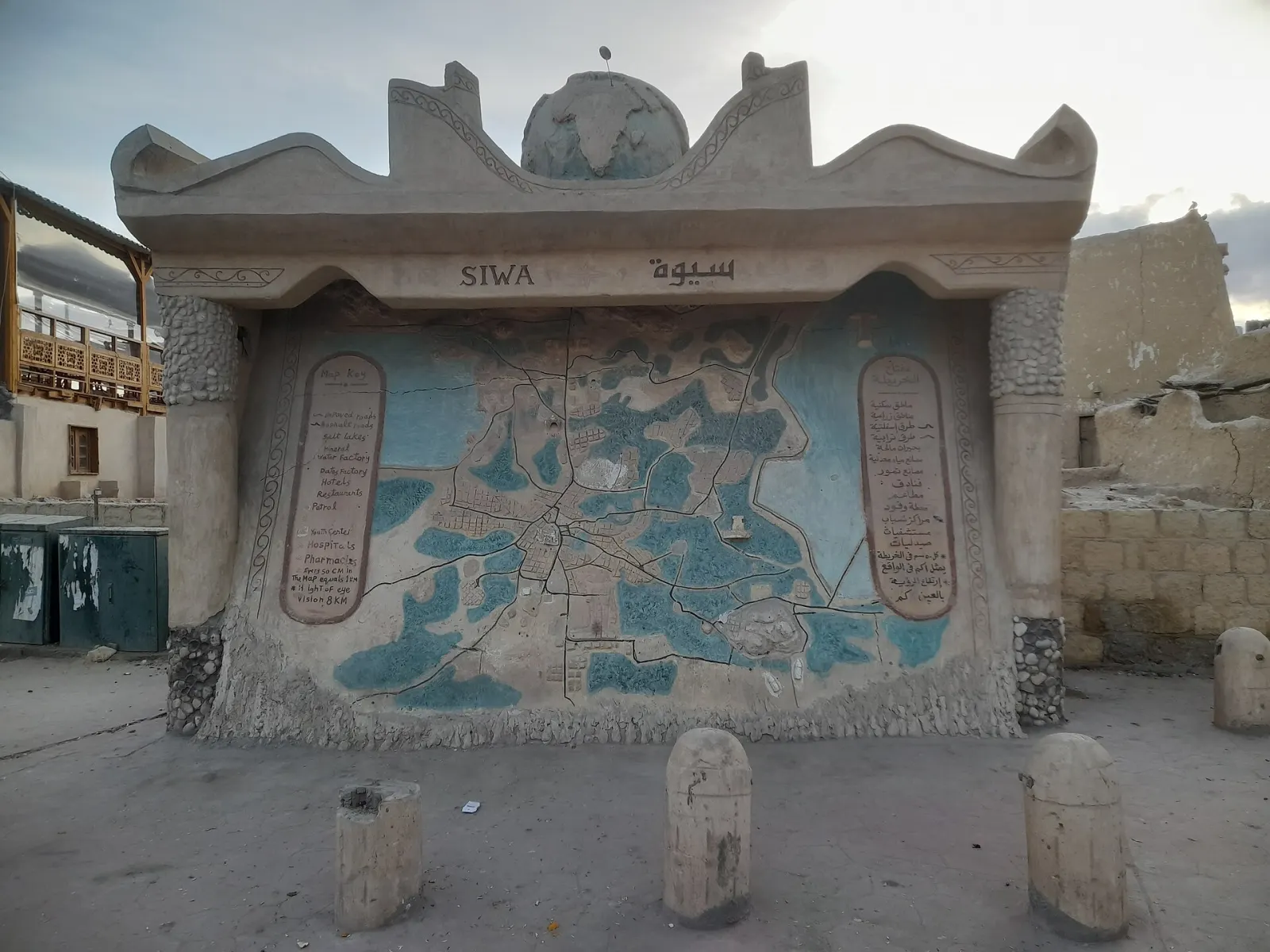
The short answer
Siwi is the Berber (Amazigh) language of Siwa and the small oasis of Gara, the easternmost Berber language and the only one native to Egypt. Estimates range from 15,000 to 21,000 speakers. Siwans use it at home and in the market, and almost all also speak Egyptian Arabic. It is mostly unwritten, and UNESCO lists it as definitely endangered.
Ask us on WhatsAppSiwi at a glance
Short answer: Siwi is a Berber (Amazigh) language spoken in Siwa and Gara, the easternmost of the Berber languages, a family that once covered far more of North Africa than it does today. It is the home language of most Siwans, sits beside Egyptian Arabic in daily life, and is under pressure but still passed on to children.
| Own name | Jlan n Isiwan |
| Family | Berber (Amazigh), within the Afro-Asiatic family |
| Where | Siwa and the small oasis of Gara (Qara), near the Libyan border |
| Speakers | 15,000 to 20,000 (Wikipedia); about 21,000 (Ethnologue, as cited by Wikipedia) |
| Status | "Definitely endangered", UNESCO Atlas (2010) |
| Writing | Not written in everyday life; Siwans write in Standard Arabic |
| In schools or media | No; not officially recognised |
| Closest relatives | Debated: Sokna and the Nafusa dialects of Libya are the usual candidates |
Figures from Wikipedia's Siwi language article (checked 21 November 2026), which cites the linguistic literature. Wikipedia's Siwi people article puts the community itself at about 30,000; the speaker estimates are lower, and the sources do not explain the gap. Siwa district as a whole has about 36,500 people (2023 official estimate), a figure that includes non-Siwan residents.
Where Siwi fits among the Berber languages
Short answer: Linguists agree Siwi is Berber. They disagree about its closest relatives, because it has been cut off from them for centuries.
Berber, or Tamazight, is the indigenous language family of north-west Africa. Its range today is broken into islands, from the Moroccan highlands and Kabylie in Algeria down to the Tuareg of the Sahel, with Siwi at the far eastern end. As the linguist Lameen Souag puts it, across much of this area Berber varieties survive as small islands in a sea of Arabic, sometimes a single town (Souag 2020, "Berber", in Arabic and contact-induced change, Language Science Press, open access).
| Who | When | Where they put Siwi |
|---|---|---|
| al-Maqrizi, Egyptian historian | 15th century | Close to the language of the Zenata Berbers |
| Destaing | Early 20th century | Within the Zenati group |
| Aikhenvald and Militarev; followed by Ethnologue | Later classifications | An "Eastern Berber" group with Awjila and Sokna in Libya |
| Kossmann | Recent | Linked with Sokna and the Nafusi cluster |
| Souag | 2010s | Emerged from a dialect continuum that excluded Awjila |
Classifications as summarised in the Wikipedia article. The practical point for a visitor: Siwans are linguistically connected to Libya's Berber communities to the west, not to the Nile Valley.
How Arabic shaped Siwi
Short answer: Contact with Arabic began with the Islamic conquests and grew over a thousand years. It changed Siwi's sounds, borrowed most of its numbers and even some grammar, but the language stayed Berber.
Souag's 2020 chapter gives the clearest short history:
| Period | What happened |
|---|---|
| 7th to 8th century | Sporadic contact with Arabic begins with the Islamic conquests |
| 11th century | Arabic-speaking Banu Sulaym settle across Cyrenaica, in eastern Libya |
| 12th century | The geographer al-Idrisi reports Arab settlers in Siwa alongside the Berber majority; later writers do not, suggesting they were absorbed |
| 1820 | Muhammad Ali brings Siwa into the Egyptian state |
| 1928 | First government school in the oasis |
| 1960s | Labour migration: Upper Egyptian workers come to Siwi farms; young Siwi men find work in Libya's oil economy |
| 1980s | Television arrives; tourism and higher education grow |
The results show in the grammar. Siwi has borrowed at least nine sounds from Arabic. Its numbers are almost all Arabic, with only the Berber words for one and two surviving, according to Wikipedia. It has lost the separate feminine plural agreement that other Berber languages keep, which Souag points out exactly copies the usual Arabic system of Egypt. It even uses an Arabic pattern to make comparatives from Berber words, so amellal "white" gives əmləl "whiter".
Souag also notes a generation gap in the Arabic Siwans speak: older and less educated men tend to use a Bedouin-like dialect, younger and more educated ones something close to Cairo Arabic. And contact runs both ways: Arabic speakers who settle in Siwa, and especially their children, sometimes learn Siwi.
Real Siwi words
Short answer: These words come from linguists' published work, written in their transcription. Pronunciation in the market may differ; let a Siwan correct you.
We do not print a Siwi phrasebook. We could not find a published academic source for everyday greetings and thank-yous, and a wrongly spelt "hello" helps nobody. Instead, here are words linguists have recorded, several of which you will notice around the oasis.
| Siwi (linguists' spelling) | Meaning | Note | Source |
|---|---|---|---|
| amellal (a-məllal) | white | As in Adrère Amellal, the "White Mountain" by Lake Siwa | Souag 2020 |
| Shali Ghadi | the old fortress | Shali is the town's name and ghadi means "remote" | Wikipedia: Siwa Oasis |
| agṛoẓ | palm heart | An inherited Berber word | Souag 2020 |
| ddhan | oil | An Arabic loan | Souag 2020 |
| allon | window | An inherited Berber word | Souag 2020 |
| agʷərzni | dog | Its plural ləgʷrazən uses an Arabic-style pattern | Souag 2020 |
| akúḅḅi | boy | Wikipedia, after Naumann | |
| náčču | food | Wikipedia, after Naumann | |
| azidi | jackal | Plural izida | Wikipedia |
| támẓa | ogress | A stock character of Siwi folk tales | Wikipedia |
| luli | noon prayer | An old Arabic loan absent from the Arabic spoken around Siwa today | Souag 2020 |
Wikipedia's example sentence shows the shape of the language: akúḅḅi la yušas náčču i támẓa, "the boy didn't give food to the ogress". Note the negative la and the verb before its objects.
What to say instead
For greetings and thanks, Egyptian Arabic works everywhere in Siwa. As-salamu alaykum (peace be upon you) and shukran (thank you) will carry you through any shop or café. If you want a Siwi word, ask the person in front of you to teach you one. That gesture matters more than getting it right.
Siwi in daily life
Short answer: Siwi is the language of home, family and the market among Siwans. Arabic is the language of school, the state and dealings with outsiders.
Wikipedia notes that Siwi is not taught in local schools, not used in the media and not recognised by the Egyptian government, and that nearly all Siwans learn Egyptian Arabic early. It has a rich oral tradition of poems and songs, folk tales, riddles and proverbs, but in writing Siwans use Standard Arabic.
What that means for you:
- Conversations around you will often be in Siwi. That is the household language, not a way of shutting you out.
- Your guide will often switch. Siwi with the driver, Arabic with a police checkpoint, English with you.
- Signs are in Arabic and sometimes English; Siwi is not written in daily use.
- It is not "a dialect of Arabic". Calling it one is a common slip that Siwans notice.
Is Siwi dying?
Short answer: It is endangered but not dying out fast. Children still learn it at home, which is the single most important sign of a language's health.
UNESCO's Atlas (2010) classes Siwi as definitely endangered; the Endangered Languages Project lists it as vulnerable, both as reported by Wikipedia. The pressures are the familiar ones: Arabic schooling since 1928, television since the 1980s, migration and tourism. Against that, Souag's 2020 chapter, citing a 2017 study by Serreli, notes that in Siwa mass education in Arabic has had far less impact than in places such as Igli, in Algeria, where it encouraged parents to speak Arabic to their children to improve their chances at school.
The main documentation is academic: Emile Laoust's study of 1932, Christfried Naumann's work from 2009, Lameen Souag's Berber and Arabic in Siwa (Egypt) (2013) and Valentina Schiattarella's research from 2016. If you want to go further, start with Souag's open-access chapter linked above.
Where to hear Siwi, respectfully
Short answer: Around the market square, in cafés and shops, and at public gatherings such as Siyaha. Listen rather than record.
Distances are from the market square below Shali, measured on OpenStreetMap, as on our Siwa map.
| Where | Distance | When | Etiquette |
|---|---|---|---|
| Market square and its shops | 0 km | Mornings and after the afternoon heat | Greet before you buy; ask before photographing anyone |
| House of Siwa museum | 0.2 km, a 3-minute walk | Opening hours | Good context on the household life the language belongs to |
| Shali | 0.3 km, a 5-minute walk | Late afternoon | The old town, Shali Ghadi, at the heart of Siwan history |
| Gebel Dakrour (Siyaha) | 4.5 km by road | Siyaha, around the October full moon | A Siwan gathering, not a show; see Siwa events and holidays for the expected 2027 dates |
A few rules that matter more than vocabulary:
- Do not record people speaking without asking, and never photograph Siwan women.
- Weddings and family events are private. If you are invited, follow your host's lead on what you may film.
- Do not treat the language as a curiosity. A question such as "what do you call this in Siwi?" is welcome; asking someone to "say something in Berber" for a camera is not.
More on customs in Siwi people and culture and Siwa etiquette.
Combine with
- Siwi people and culture for dress, silver, Sufi life and Siyaha
- Siwan crafts for embroidery, baskets and the names behind them
- Siwa history, from the Oracle of Amun to the Berber town of Shali
Our Siwa oasis day tour and Siwa in 3 days are led by local guides who switch between Siwi, Arabic and English all day. For dates and prices, contact us or browse all tours.
Questions people ask
Is Siwi a dialect of Arabic?+
No. Siwi is a Berber (Amazigh) language, part of the same family as the Berber languages of Libya, Algeria and Morocco. It has borrowed heavily from Arabic, including most of its numbers, but its grammar and core vocabulary are Berber.
How many people speak Siwi?+
Estimates vary: Wikipedia's article gives 15,000 to 20,000 speakers, and its infobox, citing Ethnologue, about 21,000. Speakers live in Siwa and the small oasis of Gara (Qara). There is no census figure for the language.
Do people in Siwa speak Arabic and English?+
Almost everyone speaks Egyptian Arabic as a first or second language, learnt early. People working in lodges, restaurants and tourism often speak some English.
Is Siwi written?+
Not in everyday practice. Siwans normally write in Standard Arabic. Linguists record Siwi in a Latin transcription, and there is no standard spelling that local people use.
Is Siwi endangered?+
UNESCO's Atlas of the World's Languages in Danger (2010) classes it as definitely endangered. It is not taught in schools, used on television or officially recognised. It is still passed on at home: the linguist Lameen Souag, citing a 2017 study by Valentina Serreli, notes that Arabic schooling has disrupted that less in Siwa than in some other Berber communities.
Should I try to speak Siwi?+
There is no need: Arabic and English cover everything a visitor needs. If you are curious, ask your guide or host to teach you a word or two, and take their pronunciation over any written version.
Go with us
Trips that include this
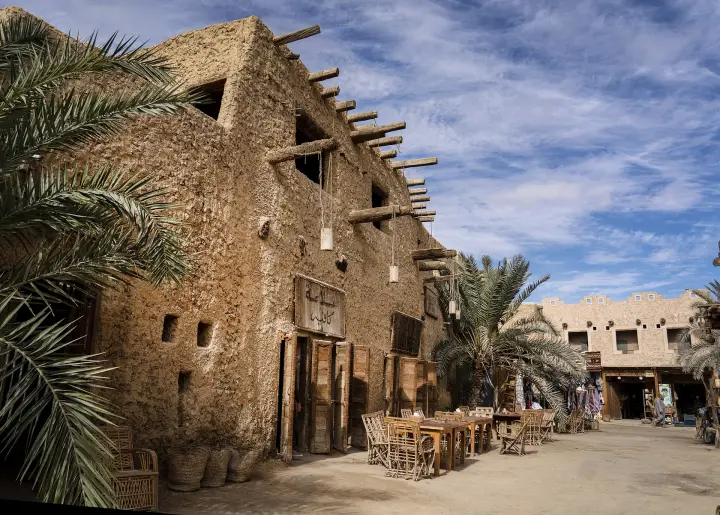
3 days, 2 nights
Siwa Oasis in 3 Days from Cairo (Private Trip)About US$420 to 650 per person for two travellers
Check dates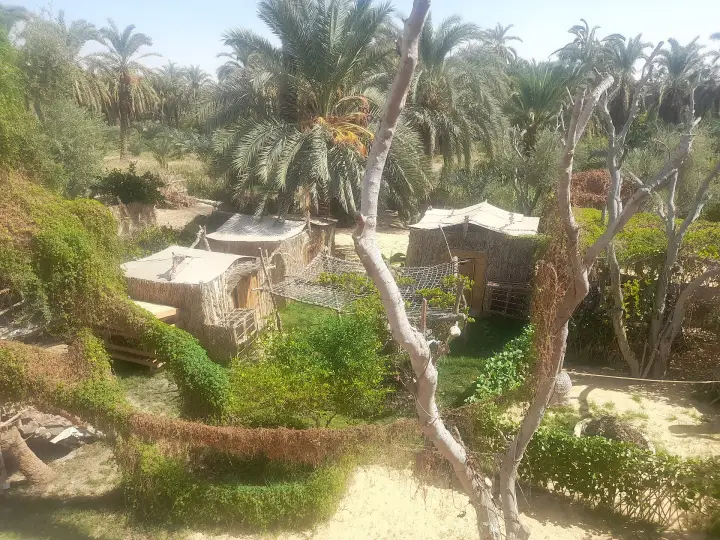
4 days, 3 nights
Siwa in 4 Days: Eco-Lodge and a Night in the Great Sand SeaAbout US$495 to 825 per person for two travellers (the lodge level decides the price)
Check dates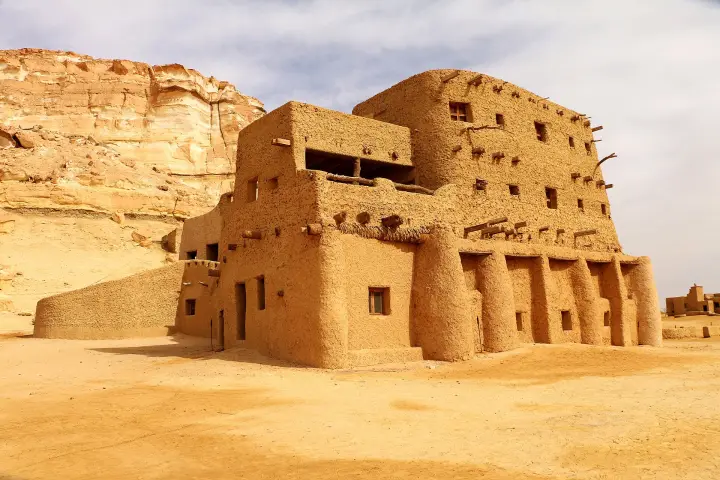
4 to 5 days (3 or 4 nights in Siwa)
Luxury Siwa: Candlelit Eco-Lodge EscapeOn request (depends on the lodge and season)
Check dates