The short answer
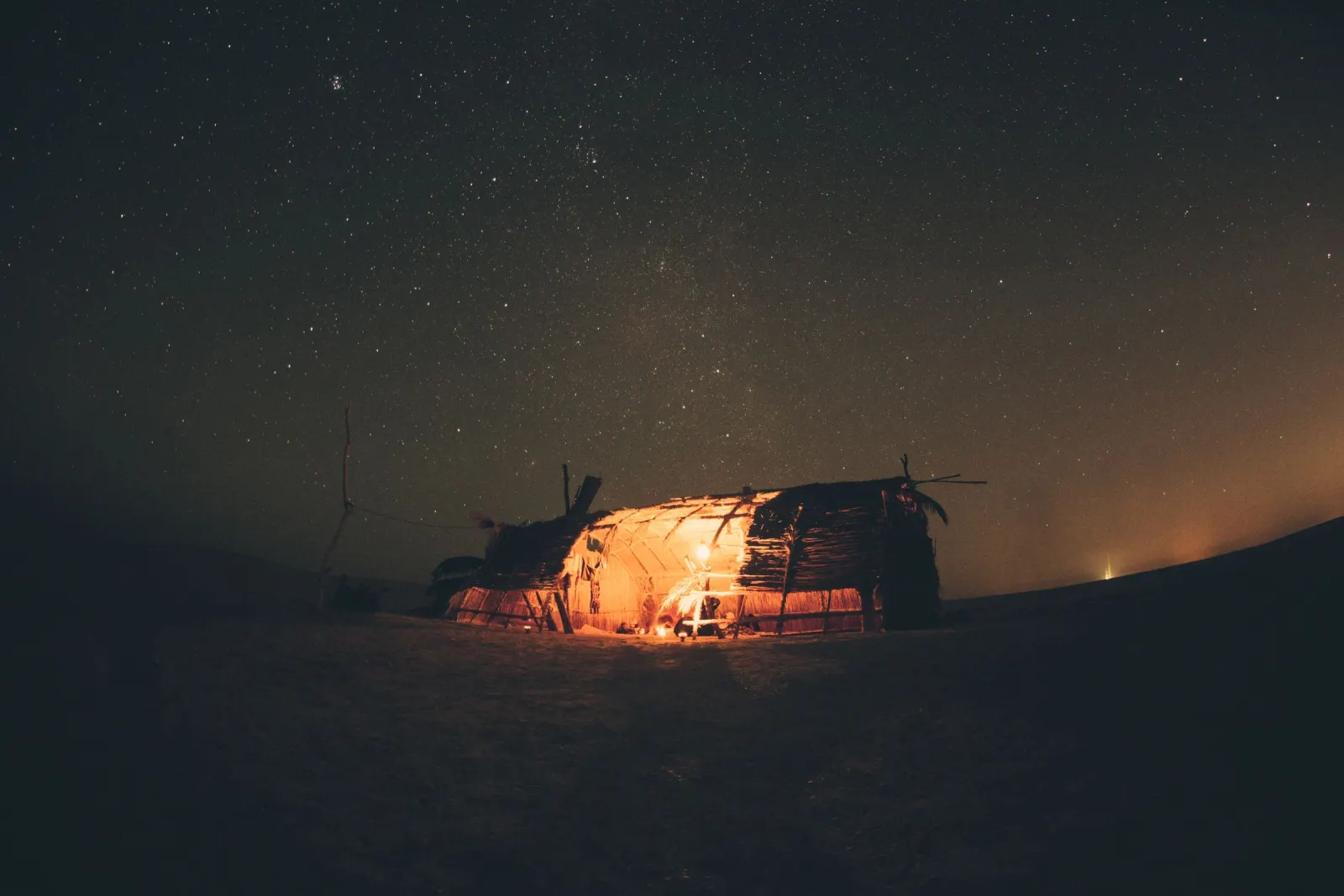
A night in a desert camp near Siwa runs from an afternoon pick-up to late the next morning: dunes, a spring soak, sunset, dinner on the fire, a dark sky and sunrise. You sleep on mattresses under blankets, with no toilet or shower unless you book glamping. From December to February nights in town average 5.6 to 7.1 °C, so bring a sleeping bag.
Ask us on WhatsAppA night in the dunes, in brief
Short answer: You leave town after lunch, play in the dunes, soak in a warm spring, watch the sun set from a ridge and make camp in a sheltered hollow before dark. Dinner is cooked on the fire. You sleep on mattresses under blankets, wake for sunrise and are back in town by late morning. It is simple, cold in winter and very quiet.
This page walks through that night from start to finish. For a side-by-side of camp styles and the season's moon dates, see camping in Siwa. The dunes themselves are covered on our Great Sand Sea page.
Three ways to spend the night
| Dune camp | Glamping in the dunes | Spring camp below Gebel Dakrour | |
|---|---|---|---|
| Where | A hollow in the Great Sand Sea, picked on the day | The same dunes | A fixed camp at the foot of Gebel Dakrour, about 4.5 km by road from the market square |
| Bed | Mattress, blankets and rugs; tent on request | Beds and linen in a private tent | Tent or basic room |
| Toilet | None: a trowel and a dune | Toilet tent | Shared bathrooms |
| Shower | No | No | Ask the camp |
| Other people | Your group only | Your group only | Other guests |
| Darkness | Excellent | Excellent | Fair; the oasis is close |
| Desert permit | Yes, filed by the operator | Yes | Not needed: Dakrour is inside the oasis |
| Best for | A first real desert night | Couples, comfort | Families with small children, a gentle first try |
If you want stars but not a night outside, our stargazing evening spends about two hours on the sky at the edge of the dunes and has you back at your hotel by about 22:30.
What our camp night includes
Everything below is as listed on our overnight desert camp. The camp night on the eco-lodge and desert camp trip follows the same pattern, with tents, mattresses and blankets, dinner and breakfast.
| Included | Not included |
|---|---|
| Private 4x4 and Siwan driver-guide, with the camp crew | Sleeping bag |
| Camping kit: mattresses, blankets, rugs, tent on request | Tips |
| Dinner, breakfast, tea and water | |
| Sandboards | |
| Desert permit for the Great Sand Sea |
There is no toilet tent in the standard camp and no electricity in the dunes. The glamping set-up, with beds, linen and a toilet tent, costs more and is quoted on request.
Dinner is chicken or vegetables slow-cooked in the sand, with rice, salad, bread and tea. Tell us about vegetarian diets or allergies when you book, because the crew carries every ingredient out with them. The camp is private: we never merge groups, and if you see another fire at all it is far off across the dunes.
The night, hour by hour
The sun sets the timetable. On the 15th of the month, sunset in Siwa falls at 17:21 in December and 20:19 in July (times from timeanddate.com, as set out on our Siwa weather page).
| When | What happens |
|---|---|
| About 14:00 (after 16:00 in summer) | Pick-up at your hotel. Main luggage stays behind |
| Edge of the sand | The driver lets the tyres down for the dunes |
| Afternoon | Dune driving, sandboarding and a stop at a field of fossil shells |
| Late afternoon | A soak at Bir Wahed, a warm sulphur pool beside a cold lake |
| Sunset | Tea on a high ridge |
| Dusk | The crew drives on to a sheltered hollow and sets up camp |
| Evening | Dinner by the fire |
| Night | Fires and torches go low, eyes adapt, stars |
| Dawn | Sunrise from the nearest dune crest, breakfast by the fire |
| Late morning | Back at your hotel for a shower and lunch |
In winter the night is long: about 13 hours 45 minutes from sunset to sunrise in mid-December, so you will have several hours by the fire before bed. In summer it is closer to 10 hours. How the dune driving feels, and how to ask for a gentler ride, is on what to expect on a 4x4 safari. For the slopes on the way out, see sandboarding in Siwa.
How cold the night gets, month by month
Lows and record lows are for Siwa town from the official WMO 1961-1990 normals (station 62417), the baseline on our Siwa weather page. Open sand under a clear, still sky loses heat faster than the palm gardens, so read every low as a town figure and expect the dunes to feel colder before dawn. Night length runs from sunset to sunrise around the 15th.
| Month | Mean low | Record low | Night length | Sleep in |
|---|---|---|---|---|
| January | 5.6 °C | -2.2 °C | About 13 h 30 | Bag rated to about 0 °C, hat, down jacket |
| February | 7.1 °C | -1.3 °C | About 12 h 50 | Bag rated to about 0 °C, hat |
| March | 10.1 °C | 0.3 °C | About 12 h | Warm bag; wind can move your date |
| April | 13.7 °C | 5.7 °C | About 11 h | Light bag; windiest month |
| May | 17.8 °C | 7.5 °C | About 10 h 25 | Blankets usually enough |
| June | 20.4 °C | 14.0 °C | About 10 h | Blankets; late pick-up to miss the heat |
| July | 21.7 °C | 17.5 °C | About 10 h 10 | Sheet or light blanket |
| August | 21.4 °C | 15.9 °C | About 10 h 50 | Sheet or light blanket |
| September | 19.5 °C | 11.7 °C | About 11 h 40 | Blankets |
| October | 15.5 °C | 7.8 °C | About 12 h 30 | Blankets and a fleece |
| November | 10.2 °C | 2.9 °C | About 13 h 20 | Bag for the small hours |
| December | 6.5 °C | -0.7 °C | About 13 h 45 | Bag rated to about 0 °C, hat, down jacket |
Recent decades run about 1 °C warmer on winter nights (Meteostat, 1991-2020). Wind matters as much as the figure: in the same WMO normals April is the windiest month and October and November the calmest, which is why the crew pitches camp on the sheltered side of a dune.
Sleeping warm
Cold is the thing most likely to spoil the night, and it is easy to prevent.
- Bring a sleeping bag from November to March. Ours is not included, and blankets alone feel thin in the small hours of a January night. Bags tested to ISO 23537 show a comfort temperature and a lower limit; choose by the comfort figure.
- Put on dry layers before you get cold. Change out of anything damp from the spring soak, then add thermal leggings, thick socks, a hat and gloves. You will sleep in them.
- Get off the ground. Ask for an extra mattress or rug under you; cold sand draws heat away all night.
- Eat, drink something hot, then visit the dune before you get into the bag, not at 03:00.
- Never take a heater, stove or charcoal into a closed tent. The NHS warns against using camping stoves in tents and lists gas and paraffin heaters among the sources of carbon monoxide. Sit by the open fire instead.
- Keep your phone and power bank in the bag with you. Cold drains batteries fast, and there is no electricity in the dunes.
Toilets, washing and water
There is no plumbing in the sand. In a standard dune camp you take a trowel and a roll of paper behind the nearest ridge, dig, and carry the used paper back in a bag. Use the toilet in town or at your lodge before pick-up. If that is a deal-breaker, book the glamping set-up, which adds a toilet tent, or choose a spring camp below Gebel Dakrour, which has shared bathrooms.
There is no shower either. The Bir Wahed soak on the way out is your wash. Wet wipes, hand gel and a flannel see you through until morning. Drinking water comes with the crew; do not drink spring water, which is untreated. Wear old, dark swimwear for Bir Wahed, as sulphur water can stain pale fabric. More on the pools is on Siwa's springs.
What to pack for one night
Leave your main bag at the hotel and bring one small one.
- Passport. The driver-guide files the desert permit with your details; see permits and checkpoints.
- Sleeping bag from November to March.
- Warm layers you can sleep in: down or fleece jacket, hat, gloves, thick socks.
- Head torch with a red light, so you keep your night vision.
- Power bank. Phone signal is weak or absent once you are in the dunes.
- Dark swimwear, towel and flip-flops for the spring.
- Scarf, sunglasses and sun hat for blown sand and the morning drive.
- Wet wipes, hand gel, toilet paper and a rubbish bag.
- Medicines, including motion-sickness tablets if you need them.
The full list for the whole trip is on our Siwa packing list.
The sky: choose your night by the Moon
Short answer: pick a date near new moon for the darkest sky, or near full moon for moonlit dunes.
Once the fire is low and your eyes have had time to adjust away from torches and phone screens, the sky over the dunes is the reason many people come. A full moon lights the sand silver and you can walk the crests without a torch, but it drowns most stars. A new moon gives the full black sky.
| Month | New moon | Full moon |
|---|---|---|
| December 2026 | 9 December | 24 December (03:28, so the moonlit night is 23/24) |
| January 2027 | 7 January | 22 January |
| February 2027 | 6 February | 21 February (01:24, so the moonlit night is 20/21) |
| March 2027 | 8 March | 22 March |
Dates in Siwa local time from timeanddate.com (checked 21 November 2026). For the Geminids on 13/14 December 2026 the crescent Moon sets around 21:10, leaving most of the night dark. Every date for the coming year is on our 2027 moon calendar, showers are on the meteor shower calendar, and what you can see is in our stargazing guide. For a dated sky night, see full moon and stars.
Safety and travel advice
Short answer: go with a licensed operator, read your government's advice, and check your insurance covers off-road travel.
- Permits. UK advice for Egypt is to use a qualified guide and get a Ministry of Interior permit if you travel off road (FCDO, checked 21 November 2026). The operator files it; you cannot drive yourself into the Great Sand Sea.
- Travel advice. The FCDO advises against all but essential travel to most of the desert west of the Nile, with exceptions that include the oasis town of Siwa and the Marsa Matruh-Siwa road (FCDO, updated 27 October 2026, checked 21 November 2026). The open dunes beyond the oasis are not on that list, and the FCDO warns that insurance could be invalidated if you travel against advice. Read what your own foreign ministry says.
- Rescue costs. The UK advice also says Egyptian authorities start a rescue only once payment is guaranteed, so check that your policy covers it.
- The drive. The steep dune drops are the roughest part of the trip. Wear the seatbelt, and ask for a gentle drive if anyone has back or neck problems, is pregnant or gets car-sick.
- Wind. If the wind is too strong to camp, we move the night within your stay where we can, so do not book the camp for your last night.
- Medical help. There is no clinic in the sand; see health and pharmacies in Siwa.
- Around camp. Shake out shoes in the morning, keep bags zipped, and do not wander off alone after dark: one dune hollow looks much like the next.
More on the wider picture is on is Siwa safe.
Children and accessibility
- Children. Sitting-down sandboarding, the fire and the stars tend to go down well. Tell us the children's ages when you book so we can say whether the steep sections and a night without a toilet suit them. Bring a sleeping bag for each child from November to March, and keep them belted in the car.
- Younger children. A spring camp below Gebel Dakrour, with shared bathrooms and town ten minutes away by car, is the gentler first night.
- Mobility. The 4x4 is a high step up, every stop means walking on soft sand, and you sit and sleep at ground level. Tell us what you can manage and we will say honestly which stops work.
- Pregnancy. Steep dune drops are best avoided, and ask your doctor about the hot spring before you travel; the stargazing evening, which stops at the dune edge, is the easier choice.
Mistakes to avoid
- Booking the camp for the night you arrive. Siwa is about 750 km from Cairo by road: about 9 hours of driving, or about 10 hours with stops. Put the camp on day two or later.
- Trusting the daytime temperature. A January afternoon near 19 °C is followed by a night that can approach freezing.
- Packing for the spring and not the night. Bring dry clothes to change into after Bir Wahed.
- Leaving anything behind. Take every scrap of rubbish out, and leave fossils and stones where they lie.
Book a night out
Our overnight desert camp is private and runs from your Siwa hotel: about US$120 to 220 per person for two travellers, with the desert permit included (prices updated November 2026). If you are coming from Cairo, the eco-lodge and desert camp trip adds a camp night to two lodge nights. For an afternoon without the night, take the Great Sand Sea safari. Send your dates through contact, or browse all tours.
Questions people ask
What is included in a desert camp night from Siwa?+
On our overnight camp: a private 4x4 with a Siwan driver-guide and camp crew, mattresses, blankets and rugs (a tent on request), dinner, breakfast, tea and water, sandboards and the desert permit. A sleeping bag and tips are not included.
Is there a toilet at a desert camp?+
Not in a standard dune camp. You walk behind a dune with a trowel and paper and carry the used paper out in a bag. The glamping set-up adds a toilet tent, and the fixed spring camps below Gebel Dakrour have shared bathrooms.
How cold is a night in the desert near Siwa?+
In the WMO normals for Siwa town the mean low is 5.6 °C in January, 6.5 °C in December and 7.1 °C in February, and the record low is -2.2 °C. Open sand often feels colder before dawn. From November to March bring a sleeping bag rated to around freezing.
Is it safe to sleep in the desert near Siwa?+
With a licensed operator, the main issues are cold, the steep dune driving and being far from a clinic. UK advice says off-road trips need a qualified guide and a Ministry of Interior permit. The open dunes are not among the FCDO's named exceptions, so check your own government's advice and your insurance.
Can children sleep in a desert camp?+
Yes, if they sleep well away from home and can manage a night without a bathroom. Ask for a gentle drive, bring a sleeping bag for each child from November to March, and tell the operator the children's ages when you book.
Should I camp at full moon or new moon?+
New moon for the darkest sky and the most stars; full moon for silver dunes you can walk without a torch. Upcoming new moons are 9 December 2026, 7 January and 6 February 2027.
What if the wind is too strong to camp?+
We move your night to another date within your stay where we can, which is why a camp works best with three or more nights in Siwa. February to April is the windiest season.
Go with us
Trips that include this
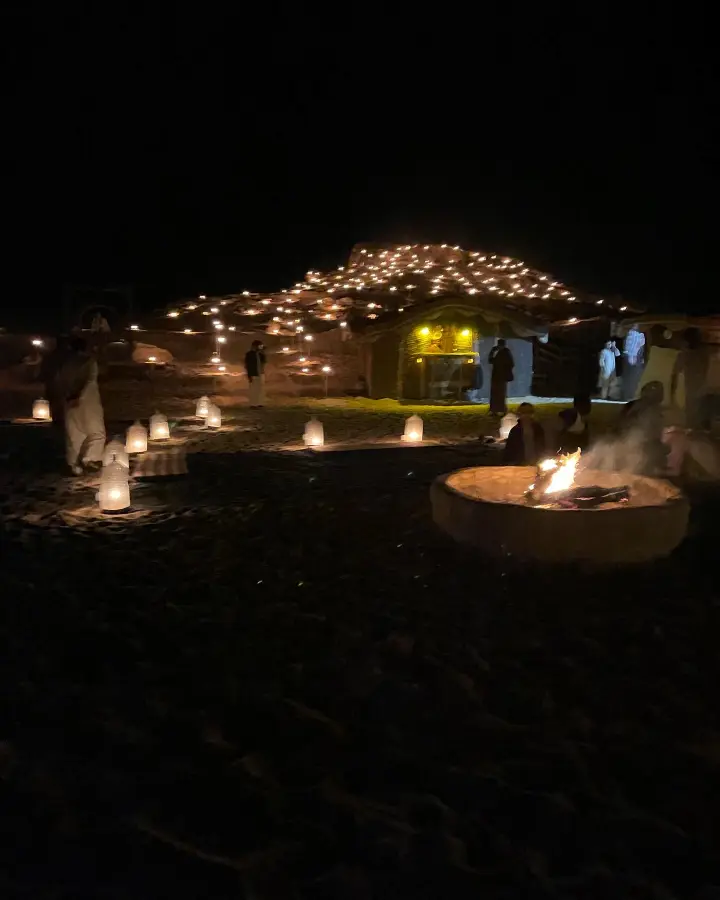
About 20 hours (afternoon to next late morning)
Overnight Desert Camp from Siwa (Private)About US$120 to 220 per person for two travellers
Check dates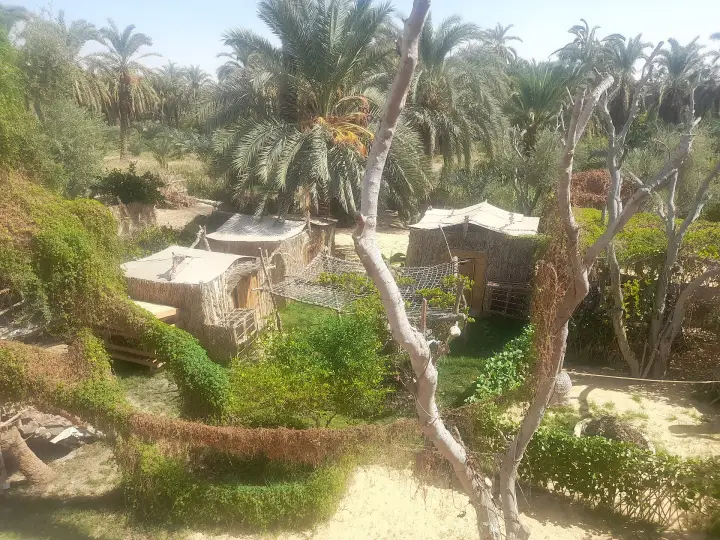
4 days, 3 nights
Siwa in 4 Days: Eco-Lodge and a Night in the Great Sand SeaAbout US$495 to 825 per person for two travellers (the lodge level decides the price)
Check dates