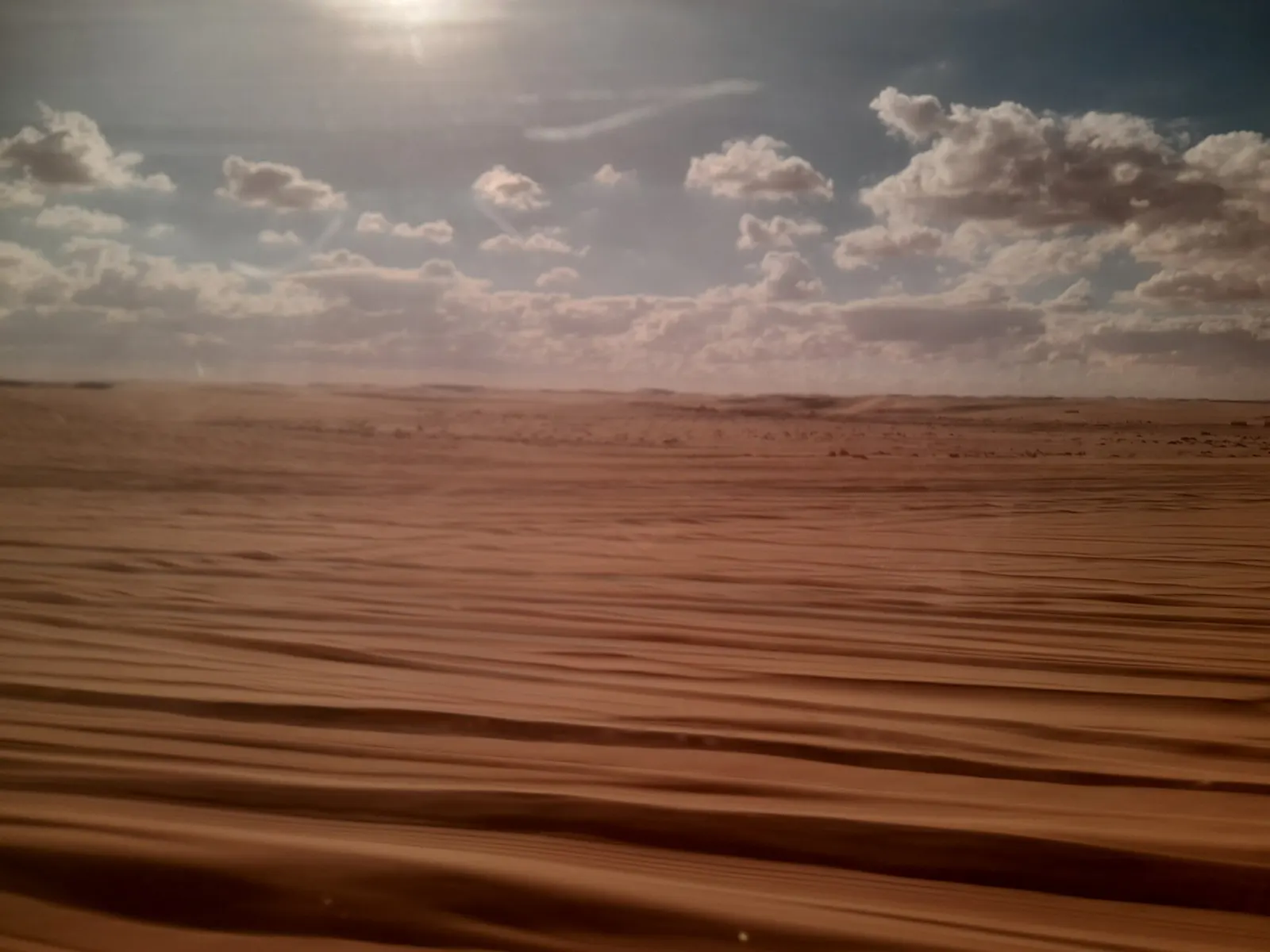
The short answer
Herodotus wrote that around 524 BC the Persian king Cambyses II sent 50,000 men from Thebes to destroy Siwa's Oracle of Amun, and that a sandstorm buried them in the desert. No remains have been confirmed. In 2014 Olaf Kaper of Leiden University argued the army was really sent against an Egyptian rebel king based in Dakhla Oasis, and was defeated.
Ask us on WhatsAppThe story at a glance
Short answer: Herodotus says Cambyses II, the Persian king who conquered Egypt, sent 50,000 men from Thebes to enslave the Ammonians and burn the oracle of Zeus Ammon at Siwa. They reached an oasis seven days from Thebes, set out across the sand and were buried by a south wind. Nothing confirmed has ever been found.
| Source | Herodotus, Histories 3.25 to 3.26, the only ancient account |
| Date of events | c. 524 BC, soon after the Persian conquest of Egypt |
| Written down | Roughly a century later, in the 5th century BC |
| Army | 50,000 men, according to Herodotus |
| Route | Thebes (Luxor) to "the city of Oasis", seven days away, then on across the sand |
| Fate in the story | A violent south wind while they ate their morning meal |
| Physical evidence | None confirmed |
| Leading modern theory | Defeated by the rebel Petubastis IV, based in Dakhla Oasis (Kaper, 2014 to 2015) |
What Herodotus actually wrote
Short answer: He heard the story from the Ammonians themselves. The army left Thebes with guides, reached "Oasis", then vanished somewhere between there and Siwa.
In Book 3 Herodotus describes Cambyses marching south against the Ethiopians. At Thebes, he says, the king split off about 50,000 men and ordered them to reduce the Ammonians to slavery and set fire to the oracle of Zeus. The detachment travelled with guides to a city called Oasis, which belonged to Samians of the "Aeschrionian tribe" and lay seven days across the sand from Thebes.
After that, Herodotus is careful to say, only the Ammonians and those who heard their account could report anything. Their version: the troops left Oasis, marched across the sand, and stopped to eat about halfway to Siwa, when a strong wind from the south buried them. They never reached the Ammonians and never came home. The passage is quoted in full, in Andrea Purvis's translation, in Olaf Kaper's 2015 chapter (below); A. D. Godley's older translation is on the Perseus Digital Library.
Two things in that wording matter. First, Herodotus does not claim to know what happened; he tells us whose story it is. Second, the story fits his larger portrait of Cambyses as a king who offended the gods. He goes on to describe Cambyses killing the sacred Apis bull at Memphis.
Why historians doubt it
Short answer: The route, the size of the army and the manner of death all look wrong for a march on Siwa.
Olaf Kaper of Leiden University sets out the problems in his chapter "Petubastis IV in the Dakhla Oasis" in Political Memory in and after the Persian Empire (SBL Press, 2015; author's copy via NYU).
| Problem | Kaper's point |
|---|---|
| Motive | Herodotus gives no clear reason for Cambyses to attack the oases at all |
| Army size | 50,000 is far too many for a long desert crossing, which works best with small caravans carrying their own water and food |
| Starting point | Nobody heading for Siwa would start at Thebes; the normal ways were from Memphis or along the Mediterranean coast |
| "Oasis" | Seven days from Thebes is an accurate description of the capital of Kharga Oasis, a name never used for Siwa |
| Sandstorm | He cites experienced Sahara travellers such as Théodore Monod: a sandstorm is highly unlikely to kill anyone |
| Desert skill | The Persian army was experienced in desert travel and would not have taken needless risks |
Kaper also notes that elsewhere (4.181) Herodotus puts "the Ammonians" ten days from Thebes, a distance that fits Dakhla Oasis better than Siwa. Some 19th-century scholars, such as Heinrich Brugsch, had already suggested that the oasis of Ammon in this story was Dakhla.
The Petubastis theory
Short answer: Temple blocks found at Amheida in Dakhla carry the full titles of a rebel pharaoh. Kaper argues Cambyses sent the army against him, lost, and the defeat was rewritten as a sandstorm.
The excavations at Amheida in Dakhla are directed by Roger Bagnall of New York University, with Paola Davoli of the University of Salento (Lecce) in charge of the digging and Kaper as associate director for Egyptology. In 2005 the royal name Petubastis turned up at the site's temple of Thoth. Blocks found in later seasons gave the king's full set of titles, which showed he was Petubastis IV, the rebel who claimed the throne of Egypt against Persia around 522 BC. He was formerly numbered Petubastis III, which is the name used in the 2014 press coverage.
Leiden announced the theory on 19 June 2014 (ScienceDaily, from Leiden University), and the full argument appeared in the 2015 chapter. Kaper's reading runs like this:
- Petubastis prepared his revolt in the southern oases, with Dakhla as a power base. That would explain his unusual temple building there.
- Cambyses sent part of his army west from Thebes to deal with him, not to attack Siwa.
- The army was defeated, which is why no one came back.
- Cambyses kept the disaster from becoming widely known. After Darius I restored full control, the defeat survived in public memory as an unlucky sandstorm.
Kaper writes that he thinks "we can lay to rest the myth of the lost army of Cambyses". Not everyone agrees on every step, and no battlefield has been found either. But his theory explains the Thebes start, the seven-day "Oasis" and the silence afterwards, which the sandstorm story does not.
A century of searching
Short answer: Explorers, oil geologists and documentary makers have all looked. Every claim so far has failed to win acceptance.
| When | Who | What happened |
|---|---|---|
| 1933 | Orde Wingate, British officer | Searched the Libyan Desert without result |
| Date not recorded | László Almásy, Hungarian explorer | Also hunted for the army; the real figure behind The English Patient |
| 1983 to 1984 | Gary Chafetz, with backing from Harvard and the National Geographic Society | Searched about 100 sq km of dunes near Bahariya from September 1983 to February 1984; found about 500 tumuli but no artefacts, and bone fragments later dated to about 1500 BC, a thousand years too early |
| 2000 | Geologists from Helwan University prospecting for oil | Reported textiles, weapon-like metal and human remains; the Supreme Council of Antiquities said it would investigate, but nothing further was published |
| November 2009 | Angelo and Alfredo Castiglioni, Italian documentary makers | Announced weapons, a silver bracelet, earrings and human remains in the desert near Siwa; Zahi Hawass called the reports "unfounded and misleading" and said they had no permit to excavate |
Details from Wikipedia's Lost Army of Cambyses article (checked 21 November 2026), which cites Hawass's press release and the original reports. The Castiglioni finds were presented in a documentary rather than a peer-reviewed publication, which is one reason archaeologists did not accept them.
Evidence versus legend
| Claim | Status |
|---|---|
| Cambyses conquered Egypt and campaigned south | Well attested |
| He sent a detachment into the Western Desert | Possible; only Herodotus says so |
| Its target was Siwa's oracle | Doubtful; the route points to the southern oases |
| 50,000 men | Very probably exaggerated |
| A sandstorm buried them | Legend; desert specialists say a sandstorm is highly unlikely to kill anyone |
| Their remains lie under the dunes near Siwa | No confirmed evidence |
What you can see on the ground
Short answer: There is no lost-army site. What you can visit is the oracle the army was supposed to destroy, and the dune country that made the legend believable.
Distances are by road from the market square, measured on OpenStreetMap, as on our Siwa map.
| Place | Distance | Why go |
|---|---|---|
| Oracle Temple of Amun | 2.5 km | The sanctuary Herodotus says Cambyses wanted burned; EGP 120 for a foreign adult on the Ministry of Tourism and Antiquities ticket list |
| Dune edge past Gebel Dakrour | 4.7 km straight line, sand at the end | The first sand, reachable by tuk-tuk and then on foot |
| Great Sand Sea | From about 10 km south | The open erg; 4x4 only, with a permit and licensed driver |
Timing
Dunes are best in the two hours before sunset, when the low light shows every ridge, and in the cooler months from October to April. In summer, keep desert time to the early morning and evening; see best time to visit Siwa. Allow about an hour at the Oracle Temple and an afternoon for a 4x4 safari.
Getting here
Siwa is about 750 km from Cairo by road: about 9 hours of driving, or about 10 hours with stops, via the coast and Marsa Matruh. Some travellers ask about crossing from the southern oases along the line Herodotus describes. Britain's travel advice (checked 22 November 2026) warns against all but essential journeys on the desert track linking Bahariya and Siwa, so we route via the coast. See how to get to Siwa and is Siwa safe.
Be realistic
No guide can show you where the army died, and anyone who offers to is selling a story. What a good desert day gives you is scale: an hour into the Great Sand Sea, with no track in sight, you understand why ancient travellers feared this country and why a tale of an army swallowed by sand was easy to believe.
Why the story lasts
It has everything: a mighty empire, a sacred oracle, a vanished army and an unforgiving desert. Each new claim makes headlines, and the dunes south of Siwa look as if they could hide anything. The truer story, if Kaper is right, is a lost battle in the southern oases, kept quiet by the Persian king and later retold as bad luck. It is less romantic, and harder to film, but it fits the evidence better.
For the wider timeline, see Siwa history; for Siwa's most famous ancient visitor, who did reach the oracle, see Alexander the Great in Siwa.
See it with us
Our Siwa in 3 days trip visits the Oracle Temple and spends an afternoon in the dunes. For a full day deep in the sand, the Great Sand Sea safari goes further south. For dates and prices, contact us or browse all tours.
Questions people ask
Has the lost army of Cambyses been found?+
No. Several expeditions have announced finds, most famously the Castiglioni brothers in November 2009, but none has been confirmed. Egypt's antiquities chief at the time, Zahi Hawass, called the 2009 reports unfounded and misleading.
Where does the story come from?+
Only from Herodotus, Histories 3.25 to 3.26, written roughly a century after the events. He says the Ammonians were his source. No surviving Persian or Egyptian text is known to mention the expedition.
Could a sandstorm really bury an army?+
Desert specialists doubt it. Olaf Kaper cites experienced Sahara travellers such as Théodore Monod, who say a sandstorm is highly unlikely to kill anyone. People may die of thirst in the desert, but they survive sandstorms.
What is the Petubastis theory?+
Kaper found the full titles of a rebel pharaoh, Petubastis IV (formerly numbered III), on temple blocks at Amheida in Dakhla Oasis. He argues Cambyses sent the army against this rebel, it was defeated, and the defeat was later retold as a sandstorm.
Can I visit the place where the army vanished?+
No site has been identified. You can visit the oracle it was said to be marching on, 2.5 km from Siwa's market square, and the dunes of the Great Sand Sea, which begin about 10 km south of town.
Did Cambyses really attack Siwa?+
We do not know. Herodotus is the only source, and several details of his account do not fit a march on Siwa, including the starting point at Thebes. Kaper and other scholars treat the Siwa target as doubtful.
Go with us
Trips that include this
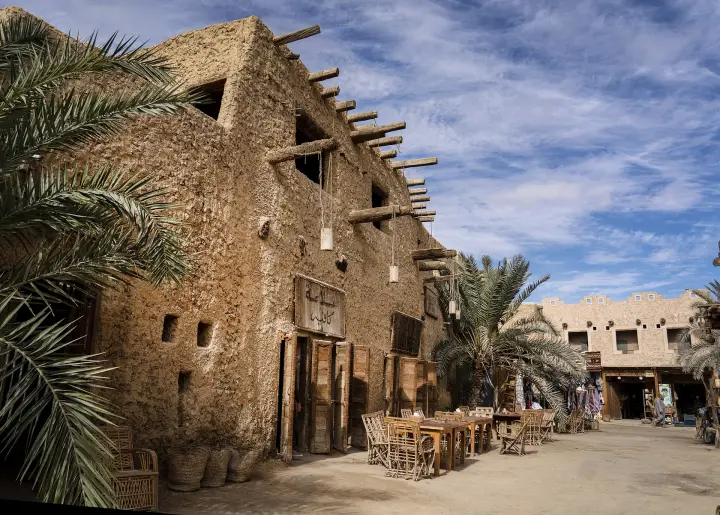
3 days, 2 nights
Siwa Oasis in 3 Days from Cairo (Private Trip)About US$420 to 650 per person for two travellers
Check dates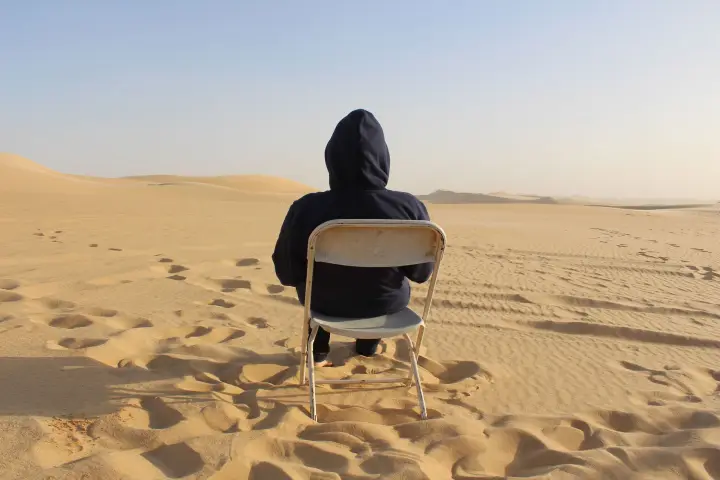
About 5 hours (afternoon to sunset)
Great Sand Sea Safari from Siwa (Half Day)About US$60 to 130 per person (shared or private car)
Check dates