The short answer
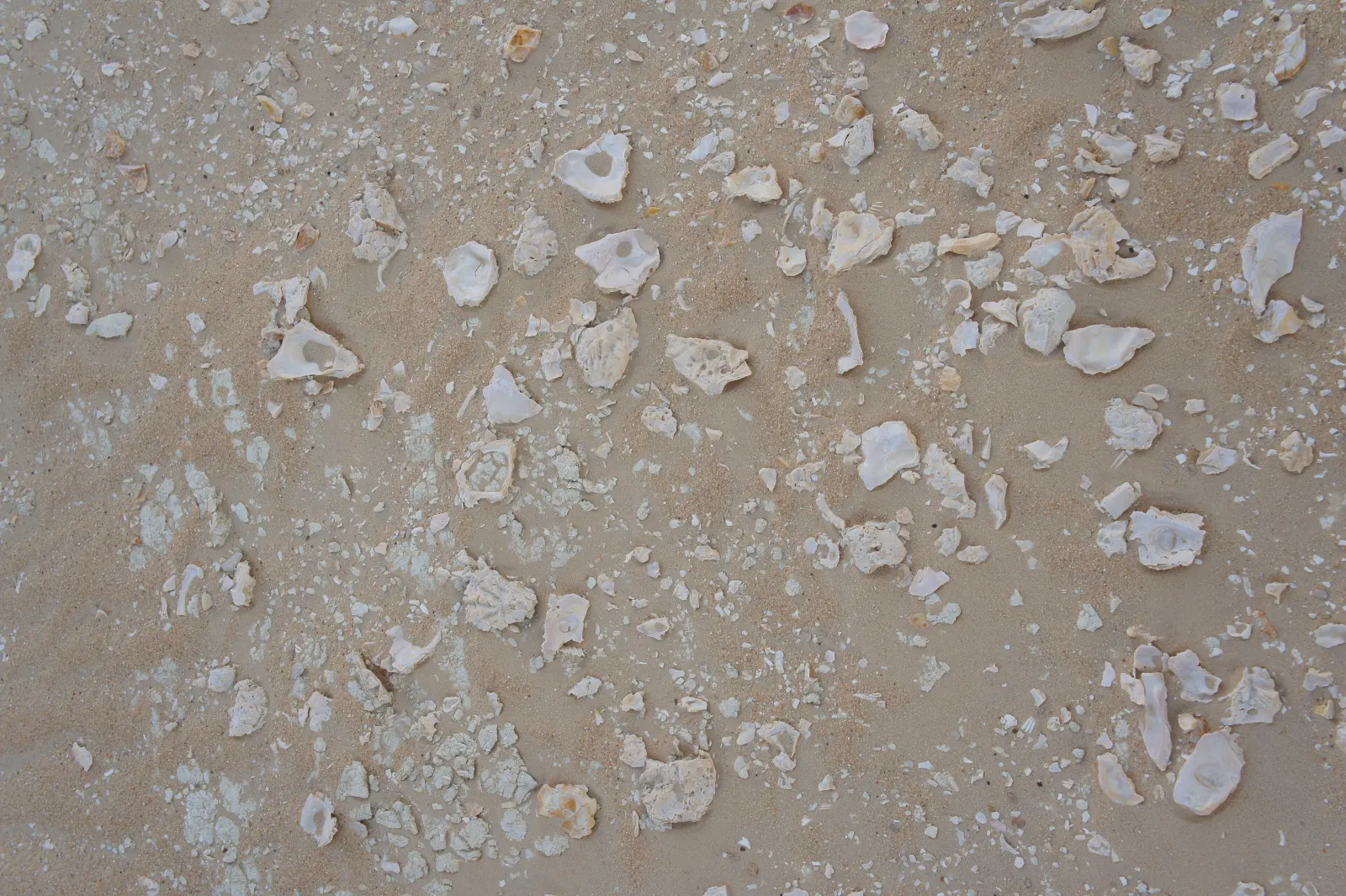
The limestone around Siwa formed on the floor of a shallow sea in the middle Miocene, roughly 16 to 11.6 million years ago. Its beds hold fossil sand dollars, shells and the borings of sea creatures, and erosion has exposed them on ridges such as Gebel Dakrour and on the desert floor near the dunes. Safaris stop at a fossil field. Photograph them; never take them.
Ask us on WhatsAppSiwa's fossils at a glance
Short answer: Siwa sits in limestone laid down under a warm, shallow sea in the middle Miocene. The rock is packed with sand dollars, shells and the borings of sea creatures. You see them on a safari stop near the dunes and in the ridges around the oasis. Look closely, photograph, and leave every piece where it lies.
| What | Marine fossils: sand dollars and other sea urchins, bivalve shells, borings made by sponges, bivalves and worms |
| Age | Middle Miocene, roughly 16 to 11.6 million years ago, over older early Miocene beds |
| Rock | Limestone and sandy limestone of the Marmarica Formation |
| Where | A fossil field on the Great Sand Sea safari route; ridges such as Gebel Dakrour |
| How | A stop on a 4x4 safari, or a walk at the foot of the ridges |
| Rules | Siwa is a protectorate: removing shells or rocks is an offence |
Why there are sea fossils in the desert
Short answer: for millions of years this part of North Africa lay under the sea. Shells and skeletons piled up on the sea floor and turned to limestone, which now forms the ridges and plateaus around Siwa.
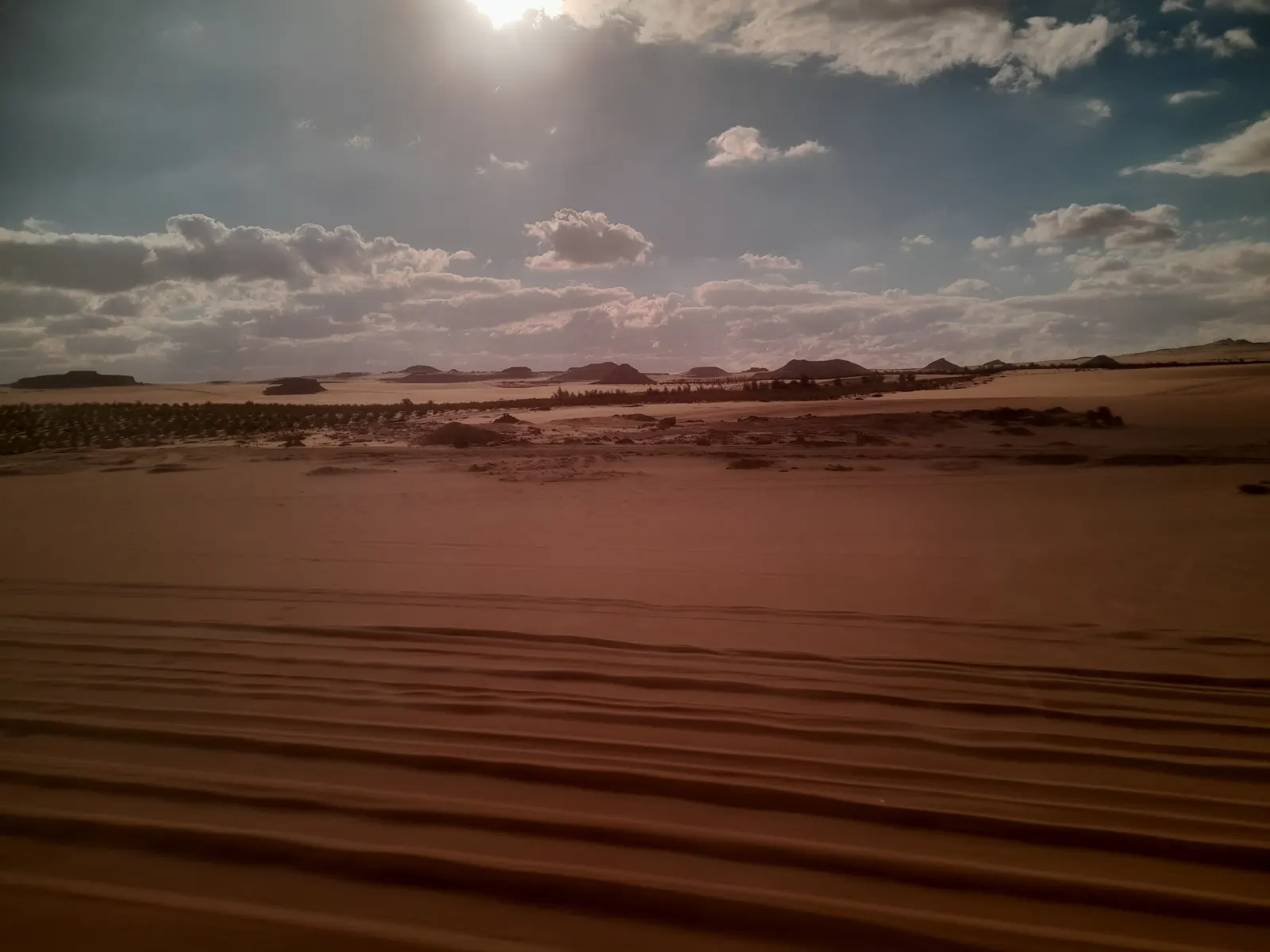
Wikipedia describes Siwa's geology as horizontal layers of porous limestone alternating with marl and clay, all from the Miocene, with the plateau and the free-standing hills shaped by erosion (Wikipedia, checked 21 November 2026). Siwa lies in a depression that reaches about 20 m (65 ft) below sea level, so you are standing among the remains of that sea floor.
Geologists divide the Miocene rock of Egypt's northern Western Desert into two formations. A 2014 paper in Cainozoic Research by Mohamed Said M. Ali of Minia University sums them up, following the Egyptian geologist Rushdi Said (Ali, 2014, checked 21 November 2026):
- The Marmarica Formation, on top: entirely marine deposits of middle Miocene age, mainly limestone and sandy limestone. This is the rock you see around Siwa.
- The Moghra Formation, below: early Miocene, marine in the west and grading to estuarine and river deposits further east.
The paper adds that late Miocene sedimentary rocks are absent from the Western Desert, so the record jumps from these marine beds to the landscape you see now. On the international timescale, the middle Miocene stages (Langhian and Serravallian) span roughly 16 to 11.6 million years ago, and the early Miocene Burdigalian about 20 to 16 million (International Commission on Stratigraphy chart, checked 21 November 2026).
The sea was shallow. A study of the Marmarica Formation at Siwa found a lagoon with small patch reefs, in water probably less than 10 m deep, during a phase when the sea was retreating (El-Hedeny and El-Sabbagh, 2018, Annales Societatis Geologorum Poloniae, checked 21 November 2026).
The wider picture: older seas in the Western Desert
Siwa's limestone is young compared with Egypt's World Heritage fossil site. Wadi Al-Hitan, the Valley of the Whales in Fayoum, holds skeletons of early whales in middle to late Eocene rock, about 40 million years old, and was inscribed as a UNESCO World Heritage Site in 2005 (Wikipedia, checked 21 November 2026). Between those two ages sits a site east of Siwa, Minqar Tibaghbagh, where a 2017 study reported early Oligocene land mammals and, higher in the section, a fully marine fauna of sharks and rays (Van Vliet and others, 2017, Acta Palaeontologica Polonica, checked 21 November 2026).
| Age | Where | What |
|---|---|---|
| Eocene, about 40 million years ago | Wadi Al-Hitan, Fayoum | Early whales, sea cows, shark teeth |
| Early Oligocene | Minqar Tibaghbagh, east of Siwa | Land mammals, then sharks and rays |
| Early Miocene, about 20 to 16 million years ago | Moghra Formation, beneath Siwa's ridges | Marine in the west, grading to estuary and river deposits further east |
| Middle Miocene, about 16 to 11.6 million years ago | Marmarica Formation around Siwa | Sand dollars, shells, reef borings |
The lesson for a visitor is simple: the sea came and went over tens of millions of years, and each stay left a layer. Around Siwa, the layer at the surface is the last marine one.
What you will see
Short answer: sand dollars, shells and holes in the rock. Most are small, and a guide's eye helps.
Sand dollars. These flattened sea urchins are Siwa's signature fossil. The first species from the oasis were described by Fuchs in 1882, and the 2014 study records six species of the extinct genera Scutella and Amphiope from Gebel El Takrur at Siwa. Look for a flat, rounded disc with a five-petalled pattern on top.
Shells. Clams, oysters and other bivalves weather out of the limestone and lie loose on the desert floor. Their ridged outlines are easiest to see in low afternoon light.
Borings. The 2018 study recorded nine kinds of trace fossil at Siwa, including borings made by sponges (Entobia), bivalves (Gastrochaenolites) and worms (Trypanites and Maeandropolydora), cut into a hard sea floor. On the ground they look like neat round holes or networks of tiny tunnels in the rock.
| Look for | What it looks like |
|---|---|
| Sand dollars | Flat discs, palm-sized or smaller, with a five-petalled star on top |
| Other sea urchins | Rounded, domed shapes with rows of small bumps |
| Bivalve shells | Ridged, fan-shaped or thick and layered (oysters) |
| Sponge borings | Clusters of pinhead holes joined by tiny tunnels |
| Bivalve borings | Smooth, flask- or club-shaped holes |
Where to see them
Short answer: on the safari fossil stop, and in the rock of the ridges around the oasis.
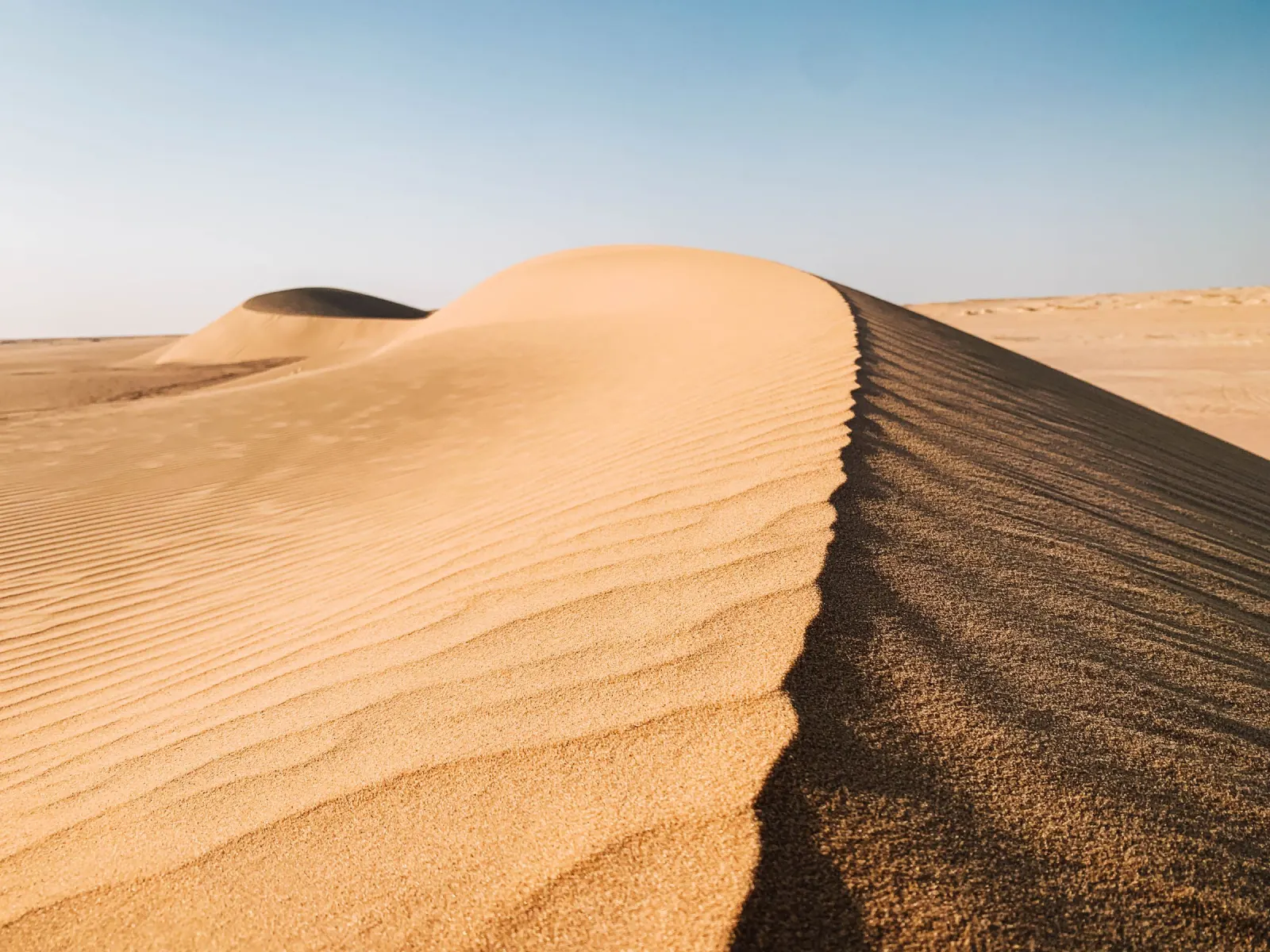
The safari fossil field. Our afternoon Great Sand Sea safari and the overnight desert camp both stop at a field of fossil shells from an ancient sea bed, on the way to the warm spring at Bir Wahed. The stop is in the Great Sand Sea, so it needs a 4x4 with a licensed driver and a desert permit, which the operator files. How the afternoon runs is on what to expect on a 4x4 safari.
Gebel Dakrour. The 2014 study measured about 148 m of Miocene beds at Gebel El Takrur, about 3.5 km south-east of Siwa: the same ridge visitors know as Gebel Dakrour. It is about 4.5 km by road from the market square and inside the oasis, so no desert permit is needed. Climb it in the last hour of daylight and look at the rock underfoot as well as the view.
Other ridges. The same paper describes a second section at Gebel West El Migahhiz, about 7.5 km north-west of Siwa, where seven sand-dollar species were recorded. The hills around the oasis, including Gebel al-Mawta and the plateau edge, are made of the same Miocene limestone layers, but they are also archaeological or working sites: look, do not dig or climb on tombs.
What Egyptian law says
Short answer: Siwa is a natural protectorate, and inside protectorates the law forbids removing shells, corals, rocks or soil for any purpose.
Siwa was declared a protected area by Prime Ministerial Decree 1219 of 2002, covering about 7,800 km² in Matrouh governorate (Wikipedia, list of Egyptian protectorates, checked 21 November 2026). Protectorates are governed by Law 102 of 1983. Article 2 of that law forbids damaging or removing "natural features and resources, such as shells, corals, rocks, or soil for any purpose", and spoiling geological structures. Article 7 sets a fine of EGP 500 to 5,000 and/or up to a year in prison, with higher penalties for repeat offenders (Law 102 of 1983, English text via FAOLEX, checked 21 November 2026).
We have not found a published map showing exactly where the protectorate boundary runs in the dunes, so we treat every fossil around Siwa as protected. Do not buy fossils offered for sale either: it only rewards someone for taking them.
| Do | Do not |
|---|---|
| Photograph a fossil where it lies, with a coin or your hand for scale | Pocket a shell, however small or common |
| Ask your guide to show you how to spot sand dollars | Hammer, chip or prise anything out of the rock |
| Put back any loose piece you pick up, exactly where it was | Pile fossils up for a photo |
| Walk on open ground and keep to vehicle tracks | Drive or walk across fragile crusts to reach a find |
| Report heavy damage to your operator | Buy fossils from sellers |
How to look responsibly
- Go in the late afternoon. Low sun throws shadows across ridged shells and the star on a sand dollar.
- Wear closed shoes. Limestone edges are sharp, and the stop is on rough ground.
- Take a close-up lens or use your phone's macro mode. The borings and smaller shells are only a few millimetres across.
- Keep children close. Let them search and photograph, and make "leave it where it lies" part of the game.
- Bring water and sun protection. There is no shade at the fossil stop. Mean afternoon highs reach 37.5 °C in June and July in the WMO normals; see Siwa weather.
- Take every piece of rubbish home. The same law forbids polluting a protectorate.
Combine it
A fossil stop sits naturally in a dune afternoon with sandboarding and a soak at Bir Wahed; the landscape and its explorers are covered on our Great Sand Sea page. For the human history the same rock later sheltered, see Siwa history, and for a night out after the fossils, camping in Siwa.
On a trip
The fossil field is on the route of our Great Sand Sea safari, about five hours from your hotel and back after sunset, and of the overnight desert camp. If fossils matter to you, tell us when you book so the driver can allow more time at the stop. Contact us with your dates, or browse all tours.
Questions people ask
Can I take a fossil home from Siwa?+
No. Siwa has been a natural protectorate since 2002, and Egypt's Law 102 of 1983 forbids removing natural features such as shells, corals, rocks or soil from protected areas, with fines and up to a year in prison. Take a photograph instead.
How old are the fossils near Siwa?+
Most belong to the Marmarica Formation of the middle Miocene, roughly 16 to 11.6 million years old. Older early Miocene beds, the Moghra Formation, lie beneath them.
What kind of fossils can I see?+
Mainly marine ones: sand dollars and other sea urchins, clam and oyster shells, and holes bored into the rock by sponges, bivalves and worms while it was still sea floor. Geologists have described sand dollars from Siwa since 1882.
Where can I see fossils near Siwa?+
On a Great Sand Sea safari, which stops at a field of fossil shells on the way to Bir Wahed, and in the limestone of the ridges around the oasis. Gebel Dakrour, about 4.5 km by road from the market square, is one of the sections geologists have studied.
Are there whale fossils near Siwa?+
Not that we know of. Egypt's famous fossil whales are at Wadi Al-Hitan in Fayoum, in Eocene rock about 40 million years old, far older than Siwa's Miocene limestone.
Do I need a permit to see the fossils?+
For the ridges inside the oasis, no. The fossil field on the safari route is in the Great Sand Sea, where a licensed operator files a desert permit for you.
Go with us
Trips that include this
About 5 hours (afternoon to sunset)
Great Sand Sea Safari from Siwa (Half Day)About US$60 to 130 per person (shared or private car)
Check dates
About 20 hours (afternoon to next late morning)
Overnight Desert Camp from Siwa (Private)About US$120 to 220 per person for two travellers
Check dates